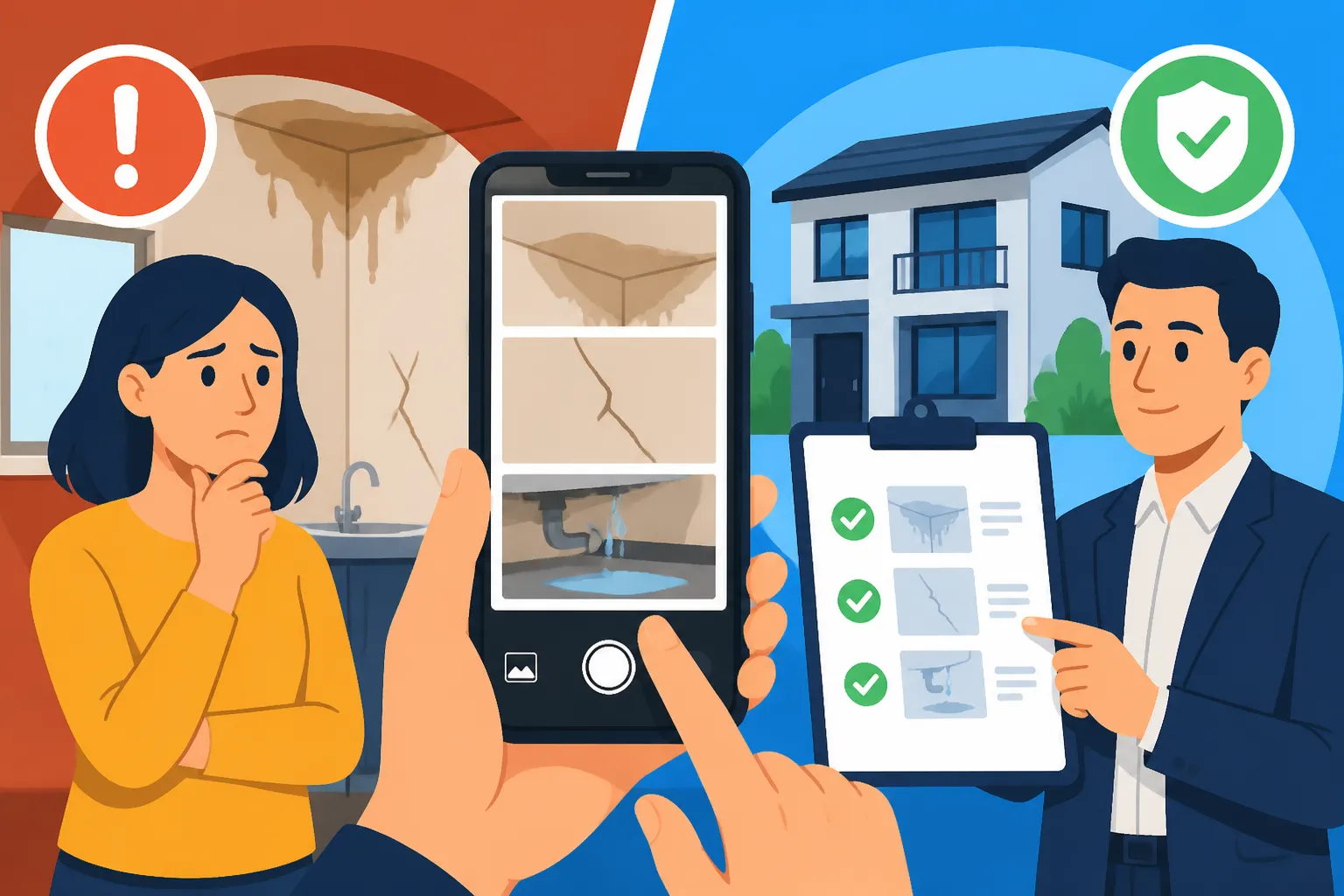
How to Document Repair Problems
Dealing with persistent repair issues in your rental can feel like a never-ending battle, leaving you frustrated, unheard, and wondering if your landlord will ever take things seriously. It's a common experience for renters, and one that can escalate quickly if not handled correctly. This comprehensive guide is here to walk you through the essential steps of meticulously documenting every repair problem, helping you protect your rights, strengthen your position, and ensure your landlord addresses necessary fixes.
Why Documentation is Your Best Friend
When something goes wrong in your rental and your landlord isn't responsive, the last thing you want is for it to turn into a "he said, she said" situation. That's where meticulous documentation comes in. It's not just about complaining; it's about creating an undeniable, irrefutable record of events that protects you at every turn.
Protecting Your Rights and Security Deposit
Imagine you move out, and your landlord claims a leaky faucet you reported months ago caused extensive water damage, deducting a huge chunk from your security deposit. Without proof of when you reported it, how often, and the landlord's lack of action, you're at a significant disadvantage. That's why documentation is crucial. It serves as your verifiable timeline, demonstrating that you fulfilled your responsibilities as a tenant by notifying the landlord promptly.
Detailed records prove not only that you reported an issue but also when you reported it and what the problem entailed. This is particularly vital when it comes to defending yourself against unjustified deductions from your security deposit after you move out. Landlords often try to charge for pre-existing conditions or issues that were their responsibility to fix. For a deeper dive into what landlords can legally withhold, check out our guide on What Can a Landlord Deduct From a Security Deposit?. Your careful documentation will be the shield against such claims, showing clearly that any damage wasn't due to your neglect but perhaps the landlord's delay or failure to make timely repairs.
Building a Strong Case for Legal Action If Needed
While no one wants to think about taking legal action, sometimes it's the only way to get a landlord to comply with their obligations. Whether you're considering small claims court, filing a formal complaint with a housing authority, or exploring options like Withholding Rent for Repairs, your documentation is the backbone of your case. Without solid evidence, your claims are simply allegations.
A well-organized file of communication, photos, and other records transforms your personal frustration into a clear, compelling narrative. For instance, if you're dealing with a consistent lack of hot water and your landlord has ignored repeated requests, dated emails, repair logs, and even logs of your alternative arrangements (like paying for showers at a gym) paint a vivid picture for a judge or mediator. This evidence demonstrates a pattern of negligence and helps prove that you've exhausted all reasonable avenues to resolve the issue directly. Should you find yourself needing to take more drastic measures, understanding how to build a case is key, and our article on Suing a Landlord for Your Deposit (Small Claims & Penalties) offers valuable insights into that process.
The Golden Rule: Communicate in Writing
When it comes to repair requests, verbal communication is a trap. It's easy for details to get misremembered, misinterpreted, or outright denied. The golden rule in landlord-tenant relations, especially concerning repairs, is to always put it in writing. This creates a clear, undeniable record of every interaction and request.
Initial Repair Request The First Step
Your very first step when you notice a repair problem should be to inform your landlord in writing. This isn't just a suggestion; it's often a legal requirement before you can pursue further action, such as withholding rent or terminating your lease due to an uninhabitable condition. Your initial request should be clear, concise, and contain all necessary information. Start with the date, your name, the rental address, and a specific description of the problem. Instead of saying "the bathroom faucet is leaky," say "the hot water faucet in the master bathroom has a steady drip, approximately one drip per second, causing water stains in the sink basin, noticed on [Date]."
Specify where the problem is, when you first noticed it, and how it's impacting your ability to live comfortably or safely in the unit. It's also wise to mention any potential further damage the issue could cause if left unaddressed. You can send this request via certified mail (requiring a signature confirmation), email with a read receipt, or through your landlord's official tenant portal if they use one. Some property management systems, like those offered by TurboTenant for landlords, often include a tenant portal feature that logs communication, providing an excellent record for both parties. Always keep a copy for yourself, whether it's a screenshot, a saved email, or the postal receipt. For more guidance on this critical first step, see our detailed guide on How to Request Repairs in Writing.
Follow-Up Communication and Reminders
Unfortunately, sending one written request isn't always enough. Landlords can be busy, overlook emails, or simply drag their feet. If you don't hear back or see action within a reasonable timeframe (which can vary by state and the severity of the repair, as discussed in How Long Does a Landlord Have to Make Repairs By State), it's time for a follow-up. This follow-up should also be in writing and should reference your initial communication.
For example, your follow-up email could state: "This is a follow-up to my repair request dated [Date of initial request] regarding the leaky faucet in the master bathroom. As of today, [Current Date], the issue remains unresolved. The leak appears to be worsening, and I am concerned about potential water damage to the cabinet below." Attach the original communication and any new photos or videos that show the problem persisting or deteriorating. Each follow-up serves to reinforce your efforts and the landlord's inaction. Consistent, dated follow-ups demonstrate a clear pattern and remove any ambiguity about your attempts to resolve the issue. Make sure to keep copies of every single piece of correspondence.
Visual Evidence: Photos and Videos are Non-Negotiable
In the world of documentation, a picture (or video) is worth a thousand words – and potentially thousands of dollars in dispute. Verbal descriptions can be vague, but visual evidence offers undeniable proof of the condition of your rental unit and the specific repair problems you're facing.
Capturing the Problem's Scope and Severity
When you encounter a repair issue, don't just snap one quick photo. Think like a detective. You need to capture the problem from multiple angles to truly convey its scope and severity. Start with a wide shot that shows the general area of the problem, giving context. For example, if it's a ceiling leak, take a photo that shows the entire room or at least a large section of the ceiling. Then, move closer for mid-range shots, and finally, take tight close-ups that show the intricate details of the damage.
Always try to include something in your photos that provides scale, like a ruler, a coin, or even your hand. This helps to quantify the size of a crack, a mold patch, or a stain. The most crucial element for both photos and videos is the date and time stamp. Most modern smartphones automatically embed this data, but it's always a good idea to ensure it's enabled. If possible, consider using a third-party app that can overlay the date and time directly onto the image or video, making it explicitly clear. Vivid examples include a dripping faucet with a cup underneath to measure the accumulation, a growing patch of mold on a bathroom wall, or a malfunctioning appliance with an error code displayed. Think about how you would prove your apartment's condition when you moved in – the same thoroughness applies here, as highlighted in our guide on How to Document Your Apartment at Move-In.
Documenting the Repair Process and Aftermath
Your documentation efforts shouldn't stop once a repair person shows up or the landlord claims the issue is fixed. It's equally important to document the repair process itself, and critically, the aftermath. Sometimes, a repair can be shoddy, incomplete, or even cause new damage. If a contractor comes to fix a leaking pipe, take photos of the area before they start, during their work (if appropriate and safe), and immediately after they finish.
If the repair is temporary or seems insufficient, document that. For instance, if a large hole was patched but not properly painted, or if a new leak appears soon after a repair to another area, you'll need evidence. Furthermore, document any secondary damage caused by the initial problem. Did that leaky pipe ruin your living room rug? Take photos of the ruined rug. Did the roof leak damage a painting or cause a significant water stain on the wall? Capture that clearly. This is where renters insurance becomes invaluable. A policy from providers like Lemonade can cover your personal belongings if they are damaged due to covered perils like leaks that are not your fault, provided you've documented the issue and reported it to your landlord. Without this visual proof, claiming damages for your personal property becomes significantly harder.
Beyond the Obvious: Comprehensive Record Keeping
While written communication and visual evidence are foundational, comprehensive record-keeping extends to other important details that can bolster your position. Every little bit of information can contribute to a stronger case, showcasing the full impact of the repair problem.
Repair-Related Expenses and Damages
Repair problems don't just affect your living situation; they can also hit your wallet. Keeping meticulous records of all repair-related expenses is absolutely critical. Did you have to buy buckets to catch a leak? Did you purchase a temporary space heater because your furnace broke, as discussed in situations like No Heat / No Hot Water / No AC Your Rights? Did you need to stay in a hotel for a night or two because the conditions became uninhabitable? Every single receipt for these out-of-pocket expenses should be saved.
Label these receipts clearly with the date, item, and what it relates to (e.g., "Bucket for kitchen ceiling leak, 2/15/2026"). Additionally, if any of your personal property was damaged or destroyed as a direct result of the landlord's failure to repair, you should also document its value. This might involve finding original purchase receipts, getting estimates for repair or replacement, or even taking photos of the damaged items themselves. Remember, proving these financial damages directly links the landlord's inaction to a quantifiable loss for you.
Witness Statements and Expert Opinions
Sometimes, an issue is so severe or complex that it benefits from outside perspectives. Witness statements can provide powerful corroboration to your claims. This could be a neighbor who also experienced similar issues, a guest who observed the problem, or even a local maintenance worker who commented on the state of your building's plumbing. While not always easily obtainable, a brief written statement from a witness describing what they observed, dated and signed, can be incredibly persuasive.
For more complex issues, like pervasive mold or structural concerns, an expert opinion carries significant weight. If you've had a professional inspect the property (e.g., a mold remediation specialist, an HVAC technician for a heating issue, or a general contractor for significant damage), get their written assessment. These professionals can often pinpoint the cause, estimate repair costs, and comment on the safety or habitability implications. For example, if you suspect an electrical issue, an electrician's report stating the wiring is unsafe will be much more impactful than just your own observation. Such professional opinions can also help delineate what might be considered an What Counts as an Emergency Repair? versus a routine fix.
Organizing Your Evidence for Maximum Impact
Gathering all this information is one thing, but if it's a disorganized mess, it loses much of its power. A clear, well-structured system for your documentation ensures that you can quickly access and present your evidence when it matters most, whether you're engaging in a difficult conversation with your landlord or presenting your case in court.
Creating a Digital and Physical Documentation System
The best approach to organizing your documentation is to maintain both a digital and a physical copy. For your digital files, create a dedicated folder on your computer or cloud storage service (like Google Drive, Dropbox, or OneDrive). Within this main folder, create subfolders for each specific repair issue (e.g., "Leaky Bathroom Faucet – Apt 3B," "No Heat – Feb 2026"). Inside each subfolder, save all relevant photos, videos, emails, and scanned documents. Name your files consistently, starting with the date in YYYY-MM-DD format, followed by a brief description (e.g., "2026-02-15_FaucetLeak_InitialReport.pdf," "2026-02-16_FaucetLeak_Photo_WideShot.jpg"). This consistent naming makes it easy to sort and find specific items.
For your physical documentation, invest in a binder or accordion folder. Print out all emails, letters, and important documents. Keep original receipts. Arrange these documents chronologically within each issue's section, similar to your digital setup. Having both formats provides a backup and ensures you always have access to your records, even if technology fails. This level of organization is crucial when you're trying to prove a long-standing issue or negotiate the return of your Security Deposit Laws by State (2026).
Summarizing Your Timeline of Events
Beyond individual files, a master timeline or log of events provides an invaluable overview of your repair struggles. This document acts as a chronological index, making it easy to see the progression of events at a glance. For each repair issue, create a simple table or spreadsheet that includes:
- Date: When the event occurred.
- Problem: Brief description of the issue.
- Action Taken by Tenant: What you did (e.g., "Sent email request," "Took photos," "Called landlord").
- Action Taken by Landlord/Management: What they did (e.g., "Acknowledged email," "Sent maintenance," "No response").
- Outcome/Status: Current state of the repair.
- Related Documents: Reference to the specific file names or documents (e.g., "See 2026-02-15_FaucetLeak_InitialReport.pdf").
Here's an example of what such a timeline might look like:
| Date | Problem Description | Action by Tenant | Action by Landlord/Management | Outcome/Status | Related Documents |
|---|---|---|---|---|---|
| 2026-02-15 | Leaky kitchen faucet | Email to management | No response | Leak ongoing, worsening | 2026-02-15_Email_FaucetLeak.pdf |
| 2026-02-16 | Water stain under faucet | Photos/Video taken | N/A | Stain growing | 2026-02-16_Photos_FaucetLeak.zip |
| 2026-02-19 | Follow-up on faucet leak | Certified letter sent | Confirmed receipt 2/21 | Leak ongoing | 2026-02-19_CertifiedLetter_FaucetLeak.pdf |
| 2026-02-25 | No heat (outside temp 30°F) | Emergency call to landlord | Maintenance technician visit | Heat restored partially | 2026-02-25_CallLog_NoHeat.txt |
| 2026-02-26 | Heat still not adequate | Email follow-up | Promised second visit | Heater still inconsistent | 2026-02-26_Email_HeatIssue.pdf |
| 2026-03-01 | Ruined personal rug | Photos of damaged rug | N/A | Rug discarded, replacement needed | 2026-03-01_Photos_DamagedRug.zip (Claim via Lemonade) |
This timeline provides a snapshot of the entire situation, highlighting delays and proving your diligent efforts. It's a powerful tool, especially when you need to quickly access information or make a case for why you deserve your full security deposit back. Our guide on How to Get Your Security Deposit Back emphasizes that thorough documentation is often the deciding factor in these disputes.
Common Pitfalls to Avoid
Even with the best intentions, it's easy to make mistakes that can undermine your documentation efforts. Knowing what to avoid is just as important as knowing what to do, especially when dealing with landlord-tenant issues that can quickly become contentious.
Relying Solely on Verbal Agreements
This is perhaps the biggest and most common pitfall tenants fall into. A casual conversation with your landlord in the hallway, a quick phone call, or a friendly chat with the maintenance person might seem sufficient at the time. However, when a dispute arises, these verbal agreements are notoriously difficult to prove. It quickly devolves into a "he said, she said" scenario, and without a written record, a judge or mediator will have little to go on.
Even if your landlord is perfectly trustworthy and has always been good about fixing things, life happens. Memories fade, management changes, and promises can be forgotten. Always, always follow up any verbal conversation with a written summary. A simple email saying, "Just confirming our conversation today, [Landlord's Name]. I understand you will have maintenance address the broken dryer by Friday, March 8th. Thank you!" creates a tangible record. This applies to initial reports, landlord promises of repair, and any agreements about compensation or timelines. The more you have in writing, the more protected you are.
Neglecting Ongoing Issues
Another common mistake is to document an issue once, send a request, and then assume your job is done. Unfortunately, repair problems often aren't a one-and-done situation. A landlord might attempt a quick fix that doesn't hold, or they might ignore the issue for weeks or months. In such cases, neglecting to continue documenting the ongoing problem, the subsequent lack of repair, or the worsening conditions can weaken your position significantly.
Each time a repair isn't completed satisfactorily, a new attempt fails, or the problem escalates, you need to create a new entry in your documentation system. This means fresh photos, new emails referencing the original request, and updates to your timeline. For example, if your oven isn't working and a technician comes but doesn't fix it, you need to document that the repair was unsuccessful. If the landlord then ignores your calls, document those attempts. This continuous stream of evidence demonstrates a pattern of failure on the landlord's part and your persistent efforts to resolve the issue. If your landlord consistently fails to address issues, knowing your rights is crucial, and our guide on Landlord Won't Fix Anything What Are My Rights? can provide further assistance.
Disclaimer
Please remember, the information provided in this guide is intended for general informational purposes only and does not constitute legal advice. Landlord-tenant laws vary significantly by state and even by municipality. It is always recommended to consult with a qualified legal professional or local housing authority for advice specific to your situation and jurisdiction.