Tenant Rights With No Heat in Oregon
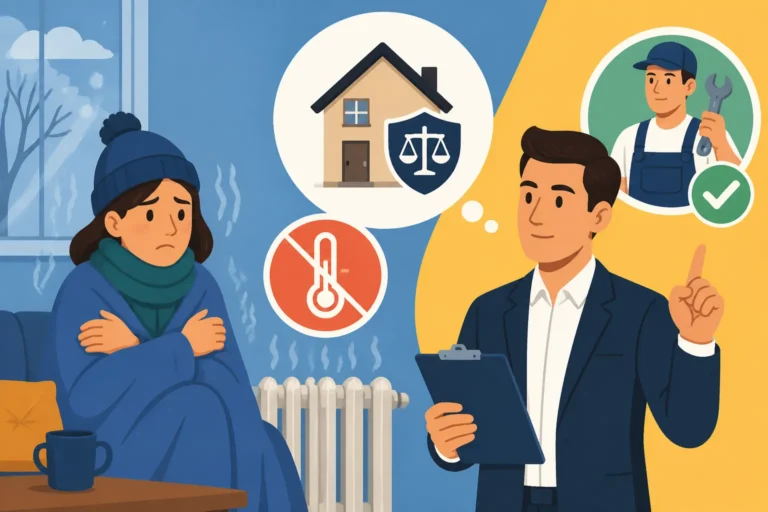
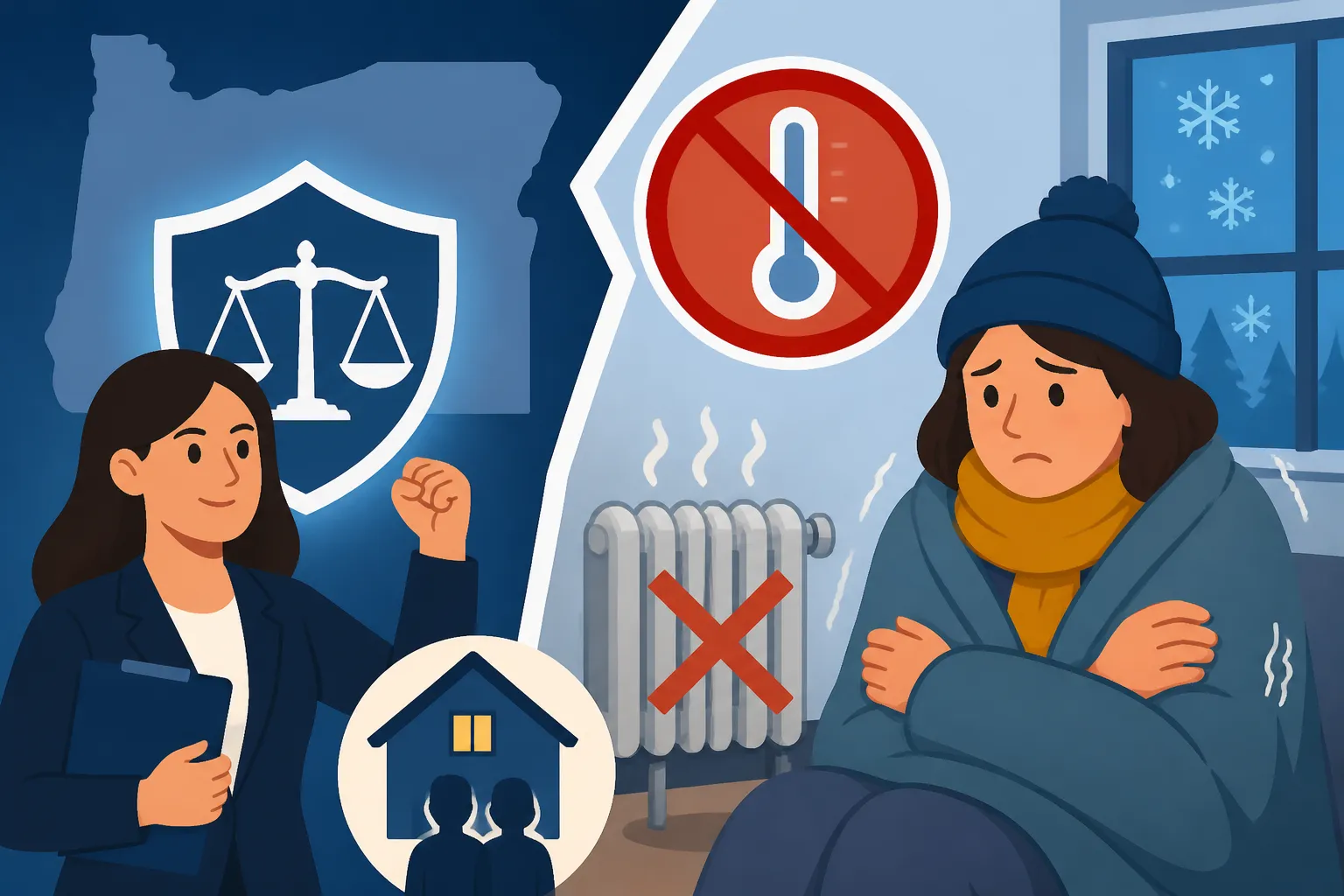
There's nothing quite like the sudden, unwelcome chill that creeps into your home when the heating system decides to call it quits, especially during Oregon's damp and cold months. It's not just an inconvenience; it can be a serious health and safety concern, leaving you feeling helpless and wondering what your legal standing is. This comprehensive guide is here to walk you through your tenant rights in Oregon when faced with a lack of heat, outlining the steps you can take to ensure your landlord fulfills their responsibilities and restores warmth to your rental.
The Implied Warranty of Habitability and Heat in Oregon
First things first, let's talk about the big one: the implied warranty of habitability. This isn't just a nice idea; it's a fundamental principle of landlord-tenant law across the country, including right here in Oregon. It essentially means that landlords are legally required to provide a safe and livable rental property, regardless of what your specific lease agreement says. A functioning heating system is almost always considered a core component of a habitable dwelling.
What Habitability Means for Your Heating System
In Oregon, a landlord's responsibility to provide a habitable living space is enshrined in the Oregon Residential Landlord and Tenant Act (ORS Chapter 90). This includes ensuring all essential services are in good working order. A dwelling must have adequate heating facilities that are kept in good repair. This isn't about luxury; it's about basic safety and health. Imagine a winter night in Bend or Portland without heat – it's not just uncomfortable, it can quickly become dangerous, especially for children, the elderly, or those with health conditions.
It's important to understand that this usually applies to the permanent heating system that came with the rental. If your apartment was advertised with a central furnace or wall heaters, those are what your landlord is responsible for maintaining. Providing a small, portable space heater as a temporary fix might offer some relief, but it typically doesn't absolve them of their duty to repair the primary heating source.
Specific Temperature Requirements in Oregon
Unlike some states or cities that have explicit minimum indoor temperature requirements (like 68 degrees Fahrenheit during certain hours), Oregon state law doesn't specify an exact minimum temperature landlords must maintain. However, the requirement for "adequate heating facilities" is interpreted to mean a system capable of providing reasonable warmth suitable for the climate. When temperatures outside drop significantly, a heating system that can't keep the interior reasonably warm would likely be considered inadequate and a breach of the implied warranty of habitability.
If you find yourself in a situation where your heat is out, it's not just a matter of shivering; it's a potential violation of your right to a habitable home. This is why knowing your options and acting quickly is so crucial.
Landlord Responsibilities for Heating Systems in Oregon
Your landlord isn't just responsible for having a heating system in your rental; they're responsible for its upkeep, repair, and ensuring it works when you need it most. This is a recurring theme in conversations around things like Landlord Repair Responsibilities What They Must Fix.
Maintaining and Repairing Heating Systems
Under Oregon law, landlords must "maintain in good working order and condition all electrical, plumbing, sanitary, heating, ventilating, air conditioning and other facilities and appliances supplied or required to be supplied by the landlord." This is a pretty clear directive. If the furnace stops blowing hot air, if the baseboard heaters fail, or if there's a problem with the thermostat that prevents the system from functioning, it's on your landlord to address it.
They can't just ignore it or tell you to "bundle up." Their responsibility extends to making sure the system is safe to operate and doesn't pose risks like carbon monoxide leaks or fire hazards. Regular maintenance, such as annual furnace checks, often falls under their preventative duties to keep things running smoothly.
What Constitutes a Heating Emergency?
While Oregon law doesn't strictly define every repair timeline, it does distinguish between "essential services" and other repairs. Heat is absolutely considered an essential service, especially when outdoor temperatures are cold. What truly makes it an emergency often comes down to the severity of the cold, the duration of the outage, and the vulnerability of the tenants.
For instance, if your heat goes out in July in Ashland, it might not be an immediate emergency, but it still warrants a prompt repair. If it goes out during a winter storm in the Willamette Valley when temperatures are freezing or below, that's a definite emergency. This is often where landlords are expected to act with extreme urgency, generally within 24 to 48 hours for emergency repairs affecting essential services. You can learn more about this nuance in our guide on How Long Does a Landlord Have to Make Repairs By State.
What to Do When Your Heat Goes Out: A Step-by-Step Guide
It can feel overwhelming when your heat suddenly stops working. But having a clear plan can empower you and protect your rights. Here's a realistic, step-by-step approach to take.
Step 1: Document the Problem Immediately
Before you even pick up the phone, document everything. This is your number one defense if things escalate.
- Take photos or videos: Capture images of the thermostat reading (especially if it shows a very low temperature), any error codes on your furnace, or other visual evidence of the issue.
- Note the date and time: Keep a log of when the heat went out.
- Check outdoor temperatures: Note the current temperature outside, as this reinforces the urgency of the situation.
- Gather details: Did you try resetting the furnace? Is the pilot light out? Are other utilities (electricity, gas) working? These details will be crucial when you communicate with your landlord.
Step 2: Notify Your Landlord in Writing
This is critical. Verbal communication is easy to deny or forget. Always follow up any phone calls with written notification.
- Initial contact: Call your landlord or property manager first, especially if it's an emergency.
- Follow up in writing: Send an email, text message, or even a certified letter as soon as possible. State clearly that the heating system is not working, the date it stopped, and that you consider this an essential service requiring urgent repair.
- Demand Letter: If the issue isn't addressed, a formal Security Deposit Demand Letter How-To + Template can be adapted to request specific repairs. Though that template is for deposits, the principle of formal written demand is the same.
- Keep copies: Save every email, text message, and postal receipt. This creates an undeniable paper trail. You can use tools like TurboTenant for tenant communication if your landlord uses it or similar property management software, ensuring a digital record.
A good example might be: "Dear [Landlord's Name], This email is to confirm our phone conversation today, [Date], at [Time], regarding the heating outage at [Your Address]. The furnace stopped working on [Date/Time], and the indoor temperature is currently [Temperature] degrees Fahrenheit. As per Oregon Residential Landlord and Tenant Act (ORS 90), a functioning heating system is an essential service. Please address this urgent repair immediately. I will follow up if I don't hear back within [reasonable timeframe, e.g., 24 hours]."
Step 3: Allow "Reasonable Time" for Repairs
After notifying your landlord, you generally must give them a "reasonable time" to make the repairs. What's "reasonable" can be subjective, but for essential services like heat in cold weather, it's typically much shorter than for minor issues.
- Oregon's "reasonable time": While not explicitly stated for every scenario, for an essential service like heat, Oregon law usually considers 7 days a reasonable time for non-emergency issues, but for an actual emergency threatening health and safety (like no heat in winter), it could be as little as 24-48 hours. If the outdoor temperature is freezing, a 24-hour response time is often expected. Our article Reasonable Time for Repairs by State dives deeper into these timelines.
- Communication is key: If your landlord communicates that they're working on it, have ordered parts, or have scheduled a technician, that shows good faith. Be understanding of genuine delays, but don't let them string you along indefinitely.
Step 4: Understand Your Options if Your Landlord Fails to Act
If your landlord doesn't fix the heat within a reasonable timeframe after proper notification, Oregon law provides tenants with specific remedies. These are serious steps, so proceed with caution and ideally, seek legal advice.
Option A: Repair and Deduct
Oregon law allows tenants to "repair and deduct" for essential services if the landlord fails to make repairs after written notice. However, this is a very strict and often risky remedy.
- Prerequisites: You must give your landlord written notice, detailing the problem and your intention to repair and deduct if they don't fix it within a specified "reasonable time" (e.g., 7 days or less for an emergency).
- Professional repair: The repair must be performed by a licensed professional. You cannot do the repair yourself and deduct your own labor.
- Cost limits: The cost of the repair cannot exceed $300 or one-half of the monthly rent, whichever is greater. You also can't use this remedy more than once every six months.
- Proof: You must provide your landlord with an itemized statement from the repair person and copies of the receipts.
The repair and deduct option is serious and requires meticulous documentation to avoid your landlord claiming you breached the lease by withholding rent. For more details, see our article on Repair and Deduct by State.
Option B: Withholding Rent (Very Risky)
While you might be tempted to withhold rent as a way to force your landlord's hand, Oregon law does not generally allow tenants to unilaterally withhold rent for repairs without very specific procedures, like placing the rent into an escrow account.
- Oregon's position: The Oregon Residential Landlord and Tenant Act states that a tenant "may not unilaterally withhold rent" to force repairs. If you do, your landlord could issue a "Notice to Pay Rent or Quit" and proceed with eviction.
- Rent Escrow: Some states allow tenants to pay rent into an escrow account held by a court or third party until repairs are made. While Oregon law doesn't explicitly provide for this as a common tenant remedy, it's a concept you might encounter in other landlord-tenant discussions, like Withholding Rent & Rent Escrow. Consulting with a tenant's rights organization or legal aid is crucial before attempting this.
Option C: Terminating the Rental Agreement (Constructive Eviction)
In severe cases where the lack of heat makes the unit truly uninhabitable and the landlord has failed to remedy the situation, a tenant might have grounds to terminate the lease. This is often referred to as "constructive eviction."
- Definition: Constructive eviction occurs when a landlord's actions (or inactions, like failing to provide heat) make the rental property so unsafe or unlivable that the tenant is effectively forced to move out.
- Process: You typically must give your landlord written notice of the uninhabitable condition and allow a reasonable time for repair. If they fail, you can move out and consider the lease terminated, potentially suing for damages.
- High bar: This is a very high bar to meet legally. You must demonstrate the unit was indeed uninhabitable and that you followed all proper notice procedures. If a court finds the unit was habitable, you could be liable for breaking your lease. For a deeper dive into this serious step, read our piece on Constructive Eviction Explained.
Option D: Contacting Housing Authorities or Code Enforcement
Local housing authorities or city code enforcement offices can be powerful allies. Cities like Portland, Eugene, and Salem have departments that enforce housing codes.
- Complaint process: You can file a complaint with the appropriate city or county agency. An inspector can then investigate and issue a violation notice to your landlord, ordering them to make repairs. This can often be a faster and less risky route than self-help remedies.
- Documentation: Again, provide them with all your documentation (photos, written notices to your landlord). This shows you've tried to resolve it directly.
- Reporting a landlord: Our guide on How to Report a Landlord Code Violations & Retaliation offers more information on this process.
Step 5: Consider Legal Advice
If your landlord remains unresponsive or denies their responsibilities, it's wise to consult with a landlord-tenant attorney or a local legal aid organization. They can review your specific situation, explain your rights, and help you choose the best course of action. Many organizations in Oregon offer free or low-cost legal assistance to tenants.
Understanding "Reasonable Time" for Heating Repairs in Oregon
The concept of "reasonable time" is frequently debated, but it's crucial for tenants to understand what Oregon law typically expects.
Emergency vs. Non-Emergency Repairs
As mentioned earlier, whether a heating outage is an emergency hinges on factors like the time of year, outdoor temperatures, and the specific circumstances of the tenants.
- Emergency: If outdoor temperatures are consistently below freezing, or if the lack of heat poses a direct threat to health (e.g., pipes freezing, vulnerable residents), it's an emergency. Landlords are typically expected to begin repairs and restore essential services within 24-48 hours. A landlord’s insurance provider, like Steadily, might even advise landlords on prompt repairs to mitigate further damage.
- Non-Emergency: If the weather is mild and the lack of heat is more an inconvenience than a danger, a longer "reasonable time" might apply, perhaps up to 7 days, as is often the case for non-essential repairs.
Factors Influencing Timelines
Several factors can influence how quickly a repair can realistically be made:
- Complexity of the repair: A simple pilot light relight is quicker than replacing a whole furnace.
- Availability of parts/technicians: During peak heating season or extreme weather, technicians and parts can be in high demand. Your landlord should still demonstrate they are actively working to resolve it.
- Tenant cooperation: Ensure you're available to grant access for repairs. If you refuse access, it can complicate matters. Remember, a landlord must provide Landlord Entry for Repairs Notice Rules, but in an emergency, notice might be waived if you agree.
Even with these factors, the core principle remains: your landlord must make a good faith effort to restore heat as quickly as possible, especially in cold conditions.
Potential Recourse and Legal Avenues for Tenants
If all direct attempts to resolve the no-heat issue fail, you have additional legal avenues to pursue.
Small Claims Court
Tenants can file a claim in small claims court (Justice Court in Oregon) to seek monetary damages from their landlord.
- Types of damages: You could seek compensation for:
- The difference in value of the rental unit without heat (e.g., if you had to pay for alternative heating or temporary accommodation).
- Costs of any repairs you lawfully made under the "repair and deduct" rule.
- Damages resulting from the lack of heat (e.g., medical expenses if someone got sick, spoiled food due to cold, frozen pipes causing damage to your belongings).
- Process: Small claims court is designed to be accessible without an attorney, though legal advice is still recommended. You'll file a complaint, serve your landlord, and present your case with all your documentation.
Protection Against Retaliation
Oregon law protects tenants from landlord retaliation for exercising their legal rights. If you report a lack of heat, contact housing authorities, or try to enforce your rights, your landlord cannot legally:
- Raise your rent (except for a legitimate, non-retaliatory increase).
- Decrease services.
- Threaten eviction.
- Terminate your tenancy.
If your landlord takes any of these actions within six months of you asserting your rights, it is presumed to be retaliatory. You would then have to prove that you engaged in a protected activity, and the landlord would have to prove their action was not retaliatory. A quick review of our guide on Landlord Retaliation After a Repair Request can provide more specific details.
What if a Landlord Refuses to Engage?
Sometimes, a landlord simply goes radio silent or outright refuses to acknowledge the problem. This is where your diligent record-keeping truly pays off. If your landlord won't respond to written requests or engage in discussions, you can move forward with options like contacting code enforcement or pursuing legal action. The key is demonstrating that you made repeated, good-faith efforts to communicate and resolve the issue.
Tenant Rights Summary for No Heat in Oregon
| Action Step | Tenant Responsibility | Landlord Obligation | Risk Level for Tenant |
|---|---|---|---|
| Document the Problem | Photos, videos, date/time, outdoor temp, details of issue. | N/A | Low |
| Notify Landlord | Immediately call, follow up with written notice (email, certified mail, text). | Acknowledge receipt, begin assessment/scheduling repairs. | Low |
| Allow Reasonable Time | Provide access for repairs, communicate availability. | Make diligent efforts to repair within 24-48 hours (emergency), 7 days (non-emergency). | Low |
| Repair and Deduct | Written notice to landlord, wait time, get licensed professional, cost limits, receipts. | Reimburse tenant for lawful repair costs. | Medium-High (if not done correctly) |
| Withholding Rent | Not generally allowed in Oregon without specific process. | Can proceed with eviction for non-payment if no specific process followed. | High (risk of eviction) |
| Terminate Lease (Constructive Eviction) | Written notice of uninhabitable conditions, allow time for repair, move out. | May dispute claim of uninhabitable conditions. | High (if not legally sound) |
| Contact Housing Authority | File complaint with documentation, cooperate with inspectors. | Comply with code violation notices issued by authorities. | Low |
| Small Claims Court | File claim with evidence, serve landlord, present case. | Respond to court summons, defend against claim. | Medium |
Remember, your best defense is always thorough documentation and adherence to proper legal procedures. Don't be afraid to assert your rights when your landlord fails to provide an essential service like heat, especially in Oregon's unpredictable climate.
Disclaimer
Please remember that this article provides general information and should not be considered legal advice. Landlord-tenant laws can be complex and are subject to change. For advice specific to your situation, it is always recommended to consult with a qualified attorney or a tenant's rights organization in Oregon.