Landlord Retaliation After a Repair Request
It's an unfortunate truth that asking your landlord to fix something, even something absolutely necessary, can feel like walking on eggshells. Many tenants worry that a simple request for a leaky faucet or a broken heater might suddenly turn their housing situation into a nightmare, with rent hikes or eviction notices appearing out of nowhere. This guide is here to shed light on landlord retaliation, defining what it is, explaining your legal protections, and providing actionable steps to protect yourself when your landlord tries to get back at you for exercising your rights.
Understanding Landlord Retaliation
Let's be real: landlord-tenant relationships can sometimes feel like a delicate dance. You pay your rent, they provide a safe, habitable home. But what happens when that balance is upset, especially when you, the tenant, have to speak up about something that's wrong? The fear of retribution is very real, and it's something many renters face.
What Exactly is Landlord Retaliation?
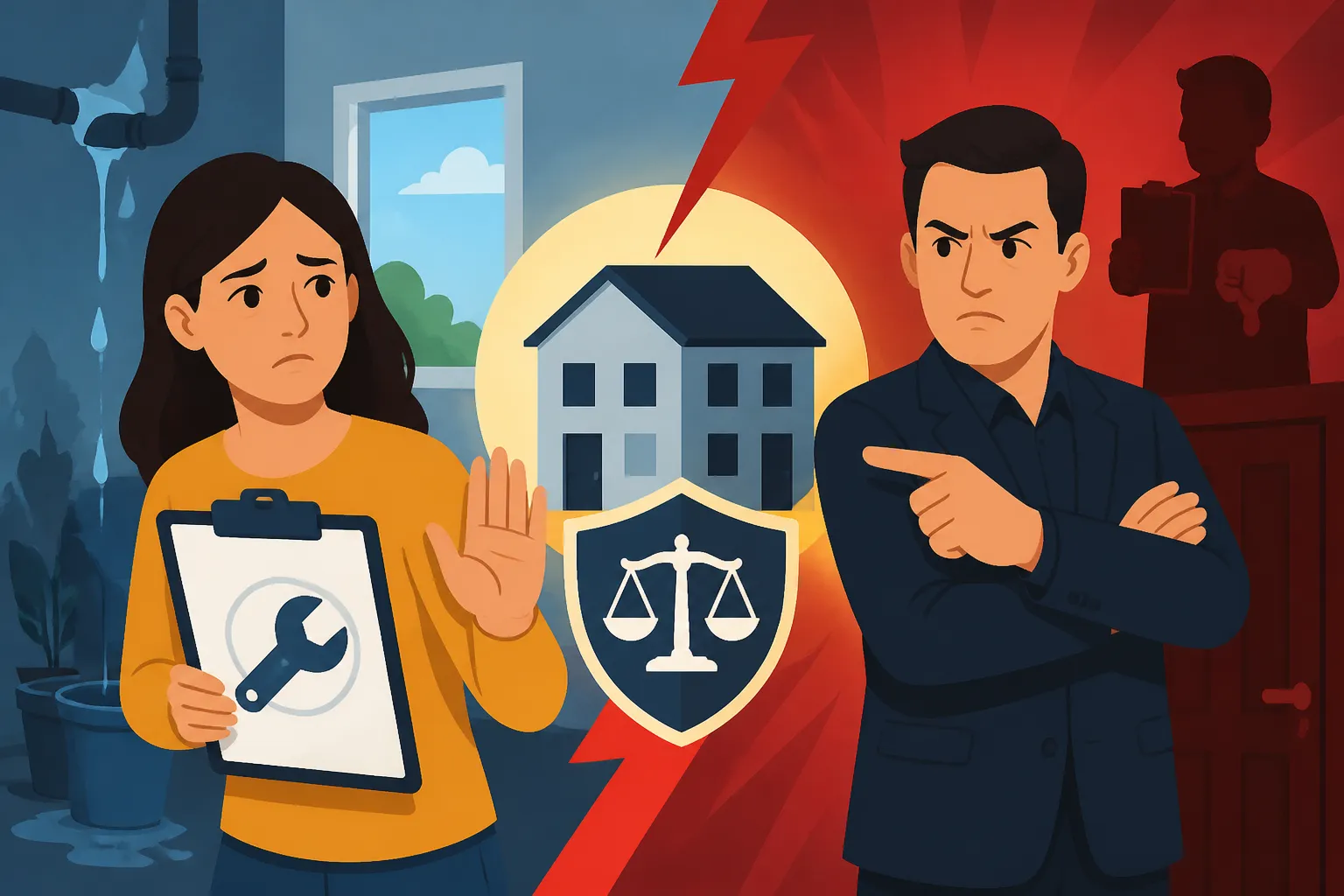
At its core, landlord retaliation is when a landlord takes adverse action against a tenant because the tenant exercised a legal right. It's not just a landlord deciding to raise your rent for market reasons; it's a landlord specifically trying to punish you for something you legally did. This could be anything from reporting a building code violation, joining a tenant's union, or, most commonly, requesting necessary repairs.
Think about it this way: you've been living in your apartment for a year, paying rent on time, being a good neighbor. Then, the refrigerator breaks down, and it's clearly the landlord's responsibility to fix it, as per the lease and the implied warranty of habitability. You send a polite, written request for repair. Instead of fixing it promptly, your landlord suddenly announces they won't renew your lease, even though you had an agreement in place. Or maybe they hit you with an unexpected, significant rent increase that seems wildly out of step with the market. If these actions are a direct response to your legitimate repair request, that's retaliation.
It's a really frustrating situation because it puts tenants in a catch-22: do you live with substandard conditions, or do you risk your housing stability by asserting your rights? Knowing what constitutes retaliation is the first step to empowering yourself and understanding that you have rights beyond just paying rent.
Common Forms of Retaliation
Landlords can be quite creative when it comes to retaliatory actions, but there are several common tactics that appear frequently. It's crucial to recognize these so you can identify if what you're experiencing falls under the umbrella of illegal retaliation.
One of the most immediate and impactful forms of retaliation is an unfair eviction or a notice of non-renewal of your lease. Imagine you've reported a serious plumbing issue or even a mold problem, which the landlord was slow to address. Suddenly, you receive an "Eviction Notice Types (Pay or Quit, Cure or Quit, Unconditional)" that seems unfounded, or you're told your lease won't be renewed despite having been a model tenant. If this happens shortly after you made a legitimate complaint, it's a red flag.
Another frequent tactic is a sudden and significant rent increase that doesn't align with market rates or your lease terms. While landlords can raise rent, especially at lease renewal, an exorbitant hike that appears out of the blue right after a repair request can be retaliatory. Similarly, charging new, unjustified fees, like excessive "pet rent, convenience fees & other charges" where none existed before or where the fees are clearly unreasonable, can also be a form of harassment.
Then there are the less obvious, but equally damaging, actions. Your landlord might refuse to make necessary repairs or delay them indefinitely, even for things like a broken furnace in winter or a leaking roof. They might also engage in what are known as "self-help evictions," which are universally illegal. This includes locking you out of your unit, shutting off utilities like water or electricity, or even removing your personal property. These actions are not only retaliatory but also outright illegal, regardless of the tenant's actions. Even restricting access to amenities you previously enjoyed, such as laundry facilities or a parking spot, can be considered retaliatory if it's done to punish you. It's important to know that these actions are rarely about genuine lease violations on your part; they are often direct attempts to intimidate or force you out.
Your Rights as a Tenant Against Retaliation
The good news is that tenant protection laws exist specifically to prevent landlords from punishing you for exercising your legal rights. You don't have to live in fear or tolerate substandard conditions. Knowing these protections is your best defense.
Federal and State Protections
Tenant protection against landlord retaliation isn't just a suggestion; it's a legally enforceable right in most places. The specific rules can vary, but generally, state landlord-tenant laws include provisions against retaliation. These laws aim to ensure that tenants can assert their rights, such as requesting necessary repairs or reporting code violations, without fear of losing their housing.
For example, many states have laws that make it illegal for a landlord to take certain actions, like filing for eviction, raising rent, or decreasing services, within a specific timeframe after a tenant has made a good-faith complaint about living conditions to the landlord or a government agency. This is often referred to as a "retaliatory eviction defense" because if your landlord tries to evict you, you can argue in court that their action is unlawful retaliation.
In California, for instance, Civil Code Section 1942.5 explicitly prohibits landlords from retaliating against tenants who have reported issues. The specific protections, such as how long a landlord has to return your deposit or how to get your security deposit back, are often outlined in state laws, and understanding these can be incredibly helpful. This means if you submit a formal request for your landlord to address a serious issue like a rodent infestation or faulty wiring, they cannot legally turn around and serve you with an eviction notice a week later simply because you spoke up. These laws exist to give power back to tenants and ensure habitable living conditions without fear of reprisal.
The Presumption of Retaliation
One of the most powerful tools in a tenant's arsenal against landlord retaliation is the "presumption of retaliation" doctrine, which exists in many state laws. This legal concept shifts the burden of proof. Normally, in a legal dispute, the person bringing the claim (in this case, the tenant) has to prove their case. However, with the presumption of retaliation, if a landlord takes certain adverse actions within a specified period after a tenant has exercised a protected right, the law presumes the landlord's action was retaliatory.
This "protected period" varies by state, but it's commonly 90 days, 120 days, or even up to six months (like in California) after the tenant has made a formal complaint, joined a tenant union, or taken other protected actions. During this window, if your landlord tries to evict you, significantly raises your rent, or reduces services, the law assumes it's because you exercised your rights. The burden then falls on the landlord to prove that their action was for a legitimate, non-retaliatory reason. This could be something like a significant, documented breach of the lease by the tenant that occurred after the protected action, or a verifiable market-wide rent increase that impacts all similar units.
For example, let's say you send your landlord a detailed letter about a persistent mold problem, noting the "Landlord Repair Responsibilities (What They Must Fix)" and stating your expectation for a prompt resolution. If, two months later, your landlord serves you a notice to vacate without a clear, independent reason, the court in many states would immediately view that action with suspicion. It's up to the landlord to then demonstrate that their decision was purely coincidental and based on something entirely unrelated to your mold complaint. This presumption is a critical safeguard, making it much harder for landlords to get away with punishing tenants for advocating for themselves.
Documenting and Proving Retaliation
The biggest hurdle tenants face when dealing with potential retaliation is proving it. It often feels like your word against theirs, and that can be incredibly intimidating. That's why meticulous documentation isn't just helpful; it's absolutely essential.
The Importance of a Paper Trail
In any dispute with your landlord, especially one involving retaliation, the phrase "if it's not in writing, it didn't happen" rings incredibly true. A clear and consistent paper trail is your strongest ally. This isn't about being overly suspicious from day one, but rather about being prepared and protecting yourself in case things go south.
Every interaction related to your tenancy, particularly repair requests and any responses, should ideally be in writing. This includes initial maintenance requests, follow-up messages, and any communication about rent, lease renewals, or potential issues. An email, a text message, or a certified letter provides concrete evidence of when you communicated, what you communicated, and if applicable, how your landlord responded. Contrast this with a phone call, where it's your word against theirs – much harder to prove in court. For instance, if you're requesting repairs, sending a detailed "How to Request Repairs in Writing" letter via certified mail gives you a timestamped record that your landlord received it.
This paper trail becomes critical when you suspect retaliation. If your landlord suddenly sends an eviction notice after you reported a serious issue to the health department, having a record of that report, alongside your prior written repair requests, connects the dots. Without it, a judge might view the eviction as a separate, legitimate action. Even if you use a platform like TurboTenant for communication, ensure that records are exportable or easily accessible, as this provides a clear, organized history of all interactions. It’s all about creating an undeniable timeline that clearly links your protected activity to your landlord’s adverse action.
Gathering Evidence
Okay, so you suspect your landlord is retaliating. Now what? You need to become a detective and gather every piece of evidence you can. This is where your diligent paper trail truly shines, but it's not the only type of evidence you'll need.
First, written communications are paramount. Keep copies of all emails, text messages, and certified letters regarding repair requests, complaints, and any notices from your landlord (e.g., rent increase notices, eviction notices, non-renewal notices). Ensure these are dated. If your landlord prefers phone calls, follow up with an email summarizing the conversation: "As per our phone call today, [Landlord's Name], I am confirming that you stated [summary of conversation, e.g., 'the furnace repair would take another week']. I hope to hear an update soon." This creates a written record of a verbal exchange.
Second, photographic and video evidence is incredibly powerful. Before and after photos of repair issues are vital. If the problem persists or worsens due to your landlord's refusal to fix it, documented proof of the deteriorating conditions helps establish the need for repairs and the landlord's neglect. Document property damage (e.g., water stains, broken appliances) and date the photos or videos. A timestamped app can be very useful here. For example, if you're disputing deductions from your security deposit, knowing "Normal Wear and Tear vs Damage: Complete Guide" will help you determine what's legitimate and what isn't, and photos can back you up.
Third, witness statements can bolster your case. If neighbors or friends were present during a discussion with your landlord, or if they can attest to the condition of your unit, their written statements could be valuable. For instance, if a neighbor also had an issue with delayed repairs and can corroborate your story, that strengthens your claim.
Fourth, official reports carry significant weight. If you've reported a code violation to your local housing authority, a copy of that report is crucial evidence. This formally documents your protected activity.
Finally, financial records can support claims of unusual rent increases or new fees. Bank statements showing consistent on-time rent payments before the alleged retaliation, compared to a sudden demand for an exorbitant increase, can highlight the suspicious timing.
Table: Essential Documentation for Proving Retaliation
| Type of Evidence | What to Collect | Why it's Important |
|---|---|---|
| Written Communication | Emails, texts, certified letters, online portal messages | Provides dated proof of requests, complaints, and landlord responses (or lack thereof). |
| Photos & Videos | Timestamps of repair issues, property condition | Visual proof of conditions, showing landlord neglect or the severity of issues you reported. |
| Witness Statements | Written accounts from neighbors, friends, or visitors | Corroborates your version of events and strengthens your credibility. |
| Official Reports | Code violation reports, police reports (if applicable) | Formal documentation of your protected activity and corroboration from objective third parties. |
| Financial Records | Rent payment history, receipts for expenses | Demonstrates timely rent payments and can show unusual or increased charges after your protected activity. |
| Lease Agreement | Your signed lease and any addendums | Outlines original terms, responsibilities, and helps prove any deviation by the landlord is retaliatory. |
Remember, the goal is to create an undeniable timeline and a body of evidence that clearly shows your landlord's actions were a direct response to your protected activity, not a legitimate business decision.
Steps to Take When You Suspect Retaliation
Discovering that your landlord might be retaliating against you can be incredibly stressful, leaving you feeling helpless and uncertain about your next move. But you're not powerless. There are clear, actionable steps you can take to protect your rights and address the situation head-on.
Communication and Formal Notices
When you first suspect retaliation, your immediate instinct might be to confront your landlord directly, perhaps emotionally. While communication is key, it’s vital to handle it strategically and formally. Your goal is to continue building that crucial paper trail.
Start by sending a formal, written communication to your landlord. This isn't just another email; it's a document that clearly states your concern about their actions being retaliatory. Reference your previous repair requests or protected activities, and then describe the landlord's recent adverse action (e.g., eviction notice, rent increase, reduction of services). Explain why you believe it is retaliatory and cite your rights under state law. You can often find state-specific information on landlord-tenant laws through resources like your state's attorney general's office or local housing authorities.
A "Security Deposit Demand Letter (How-To + Template)" provides a good example of how to structure a formal letter. While your letter might not be about a security deposit, the principles of clear, concise, and legal-reference communication are the same. For instance, if your landlord has suddenly refused to make repairs after you reported a code violation, your letter might state: "On [Date of Complaint], I submitted a report to [Housing Authority Name] regarding [specific issue, e.g., persistent plumbing leaks]. Since then, you have informed me that [specific retaliatory action, e.g., 'you will not renew my lease']. I believe this action is in retaliation for my protected activity, which is a violation of [State Statute, e.g., California Civil Code 1942.5]."
Always send this letter via certified mail with a return receipt requested. This provides undeniable proof that your landlord received it and on what date. Keep a copy for your records. This formal notice serves multiple purposes: it puts your landlord on notice that you understand your rights, it provides an opportunity for them to correct their behavior, and it adds another vital piece of evidence to your paper trail should you need to take further legal action. Don't engage in heated verbal arguments; keep everything documented and professional.
Legal Avenues and Resources
If formal communication doesn't resolve the issue, or if the retaliation is severe (like an illegal self-help eviction), it's time to explore legal avenues and seek external support. You have options, and you don't have to navigate this alone.
One of the first places to turn is your local housing authority or tenant rights organization. These bodies can often provide free or low-cost legal advice, mediate disputes, or even help you file a formal complaint. Many cities, like San Francisco or New York, have robust tenant protection laws and dedicated organizations that can guide you through the process. They can explain your specific rights, such as your ability to withhold rent for repairs in certain circumstances (though this is a serious step with strict rules, detailed in "Withholding Rent & Rent Escrow"), or how to contest an eviction.
If the situation escalates to an eviction filing, you'll need to understand the "Eviction Process by State (Step-by-Step)" and how to fight an eviction. This could involve appearing in court and presenting your evidence of retaliation as a defense. If your landlord's actions caused you financial damages (e.g., extra costs due to a utility shutoff, or being forced to find new housing unexpectedly), you might be able to pursue a claim in small claims court. Depending on your state's laws, some forms of retaliation, like illegal lockouts, can even result in the landlord having to pay "Double vs Treble Damages for Wrongful Withholding."
For more complex cases, especially those involving significant financial loss or severe harassment, consulting with a landlord-tenant attorney is advisable. They can assess the strength of your case, advise you on the best course of action, and represent you in court. Many legal aid societies offer pro bono (free) services to low-income individuals, so it's worth checking if you qualify. Organizations like Nolo or Avvo can help you find local attorneys specializing in tenant rights.
Remember, you have a right to a safe home without fear of reprisal. Utilizing these legal avenues and resources is about holding your landlord accountable and asserting your fundamental rights as a tenant.
Preventing Retaliation in the First Place
While it's crucial to know how to respond to retaliation, an even better strategy is to minimize the chances of it happening at all. A little foresight and proper procedure can go a long way in maintaining a smooth landlord-tenant relationship and protecting yourself.
Proactive Communication and Repair Requests
The way you communicate with your landlord about issues can significantly impact their response. Being proactive, clear, and formal from the start sets a professional tone and creates a strong foundation of documentation.
First, always make repair requests in writing. This is non-negotiable. Whether it's a leaky faucet, a broken appliance, or a structural issue, send an email, a message through an online tenant portal (many landlords use platforms like TurboTenant for this), or a certified letter. Clearly state the problem, when it started, and how it's affecting your living conditions. Be specific: "The refrigerator in my unit (Apartment 4B) has stopped cooling effectively since Monday, October 23rd, and food is spoiling. This is a crucial appliance for maintaining food safety." Referencing the "How Long Does a Landlord Have to Make Repairs? (By State)" in your request can also subtly inform your landlord that you're aware of your rights and their obligations.
Second, avoid making demands or using accusatory language. Keep your tone professional and objective. Focus on the facts of the problem and the desired outcome (the repair). Even if you're frustrated, an angry email can put your landlord on the defensive and sour the relationship, making them less cooperative. A calm, factual approach is more likely to yield a positive response.
Third, maintain consistent communication. If you don't hear back within a reasonable timeframe, send a polite follow-up. Keep all these communications in an organized file, either digitally or physically. This continuous, documented interaction builds a solid record that proves you’ve been consistently and reasonably requesting repairs, making it much harder for a landlord to claim ignorance or accuse you of negligence later. If your landlord tends to be difficult, having this level of documentation from the outset, even for minor issues, can deter them from engaging in retaliatory behavior down the line.
Knowing Your Lease and Local Laws
Understanding your lease agreement and the specific landlord-tenant laws in your city and state is perhaps the most fundamental way to prevent retaliation. Knowledge truly is power in this context.
Your lease is a legally binding contract that outlines the rights and responsibilities of both you and your landlord. Read it thoroughly before you sign it, and refer back to it when questions or issues arise. Does it specify a method for repair requests? What are the clauses about lease renewal or termination? What's the policy on "Pet Deposits, Last Month's Rent & Other Deposit Types"? Knowing these details can clarify expectations and prevent misunderstandings that could otherwise escalate.
Beyond your lease, familiarize yourself with your local landlord-tenant laws. These laws dictate things like "Security Deposit Laws by State (2026)," how much notice your landlord must give before entering your unit, and crucially, what constitutes illegal retaliation. For example, some states have specific laws that explicitly define the window during which a landlord's actions are presumed retaliatory after a tenant reports a habitability issue. These laws often align with the "Implied Warranty of Habitability Explained," which requires landlords to provide a safe and livable rental unit. Knowing these protections empowers you to assert your rights confidently and legally.
Many municipalities and states offer tenant handbooks or online resources that summarize these laws. For instance, if you're renting in a big city like Seattle or Portland, there might be specific local ordinances that offer additional protections beyond state law. Checking with a local tenant union or legal aid society can provide invaluable information tailored to your specific location.
Finally, consider safeguarding your personal belongings with renters insurance. Providers like Lemonade or Steadily offer policies that protect your possessions from theft, fire, and other damages. While this doesn't prevent retaliation, it's a smart layer of personal protection that ensures your assets are covered, regardless of the landlord's actions or a property-related dispute. Being informed about your rights and responsibilities creates a more level playing field, making it much harder for a landlord to take advantage of you or act punitively.
Disclaimer
Please remember that this guide provides general information and is not a substitute for legal advice. Landlord-tenant laws vary significantly by state and even by city. If you are facing a landlord-tenant dispute, especially concerning retaliation, it is always recommended to consult with a qualified attorney or local tenant rights organization for advice specific to your situation.