Squatters’ Rights in New York
Finding out someone has taken up residence in your vacant property without permission is an absolute nightmare for any property owner. It's not just a violation; it's a huge source of stress, expense, and a bewildering legal maze, especially in a state like New York with its complex tenant-landlord laws. This guide is here to walk you through the realities of "squatters' rights" in New York, helping you understand who a squatter truly is in the eyes of the law and, most importantly, how to navigate the legal process to reclaim your property effectively and without falling into common pitfalls.
Understanding What Defines a Squatter in New York
Let's be clear from the get-go: the term "squatter" often conjures images of someone breaking into an abandoned building and immediately claiming it as their own. While that's part of the picture, New York law has some crucial distinctions that can make all the difference in how you deal with an unauthorized occupant. It’s not as simple as calling the police and having them removed, especially once a certain amount of time has passed.
Squatters vs. Trespassers vs. Holdover Tenants
In New York, distinguishing between a trespasser, a squatter, and a holdover tenant is absolutely critical because each category demands a different legal approach. Misidentifying the situation can lead to costly delays and even legal trouble for the property owner.
A trespasser is generally someone who enters your property without any permission and has no intention of establishing residency. Think of someone who cuts through your yard, or perhaps breaks in to steal something. They have no legal claim to the property whatsoever. If you discover a trespasser shortly after they've entered, like finding someone sleeping in your vacant house who just forced their way in, you can typically call the police, and they can be arrested and removed immediately. The key here is the lack of established residency and the immediate discovery and action.
However, the situation quickly shifts with a squatter. In New York, an individual can transform from a mere trespasser into an occupant with "squatter's rights" if they establish residency in your property for a period of time, typically cited as 30 days or more, without the owner's explicit permission. This 30-day threshold is a pivotal point in New York law (specifically under RPAPL § 711 and 713). Once someone has occupied a property for 30 consecutive days, New York law generally considers them an "occupant" or "tenant at sufferance" rather than a simple trespasser. This means you cannot simply call the police to have them removed. The police will likely refuse to intervene, seeing it as a civil matter, and will direct you to pursue a formal eviction process through the courts. This is where the frustration really sets in for many property owners – the person might not have a lease, but they still gain significant protections.
A holdover tenant, on the other hand, is someone who once had legal permission to be on your property, usually through a lease agreement, but has remained past the expiration of that lease. They are no longer paying rent, and their tenancy has ended, but they haven't moved out. While they are unlawfully occupying the property, their initial entry was legal. The process to remove a holdover tenant is also a formal eviction proceeding, but it falls under slightly different sections of the law than someone who never had permission at all. For a deeper dive into these processes, check out our guide on How to Evict a Tenant Without a Lease.
The 30-Day Residency Rule and Its Implications
New York's 30-day rule is arguably the most critical piece of information for any property owner dealing with unauthorized occupants. If someone, even without your permission, manages to live in your property for 30 days or more, they often gain rights similar to those of a legitimate tenant. This means:
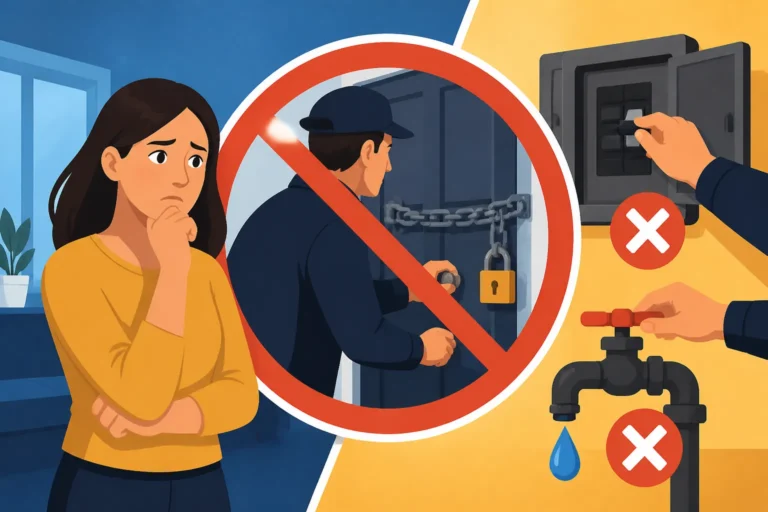
- No Self-Help Eviction: You cannot change locks, shut off utilities, remove their belongings, or physically force them out. Doing so constitutes an illegal self-help eviction and can result in significant legal penalties for you, the property owner, including fines and potential damages awarded to the occupant. This is a common pitfall and can exacerbate an already difficult situation. For more on this, see Illegal Self-Help Eviction Lockouts & Utility Shutoffs.
- Formal Eviction Required: You must go through the court system to remove them. This involves filing a special proceeding, typically a "holdover proceeding" or "unlawful detainer action," in housing court. This is a lengthy, often expensive, and emotionally draining process.
- Tenant-Friendly State: New York is known for its strong tenant protections. This means courts tend to lean towards protecting occupants, even unauthorized ones, and will ensure that all legal steps are followed meticulously by the property owner before an eviction order is granted.
This rule emphasizes the importance of vigilance. If you have a vacant property, regular checks are paramount. Swift action before the 30-day mark passes can save you immense time, money, and heartache.
New York's Adverse Possession Laws
Beyond the immediate concerns of removing an unauthorized occupant, there's the long-term, more complex legal concept of "adverse possession." While often associated with squatters, achieving adverse possession in New York is an incredibly high bar to clear and requires much more than just occupying a property for a few months. It's about a decades-long process of openly and continuously claiming land as one's own, even if they don't hold the legal title.
The Five Elements of Adverse Possession in New York
For someone to successfully claim adverse possession of your property in New York, they must prove five specific elements, continuously, for a period of at least 10 years. This isn't just a casual stay; it's a deliberate, long-term occupation that mirrors legal ownership in every way except for the actual deed.
- Hostile and Under Claim of Right: This doesn't mean angry or violent, but rather that the squatter must possess the property without the owner's permission. The possession must be "hostile" to the true owner's title. Since 2008, New York law clarifies that "claim of right" does not require a squatter to have a mistaken belief that they own the property. Instead, it means they are acting as if they are the true owner, even if they know they aren't. They are asserting their right to the property against all others, including the actual owner.
- Actual Possession: The squatter must physically occupy the property and treat it as their own. This isn't just showing up once a week. It means living there, maintaining it, making improvements, or cultivating the land in a way that demonstrates genuine occupation. Simply having a few belongings there doesn't cut it. For example, if someone moved into a derelict farmhouse and started planting a vegetable garden, fixing the roof, and living there, that would be considered actual possession.
- Open and Notorious Possession: The occupation must be obvious to anyone, especially the actual property owner, if they were reasonably diligent. It cannot be secret or hidden. The community, neighbors, and anyone passing by should perceive the squatter as the de facto owner. Putting up fences, performing visible repairs, or receiving mail at the address are examples of open and notorious possession. The true owner should have reasonably known about the squatter's presence.
- Exclusive Possession: The squatter must possess the property exclusively, meaning they are the only ones claiming and occupying it. They cannot share possession with the true owner or with the public. If the true owner is still occasionally using the property, or if multiple unrelated squatters are coming and going, this element would likely not be met.
- Continuous Possession for 10 Years: This is perhaps the most challenging element. The squatter must maintain continuous and uninterrupted possession for a full 10-year statutory period. Even a brief abandonment by the squatter or an act by the true owner to interrupt the possession (like formally demanding they leave, filing an eviction notice, or performing property taxes) can restart the 10-year clock.
It's also worth noting that under New York RPAPL § 501, improvements made to the property or the payment of property taxes for the 10-year period, while not strictly necessary for adverse possession, strongly support a squatter's claim and are factors courts often consider.
The Difficulty of Claiming Adverse Possession in New York
Given these stringent requirements, successfully claiming adverse possession in New York is incredibly difficult and rare. It's not something that happens overnight, or even over a few months. It typically involves properties that have been truly abandoned or neglected by their owners for a very long time.
Most unauthorized occupants who are referred to as "squatters" never meet these criteria. Their primary goal is usually to find free housing, not to legally claim ownership of a property over a decade. The more common scenario property owners face is dealing with an occupant who has passed the 30-day residency mark, necessitating a formal eviction, rather than a legitimate adverse possession claim.
Removing a Squatter in New York: The Legal Process
Now, for the part that causes most property owners the greatest headache: actually getting an unauthorized occupant out of your property. Remember, New York's laws strongly favor occupants once they've established residency, meaning self-help methods are off-limits. The only legal path is through the courts.
Why You Cannot Use Self-Help Eviction
It cannot be stressed enough: do NOT attempt to remove a squatter yourself by changing locks, turning off utilities, or physically forcing them out. New York's Real Property Actions and Proceedings Law (RPAPL) is very clear on this. Any attempt at "self-help" eviction, even against someone who is clearly an unauthorized squatter, can lead to:
- Fines and Penalties: You could be ordered to pay substantial fines.
- Damages to the Occupant: The court could rule that you owe the squatter damages for wrongful eviction, even though they were unlawfully there. This could include compensation for any belongings you removed or damaged, and even punitive damages.
- Restoration of Possession: The court could order you to allow the squatter back into the property.
This means that while the situation is maddening, patience and adherence to the legal process are your only safe options. For more information on dealing with illegal actions by landlords, you can read about Tenant Rights If Landlord Won't Return Deposit.
The Formal Eviction Pathway in New York
If you have an unauthorized occupant who has established residency (typically 30 days or more), you will need to initiate a formal eviction proceeding, specifically a "holdover proceeding" or "unlawful detainer action," in the appropriate Housing Court or Civil Court. This process can be complex and time-consuming, and many landlords choose to work with an attorney.
Here's a general outline of the steps involved:
-
Serve a Notice to Quit:
- This is the critical first step. You must formally inform the squatter that they need to leave the property. For squatters who have occupied for 30 days or more without permission (but also without a lease), you will typically serve a 10-Day Notice to Quit, as outlined in RPAPL § 713(7). This notice states that the owner is terminating the squatter's license to occupy the premises and demands they vacate within 10 days.
- The notice must be properly served according to New York Civil Practice Law and Rules (CPLR) and RPAPL, which often means personal delivery, substituted service (to a person of suitable age and discretion at the property, plus mailing), or conspicuous place service (affixing to the door, plus mailing). Improper service can lead to dismissal of your case.
- For comprehensive guidance on notices, check out Eviction Notice Types Pay or Quit, Cure or Quit, Unconditional.
-
File an Eviction Lawsuit (Holdover Petition):
- If the squatter does not vacate after the notice period expires, you can then file a "Notice of Petition" and "Petition" with the Housing Court in the county where the property is located. This formally begins the holdover proceeding.
- The petition will outline your claim to the property, explain that the occupant is there without permission, and request an order from the court to remove them.
- You'll need to pay filing fees, which can vary by county. For example, in New York City, you'd file in the Civil Court, Housing Part.
-
Serve the Court Papers:
- Once filed, the Notice of Petition and Petition must be formally served on the squatter by a process server. Again, strict rules apply to ensure proper service. The papers typically inform the squatter of the court date.
-
Attend the Court Hearing:
- Both you (or your attorney) and the squatter will need to appear in court. The judge will hear arguments from both sides.
- The squatter may attempt to claim they had permission, or that they are a legitimate tenant, or raise other defenses. You will need to present evidence, such as property deeds, utility bills in your name, and documentation showing lack of a lease or permission.
- This stage can be unpredictable and may involve multiple appearances or adjournments, significantly lengthening the process.
-
Obtain a Judgment of Possession:
- If the court rules in your favor, they will issue a "Judgment of Possession," which formally declares your right to reclaim the property. It will also specify the date by which the squatter must vacate.
-
Secure a Warrant of Eviction (Writ of Possession):
- If the squatter still doesn't leave after the judgment, you will then need to obtain a "Warrant of Eviction" (also known as a "Writ of Possession") from the court. This warrant is an official order directing the county sheriff or marshal to physically remove the squatter.
- You cannot execute this warrant yourself. Only authorized law enforcement can do so. For details on this final step, see The Writ of Possession & Sheriff Removal.
-
Sheriff or Marshal Enforcement:
- The sheriff or marshal will serve the squatter with a notice of eviction, giving them a final period (typically 72 hours, but this can vary) to vacate. If they still remain, the sheriff or marshal will return and physically remove them and their belongings.
- This is the final, lawful step in removing an unauthorized occupant.
The entire process, from serving the initial notice to the final sheriff removal, can take anywhere from a few weeks to several months, or even longer in some busy jurisdictions, particularly in New York City. The overall Eviction Process by State Step-by-Step can give you a broader idea of how these timelines work.
Using Legal Resources to Aid the Process
Navigating New York's eviction laws can feel like learning a new language. While hiring an attorney is often the best course of action, especially for complex cases, there are resources that can help. Platforms like LawDepot offer customizable legal forms and templates, which can be useful for drafting notices or other documents, though always ensure they align perfectly with New York's specific requirements. For property owners managing multiple units or concerned about overall property security and record-keeping, property management software like DoorLoop can help keep track of property status, maintenance schedules, and communications, which can be vital if you need to demonstrate proof of ownership or the unauthorized nature of an occupancy.
Here’s a simplified table comparing different types of unauthorized occupants and the required steps:
| Occupant Type | Definition | Entry Status | NYC 30-Day Rule Impact? | Removal Method | Key Legal Statute/Action |
|---|---|---|---|---|---|
| Trespasser | Enters without permission, no intent to reside, short-term presence. | Illegal | No | Police removal/arrest | Criminal Trespass |
| Squatter | Enters without permission, establishes residency (30+ days), no lease. | Illegal | Yes | Formal Holdover Eviction (Housing Court) | RPAPL § 713(7) (10-Day Notice to Quit) |
| Holdover Tenant | Had a valid lease/permission, but remains after tenancy expires. | Legal (initially) | Yes | Formal Holdover Eviction (Housing Court) | RPAPL § 711(1) (Notice of Termination as per lease/law) |
| Licensee | Had permission to occupy (e.g., guest, family member) but no lease, permission revoked. | Legal (initially) | Yes (if 30+ days) | Formal Holdover Eviction (Housing Court) | RPAPL § 713(7) (10-Day Notice to Quit) |
Preventing Squatters and Protecting Your Property
The best defense against squatters is prevention. Taking proactive steps can save you from the arduous and costly legal battle of an eviction. Protecting your investment requires diligence, especially if you own vacant properties in New York.
Secure Vacant Properties Diligently
Leaving a property vacant and unsecured is an open invitation for trouble. It's crucial to make it as difficult as possible for anyone to enter unlawfully.
- Robust Locks and Security Systems: Install high-quality, deadbolt locks on all doors and windows. Consider reinforcing entry points. For properties that will be vacant for an extended period, a robust security system with motion sensors and cameras can be invaluable. Modern systems often send alerts directly to your phone, allowing for immediate action if unauthorized entry is detected.
- Board Up Windows and Doors: If a property is truly derelict or will be vacant for a very long time, boarding up windows and doors can be an effective deterrent. This makes it physically harder to gain entry and visually signals that the property is not abandoned but actively secured.
- Maintain Exterior Appearance: A neglected exterior can signal that a property is abandoned. Keep the landscaping tidy, remove trash, and ensure the exterior looks well-maintained. A property that looks cared for is less appealing to potential squatters.
Regular Inspections and Prompt Action
Out of sight, out of mind is a dangerous philosophy when it comes to vacant properties. Regular, scheduled inspections are your first line of defense.
- Frequent Property Checks: Visit your vacant property regularly, ideally multiple times a week or at least once a week. This allows you to spot any signs of forced entry, broken windows, or suspicious activity immediately.
- Engage Neighbors or Local Contacts: If you don't live near the property, ask trusted neighbors to keep an eye out and report anything unusual. Establishing a good relationship with those living nearby can provide an extra layer of vigilance. Alternatively, hire a local property manager or security service to conduct routine checks.
- Act Immediately: If you discover anyone on your property without permission before they have established residency (i.e., before the 30-day mark in New York), call the police immediately. Emphasize that they are trespassers and have just entered or have only been there a short time. Quick action can lead to their removal without needing a lengthy eviction process. If you delay, and they hit that 30-day threshold, your options become significantly more limited.
Clear Signage and Communication
Sometimes, a simple visual deterrent can be effective.
- "No Trespassing" Signs: Prominently display "No Trespassing" signs around the perimeter of your property. While these might not deter everyone, they clearly establish your intent and serve as legal notice that entry is forbidden.
- Do Not Accept Rent or Services: Never accept any form of payment or service (e.g., an offer to clean the property in exchange for staying) from an unauthorized occupant. Doing so could inadvertently create a landlord-tenant relationship in the eyes of the law, making future eviction even more complicated.
By being proactive, vigilant, and swift in your response, you can significantly reduce the risk of dealing with squatters and avoid the complex legal battles associated with their removal in New York. Remember, understanding the specifics of Squatters' Rights & Adverse Possession by State is crucial, and acting within the law protects both your property and your legal standing.
Disclaimer
Please be advised that this article provides general information and is not intended as legal advice. Landlord-tenant laws, especially regarding squatters and adverse possession, are highly specific to New York State and can be complex. We strongly recommend consulting with a qualified attorney in your jurisdiction for advice pertaining to your individual situation. Legal requirements and interpretations can change, and professional legal counsel is essential to ensure compliance and protect your interests.