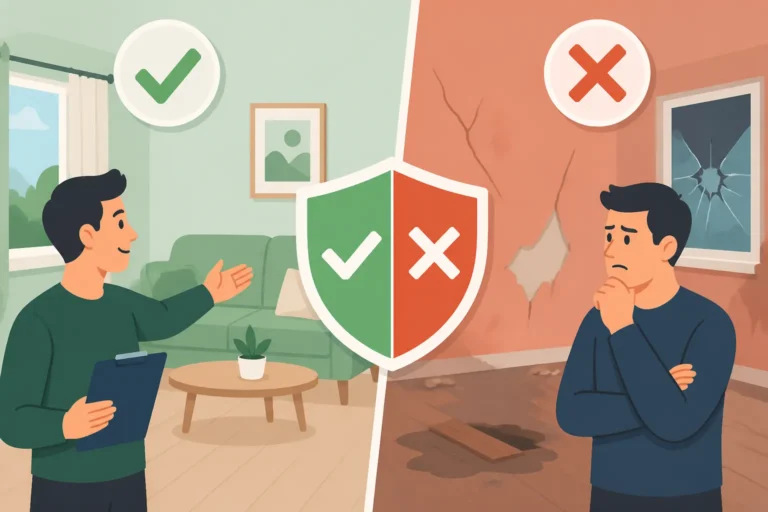
Tenant Rights If Landlord Won’t Return Deposit
Moving out of an apartment is exhausting, but the real frustration often starts after you have handed over the keys. You expect that security deposit check to arrive in the mail to help cover your new expenses, but instead, you get radio silence or a list of ridiculous charges. This guide breaks down your legal protections and the exact steps you need to take when a landlord wrongfully withholds your security deposit.
Understanding the Legal Deadline for Deposit Returns
It is incredibly stressful when you are counting on that money for your next move, only to realize weeks have passed without a peep from your former landlord. Most people do not realize that landlords are not allowed to just hold onto your money indefinitely. Every state has a strict statutory clock that starts ticking the moment you vacate the premises and return the keys. If that clock runs out, the landlord might lose their right to withhold any of the money at all, even if there was actual damage to the unit.
Statutory Timelines Vary by State
One of the most important things you can do is look up the specific laws in your area. For instance, in California, a landlord has exactly 21 days to return your deposit or provide an itemized list of deductions. In Texas and Florida, that timeline extends to 30 days. New York is much stricter, requiring the return of the deposit within 14 days. If you find yourself wondering How Long Does a Landlord Have to Return Your Deposit? for your specific region, you need to check your local statutes immediately.
I remember a friend in Chicago who waited six weeks for a check that never came. When she finally looked up the local ordinance, she realized the landlord had missed the deadline by a landslide. Because she knew the law, she was able to point out that by missing the window, the landlord had forfeited the right to keep a single cent for "cleaning" or "repairs." Knowing your state-specific deadline is your first line of defense against a landlord who is dragging their feet.
Consequences for Missing the Deadline
What happens when that deadline passes? In many jurisdictions, the landlord’s failure to provide an accounting or a refund within the legal timeframe constitutes a waiver of their rights. This means that even if you actually broke a window or left a hole in the wall, the landlord may be legally barred from deducting those costs from the security deposit because they were not proactive enough to meet the deadline.
Some states go even further by imposing penalties. For example, if a court finds that a landlord withheld the funds in "bad faith" beyond the deadline, they might be ordered to pay the tenant double or even triple the original deposit amount. This is known as Double vs Treble Damages for Wrongful Withholding. It is designed to discourage landlords from playing games with your money. If you are sitting there at day 31 and your state has a 30-day limit, the power dynamic has just shifted significantly in your favor.
Importance of the Forwarding Address
One of the most common excuses landlords use to justify a late or missing deposit is claiming they did not know where to send it. To protect your rights, you must provide your landlord with a written forwarding address. Do not just tell them over the phone; send it via email or, better yet, a certified letter with a return receipt. This creates a paper trail that proves they had the information needed to fulfill their legal obligation.
If you forget this step, the landlord might claim they attempted to send it to your old apartment, and it got lost in the mail. By providing a clear, written record of your new address, you eliminate this excuse. If you are unsure of the specific requirements in your area, checking the Security Deposit Forwarding Address Rules can save you a lot of headache later. Landlords often use tools like TurboTenant to manage tenant communications, so check if your move-out portal has a dedicated section for this information.
Common Reasons Landlords Withhold Deposits And Your Defenses
It is infuriating to open a letter and see that your $2,000 deposit has been whittled down to $200 because of "dust on the ceiling fan" or "faded paint." Landlords often try to pass the cost of routine building maintenance onto the departing tenant. However, the law is very clear that you are only responsible for damage that goes beyond normal usage. Understanding this distinction is the key to winning a dispute.
Normal Wear and Tear vs Damage
This is the biggest battlefield in landlord-tenant law. "Normal wear and tear" refers to the unavoidable deterioration of a property that happens just by living in it. Think of things like faded paint from sunlight, minor scuffs on hardwood floors, or carpet that is slightly worn in high-traffic areas. These are the landlord's cost of doing business. On the other hand, "damage" refers to things like large holes in the drywall, broken appliances due to misuse, or deep stains in the carpet.
You should consult a Normal Wear and Tear vs Damage: Complete Guide to see where your specific situation falls. For example, if you lived in an apartment for five years, the landlord cannot usually charge you for the full cost of replacing the carpet just because it looks old. Carpets have a limited lifespan, and if it was already five years old when you moved in, it is likely worth zero dollars at the end of your ten-year total lifespan. If they try to charge you, you can argue that they are seeking a "betterment" of the property at your expense, which is illegal.
Unpaid Rent and Utilities
While we usually focus on physical damage, landlords are legally allowed to deduct for financial defaults. If you moved out and still owed a portion of the last month's rent, or if there were unpaid utility bills that were the landlord's responsibility to cover under the lease, they can take that directly from your deposit. This is one of the more straightforward deductions, but it still requires documentation.
If you find yourself in a situation where you broke the lease early, the rules change slightly. You might be wondering Can a Landlord Deduct for Unpaid Rent From the Deposit? in a way that covers the time the unit sat empty. Generally, they can, but they also have a "duty to mitigate" by trying to find a new tenant as quickly as possible. They cannot just let the apartment sit empty for three months and charge you for all of it if they didn't even try to list the unit.
Cleaning Fees and Substantiation
Many tenants spend hours scrubbing their old apartment until it shines, only to be hit with a $300 "professional cleaning fee." In many states, a landlord cannot charge a standard cleaning fee if the tenant left the unit in the same condition it was in when they moved in (minus wear and tear). If you are being charged for cleaning, ask for receipts and photos of what exactly was dirty.
If you are a landlord reading this, using a service like LawDepot to create a clear move-out checklist can help prevent these disputes. For tenants, knowing Can a Landlord Charge a Cleaning Fee From the Deposit? depends heavily on the language in your lease. If the lease says "tenant must pay $200 for cleaning regardless of condition," that might actually be illegal in some states where non-refundable fees are prohibited.
| Feature | Normal Wear and Tear | Property Damage |
|---|---|---|
| Walls | Faded paint, minor scuffs, small nail holes | Large holes, unapproved bright paint, drawings |
| Flooring | Worn carpet, minor wood scratches | Carpet burns, pet urine stains, cracked tiles |
| Windows | Sticky tracks, dusty blinds | Broken glass, torn screens, missing hardware |
| Cleaning | Minor dust, light soap scum | Trash left behind, grease on stove, mold from neglect |
The Itemized Statement Requirement
A landlord cannot just send you a check for half of your deposit and say "repairs" in the memo line. They are legally required to provide a detailed, written explanation of every single cent they took out. This document is your roadmap for a dispute. If it is vague or missing, it might be your ticket to getting the full amount back in court.
What an Itemized Statement Looks Like
An Itemized Security Deposit Deduction Statement Explained should include a description of the repair or cleaning performed, the cost of the labor, and the cost of the materials. In many states, if the work was done by a third party, the landlord must provide copies of the actual invoices or receipts. If they did the work themselves, they are often limited to charging a reasonable hourly rate for their labor and cannot mark up the cost of materials.
I once dealt with a landlord who tried to charge $500 for "repairs" without any further explanation. When I demanded an itemized statement, he sent a handwritten note that just said "Painting – $500." That was not sufficient. He didn't specify which rooms were painted, why they needed painting, or how many hours it took. Because he couldn't provide a professional breakdown, he eventually folded and returned the full amount.
Challenging Bad-Faith Deductions
If you receive the statement and it includes charges that seem inflated or outright fabricated, you have the right to challenge them. For instance, if they charge you $150 to replace a lightbulb, that is clearly unreasonable. Or, if they charge you for Can a Landlord Charge for Painting? when you only lived there for six months and didn't even hang a picture, you have a strong case for a bad-faith deduction.
"Bad faith" is a legal term that essentially means the landlord is being dishonest or intentionally unfair to keep your money. If you can prove bad faith in court, the penalties for the landlord can be severe. Keep all your communication in writing and take screenshots of any "before and after" photos you have. If you used a platform like TurboTenant, check your move-in inspection report to compare it against their current claims.
When Receipts are Mandatory
In many jurisdictions, like California, if the total deductions exceed a certain amount (usually $125), the landlord must provide copies of receipts. If they haven't finished the work yet, they must provide a "good faith estimate" and then provide the actual receipts within 14 days of the work being completed. If your landlord is claiming they spent $1,000 on repairs but "lost the receipts," they are likely in violation of the law.
When you are disputing these charges, look up What Can a Landlord Deduct From a Security Deposit? to see if the items listed are even allowed. Some landlords try to include "administrative fees" for processing the return, which is often illegal. If the documentation is missing, your first step should be a formal request for those receipts.
Steps to Take if Your Landlord Refuses to Pay
When the landlord is ghosting you or flat-out refuses to return the money, you need to transition from "friendly tenant" to "informed legal advocate." You don't have to hire an expensive lawyer right away, but you do need to follow a specific sequence of actions to build your case.
Drafting a Security Deposit Demand Letter
The demand letter is the most critical step in the process. This is a formal letter that outlines why you are entitled to the money, the law the landlord is violating, and the deadline by which you expect payment before you take further legal action. It serves as evidence in court that you tried to resolve the issue amicably.
When writing your Security Deposit Demand Letter (How-To + Template), be firm but professional. State the facts: "I moved out on October 1st, I provided my forwarding address on September 15th, and as of November 15th, I have not received my deposit or an accounting of deductions." Mention that you are aware of your state’s laws and that you will seek double or triple damages if forced to go to court. You can find excellent templates on LawDepot to ensure your language is legally sound.
Utilizing Rental Management Tools
If your landlord uses professional software like TurboTenant, you might have an easier time resolving the dispute. These platforms often keep logs of when you moved out, when you provided your address, and any messages sent between you and the landlord. Before you head to court, download your entire message history and any move-out inspection photos uploaded to the portal.
Sometimes, simply sending a message through the official portal that mentions "legal action" and "statutory deadlines" gets the attention of a busy landlord or property manager. It shows them that you aren't just going to go away and that you have a documented trail of their non-compliance.
Mediation vs. Legal Action
Before jumping into a lawsuit, consider mediation. Many cities offer free or low-cost mediation services for landlord-tenant disputes. A neutral third party sits down with both of you to try and reach a settlement. This is often faster and less stressful than court.
However, if the landlord is being completely unreasonable, you may have no choice but to pursue Suing a Landlord for Your Deposit (Small Claims & Penalties). Small claims court is specifically designed for cases like this. You don't need a lawyer, the filing fees are usually low, and the rules are simplified so that regular people can present their case.
Suing Your Landlord in Small Claims Court
If the demand letter didn't work, it's time to let a judge decide. Many tenants feel intimidated by the idea of "suing," but small claims court is actually a very common and effective tool for renters. In most cases, the mere act of serving the landlord with a lawsuit is enough to make them write a check to avoid the hassle of a court date.
Preparing Your Evidence
The person with the best paperwork usually wins in small claims court. You will need your lease agreement, your cancelled check or receipt for the original security deposit, your demand letter (and proof it was sent), and most importantly, your photos. If you followed a Move-In / Move-Out Inspection Guide, you should have a side-by-side comparison of the unit's condition.
I once saw a tenant win their entire deposit back plus damages because they had a video walk-through of the apartment taken two hours before they handed over the keys. The landlord claimed the oven was "destroyed," but the video clearly showed it was spotless and functioning. The judge was not impressed with the landlord's attempt to fabricate damages.
The Hearing Process
On the day of your hearing, arrive early and be organized. You will likely have about 5 to 10 minutes to present your case. Stick to the facts: "The law requires a return in 21 days; it has been 45 days. I have not received the funds. Here is my evidence that I left the unit in good condition."
Avoid getting emotional or calling the landlord names. Let your evidence do the talking. If the landlord shows up with no receipts and just a list of vague "damages," the judge will likely rule in your favor. Be sure to ask the judge for the maximum allowable penalties if your state allows for Double vs Treble Damages for Wrongful Withholding.
Collecting the Judgment
Winning in court is one thing; actually getting the money is another. Once you have a judgment, the landlord is legally required to pay you. If they still refuse, you can take steps like garnishing their bank account or putting a lien on their property. Most landlords will pay up once a judge orders them to, as they don't want a court judgment affecting their credit or their ability to manage their properties.
If you are dealing with a landlord who has multiple properties, they might be using TurboTenant to collect rent. In some cases, a court order can be used to redirect rent from other tenants to satisfy your judgment, though this is a more advanced legal move.
Protecting Yourself for Future Rentals
The best way to handle a security deposit dispute is to prevent it from happening in the first place. By taking a few proactive steps at the start of your next lease, you can make it nearly impossible for a landlord to wrongfully keep your money.
Documentation is Everything
The moment you get the keys to a new place, take high-resolution photos and videos of every single room, including inside the oven, the back of closets, and the condition of the carpets. If there is already a stain or a crack, document it. Use a Move-In / Move-Out Inspection Guide and ask the landlord to sign off on a list of existing damages.
Email these photos to yourself so they are time-stamped. If you ever need to prove the condition of the unit years later, you have an unhackable record of exactly how it looked on day one. This simple 15-minute task is the most effective way to ensure How to Get Your Security Deposit Back without a fight.
Understanding Renter's Insurance and Security Alternatives
Sometimes, the traditional security deposit isn't the only option. Companies like Lemonade offer renter's insurance that can protect you if you are sued for actual damage to a unit, which can provide peace of mind. Additionally, some landlords are now using Security Deposit Alternatives (Rhino, Jetty, Surety Bonds) where you pay a small monthly fee instead of a large upfront deposit.
While these alternatives save you money upfront, be careful—they are often non-refundable. You are paying for a "bond" that protects the landlord, not a deposit that comes back to you. Make sure you understand the difference before you sign. If you do go the traditional route, make sure you know Where Must a Landlord Hold Your Deposit? as some states require the money to be kept in a separate, interest-bearing escrow account.
Reading the Fine Print on Deposits
Before you sign your next lease, look closely at the security deposit section. Are there "non-refundable" fees hidden in there? If so, check if Are Non-Refundable Deposits Legal? in your state. Some landlords try to sneak in "redecoration fees" or "administration fees" that are actually just illegal ways to keep your money.
If the lease seems unfair, you can try to negotiate. Using a service like LawDepot to review standard lease terms can help you spot red flags. Remember, the security deposit is your money held in trust. It is not a bonus for the landlord, and you have every right to fight for its return.
Disclaimer
This guide is for informational purposes only and does not constitute legal advice. Landlord-tenant laws vary significantly by state and local jurisdiction, and statutes are subject to change. For specific legal issues or if you are facing an eviction, please consult with a qualified attorney or a local legal aid society in your area.