Can a Landlord Charge for Carpet Replacement?
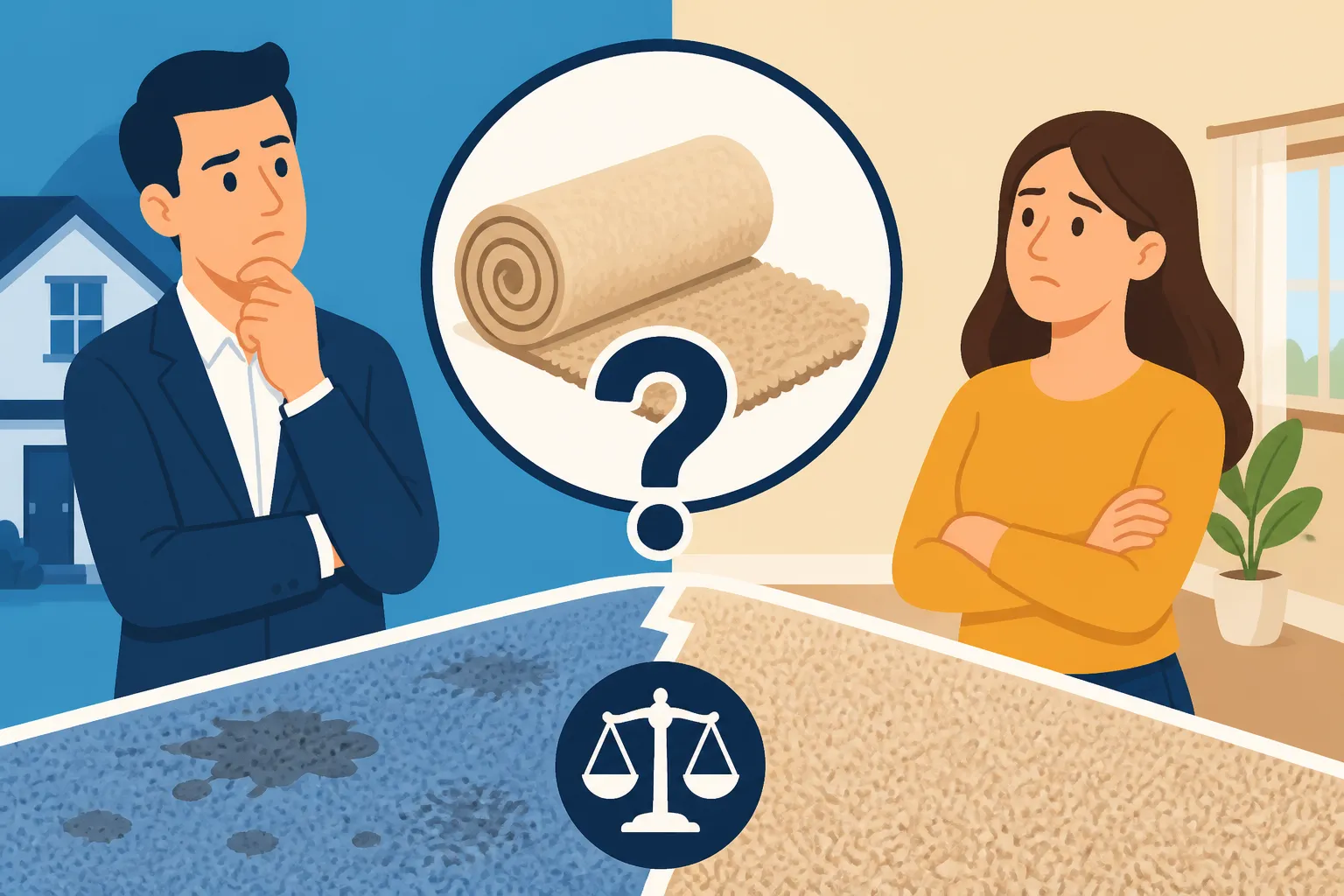
Moving out of a rental can be one of the most stressful experiences, especially when you are counting on that security deposit to fund your next move. One of the most common and expensive conflicts arises when a landlord decides the flooring needs a total overhaul. This guide explains exactly when a landlord can charge for carpet replacement and how to protect your rights.
Understanding Normal Wear and Tear vs. Damage
The fundamental battleground in security deposit disputes is the distinction between what is considered "normal wear and tear" and what qualifies as actual "damage." This distinction is the pivot point upon which your deposit return rests. Landlords are legally required to expect a certain level of deterioration in a property over time; they cannot expect a home to look exactly the same after three years as it did on day one.
Defining Normal Wear and Tear
Normal wear and tear refers to the inevitable decline in the condition of a carpet caused by everyday, responsible living. Think about the high-traffic areas—the "walking paths" from the front door to the kitchen or from the bed to the bathroom. Over time, the fibers in these areas will naturally flatten, lose their loft, and perhaps show a slight change in color due to light exposure or friction. This is not damage; it is the physical reality of a textile being walked upon.
If you lived in an apartment for five years and the carpet looks a bit "tired" or faded, that falls squarely under normal wear and tear. You are paying rent for the right to use the space, and using the space involves walking on the floor. A veteran lifestyle blogger will tell you that no matter how often you vacuum, a cheap builder-grade carpet is going to show its age quickly. To dive deeper into these definitions, check out our Normal Wear and Tear vs Damage: Complete Guide.
What Constitutes Actionable Damage?
Damage, on the other hand, is the result of negligence, accidents, or abuse. This is where a landlord has the right to reach into your security deposit. We aren't talking about a little bit of dust or a slightly matted fiber. We are talking about things like large, permanent ink stains, cigarette burns, or significant tears caused by dragging heavy furniture across the room without sliders.
Actionable damage is often concentrated in a specific spot rather than spread evenly across a traffic lane. If there is a massive bleach spot in the middle of a bedroom, that is damage. If the carpet has been shredded by a cat's claws, that is damage. For a comprehensive list of what might get flagged during a move-out, you should look at What Counts as Damage Beyond Normal Wear?. Landlords using platforms like TurboTenant often have standardized move-out checklists that specifically look for these localized issues.
The Concept of Useful Life
This is the "secret weapon" every tenant needs to understand. Carpets are not meant to last forever. Most tax authorities and Department of Housing and Urban Development (HUD) guidelines suggest that a standard rental-grade carpet has a "useful life" of about five to seven years. This is a critical factor because if a carpet is at the end of its useful life, the landlord may not be able to charge you for replacing it, even if you did damage it.
If you move into an apartment where the carpet was already four years old, and you stay for three years, that carpet is now seven years old. At that point, the value of the carpet is essentially zero in the eyes of the law. If the landlord tries to charge you the full price of a brand-new plush carpet, they are likely overstepping. They are entitled to be made whole, not to receive a free upgrade at your expense. Understanding What Can a Landlord Deduct From a Security Deposit? often comes down to this timeline of depreciation.
When Can a Landlord Legally Charge You?
While the law protects tenants from paying for routine maintenance, there are specific scenarios where the landlord is well within their rights to bill you for carpet-related issues. It usually comes down to the severity and the nature of the "injury" to the flooring.
Excessive Staining and Odors
We all spill things. A dropped glass of water or a bit of crumbs that get vacuumed up isn't the problem. The problem arises with substances that permanently alter the carpet's appearance or smell. Red wine, coffee, oil-based paints, and certain fruit juices can create stains that professional steam cleaning cannot remove.
Odors are an even bigger hurdle. If a tenant smokes inside a non-smoking unit, the smell can settle so deeply into the carpet padding that replacement is the only way to make the unit habitable for the next person. In these cases, the landlord can argue that the carpet's utility has been destroyed. They will often provide an Itemized Security Deposit Deduction Statement Explained to justify why cleaning wasn't enough and replacement was the only option.
Physical Destruction: Tears and Burns
Physical destruction is much harder to argue against than simple staining. If you were practicing your golf swing in the living room and took a divot out of the carpet, or if an iron was left face down, leaving a perfect triangular burn mark, you are looking at a legitimate charge.
Landlords cannot simply "patch" a carpet if the patch will be glaringly obvious or affect the rentability of the unit. In many cases, if a burn is in a prominent location, the landlord might have to replace the carpet in the entire room to ensure a uniform look. However, they can only charge you for the depreciated value of that carpet, not the "new" price. If you find yourself in this situation, using a service like LawDepot to understand your local lease laws can help you determine if the landlord's demand is reasonable.
Pet-Related Carpet Issues
Pets are the number one cause of carpet replacement disputes. Even the best-behaved dog or cat can have an accident, but the real issue is "repeated" incidents. Pet urine doesn't just stay on the surface; it seeps through the carpet fibers, into the backing, and down into the subfloor. Once it’s in the padding, the ammonia smell can be nearly impossible to neutralize.
Landlords often use UV lights during inspections to find hidden pet stains. If they find significant "saturation" in the padding, they will almost always replace the carpet and the pad. You might be wondering, Can a Landlord Charge for Carpet From Pets? even if you paid a pet deposit. The answer is usually yes, if the damage exceeds the amount of that pet deposit. This is why many renters opt for supplemental coverage through companies like Lemonade, which can sometimes help mitigate the costs of accidental damage caused by pets, depending on the policy terms.
| Issue | Normal Wear & Tear (Landlord Pays) | Actionable Damage (Tenant Pays) |
|---|---|---|
| Traffic Lanes | Flattened fibers in hallways | Holes or jagged tears from furniture |
| Fading | Sunlight exposure near windows | Bleach spots or harsh chemical spills |
| Stains | Small, faint spots from water/dust | Large wine, ink, or pet urine saturation |
| Burns | None | Cigarette, iron, or candle wax burns |
| Age | Carpet older than 7 years | Carpet is new or mid-life |
Calculating the Cost: The Pro-Rated Replacement Rule
If it is determined that you are responsible for the carpet's demise, the next question is: "How much?" This is where many tenants get scammed. You should never be charged the full replacement cost of a brand-new carpet unless you destroyed a carpet that was literally installed the day you moved in.
Why You Don't Pay for a Brand New Carpet
The legal principle at play here is "betterment." A landlord is not allowed to be in a better position after the repair than they were before the damage occurred. If they replace a five-year-old carpet with a brand-new one, they have gained "betterment" because the new carpet will last another seven years, whereas the old one only had two years of life left.
Therefore, you are only responsible for the "remaining life" of the carpet. If the carpet was expected to last ten years and you ruined it in year five, you should only be on the hook for 50% of the replacement cost. If the landlord tries to charge 100%, they are essentially asking you to buy them a new floor, which is a violation of most state laws. This is a key part of learning How Much of My Deposit Can a Landlord Keep?.
Examples of Pro-Rated Calculations
Let’s look at a realistic scenario. Suppose the landlord installed a carpet that cost $1,000 including labor. The "useful life" in your state is considered 5 years. You move in when the carpet is 2 years old and move out two years later (total age: 4 years).
If you burned a hole in that carpet, the landlord can only charge you for the 1 year of life that was remaining.
- Total cost: $1,000
- Life span: 5 years ($200 per year)
- Remaining life: 1 year
- Your maximum liability: $200
If the landlord sends you a bill for $1,000, you have a very strong case to dispute that charge. They must provide proof of the original installation date and cost. To prepare for this conversation, you might need to know How to Get Your Security Deposit Back by challenging these specific numbers.
Depreciation Schedules and Documentation
To win an argument about pro-rating, you need data. Ask the landlord for the original invoice for the carpet installation. Most professional landlords using TurboTenant will have these records digitally stored. If the landlord cannot or will not provide proof of the carpet's age, the court (if it goes that far) will often lean in favor of the tenant or use a standard 5-year depreciation schedule.
It is also worth noting that "labor" to install the carpet is also depreciated. The landlord cannot charge you the full labor fee if the carpet itself was old. Everything related to the replacement follows the same percentage of "remaining life." This is why understanding What to Do If a Landlord Misses the Deposit Deadline is so important; if they take too long to give you this itemized list, they might lose the right to charge you at all.
How to Protect Yourself and Your Deposit
Prevention is the best cure, but if you're already at the move-out stage, documentation is your only shield. You need to prove that the carpet's condition is either "fine" or just "old."
Documentation at Move-In
Your protection starts the day you get your keys. Never, ever move furniture into a rental without taking high-resolution photos and videos of every single room. Focus specifically on the corners of the carpet, the areas near the baseboards, and any existing spots. If you see a stain on day one, write it down on your move-in checklist and have the landlord sign it.
Detailed documentation is the only way to avoid being blamed for a previous tenant's mess. If you didn't do this, it’s a hard lesson learned for next time. Check out our Move-In / Move-Out Inspection Guide to see exactly what you should be looking for. Many tenants find that using a standardized form from LawDepot at the start of a lease keeps everyone honest.
Professional Cleaning vs. Replacement
Sometimes a landlord will claim a carpet is "ruined" when it really just needs a deep clean. Before you hand over the keys, you might want to consider hiring a professional steam cleaner yourself. Keep the receipt! If you can show that the carpet was professionally cleaned to its highest possible standard, it becomes much harder for the landlord to justify a total replacement charge.
Be careful with "DIY" rug doctors from the grocery store. If you use the wrong chemicals or leave the carpet too wet, you could actually cause damage (like mold or delamination of the backing) that wasn't there before. Some leases actually specify that a professional cleaning is required. We discuss this in depth in Can a Landlord Charge a Cleaning Fee From the Deposit?.
Dealing with Disputes and Small Claims
If the landlord has already deducted an unfair amount for carpet replacement, don't panic. Your first step is to write a formal dispute. This isn't just a text or an email; it's a Security Deposit Demand Letter (How-To + Template). In this letter, you should cite the "useful life" rule and demand proof of the carpet's age and the pro-rated calculation.
If the landlord refuses to budge, your next stop is likely Small Claims Court. You don't need a lawyer for this. You just need your photos, your move-in checklist, and your receipt for cleaning. Most judges are very familiar with landlords trying to "refresh" their units on the tenant's dime and will rule in favor of the pro-rated amount. You can find more advice on this in our guide on How to Dispute Security Deposit Deductions.
Landlord Best Practices for Carpet Maintenance
If you happen to be a landlord reading this, or a tenant who wants to understand the "other side," there are ways to manage carpet issues that don't result in a legal headache. Transparency is the key to a smooth turnover.
Setting Clear Expectations in the Lease
A good landlord uses a clear, legally-binding lease agreement. This document should outline what is expected at move-out. Does the carpet need to be steam cleaned? Are pets allowed, and if so, what are the specific penalties for carpet damage? By using professional tools like TurboTenant, landlords can ensure their lease language is up to date with state-specific statutes.
Clear communication prevents the "shaking of the head" at move-out. If the tenant knows they will be charged for pet urine saturation, they might be more diligent about cleaning up accidents immediately. It also helps to provide the tenant with the same How to Document Your Apartment at Move-In tips that we give to renters. A well-informed tenant is usually a better tenant.
Using Checklists and Receipts
A landlord should always keep a folder for every unit containing receipts for every major upgrade. If you installed a high-end frieze carpet in 2024, keep that invoice. When the tenant moves out in 2026, you can show them exactly what the carpet cost and how you calculated the two years of depreciation.
Providing a tenant with an honest Itemized Security Deposit Deduction Statement Explained goes a long way. When a tenant sees that you aren't just "grabbing their whole deposit" but are actually following a mathematical formula for the damage they caused, they are much less likely to sue you. Transparency builds trust, even during a move-out.
State-Specific Nuances and Legal Limits
Every state has its own quirk when it comes to security deposit law. Some states are very "pro-tenant" and have strict rules about what can be deducted, while others give landlords more leeway.
State Deadlines and Itemized Statements
Most states give landlords between 14 and 30 days to return a security deposit or an itemized list of deductions. If the landlord misses this window, in many jurisdictions, they lose the right to withhold any money, even if the carpet is objectively destroyed.
Furthermore, some states have specific laws regarding carpet cleaning fees. For example, in some places, a landlord cannot charge a standard "cleaning fee" unless the carpet is actually dirty beyond normal wear. Being aware of your local statutes is vital. If you’re unsure of the rules in your area, you can look up the Security Deposit Laws by State (2026) to see the specific deadlines and limits that apply to you.
When Deductions Exceed the Deposit
If the carpet replacement is legitimately your fault and the pro-rated cost is $2,000, but your deposit was only $1,000, the landlord can technically sue you for the remaining $1,000. This is a nightmare scenario for any renter. This is why many people choose to have renters insurance from a company like Lemonade. While many policies focus on "theft" or "fire," some have liability coverage that might help if you accidentally cause significant damage to the landlord's property.
In the end, the goal is to leave the apartment in a way that respects the property while ensuring you aren't being taken advantage of. Being armed with the knowledge of "useful life" and "pro-rated costs" is your best defense against unfair carpet replacement charges.
Security Deposit Legal Disclaimer
This guide is intended for informational purposes only and does not constitute legal advice. Landlord-tenant laws vary significantly by state, county, and city, and are subject to frequent changes. While every effort has been made to ensure the accuracy of the information provided, you should always consult with a qualified attorney or a local housing authority regarding your specific situation and legal rights. The mention of specific brands or services does not imply an endorsement or a guarantee of their legal efficacy in your jurisdiction.