Security Deposit Forwarding Address Rules
Moving is an exhausting process that leaves most of us focused on packing boxes and hiring trucks, yet the most critical step for your bank account often happens after the last box is loaded. Many tenants lose hundreds or even thousands of dollars simply because they fail to navigate the specific rules regarding their new contact information. This guide explains the essential requirements for providing your new location to ensure your money is returned promptly and legally.
The Legal Requirement of Providing a Forwarding Address
The relationship between a landlord and a tenant is governed by a series of "clocks." These clocks determine when rent is due, when repairs must be made, and, most importantly, when your security deposit must be returned. However, in almost every jurisdiction, the clock that governs your deposit return does not start ticking until the landlord has two things: possession of the property and your forwarding address. Without that address, the landlord is often legally "off the hook" for meeting the standard deadline until you provide it.
Why Your Forwarding Address is the Golden Ticket
Think of your forwarding address as the formal "off-ramp" of your lease agreement. Legally, the landlord is required to send either your full deposit or an itemized list of deductions to your last known address. If you do not provide a new one, they will likely mail it to the apartment you just vacated. While the postal service might forward it, many state laws specify that the landlord’s duty is fulfilled once they mail it to the address you provided. If that address is missing or incorrect, the check could sit in a dead-letter office while you struggle to pay the deposit on your new place in a neighborhood like Capitol Hill in Seattle or the Pearl District in Portland.
Beyond just the check, the forwarding address is where you will receive the Itemized Security Deposit Deduction Statement Explained. This document is your only window into why a landlord might have kept $200 for "cleaning" or $500 for "wall repairs." Without this physical or digital trail, you lose your primary tool for disputing unfair charges. Providing this information isn't just a courtesy; it is a strategic move to protect your financial rights and hold the property owner accountable to the strict timelines set by the state.
When Should You Provide It
Timing is everything in property management. Most savvy renters assume that writing their new address on a scrap of paper during the key hand-off is sufficient. While it might work for a friendly mom-and-pop landlord, it rarely holds up in a legal dispute with a large management company. You should ideally provide your forwarding address in writing at least 7 to 10 days before your move-out date. This gives the landlord’s accounting department enough time to update their software, such as TurboTenant, which many landlords use to track tenant move-outs and process payments.
By providing the address early, you also eliminate the landlord’s ability to claim they "didn't know where to send it." If you wait until three weeks after you’ve moved into your new bungalow in Austin, you have effectively paused the legal return window for those three weeks. The law generally protects landlords from being penalized for late returns if the tenant was the cause of the delay. To stay ahead of the game, include your new address in your formal notice to vacate, ensuring it is part of the permanent record from the very beginning of the move-out process.
State-Specific Deadlines and Variations
The rules regarding security deposits are not a federal matter; they are a patchwork of state and local ordinances. This means that a tenant moving from a high-rise in Chicago to a condo in Miami is dealing with two completely different sets of legal expectations. Understanding these variations is crucial because the "forfeiture" rules—what happens if the landlord misses the deadline—change drastically depending on where the property is located.
The Standard 14 to 30 Day Window
In the world of rentals, 21 and 30 are the magic numbers. For example, the Security Deposit Return Deadline in California is strictly 21 days. During this window, the landlord must postmark the check and the itemization. In contrast, the Security Deposit Return Deadline in Florida gives the landlord 15 days to return the full deposit or 30 days to give notice of an intention to impose a claim. If you are moving within the Empire State, the Security Deposit Return Deadline in New York is 14 days, which is one of the most tenant-friendly windows in the country.
These deadlines are not suggestions. If a landlord in a strict state like New York or California misses the window because they were "busy" or "forgot," they often lose the right to withhold any money at all, even if there is legitimate damage. However, this level of protection only applies if you have fulfilled your end of the bargain by providing that forwarding address. If you are a tenant in a state with a longer window, like Texas, where the Security Deposit Return Deadline in Texas is 30 days, the wait can feel eternal. Staying organized and keeping a copy of your dated address notification is the only way to prove exactly when their time started running out.
How a Missing Address Pauses the Clock
It is a common misconception that if a landlord doesn't have your address, they just get to keep the money. That isn't true. However, a missing address acts like a "pause" button on a video game. In many states, the landlord is required to hold the funds in a state-regulated account until the tenant makes contact. But here is the catch: while they are holding the funds, you cannot sue them for a "wrongful withholding" or "bad faith" retention because they can simply argue they had no way to get the money to you.
This becomes especially complicated when dealing with Security Deposit Rules for Roommates. If three people are moving out of a shared house in Tempe, Arizona, and only one person provides a forwarding address, the landlord may issue a single check with all three names on it and send it to that one address. If no one provides an address, the landlord is essentially stuck. They may even be required by some local laws to turn the money over to the state’s "unclaimed property" division after a year or two. To avoid your hard-earned cash ending up in a government vault, you must ensure that your paper trail is ironclad.
| State | Deadline (with address provided) | Potential Penalty for Landlord |
|---|---|---|
| California | 21 Days | Up to 2x the deposit amount |
| Texas | 30 Days | $100 + 3x the withheld amount |
| Florida | 15-30 Days | Court costs and attorney fees |
| New York | 14 Days | Actual damages + 2x for willful violations |
| Illinois | 30-45 Days | 2x the deposit amount |
How to Legally Document Your Forwarding Address
In a courtroom or a small claims hearing, "I told him over the phone" is rarely enough to win a case. Landlords and property managers handle dozens of move-outs, and verbal information is easily lost or conveniently forgotten. To protect your deposit, you must treat the delivery of your forwarding address as a formal legal transaction.
Methods of Delivery: Certified Mail vs. Digital
The gold standard for any tenant-landlord communication is Certified Mail with a Return Receipt Requested. This provides you with a green card signed by the landlord or their agent, proving they physically received your letter. If you are moving out of a managed building in a city like Charlotte or Denver, sending your address via certified mail to the corporate office is the most effective way to ensure it reaches the accounting department. It also creates a "date-certain" for when the return clock starts.
Digital communication is becoming more acceptable, but it carries risks. If your lease states that all notices must be in writing via mail, an email might not count as a legal notice. However, if you have spent the last two years communicating with your landlord through a portal like TurboTenant, then sending your address through that system is often considered a valid and documented method. Always follow up a digital message with a request for a "confirmation of receipt." If they don't reply, go to the post office and send the hard copy. This redundancy is what separates tenants who get their money back from those who spend months fighting for it.
Using Professional Templates and Tools
You don't need to be a lawyer to write a formal notice, but using a professional framework helps. Companies like LawDepot provide standardized "Notice to Vacate" or "Forwarding Address Notice" templates that ensure you include all necessary information, such as the lease end date, the property address, and your signature. A formal-looking document often signals to a landlord that you are aware of your rights and are prepared to take action if the law isn't followed.
When drafting your notice, be clear and concise. State: "Per the terms of my lease and Security Deposit Forwarding Address Rules, please find my forwarding address below for the return of my security deposit and any required itemization." This simple sentence ties your request directly to the legal requirements of your state. If you are dealing with a particularly difficult landlord, you might even include a reminder of the state's specific deadline, such as, "I look forward to receiving the deposit within the 21 days required by California law."
Common Pitfalls and Disputes
Even with the best intentions, things can go wrong. Misunderstandings about what constitutes a "valid" address or how the mail is handled can lead to significant delays. Understanding these pitfalls before they happen allows you to build a strategy that accounts for human error and landlord negligence.
What Happens if the Address is Wrong or Missing
If you realize a week after moving into your new place in Nashville that you gave the landlord the wrong apartment number, don't panic, but act immediately. Send a "Correction of Forwarding Address" notice via both email and certified mail. If the landlord has already mailed the check to the wrong address, they may charge you a "stop payment" fee to cancel the first check and issue a new one. While frustrating, this is generally a legal deduction if the error was yours.
If you are in the middle of a transition—perhaps staying in an Airbnb while you house-hunt in Raleigh—do not leave the forwarding address field blank. Use a "care of" address (c/o) for a trusted friend or family member, or rent a P.O. Box. The law requires a place to send the mail; it doesn't strictly require it to be your bedroom. Failing to provide any address is the number one reason tenants lose leverage in deposit disputes. It gives the landlord a "get out of jail free" card regarding the return deadline.
Dealing with Bad Faith Landlords
Unfortunately, some landlords use the forwarding address as a way to play games. They might claim they "never received it" despite your tracking number, or they might mail the check to the old apartment intentionally to buy themselves more time. This is often referred to as "bad faith" behavior. If you have your certified mail receipt, you have the evidence needed to prove they are lying.
In these cases, you should refer to the Security Deposit Rules for Roommates or general state guidelines to see if you are entitled to "punitive damages." In many states, if a landlord willfully ignores the law, a judge can award you double or even triple the original deposit amount. This is why keeping a log of every interaction is vital. If a landlord is being evasive, your renters insurance provider, such as Lemonade, might offer legal assistance or resources to help you understand your options for recovering lost funds related to your move.
Protecting Your Move with Insurance and Documentation
While the forwarding address is the "where," the move-out inspection is the "why." You need to prove that the condition you left the apartment in justifies the return of your full deposit. This documentation works hand-in-hand with your address notification to create an undeniable case for your refund.
The Role of Renters Insurance and Security Deposit Alternatives
Many modern tenants are moving away from traditional deposits in favor of security deposit alternatives. While these can lower your move-in costs, they don't necessarily change the rules about providing a forwarding address. Even if you used a surety bond, the landlord still needs to send you an itemized list of any claims they make against that bond. If they claim you damaged the floors, you need to receive that notice so you can dispute it.
Furthermore, having a robust renters insurance policy through a provider like Lemonade can be a lifesaver during a move. If your belongings are damaged or stolen while you are in transit to your new address, your insurance follows you. More importantly, some policies provide liability coverage if you accidentally damage the old apartment while moving furniture—damage that would otherwise be deducted from your security deposit. Being able to show a landlord that you have a professional insurance claim in progress for a specific accident can sometimes prevent them from withholding the entire deposit for "repairs" they might try to inflate.
Moving Out Inspection and Final Records
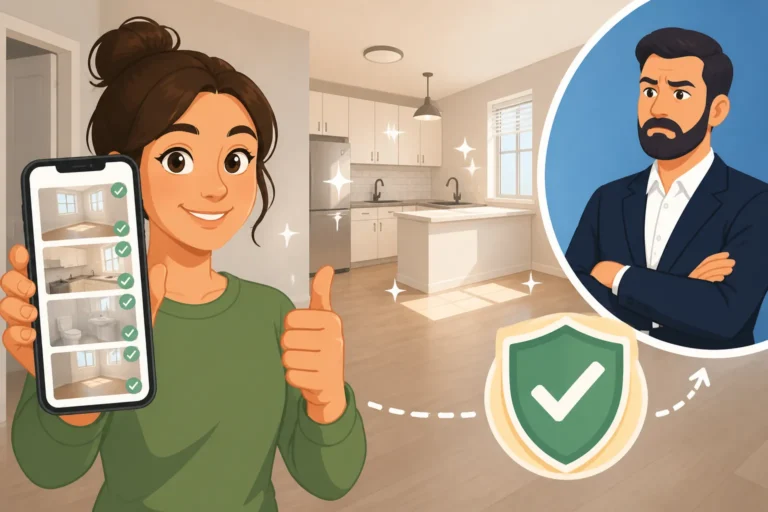
Before you lock the door for the last time, you must perform a thorough walk-through. Ideally, this should be done with the landlord present, but if they refuse, you must do it yourself. Use a Move-In / Move-Out Inspection Guide to ensure you don't miss anything. Take high-resolution photos and video of every room, including the inside of the oven, the back of closets, and the condition of the carpets.
Once you have these photos, send a digital link to them along with your forwarding address. This sends a clear message: "I have proof of the apartment's condition, and I have given you my address. I expect my deposit back." This level of preparation prevents the landlord from claiming common issues, such as Normal Wear and Tear vs Damage: Complete Guide, as reasons to keep your money. If they see that you have documented the "before and after" of your tenancy, they are much less likely to try and charge you for pre-existing scratches or aged paint.
Next Steps if the Deposit Never Arrives
If the state deadline passes and your mailbox is still empty, it is time to move from "friendly tenant" to "informed advocate." Silence from a landlord is often a tactic to see if you will just go away. Most people don't have the energy to fight over a few hundred dollars, but when you know the law, the process is much simpler than it seems.
Writing a Formal Demand Letter
The first formal step after a missed deadline is the demand letter. This is a final "warning shot" before you head to court. Using a Security Deposit Demand Letter (How-To + Template) from a site like LawDepot can help you strike the right tone—professional, firm, and legally grounded. In this letter, you should state the facts: when you moved out, when you provided your forwarding address, and exactly how many days have passed since the legal deadline.
A demand letter should be sent via certified mail. It often works because it forces the landlord to consult with their legal counsel or property management software, like TurboTenant, where they will see they are in the wrong. Many landlords who were "sitting" on a deposit will suddenly find the check and mail it the day they receive a formal demand. They know that if the case goes to court, they will likely lose and potentially owe you much more than the original amount.
Exploring Small Claims Court
If the demand letter fails, Suing a Landlord for Your Deposit (Small Claims & Penalties) is your final recourse. Small claims court is designed for people without lawyers. The filing fees are usually low (often between $30 and $100), and the rules of evidence are simplified. You will bring your lease, your photos from the move-out inspection, your certified mail receipt for the forwarding address, and your demand letter.
In court, the burden of proof is often on the landlord to justify why they kept the money. They must provide receipts and an Itemized Security Deposit Deduction Statement Explained. If they failed to provide this to your forwarding address within the state-mandated time, the judge may rule in your favor automatically. This is why that one simple step—sending your address—is the foundation of your entire legal strategy. Without it, you have no case; with it, you have a clear path to getting your money back.
Summary of Pro-Tenant Actions
- Document Everything: Never rely on a phone call. Use email or certified mail for all address updates.
- Know Your Dates: Mark the 14, 21, or 30-day deadline on your calendar based on your state's law.
- Take Photos: Your forwarding address gets the check to you, but your photos prove how much that check should be for.
- Be Persistent: If the landlord ignores you, use a demand letter. It is a low-cost, high-impact way to get results.
- Check Deductions: Review any withheld amounts against a list of What Can a Landlord Deduct From a Security Deposit? to ensure you aren't being charged for standard maintenance.
Disclaimer
This guide is intended for informational purposes only and does not constitute legal advice. Landlord-tenant laws vary significantly by state and municipality and are subject to change. If you are facing a specific legal dispute, you should consult with a qualified attorney or a local housing authority to understand the current statutes in your jurisdiction.