How Do I Prove My Apartment Was Clean at Move-Out?
The stress of moving out is already immense – packing, coordinating logistics, and saying goodbye to a space you've called home. But looming over it all is often the anxiety of getting your security deposit back. Nothing feels worse than meticulously cleaning every nook and cranny, only to have your landlord claim the apartment wasn't up to par and ding you for cleaning fees. This guide will walk you through concrete, actionable steps to prove your apartment was sparkling clean at move-out, safeguarding your hard-earned deposit.
The Critical Importance of Documenting Condition
When it comes to your security deposit, the burden of proof often falls on you, the tenant, to demonstrate that you left the property in good condition, minus normal wear and tear. Without solid evidence, it can become a "he said, she said" scenario, and landlords often have the upper hand. That's why meticulous documentation is your best friend.
Why Landlords Deduct for Cleaning
From a landlord's perspective, preparing an apartment for a new tenant involves a lot more than just a quick wipe-down. They need to ensure the unit is pristine, often to a professional standard, to attract new renters and maintain the property's value. This can involve deep cleaning carpets, scrubbing grout, degreasing kitchen appliances, and sanitizing bathrooms. If they feel these tasks haven't been completed adequately by the departing tenant, they’ll hire professional cleaners and pass the cost on, deducting it directly from your security deposit. It’s also important to remember the distinction between "normal wear and tear vs damage," which is a whole separate battle but often gets conflated with cleaning issues. Little scuffs on walls are normal wear; crayon marks are not.
The Security Deposit Link
Your security deposit is essentially a financial safeguard for your landlord, protecting them against damages, unpaid rent, and, yes, excessive cleaning needs beyond what's considered normal. Many states have specific Security Deposit Laws by State (2026) dictating what a landlord can and cannot deduct. If your landlord incurs costs because they believe you left the place excessively dirty, those costs will almost certainly come out of your deposit. This is why proving your cleanliness is paramount – it directly impacts the amount of your deposit you get back, and often, What Can a Landlord Deduct From a Security Deposit? is a contentious point. Without your proof, you're relying solely on their assessment.
Comprehensive Documentation Strategies
Protecting your deposit starts with having an ironclad record of your apartment's condition both at move-in and, more importantly for this discussion, at move-out. This isn't just about taking a few casual photos; it's about creating a comprehensive, undeniable portfolio of evidence.
The Power of Visual Evidence (Photos and Videos)
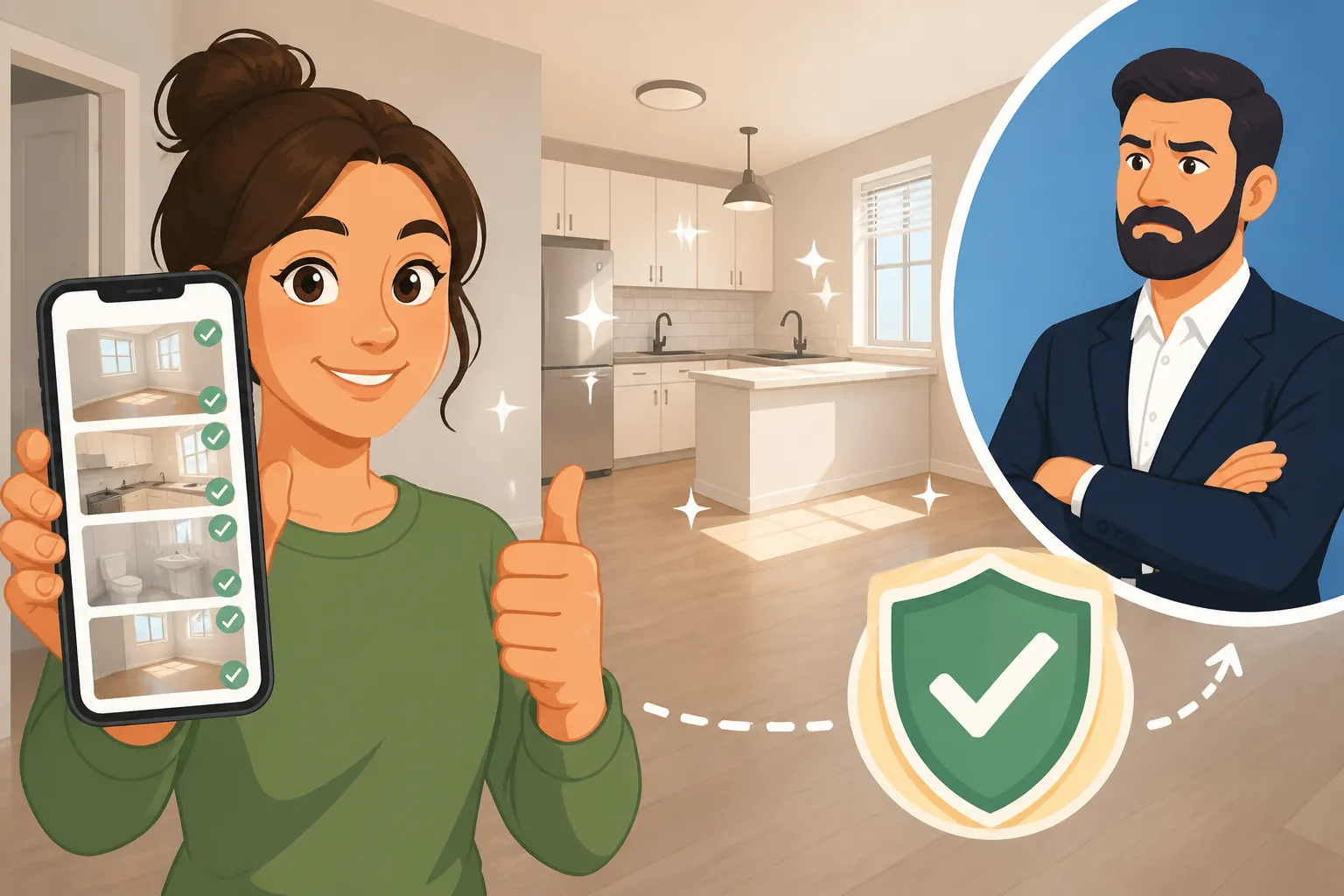
Visual proof is king. A picture truly is worth a thousand words when disputing a cleaning charge. You need to capture every inch of the apartment to show its pristine condition.
First, consider a video walkthrough. Start by panning slowly through each room, speaking aloud to narrate the date and time, and pointing out specific areas. Open cabinets, drawers, and appliance doors to show their interior cleanliness. Don't rush; a smooth, deliberate pace is key. Ensure your phone or camera's timestamp feature is enabled, or verbally state the date and time multiple times throughout the video. This timestamp can be crucial in verifying when the video was taken. For example, if your landlord claims the oven was dirty a week after you moved out, your timestamped video from your actual move-out day can refute that.
Second, supplement the video with high-resolution photos. Take wide-angle shots of each room from different angles to show the overall cleanliness. Then, zoom in on specific areas that are commonly disputed: the inside of the refrigerator, the oven and stovetop, bathroom fixtures, shower walls, baseboards, windowsills, and any flooring (especially carpets). Take photos of empty trash cans, swept floors, and spotless countertops. Don't forget areas like light fixtures, ceiling fans, and closets. Think like a detective looking for dirt, and then prove there's none. Remember to back up all these files on a cloud service or external hard drive immediately.
Written Records and Checklists
Visuals are powerful, but written documentation provides structure and detail that photos alone might miss. This is where a detailed move-out checklist comes into play.
Many landlords provide their own move-in/move-out checklists, but if yours doesn't, you can often find comprehensive templates online through resources like LawDepot or TurboTenant. Go through your apartment methodically, room by room, and check off every item as you clean it. Note specifics: "Bathroom mirror wiped clean, no streaks," "Oven completely degreased and shiny," "Baseboards free of dust and grime." Date and sign this checklist. This acts as your personal record of the efforts you made. It's an excellent way to organize your cleaning efforts and ensure nothing is overlooked.
Furthermore, ensure all communication with your landlord about cleaning expectations or any pre-existing damage is in writing. Email is great for this, as it creates an automatic paper trail. If you discuss cleaning verbally, follow up with an email summarizing the conversation. For example, "Following our call today, I understand you expect the carpets to be professionally steam-cleaned, which I will arrange, and I will be sure to deep clean the oven as discussed." This kind of record-keeping is vital, as it outlines agreed-upon responsibilities and timelines.
Witness and Third-Party Verification
Sometimes, having an extra set of eyes can make all the difference. If possible, invite a trusted friend or family member to walk through the apartment with you on your move-out day after you’ve finished cleaning. They can act as an impartial witness to the condition you left the property in. Ask them to sign and date your personal cleaning checklist, confirming they observed the apartment's clean state. While not as legally binding as a landlord's signature, it can add weight to your claim in a dispute.
Another powerful piece of evidence, especially for big-ticket items like carpets or major appliance cleaning, is a professional cleaning receipt. If your lease requires professional cleaning or if you simply choose to have it done, always get a detailed, itemized receipt from a reputable company. The receipt should include the date, the services rendered (e.g., "whole house deep clean," "carpet steam cleaning"), and the address of the property. This receipt proves that professional standards were met, making it much harder for a landlord to claim the area wasn't properly cleaned. This can be especially important if a landlord later tries to charge for carpet replacement when only a professional cleaning was needed, helping you understand Can a Landlord Charge for Carpet Replacement?.
Here’s a quick reference table for your move-out documentation:
| Document Type | Purpose | Key Details to Include | Retention Strategy |
|---|---|---|---|
| Photos | Visual proof of overall cleanliness and specific areas. | Date/Timestamp, wide shots, close-ups (e.g., inside oven). | Cloud storage, external hard drive, print important ones. |
| Video | Comprehensive walkthrough, showing condition and functionality. | Date/Timestamp, narration of condition, pan slowly. | Cloud storage, external hard drive. |
| Written Checklist | Detailed record of cleaning tasks completed. | Itemized list of areas/tasks, date, tenant signature, witness signature (if applicable). | Keep a physical copy and a digital scan. |
| Communication Log | Record of all landlord interactions regarding cleaning/condition. | Emails, text messages, notes from calls (with dates). | Keep digital records, print important emails. |
| Professional Receipts | Proof of services like professional cleaning, carpet cleaning. | Date, service provider, services rendered, property address, cost. | Keep original physical receipt and digital scan. |
| Move-In Inspection | Baseline comparison for move-out condition. | Dated, signed checklist from move-in with pre-existing damage. | Keep a physical copy and digital scan. |
The Move-In/Move-Out Inspection
One of the most crucial steps in protecting your security deposit is participating actively in both the move-in and move-out inspections. These formal walkthroughs establish the property's condition at two key points in your tenancy.
Scheduling and Conducting the Joint Inspection
Many states, like California, grant tenants the right to a pre-move-out inspection, often called an "initial inspection," typically within a specified number of days before their lease ends. This gives you a chance to address any identified issues and clean or repair items to avoid deductions. Check your state's Move-In / Move-Out Inspection Guide to understand your specific rights.
Always request a joint inspection with your landlord or their representative. This is your opportunity to literally walk through the apartment together, comparing its current state to its condition when you moved in. If your landlord points out something they deem dirty, you can address it on the spot if time allows, or at least document their concern. Take your detailed photos, videos, and cleaning checklist with you. If your landlord fails to show up for a scheduled joint inspection, document their absence. Send a follow-up email noting that you were present at the agreed-upon time and date, and that they did not appear. This demonstrates your willingness to cooperate and fulfill your responsibilities.
The Official Move-Out Inspection Report
After the inspection, your landlord should provide you with an official move-out inspection report. This document details any damage or cleaning issues they've identified. It’s absolutely critical that you review this report thoroughly. Compare their findings against your own comprehensive documentation, including your move-in condition report and all your move-out photos and videos.
If you disagree with any of their assessments, politely but firmly note your disagreements directly on the report, along with the reasons why (e.g., "Carpet stain noted, but photos from [date] show it was present at move-in" or "Kitchen floor listed as dirty, but was thoroughly scrubbed and photographed clean on [date]"). Sign the report, but make sure to add a note that your signature indicates receipt of the report, not necessarily agreement with its contents, if you disagree. Crucially, always obtain a signed copy of this report for your records. This document will be a cornerstone of any future dispute, so having your own copy with your annotations is paramount.
What to Do If a Dispute Arises
Despite your best efforts, sometimes landlords still attempt to make unfair deductions. This is when all your careful documentation becomes your strongest advocate. Don't despair; you have avenues to pursue.
Reviewing the Itemized Deduction Statement
After you move out, your landlord is typically required by state law to return your security deposit, or provide an Itemized Security Deposit Deduction Statement Explained, within a specific timeframe – often 14 to 30 days, depending on the state. For example, in California, a landlord has 21 days to return the deposit or provide an itemized statement. If they deduct any amount for cleaning or damages, the statement must clearly list each deduction, its purpose, and the exact cost.
When you receive this statement, scrutinize it. Do the charges seem reasonable? Do they align with the issues you observed during the joint inspection? Are they for "normal wear and tear vs damage," or actual excessive cleaning? For instance, if they charge you for "general cleaning" after you hired professional cleaners, that's a red flag. If they charge for a full carpet replacement when only a small section was soiled, that's also questionable, especially if your photos show only minor, easily cleanable issues. This is where your exhaustive move-out documentation, including photos, videos, and professional cleaning receipts, proves invaluable.
Challenging Unfair Deductions
If you believe your landlord has unfairly withheld part or all of your security deposit for cleaning, you need to formally dispute it. The first step is usually to send a detailed letter to your landlord. This isn't just a casual email; it's a formal Security Deposit Demand Letter (How-To + Template).
In this letter, clearly state that you dispute the deductions. Reference your lease agreement, state law, and, most importantly, provide specific counter-evidence. Attach copies of your move-in checklist, your move-out checklist, your timestamped photos and videos (perhaps links to a cloud folder), and any professional cleaning receipts. Explain calmly and factually why each deduction is unwarranted. For example, "You deducted $200 for kitchen cleaning; however, my photos and video from [date] clearly show a spotless kitchen, and I have a professional cleaning receipt from [Company Name] for deep cleaning the entire unit on [date]." Request the immediate return of the disputed amount within a specified, reasonable timeframe (e.g., 7-10 business days).
Understanding Legal Avenues
If your demand letter doesn't yield the desired result, your next step might be to explore legal action, typically in small claims court. Many tenants successfully sue a landlord for their deposit (Small Claims & Penalties). Be aware that some states offer significant penalties, like Double vs Treble Damages for Wrongful Withholding, meaning a landlord could owe you two or three times the amount of the wrongfully withheld deposit. This incentive is designed to discourage landlords from making frivolous deductions.
Before pursuing legal action, gather all your documentation: the lease, all communications, your move-in and move-out evidence, the landlord's itemized deduction statement, and your demand letter. Research your local landlord-tenant laws thoroughly, as they vary significantly by state and even city. Knowing your rights, such as Tenant Rights If Landlord Won't Return Deposit, will empower you in this process. While renter's insurance from providers like Lemonade offers liability coverage for accidental damage, protecting your deposit against wrongful cleaning deductions largely depends on your own diligent record-keeping and understanding of legal recourse.
Disclaimer
Please remember that this guide provides general information and is not a substitute for legal advice. Landlord-tenant laws vary significantly by jurisdiction. Always consult with a qualified attorney or housing authority in your area for advice tailored to your specific situation.