Tenant Rights With No Heat in Washington
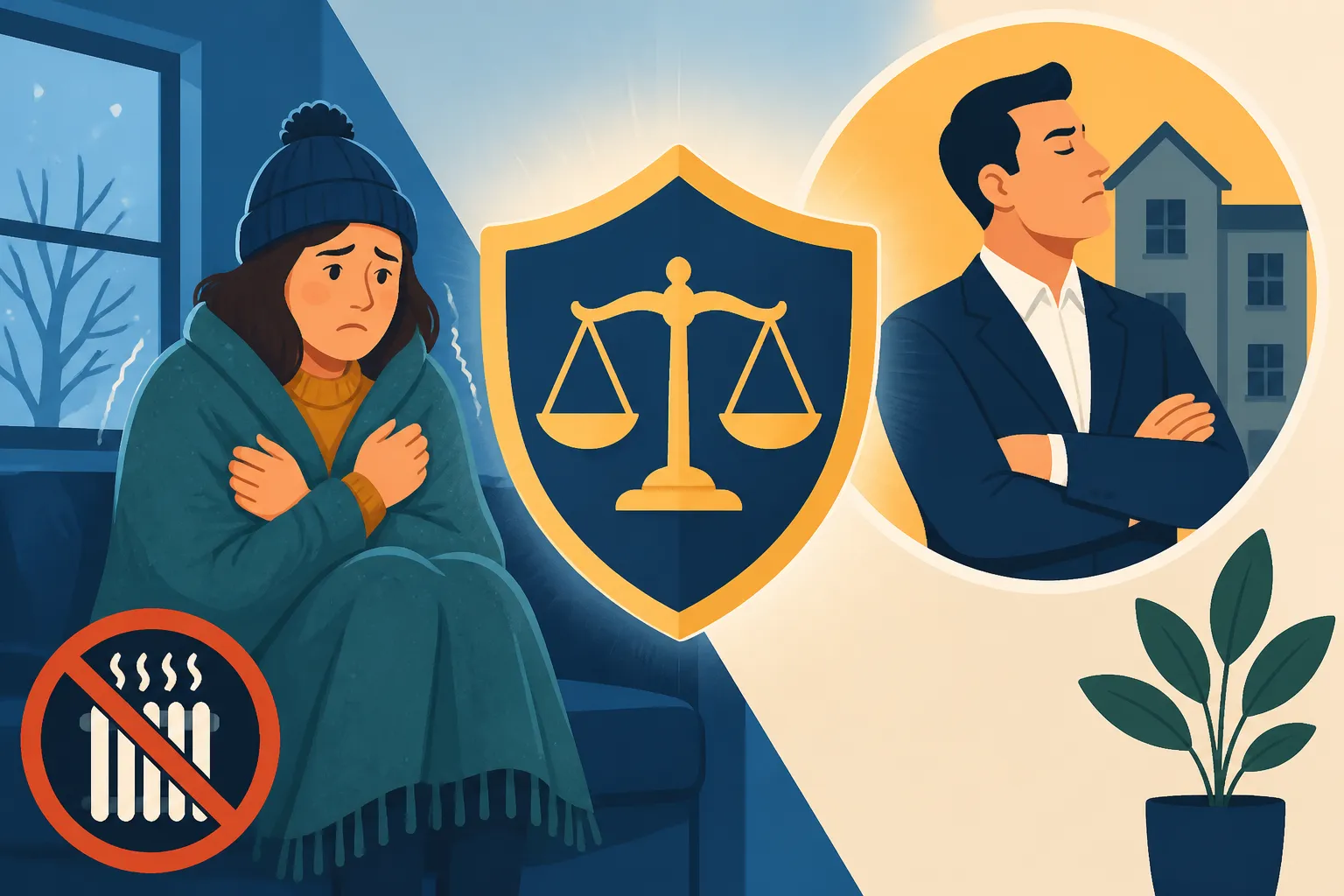
There’s nothing quite like the bone-chilling realization that your heater has stopped working, especially when the Pacific Northwest winter winds start to howl. It’s not just an inconvenience; it can be a genuine health and safety concern. If you’re a tenant in Washington State facing an apartment with no heat, you're likely feeling frustrated, cold, and maybe a little helpless. This guide is here to walk you through your tenant rights and the specific steps you can take to address a lack of heat in your rental property, ensuring you know exactly how to get your cozy haven back.
Understanding Your Right to Heat in Washington State
In Washington, like many states, tenants are protected by what’s known as the "implied warranty of habitability." This isn't something you have to write into your lease; it's a fundamental promise that your rental unit will be safe and livable, regardless of what your lease says. When it comes to essential services like heat, the law is pretty clear: landlords have a responsibility to keep your home warm.
The Implied Warranty of Habitability and Essential Services
The core of your right to heat in Washington State lies in RCW 59.18.060, which outlines the landlord's duties. This statute clearly states that a landlord must maintain the premises to substantially comply with any applicable code, statute, ordinance, or regulation governing their maintenance or operation. More importantly for our current discussion, it requires them to ensure that all heating facilities supplied are maintained in good working order. Heat is considered an "essential service" – meaning it's absolutely critical for your health and safety.
Imagine you're renting a charming bungalow in Seattle's Ballard neighborhood, and suddenly, in the middle of a January cold snap, your furnace completely gives up the ghost. The temperature inside your home starts dropping rapidly. Under the implied warranty of habitability, your landlord is legally obligated to address this promptly. They can’t just shrug their shoulders and say it’s not their problem. Your ability to live comfortably and safely in your rental hinges on having functional heat, and Washington law backs you up on this. This vital protection means you shouldn't have to shiver through the winter because your landlord is dragging their feet.
Landlord Responsibilities for Heating Systems
So, what exactly does "maintain in good working order" mean? It means your landlord must provide and maintain a functional heating system that can keep your home at a reasonable temperature. While specific temperature minimums aren't always explicitly listed in state law (some local ordinances might have them), generally, a dwelling is considered uninhabitable if it's too cold for a person to safely reside there.
This responsibility covers everything from the furnace itself to any pipes, radiators, or electric baseboard heaters that provide warmth. If there's an issue, whether it's a complete system breakdown, a pilot light that keeps going out, or inadequate heat output, it falls squarely on your landlord to fix it. This isn't about cosmetic repairs; it's about core functionality. If your landlord also provided a space heater upon move-in as part of the rental, they would also be responsible for its functionality, but generally, landlords are expected to provide a primary, built-in heating source. It’s also worth noting that this responsibility extends beyond just fixing existing issues; it includes ensuring the system is regularly maintained to prevent breakdowns, which is a proactive measure many good landlords take to ensure tenant comfort and avoid emergency repairs.
Taking Action When the Heat Goes Out
Finding yourself without heat can feel like an emergency, and in many cases, it is. Knowing the right steps to take—and the order in which to take them—can make all the difference in getting the issue resolved quickly and effectively, while also protecting your rights.
Notifying Your Landlord in Writing
The very first and most crucial step is to notify your landlord, property manager, or their designated contact person, and do it in writing. While a phone call might feel faster in the moment, a written notice provides an invaluable paper trail, documenting the exact date and time you reported the problem. This proof of notification is critical if you need to escalate the issue later.
When drafting your notice, be clear and concise. State the date, the specific issue (e.g., "The furnace is not producing heat," "The baseboard heaters in the living room are not working"), and the date the problem started. Include your unit number and contact information. You can send this via email, text message (if your lease allows for official communication this way), or certified mail with a return receipt requested. The more formal the method, the better, especially for serious issues like no heat. For instance, sending an email and following up with a certified letter ensures redundancy and indisputable proof. Many landlords use online portals or systems like TurboTenant for communication, which automatically create a digital record of all interactions, making it easier to track your repair requests. This ensures there's no misunderstanding about when the issue was reported and what the problem entails.
Allowing Reasonable Time for Repairs
After you've sent your written notice, your landlord is entitled to a "reasonable amount of time" to address the repair. In Washington State, for urgent issues like a lack of heat, the law specifies that landlords must begin to remedy the condition within 24 hours after receiving written notice if the defect deprives the tenant of heat, hot or cold water, or electricity. They then have a reasonable time to complete the repairs, but they must start within that initial 24-hour window.
What does "begin to remedy" mean? It could mean they schedule a technician, assess the problem themselves, or provide a temporary solution like a space heater. If they haven't initiated any action within 24 hours of your written notice, they are already in violation of their duties. For example, if your heat goes out on a Monday morning and you send a detailed email to your landlord, you should expect to hear back and see some action by Tuesday morning. If you don't, you've met your obligation, and they have not met theirs. Document every interaction, every phone call, every email, and the precise times these exchanges occurred. This record-keeping is vital for any future action you might need to take.
Documenting Everything
I cannot stress this enough: documentation is your best friend. From the moment you notice there’s no heat, start keeping a detailed log.
- Initial Notification: Keep copies of all written communication (emails, texts, certified mail receipts).
- Dates and Times: Note down when you discovered the problem, when you contacted the landlord, and when they responded (or didn't).
- Photos/Videos: Take pictures or videos showing thermometers in your home, especially if it's unusually cold. You can even use a phone app that measures ambient temperature. While it might not directly show the heat is off, it can certainly show the resulting discomfort.
- Communication Log: Maintain a log of all phone calls, including who you spoke to, the date, time, and what was discussed. Immediately follow up any phone conversation with an email confirming what was said. For instance, "Following up on our call at 2:30 PM today, [Landlord's Name], to confirm you will send a technician tomorrow regarding the heater."
- Expenses: Keep receipts for any related expenses, such as temporary heating solutions you had to purchase, or even hotel stays if the situation becomes unbearable and unsafe.
This meticulous record-keeping, often overlooked in the stress of the moment, will be invaluable if you need to pursue further legal action, initiate a repair-and-deduct scenario, or seek to break a lease for uninhabitable conditions. It demonstrates your good faith efforts and the landlord's lack thereof.
Legal Recourse for Tenants in Washington
If your landlord fails to restore heat within the legally mandated timeframe, you’re not without options. Washington State law provides several avenues for recourse, but each comes with its own set of rules and potential risks. It’s crucial to understand these thoroughly before proceeding.
Repair and Deduct
In Washington, one of the most common legal remedies for critical repair issues, including lack of heat, is the "repair and deduct" option. This allows you to arrange for the repair yourself and then deduct the cost from your next rent payment. However, this isn't a free-for-all; there are very strict conditions you must meet:
- Proper Notice: You must have given your landlord proper written notice of the lack of heat.
- Landlord Failure: Your landlord must have failed to commence repairs within the 24-hour period for essential services like heat.
- Repair Limit: The repair costs cannot exceed one month's rent.
- Qualified Professional: The repair must be performed by a competent, licensed professional. You can't just fix it yourself unless you're a licensed HVAC technician.
- Proof: You must provide your landlord with copies of the repair receipts and an itemized statement showing the cost and the amount deducted from your rent.
For example, if your landlord in Spokane hasn't responded to your written notice about no heat within 24 hours, you could call a licensed HVAC technician. If the repair costs $800 and your rent is $1,500, you could pay the technician and then deduct $800 from your next month's rent, attaching the invoice to your payment. However, if the repair was $1,700, you could only deduct up to $1,500 (one month's rent), and you’d be on the hook for the remaining $200. This is a powerful tool, but because of the potential pitfalls and landlord disputes, understanding all the conditions outlined in the state's Repair and Deduct by State laws is paramount.
Withholding Rent or Rent Escrow
Generally, withholding rent is a risky move in Washington State and can lead to eviction for non-payment. Unlike some other states, Washington does not have a formal "rent escrow" statute that explicitly allows tenants to pay rent into a separate account until repairs are made.
However, if your landlord has failed to respond to a valid written notice to repair a serious defect (like no heat), and you have exhausted other remedies, you may be able to legally withhold rent, but it's often a defense against eviction rather than a proactive remedy. This is a complex legal area, and it's highly recommended to seek legal advice before taking this step. If you consider withholding rent, you must be prepared to demonstrate in court that the lack of heat made your unit uninhabitable, that you gave proper notice, and that the landlord failed to act. Even then, the safest course of action is often to pursue other remedies or deposit the rent into an escrow account held by a third party, like a legal aid society, if available, rather than keeping it yourself. You can learn more about the nuances by reading up on Withholding Rent & Rent Escrow.
Constructive Eviction and Lease Termination
If the lack of heat makes your rental property truly uninhabitable, and your landlord has failed to remedy the situation after proper notice and a reasonable amount of time, you might have grounds for "constructive eviction." This means the conditions are so bad that you are forced to move out, and the law treats it as if your landlord illegally evicted you.
To claim constructive eviction, you must:
- Provide proper written notice of the problem.
- Allow the landlord a reasonable time to fix it (24 hours for heat, then reasonable time to complete).
- Prove that the lack of heat rendered the property truly uninhabitable and that you were forced to vacate.
- Actually move out.
This is a very high bar and again, it's incredibly risky without legal counsel. If you successfully prove constructive eviction, you could be relieved of your obligation to pay future rent and potentially recover damages. However, if you move out and a court later finds the conditions were not uninhabitable enough to warrant constructive eviction, you could be liable for breaking your lease. For more detailed information on this complex issue, consider reviewing resources on Constructive Eviction Explained.
Seeking Legal Aid and Housing Authorities
When direct communication and legal remedies like repair and deduct aren't working, or if you feel overwhelmed by the legal complexities, it’s time to reach out for help.
- Legal Aid: Organizations like Legal Aid Works or other non-profit tenant advocacy groups in Washington State (such as the Tenants Union of Washington State) offer free or low-cost legal assistance to tenants. They can advise you on your specific situation, help you draft letters, and even represent you in court if necessary.
- Housing Authorities: Your local city or county housing authority might have an inspection department that can investigate code violations, including inadequate heating. Filing a complaint can lead to an official inspection and an order for your landlord to make repairs. Remember, landlords cannot retaliate against you for exercising your legal rights, including reporting them to housing authorities. You can learn more about this by exploring How to Report a Landlord Code Violations & Retaliation.
Navigating these steps can be daunting, but remember, you have rights. Don't hesitate to seek expert advice if you feel your landlord is neglecting their fundamental responsibilities.
Important Considerations Before Taking Action
Before you dive headfirst into legal action or even the repair and deduct process, it’s important to take a step back and consider a few critical points. Your actions, or inactions, can have significant consequences.
Understanding Tenant Responsibility for Heating Systems
While your landlord is primarily responsible for providing and maintaining a functional heating system, tenants also have responsibilities. For instance, if you caused the damage to the heating system (e.g., you tampered with the furnace, or something you did directly led to its breakdown), then the repair responsibility and cost might fall on you.
Additionally, tenants are typically responsible for routine maintenance that prevents common problems, such as changing air filters in forced-air systems regularly. Many landlords provide filters and instruct tenants on how often to change them. If a problem arose because you neglected such a simple, clearly communicated task, your landlord might argue you contributed to the problem. Always refer to your lease agreement for specific tenant maintenance responsibilities, but generally, major system repairs are never the tenant's burden. It’s also important to ensure you’re not blocking heating vents or radiators, which can impair the system’s effectiveness.
The Nuance of "Normal Wear and Tear" vs. Damage
When it comes to property conditions, there’s a distinct legal difference between "normal wear and tear" and actual damage. Normal wear and tear refers to the deterioration that occurs naturally with ordinary use over time, which the landlord is responsible for. Damage, however, is caused by abuse, neglect, or carelessness by the tenant or their guests, and the tenant is typically responsible for repairing it.
In the context of a heating system, a furnace simply dying of old age or a thermostat failing due to manufacturing defects is usually normal wear and tear, and thus the landlord's responsibility. If, however, you accidentally broke the thermostat off the wall, or misused a heating component in a way that caused a malfunction, that would be considered damage, and you would likely be on the hook for the repair. This distinction is particularly relevant if your landlord tries to claim you're responsible for the repair costs. Having a clear understanding of Normal Wear and Tear vs Damage Complete Guide can protect you.
Insurance and Personal Property Protection
Living in a rental always carries some risk, even with the best landlord. While your landlord’s insurance (if they have a policy with providers like Steadily or another landlord insurance specialist) covers the building itself and their liability, it typically does not cover your personal belongings.
This is where renter's insurance comes in. A good renter's insurance policy, perhaps from a provider like Lemonade, can protect your personal property against perils like fire, theft, or water damage. While it won't fix your broken heater, it could be crucial if, for example, a frozen pipe bursts due to lack of heat and damages your furniture. Many tenants overlook renter's insurance, assuming their landlord's policy covers everything, but that's a common misconception that can lead to significant financial loss. It provides peace of mind and an essential safety net for your valuables, no matter what happens with your heating system or other building components.
Here’s a quick overview of typical repair timelines for urgent issues in Washington:
| Type of Repair | Tenant Notice Required | Landlord Action Required | Timeline | Potential Recourse (after waiting period) |
|---|---|---|---|---|
| No Heat, Hot Water, Electricity, or Water | Written Notice | Commence remedy | 24 Hours | Repair & Deduct (up to 1 month's rent) |
| Major Appliances (refrigerator, oven) | Written Notice | Commence remedy | 72 Hours | Repair & Deduct (up to 1 month's rent) |
| Other Minor Repairs (non-urgent issues) | Written Notice | Commence remedy | 10 Days | Repair & Deduct (up to 1 month's rent) |
Note: These are general guidelines based on Washington state law (RCW 59.18.070). Always consult the specific statute and consider legal advice for your situation.
Understanding these deadlines and your corresponding rights, as detailed in articles like How Long Does a Landlord Have to Make Repairs By State and Reasonable Time for Repairs by State, empowers you to hold your landlord accountable and ensure your home remains habitable.
Disclaimer
Please remember that this article provides general information and is not a substitute for legal advice. Landlord-tenant laws can be complex and are subject to change, as well as vary by specific city or county ordinances within Washington State. If you are facing a serious issue with your rental, it is always recommended to consult with a qualified attorney or a tenant rights organization for advice tailored to your specific situation.