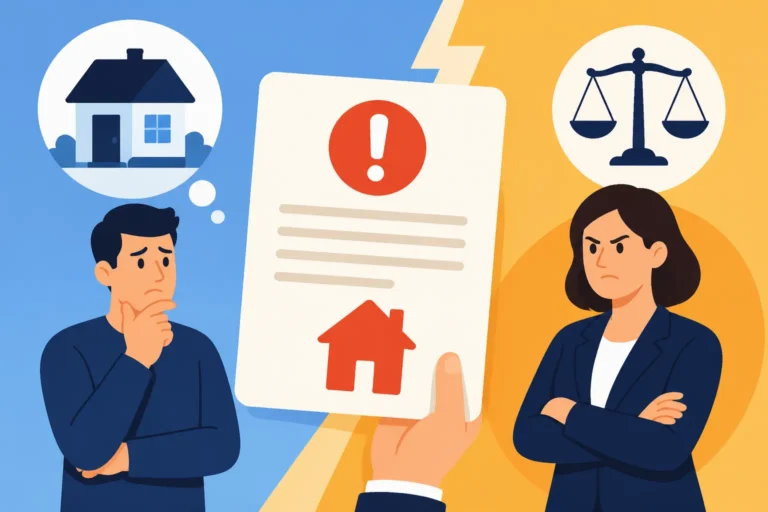
Retaliatory Eviction Defense
It's an awful feeling, isn't it? You've done everything right as a tenant – paid your rent, kept the place tidy, and maybe even had to speak up about a necessary repair or a habitability issue. Then, out of the blue, you get an eviction notice or a sudden, massive rent hike. It feels like punishment, a direct response to you exercising your rights. This guide is here to walk you through understanding, identifying, and most importantly, defending yourself against a retaliatory eviction.
Understanding Retaliatory Eviction
Let's face it, navigating the world of renting can feel like walking on eggshells, especially when you have to bring up issues with your landlord. A retaliatory eviction is essentially a landlord's way of punishing a tenant for exercising a legal right. It's not just unfair; in most places, it's illegal. Landlords are usually prohibited from trying to evict, raise rent, or decrease services as a direct response to a tenant's legitimate, protected actions.
Defining Retaliation in Landlord-Tenant Law
At its core, a retaliatory eviction occurs when a landlord takes an adverse action against a tenant because the tenant did something legally protected. This isn't about landlords having legitimate reasons for eviction, like non-payment of rent or serious lease violations. This is about a landlord trying to silence or punish a tenant for being an active, informed renter. The law recognizes that if tenants fear reprisal, they won't report issues, leading to unsafe living conditions and unchecked abuses.
For instance, imagine you live in an apartment where the roof has been leaking for weeks, causing significant water damage. You've sent multiple written requests to your landlord asking them to fix it, as it falls under their duty to maintain the "implied warranty of habitability." Suddenly, instead of fixing the roof, you receive a notice to vacate. This timing alone raises a huge red flag and strongly suggests a retaliatory motive. It's often difficult to prove intent, but the law typically looks at the timing of the landlord's adverse action in relation to the tenant's protected activity.
Common Scenarios Where Retaliation Occurs
Retaliation can manifest in many ways, and it’s not always a straightforward eviction notice. Sometimes it's more subtle, but still illegal. One of the most common scenarios involves tenants requesting essential repairs. Say your heat goes out in the dead of winter, and after multiple ignored calls, you send a formal letter requesting immediate repair, referencing your state's laws regarding landlord repair responsibilities. If, shortly after sending that letter, your landlord serves you with a "no-cause" eviction notice (where allowed), that's a classic sign of retaliation.
Another common scenario arises when tenants try to organize or join a tenants' union. Landlords might see this as a threat to their authority or profit margins. If you or your neighbors start discussing collective action regarding building issues and suddenly find your leases not being renewed or rents inexplicably soaring, this could be a form of retaliation. Even reporting a landlord to local housing authorities for code violations, like chronic pest infestations or unsafe electrical wiring, can unfortunately trigger a retaliatory response from a landlord who feels challenged or exposed. This is why understanding your rights is so crucial; you can't fight what you don't know.
Legal Protections Against Retaliation
The good news is that most states have laws specifically designed to protect tenants from landlord retaliation. These laws are a cornerstone of tenant rights, ensuring that renters can advocate for themselves and their living conditions without fear of losing their home.
State and Federal Anti-Retaliation Statutes
While there isn't one single federal law that covers all retaliatory evictions, the spirit of fair housing and tenant protection is often upheld through various state statutes. Many states have adopted provisions similar to the Uniform Residential Landlord and Tenant Act (URLTA), which explicitly prohibits landlords from retaliating against tenants for exercising certain rights. These rights commonly include complaining to a government agency about code violations, reporting unsafe conditions, or joining a tenant organization.
For example, in California, Civil Code Section 1942.5 is very clear. It states that a landlord cannot take action like evicting a tenant, increasing rent, or decreasing services within 180 days after a tenant has exercised specific rights, such as complaining about uninhabitable conditions. If a landlord does take such an action within this window, it's generally presumed to be retaliatory, and the landlord bears the burden of proving otherwise. This presumptive period is a huge advantage for tenants. Other states, like New Jersey, have similar strong protections, recognizing the power imbalance between landlords and tenants. It's crucial to look into your specific Security Deposit Laws by State (2026) or general tenant-landlord regulations, as these often contain anti-retaliation clauses.
Understanding the Rebuttable Presumption of Retaliation
Many state laws include what’s called a "rebuttable presumption" when it comes to retaliatory evictions. This is a powerful tool for tenants. It means that if a landlord takes an adverse action (like giving an eviction notice, raising rent significantly, or cutting off services) shortly after a tenant has engaged in a protected activity, the law presumes the landlord's action is retaliatory.
The burden then shifts to the landlord to prove that their action was not retaliatory and was based on a legitimate, non-discriminatory, non-retaliatory reason. For instance, if you complained about serious plumbing issues and two months later, your landlord tries to evict you, the court would likely presume it's retaliation. The landlord would then have to present compelling evidence that they had a genuine, legal reason for the eviction—perhaps you repeatedly violated a clear and documented clause in your lease unrelated to the repairs, or they had an imminent plan to sell the property that predated your complaint. Without such strong evidence, the presumption stands, giving you a strong defense. This is why documenting everything is so vital, as we'll discuss later.
Common Actions That Trigger Retaliation
Knowing what actions can trigger a landlord's illegal retaliation is key to protecting yourself. It's not about avoiding these actions—because you have a right to take them—but rather being prepared for a potential backlash and meticulously documenting your steps.
Reporting Housing Code Violations
One of the most frequent triggers for landlord retaliation is a tenant reporting housing code violations to a local authority. Imagine living in an apartment building in Chicago where the common areas haven't been maintained in years – broken stair rails, dim lighting, and persistent pest issues. You and your neighbors decide to file a complaint with the City of Chicago Department of Buildings. While this is your absolute right, and it's essential for safety and habitability, it often angers landlords who prefer to avoid the expense of bringing their properties up to code.
If your landlord subsequently serves you with an eviction notice or a sudden, drastic rent increase, it's highly suspicious. The law provides a channel for tenants to ensure their living conditions meet minimum safety and health standards. When landlords try to penalize tenants for using this channel, they are breaking the law. It’s important to understand the process for How to Report a Landlord (Code Violations & Retaliation) to ensure your complaint is filed correctly and officially, strengthening your case if retaliation occurs.
Requesting Essential Repairs and Maintenance
The "implied warranty of habitability" means that landlords have a fundamental responsibility to provide a safe and livable environment. This includes making necessary repairs to keep the property habitable. However, many landlords are slow to respond or try to cut corners. When tenants persistently request repairs for serious issues like a broken furnace in winter, a leaking roof, or persistent mold, it can sometimes be met with hostility.
Consider a situation where you’ve repeatedly asked your landlord to fix a persistent electrical issue in your apartment that causes frequent power outages. You've sent emails, made phone calls, and even used a formal Security Deposit Demand Letter (How-To + Template) for other issues, learning the importance of written communication. If, after your latest repair request, your landlord suddenly refuses to renew your lease, even though you’ve always been a good tenant, this could be a retaliatory action. Landlords are legally obligated to make repairs that affect habitability, and tenants have rights when a landlord won't fix anything. For more details on what landlords must fix and how quickly, you might want to look into How Long Does a Landlord Have to Make Repairs? (By State).
Exercising Lease Rights or Tenant Union Activities
Beyond repairs and code violations, tenants have various other rights under their lease and state law. This could include things like legally Withholding Rent & Rent Escrow if a landlord fails to make critical repairs after proper notice, organizing with other tenants to address common concerns, or even simply asserting a right outlined in the lease agreement that the landlord might be overlooking.
For instance, if your lease specifies a certain notice period for landlord entry, and you firmly remind your landlord of this rule when they attempt an unannounced entry, a retaliatory response could follow. Similarly, if you and your neighbors start discussing forming a tenant union to collectively negotiate better conditions or address systematic issues within the building, an unethical landlord might target perceived leaders or active members with eviction notices or punitive rent increases. These activities, aimed at improving living conditions or asserting legal rights, are fundamentally protected, and any adverse action taken by a landlord as a direct result is unlawful. LawDepot provides various legal templates that can help tenants formally assert their rights in a documented manner, which can be invaluable if you later need to prove that you were exercising a protected right.
Recognizing the Signs of a Retaliatory Eviction
Spotting a retaliatory eviction often comes down to timing and context. It’s rarely about a landlord explicitly stating, "I'm evicting you because you complained." Instead, it's about the suspicious confluence of events that strongly suggest an unlawful motive.
Suspicious Timing of Landlord Actions
The timing of your landlord's adverse action is often the strongest indicator of retaliation. If you just sent a certified letter to your landlord detailing numerous health and safety violations, or if you just contacted the local housing authority about a persistent mold issue, and within a matter of days or weeks you receive an eviction notice, it’s incredibly suspicious. Most states have a "presumptive period" (often 60 to 180 days) during which, if a landlord acts adversely after a tenant's protected action, the court assumes it's retaliation.
Think about it: before your complaint, everything seemed fine. Your rent was accepted, communication was normal, and there were no indications of an impending eviction. Then, after you exercise a right, the landlord suddenly declares a lease violation that was never mentioned before, or issues an eviction notice without cause where permitted. This sudden shift in behavior, especially immediately after a protected tenant action, is usually not a coincidence. It speaks volumes about the landlord's true motivation, even if they deny it. This rapid succession of events is a key piece of evidence when you are trying to prove your case.
Sudden and Unexplained Rent Increases or Service Reductions
Another glaring sign of retaliation is a sudden, significant rent increase that comes out of nowhere, especially after you've made a complaint or asserted a right. We're not talking about a reasonable increase tied to market rates at lease renewal, but rather an out-of-cycle, excessive hike clearly designed to make your apartment unaffordable. For instance, if you just reported your landlord for failing to provide adequate heat and suddenly your rent jumps by 30%, far exceeding normal market adjustments or what's allowed by How Much Can a Landlord Raise Rent? (Laws by State), that's a red flag.
Similarly, a landlord might reduce essential services in an attempt to make your living situation intolerable. This could mean suddenly cutting off your access to laundry facilities, canceling a previously included utility, or even letting common areas fall into disrepair when they previously maintained them. These actions aren't directly an eviction, but they're a form of "constructive eviction," designed to force you out. If these changes occur right after you've taken a protected action, it's highly likely the landlord is attempting to retaliate without explicitly using an eviction notice. This kind of behavior is often detailed in guides about What to Do If a Landlord Misses the Deposit Deadline or refuses to perform duties, showing how landlords may try to frustrate tenants into leaving.
Eviction Notices Following Lease Renewal Refusal
Sometimes, the retaliation isn't a direct eviction mid-lease, but rather a landlord's refusal to renew your lease, followed by an eviction notice at the end of your term. While landlords generally have the right not to renew a lease for many reasons, doing so immediately after a protected activity makes it suspect. If you've been a long-term, responsible tenant with no history of issues, and then after reporting a significant maintenance problem, your landlord suddenly decides not to offer a renewal, it's worth investigating.
This is particularly true in areas with "good cause" eviction laws, which require landlords to have a legitimate, non-retaliatory reason to evict a tenant or refuse a lease renewal. Even in areas without such strict laws, the timing remains critical. A landlord's sudden and unexplained change of heart about your tenancy, coming on the heels of you exercising a legal right, screams retaliation. You might want to review what happens in an Eviction vs Lease Non-Renewal situation in your state to understand your rights in this scenario.
Building Your Defense: Evidence is Key
When you’re facing a retaliatory eviction, the burden of proof initially often rests on you to show that your landlord's actions are indeed retaliatory. This is why having a robust collection of evidence is not just helpful, it's absolutely critical.
Documenting All Communications
Every single interaction you have with your landlord regarding issues, complaints, or your rights needs to be documented. This means sending emails, certified letters, or using online tenant portals where communications are automatically logged. Avoid purely verbal conversations whenever possible, or follow them up immediately with a written summary. For example, if you call your landlord about a persistent leak, follow up with an email: "Following our phone call today regarding the leak in my bathroom ceiling, I am reiterating my request for repair. As discussed, the leak is located…"
Include dates, times, and specific details. These records provide a clear timeline of events and demonstrate that you formally communicated your concerns. Think of it as building a chronological narrative of your tenancy. This paper trail will be invaluable in court, showing exactly when you made a complaint and when your landlord initiated their adverse action. Using a platform like DoorLoop or other property management software often has built-in communication logging features for landlords, which tenants can sometimes use for their own records, though direct email or certified mail is always best for tenant-initiated formal complaints.
Gathering Photographic and Video Evidence
When issues in your rental unit arise, visual evidence is incredibly powerful. Take clear, dated photographs and videos of any conditions you are complaining about. This includes mold, water damage, pest infestations, broken appliances, unsafe conditions, or anything else that demonstrates a breach of habitability. Make sure the date and time are clearly visible, or use an app that timestamps your photos.
For instance, if your landlord claims you caused damage, but you have photos from before you moved in (from your How to Document Your Apartment at Move-In inspection) and during your tenancy showing the issue, you can clearly refute their claims. If the ceiling started leaking after you requested a repair and your landlord did nothing, photos of the growing water stain over time become crucial. This visual proof can definitively show the condition of your unit and corroborate your written complaints, making it much harder for your landlord to deny the issues or justify their retaliatory actions.
Keeping Records of Rent Payments and Lease Agreements
While it might seem basic, having meticulous records of all rent payments is incredibly important. This proves you are upholding your end of the lease agreement and prevents the landlord from claiming non-payment as a legitimate reason for eviction. Keep copies of canceled checks, bank statements showing electronic transfers, or rent receipts. If you pay cash, always demand a receipt and keep it safe.
Your lease agreement is also a vital piece of evidence. It outlines all the terms and conditions of your tenancy, including your rights and responsibilities, and your landlord's obligations. If your landlord is attempting to evict you for a "lease violation," but that violation isn't clearly defined or covered in your agreement, your lease can serve as a defense. Furthermore, if your landlord is attempting an illegal rent increase or service reduction, your lease will show the original terms. Having a clear understanding of your Lease Renewals & Automatic Renewal Clauses can also help if the retaliation comes in the form of a non-renewal.
Steps to Take When Facing a Retaliatory Eviction
Facing an eviction is stressful, but understanding the steps you can take can empower you and significantly improve your chances of a successful defense. Don't panic; act strategically.
Do Not Self-Help or Withhold Rent Without Legal Counsel
It might be tempting to respond to a retaliatory eviction by stopping rent payments or engaging in other forms of self-help, but this is almost always a bad idea unless you've first consulted with a legal professional. While some states allow tenants to legally Withholding Rent & Rent Escrow under specific circumstances for serious habitability issues, doing so improperly can backfire and give your landlord a legitimate reason to evict you, undermining your retaliation defense.
Always seek legal advice before taking any action that could be construed as a lease violation. An attorney specializing in landlord-tenant law can assess your specific situation, inform you of your rights and local laws, and guide you on the safest and most effective course of action. They can also help you understand how to officially How to Answer an Eviction Lawsuit if you receive one, ensuring you meet all legal deadlines and requirements.
Respond Formally to Any Notices
If your landlord serves you with an eviction notice, a notice of non-renewal, or any other formal communication, you must respond formally and in writing. Do not ignore these notices, no matter how unfair they seem. Ignoring an eviction notice can lead to a default judgment against you, meaning the court will rule in favor of the landlord without hearing your side of the story.
Your written response should clearly state that you believe the landlord's action is retaliatory and cite the protected activity you engaged in (e.g., "I believe this notice to vacate is in retaliation for my formal complaint to the city housing authority on [date] regarding the ongoing rodent infestation."). Keep a copy of your response and send it via certified mail with a return receipt requested, or deliver it in a way that provides proof of receipt. If you are served with an "unlawful detainer" lawsuit, filing a formal answer is the only way to get your side heard in court.
Seek Legal Aid and Tenant Rights Organizations
Navigating the legal system, especially during an eviction, can be daunting. You don't have to do it alone. Reach out to local legal aid societies, tenant rights organizations, or housing advocacy groups. Many of these organizations offer free or low-cost legal assistance and advice to tenants facing eviction. They can help you understand the nuances of Security Deposit Laws by State (2026) or Eviction Process by State (Step-by-Step) and how they apply to your case.
These groups often have experience with retaliatory evictions and can provide invaluable guidance, connect you with attorneys, or even represent you in court. They understand the local court procedures and can help you gather the necessary documentation to present a strong defense. Websites like LawDepot can provide customizable legal documents, but an actual lawyer's advice for your specific situation is irreplaceable when your housing is on the line.
Legal Recourse and Potential Outcomes
Successfully defending against a retaliatory eviction isn't just about preventing your landlord from kicking you out; it can also involve monetary compensation and sending a clear message that such behavior is unacceptable.
Using Retaliation as an Affirmative Defense
When your landlord files an eviction lawsuit (often called an "unlawful detainer" action), you can use retaliatory eviction as an "affirmative defense." This means you are essentially saying, "Yes, my landlord is trying to evict me, but their reason is illegal because it's retaliation for me exercising my legal rights." You would present all your documented evidence—communications, photos, timestamps—to the court, demonstrating the suspicious timing and context of your landlord's actions in relation to your protected activities.
For instance, if your landlord sends you an eviction notice for a minor lease violation after you complained about exposed wiring to the building inspector, you would present proof of that complaint (the official report, your written communication) and argue that the alleged lease violation is merely a pretext for their true, retaliatory motive. If the court agrees, the eviction attempt will be denied, and you will be allowed to remain in your home. This is the primary way tenants fight an eviction.
Potential Damages and Penalties for Landlords
If a court finds that a landlord engaged in illegal retaliation, the consequences for the landlord can be severe. Beyond simply denying the eviction, many states allow tenants to sue for damages. These damages can include actual damages (such as moving costs, temporary housing expenses if you were forced out, or the difference in rent for a new, more expensive unit) and sometimes punitive damages, which are designed to punish the landlord for their unlawful conduct and deter similar actions in the future.
In some states, like New York, landlords can face civil penalties for retaliatory actions. Some jurisdictions even allow for "double" or "treble damages" – meaning the landlord might have to pay two or three times the amount of actual damages suffered by the tenant. This is a powerful deterrent and can provide significant financial relief to a tenant who has been wronged. Understanding concepts like Double vs Treble Damages for Wrongful Withholding can illuminate the potential financial penalties a landlord could face for illegal actions. This recourse not only helps the individual tenant but also encourages landlords to abide by the law and respect tenant rights across the board. For landlords, using robust property management platforms like DoorLoop can help them stay compliant and avoid such costly legal battles by ensuring proper documentation and adherence to tenant protection laws.
Disclaimer
Please remember that this guide provides general information and is not a substitute for legal advice. Landlord-tenant laws vary significantly by state and even by city. Always consult with a qualified attorney or a tenant rights organization in your specific jurisdiction for advice tailored to your situation. Laws can change, and interpretations may differ based on specific circumstances.