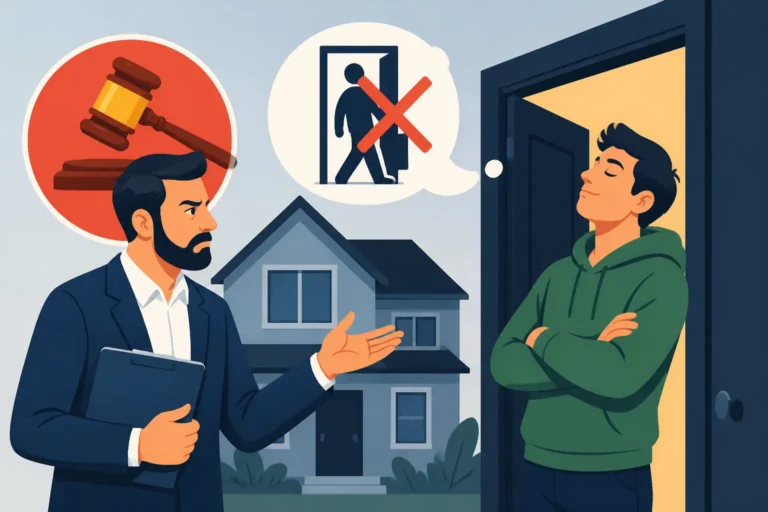
How Much Notice for Eviction Without Cause?
It's incredibly frustrating, isn't it? You've been paying your rent on time, taking care of your place, and then out of the blue, you get a notice saying your landlord wants you out, and it's not even because you did anything wrong. This "no-cause" eviction scenario can feel deeply unfair and leave you scrambling. This guide is here to walk you through exactly what a no-cause eviction notice means, how much time you really have, and what your rights are when your landlord decides it's time for you to go, without a specific reason to point to.
Understanding Eviction Without Cause
First off, let's clear up what "eviction without cause" actually means, because it's a term that often gets misunderstood. When we talk about an eviction without cause, we're generally referring to a situation where a landlord wants a tenant to vacate the property, but the tenant hasn't violated any terms of their lease agreement or done anything wrong. This is fundamentally different from an "eviction for cause," where a tenant might be evicted for nonpayment of rent, violating pet policies, or causing significant damage to the property.
Key Distinctions from "For Cause" Evictions
The main difference lies in the reason for the notice. With an eviction for cause, like a Eviction for Nonpayment of Rent or an Eviction for a Lease Violation, the landlord has a specific, documented reason that stems from the tenant's actions or inactions. The notice will detail the violation and often give the tenant an opportunity to "cure" the problem (fix it) or "quit" (move out). This is usually outlined in eviction notice types such as a "Pay or Quit" or "Cure or Quit" notice.
However, a "no-cause" scenario is different. There's no alleged wrongdoing on the tenant's part. It’s typically the landlord exercising their right to end a tenancy, often at the end of a lease term or during a month-to-month arrangement. It might feel arbitrary, but from a legal standpoint, if there's no fixed-term lease in effect or if the lease term is simply ending, a landlord often doesn't need to provide a reason beyond wanting to take back possession of their property.
Common Scenarios for No-Cause Evictions
So, when does a no-cause eviction typically come into play?
-
Ending a Month-to-Month Tenancy: This is the most common situation. If you're renting on a month-to-month basis, either because your initial fixed-term lease expired and automatically rolled over, or because you started with a month-to-month agreement from the beginning, your landlord usually has the right to terminate your tenancy without cause. They simply need to give you appropriate notice as dictated by state and local laws. This is one of the key differences when comparing Fixed-Term vs Month-to-Month Leases.
-
Non-Renewal of a Fixed-Term Lease: When your fixed-term lease is approaching its end date, your landlord might decide not to offer a renewal. While it's not technically an "eviction" during the lease, it's a request for you to vacate the property by the lease end date, and they don't need to provide a reason for their decision not to renew. This is usually governed by the terms surrounding Lease Renewals & Automatic Renewal Clauses. They can just send a "notice of non-renewal" and you're expected to move out by the end of your lease.
-
Owner Move-In or Major Renovations (in specific jurisdictions): In some areas, particularly those with strong tenant protections or "just cause" eviction laws, a landlord might be able to terminate a tenancy even during a fixed-term lease if they intend to move into the property themselves or undertake substantial renovations that require the unit to be vacant. These are often considered "no-fault" or "just cause" evictions, and while they require a reason, it's not due to tenant fault. These scenarios usually come with very specific requirements, longer notice periods, and sometimes even relocation assistance for the tenant.
It's crucial to understand that during an active, fixed-term lease, a landlord almost never has the right to evict a tenant without cause, unless there's a very specific clause in the lease that allows for it (which is rare and often heavily regulated), or if the property falls under an exception like owner move-in in a "just cause" jurisdiction. For most of us, if you have a year-long lease, you're generally protected for that entire term, provided you uphold your end of the bargain.
General Notice Period Requirements
The amount of notice a landlord must provide for a no-cause eviction isn't arbitrary; it's strictly governed by state and local laws. These laws are designed to give tenants a reasonable amount of time to find new housing and relocate, preventing people from being suddenly displaced.
Why Notice Periods Matter
Imagine if a landlord could just tell you, "Hey, I need you out by tomorrow!" It would throw your entire life into chaos. Notice periods are a fundamental tenant protection. They offer a buffer, a crucial window for you to:
- Search for a new place: Finding an apartment or house, especially in a tight rental market, takes time. You need to browse listings, schedule viewings, fill out applications, and wait for approvals.
- Handle logistics: Packing up an entire home isn't a weekend job. You need to declutter, organize, box belongings, arrange for movers, and transfer utilities.
- Financial planning: Moving is expensive, with security deposits, first month's rent, and moving costs. A notice period allows you to budget and save.
- Legal recourse: If you believe the no-cause eviction is retaliatory or illegal, the notice period gives you time to seek legal advice and understand your options, including potentially fighting the notice through avenues like How to Stop or Fight an Eviction Tenant Guide.
Without these mandated notice periods, tenants would be in a far more vulnerable position, subject to the whims of their landlords.
Common Notice Period Lengths
While specifics vary wildly by location, the most common notice periods you'll encounter for no-cause situations (primarily month-to-month tenancies or non-renewal of fixed leases) typically fall into these categories:
-
30-Day Notice: This is a very common minimum requirement in many states for month-to-month tenancies or when a lease is ending. It essentially means you have one full month from the date you receive the valid notice to vacate. For instance, if you get a notice on October 15th, your tenancy might terminate on November 30th (the end of the next full rental period).
-
60-Day Notice: This is increasingly common, especially in states or cities with higher tenant protections, or for tenants who have lived in a property for a longer duration (e.g., one year or more). California, for example, often requires a 60-day notice for tenants who have resided in a unit for over a year.
-
90-Day Notice: While less common for standard no-cause evictions, a 90-day notice might be required in specific circumstances, such as for tenants living in foreclosed properties, or in jurisdictions with exceptionally strong "just cause" eviction ordinances, often combined with specific reasons like owner move-in or substantial renovation. New York City, for instance, requires a 90-day notice for tenants who have lived in a unit for two years or more, or for those in rent-stabilized units.
It's also important to remember that these notice periods are minimums. A landlord can always choose to give you more notice than legally required, but they can never give you less. The specific deadline often depends on when your rent is due and how your state calculates "days" (e.g., calendar days vs. full rental periods). Some legal document providers like LawDepot offer customizable notice templates that help landlords ensure they are compliant with these varying requirements.
State-Specific Notice Requirements for No-Cause Evictions
This is where things get really granular, because there's no universal answer to "how much notice." Each state, and sometimes even individual cities, can have their own specific rules. It’s crucial to look up the laws for your particular location. When it comes to the general Eviction Process by State Step-by-Step, understanding these initial notice periods is the very first critical step.
Here's a breakdown of notice periods for terminating a month-to-month tenancy or for a landlord's non-renewal of a lease without cause, for several states. Keep in mind, these are general guidelines and local ordinances can add further protections.
| State | Tenancy Type/Duration | Minimum Notice Period | Notes |
|---|---|---|---|
| Alabama | Month-to-Month | 30 days | |
| California | All residential tenancies (subject to local law, up to 1 year) | 30 days | For tenants residing for 1+ years, it's generally 60 days. In some cities (e.g., Los Angeles, Oakland, San Francisco), "just cause" eviction laws might require relocation assistance or additional notice/grounds for specific no-fault evictions. |
| Florida | Month-to-Month or end of fixed term | 15 days | Notice must be given at least 15 days before the end of any monthly period. |
| New York | Month-to-Month or ending fixed term (varies by duration) | 30, 60, or 90 days | If tenant lived in unit for <1 year: 30 days. For 1-2 years: 60 days. For >2 years: 90 days. NYC and other localities have "just cause" eviction laws requiring specific reasons beyond non-renewal, like owner move-in. |
| Texas | Month-to-Month or ending fixed term | 30 days | Notice must be given at least one month in advance of the rental period it intends to terminate. For example, if rent is due on the 1st, notice on Oct 15th will terminate Nov 30th. |
| Washington | Month-to-Month or periodic tenancy (varies by duration) | 20 days | Requires 20-day notice for month-to-month tenancies or other periodic tenancies. Some cities (e.g., Seattle) have "just cause" eviction laws requiring specific reasons. |
| North Carolina | Month-to-Month or fixed term ending | 7 days | For a month-to-month tenancy, the landlord must give 7 days' notice. For fixed-term leases, the landlord is not required to renew, but must allow the lease to expire naturally. |
| (Please remember that cities with "just cause" eviction protections, such as San Francisco, Seattle, Los Angeles, and New York City, have complex rules. Always check local laws.) |
Disclaimer
This article is for general informational purposes only and does not constitute professional advice. Laws and regulations vary by location and change over time. Consult a qualified professional for guidance on your specific situation.