How Long Does a Landlord Have to Fix AC in Massachusetts?
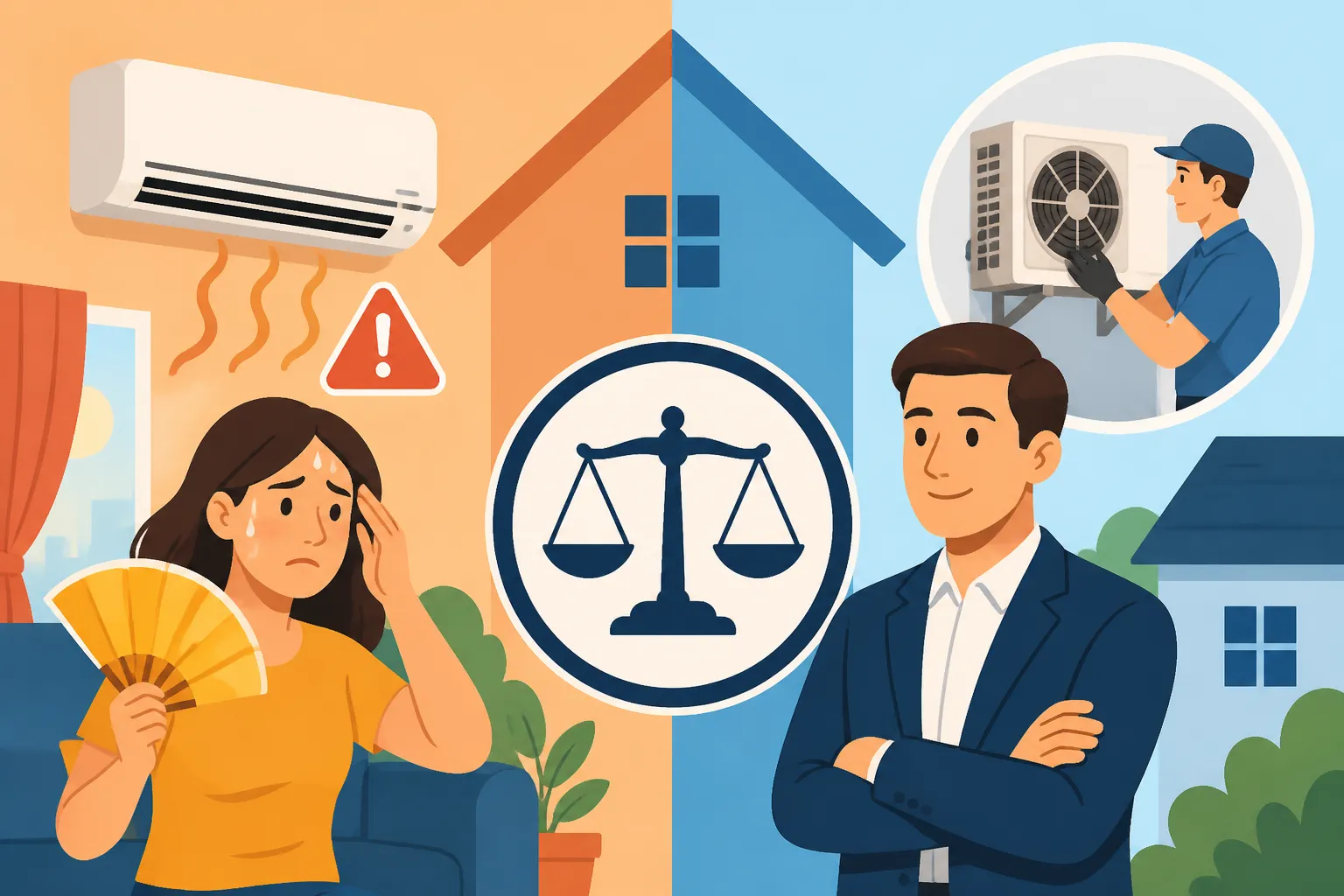
There are few things more frustrating than a broken air conditioner when the Massachusetts summer heat and humidity start to roll in. You're sweltering in your own home, feeling miserable, and wondering just how long your landlord can legally drag their feet before fixing it. This guide is designed to cut through the confusion and give you a clear understanding of your rights and the expected timelines for AC repairs in the Bay State.
Understanding Massachusetts Landlord-Tenant Law and AC
Navigating landlord-tenant law can feel like trying to decipher ancient texts, especially when you're uncomfortable in your own home. Massachusetts has specific regulations that dictate a landlord's responsibilities, but whether AC falls under those can be a bit nuanced.
The Implied Warranty of Habitability
At the heart of tenant rights in Massachusetts, and indeed across much of the country, is the concept of the implied warranty of habitability. This isn't something you'll typically see explicitly written in your lease, but it's an unspoken promise that your landlord makes: your rental unit will be safe, clean, and fit for human habitation. This means things like having a secure roof, working plumbing, heat during colder months, and freedom from pests.
Massachusetts General Laws Chapter 186, Section 14, and Chapter 239 are crucial here, as are the State Sanitary Code (105 CMR 410.000). These laws essentially state that a landlord must maintain the premises in a condition that is fit for occupancy and in compliance with health and safety codes. When a serious issue arises that makes your home truly unlivable – think no heat in winter, severe water leaks, or rodent infestations – your landlord is generally obligated to fix it promptly. You can learn more about the specifics of the Implied Warranty of Habitability Explained in detail.
Is AC Considered an "Essential Service" in Massachusetts?
Here's where it gets a little tricky with air conditioning. Unlike heat, which is almost universally considered an essential service during Massachusetts' chilly winters, AC isn't always given the same legal weight. Generally, state law views AC as an amenity rather than a necessity for habitability, unless it's explicitly stated as a provided amenity in your lease agreement or if extreme heat conditions create a health or safety hazard, especially for vulnerable individuals.
For example, if your lease specifically lists "central air conditioning" or "window AC unit included" as a feature of the apartment, then your landlord has a contractual obligation to ensure it's in working order. If the lease doesn't mention AC at all, and it's simply present as a convenience (perhaps left by a previous tenant or installed by the landlord as a bonus), then your landlord's legal obligation to repair it might be less direct. However, even if it's not a lease-defined essential, a prolonged AC outage during a severe heatwave could, in some extreme cases, render a unit unsafe, especially for elderly tenants, young children, or individuals with certain medical conditions. In such situations, the lack of AC could potentially cross the line into a habitability concern.
Massachusetts Regulations and Repair Timelines for AC
So, if your AC breaks, how long does your landlord really have to fix it? The answer often depends on what your lease says and the specific circumstances of the breakdown.
Lease Agreement Specifics
Your lease is your foundational document, the binding contract between you and your landlord. This is why it's so important to review it carefully before you sign, and to keep a copy on hand. If your lease agreement explicitly mentions air conditioning as an amenity that the landlord provides and maintains, then you have a strong legal leg to stand on.
Let's say your lease, perhaps drafted by a property manager using a platform like TurboTenant, clearly states, "Landlord provides and maintains central air conditioning." In this scenario, the AC is no longer just a nice-to-have; it's a guaranteed service. If it breaks, your landlord is contractually obligated to repair it. The timeline for that repair will then fall under the "reasonable time" clause for non-emergency repairs, which we'll discuss next. If your lease doesn't mention AC, and it was just a unit left behind, your landlord might argue they have no legal obligation to fix or replace it. This highlights the importance of clarifying all included amenities before signing.
"Reasonable Time" for Repairs
Massachusetts law doesn't provide a specific, hard-and-fast deadline for every single repair. Instead, it often refers to a "reasonable time" for landlords to address issues once they've been notified. What constitutes "reasonable" can be subjective and depends on several factors, including:
- Severity of the Issue: Is it a minor inconvenience or a major health hazard? A dripping faucet might have a longer "reasonable time" than a complete lack of heat in January.
- Availability of Parts/Technicians: Supply chain issues or a sudden influx of service calls (like during a heatwave) can legitimately extend repair times.
- Landlord's Diligence: Is your landlord actively trying to get it fixed, or are they ignoring your calls?
For AC, since it's typically not classified as an emergency like a lack of heat or a burst pipe, the "reasonable time" often falls into the category of routine or non-emergency repairs. This could mean anywhere from a few days to a couple of weeks, depending on the factors above. During a scorching summer in Massachusetts, with consecutive days of 90-degree heat and high humidity, what's "reasonable" might shorten considerably, especially if you have an elderly person or infant in the home.
However, if your lease does make AC an explicit amenity, the general expectation for landlords to address non-emergency issues is typically within 14 days of receiving proper written notice. Some sources even suggest 5-7 days for "urgent" but non-emergency repairs. For specific details on various repairs, you might want to consult a guide on How Long Does a Landlord Have to Make Repairs? (By State).
Emergency vs. Non-Emergency Repairs
Distinguishing between emergency and non-emergency repairs is critical because the expected response times are vastly different.
- Emergency Repairs: These are issues that directly threaten a tenant's health, safety, or the structural integrity of the property. Think no heat in winter, a major gas leak, a burst pipe causing severe water damage, or electrical hazards. For these, landlords are expected to act immediately – often within 24 hours or less – to make the situation safe, even if a full repair takes longer.
- Non-Emergency Repairs: These are issues that impact comfort or convenience but don't pose an immediate threat. A broken appliance (unless explicitly vital for habitability), a leaky faucet, or cosmetic damage typically falls into this category. The "reasonable time" rule applies here, usually allowing a landlord a week or two.
Where does AC fit? As mentioned, usually it's non-emergency. However, there are exceptions. If the indoor temperature becomes dangerously high (e.g., consistently above 85-90 degrees Fahrenheit) and creates a serious health risk, especially for those with health conditions, then the lack of AC could elevate to an emergency status. In such a case, a landlord might be expected to provide a temporary solution or expedite the repair significantly. It's important to understand that this is often a judgment call and not always a clear-cut legal definition.
Here's a quick reference table for general repair expectations in Massachusetts:
| Repair Type | Urgency Level | Typical "Reasonable Time" | AC Classification |
|---|---|---|---|
| No Heat (Winter) | Emergency | 24 hours | N/A |
| Burst Pipes / Major Leaks | Emergency | 24-72 hours | N/A |
| Electrical Hazard | Emergency | 24-72 hours | N/A |
| No Hot Water | Urgent | 3-5 days | N/A |
| Pest Infestation (severe) | Urgent | 3-7 days | N/A |
| Broken AC (Lease says) | Non-Emergency | 7-14 days | Amenity/Contractual |
| Broken AC (No Lease) | Low | Discretionary | Convenience (not req.) |
| Minor Appliance Repair | Non-Emergency | 7-14 days | N/A |
Note: These are general guidelines. Specific situations, lease terms, and local ordinances can affect these timelines.
What to Do If Your Landlord Isn't Fixing the AC in Massachusetts
Dealing with a landlord who is unresponsive or slow to make repairs can feel incredibly disheartening. But you have options, and knowing them is your first step toward getting relief.
Document Everything and Send Written Notice
This cannot be stressed enough: documentation is your best friend. As soon as you discover the AC is broken, take photos or videos of any visible issues (leaks, error codes, non-functioning components). Note the date and time. Then, and this is crucial, notify your landlord in writing.
A phone call might feel faster, but it leaves no paper trail. Send an email, a certified letter, or use a tenant portal if your landlord provides one. Clearly state:
- The date and time of the notice.
- The specific issue (e.g., "The central air conditioning stopped working on June 15, 2026").
- How it's impacting you (e.g., "The indoor temperature is consistently above 85 degrees, making the apartment uncomfortable and difficult to sleep.").
- A request for prompt repair.
Keep copies of all correspondence. If you're unsure how to phrase it, a resource like How to Request Repairs in Writing can provide templates and guidance. This written record proves that you informed your landlord and when, which is vital if you need to take further action.
Options for Tenants
If your landlord fails to act within a reasonable timeframe after proper notice, Massachusetts law provides tenants with several potential avenues, though some are much riskier than others, especially for an amenity like AC that isn't always deemed "essential."
-
Repair and Deduct: Massachusetts allows tenants to make certain repairs themselves and deduct the cost from their rent, but this is a very strict and often complex process. The law permits this only for serious code violations that affect health and safety and that the landlord has failed to remedy after proper notice. The repair cannot cost more than one month's rent in any 12-month period, and the tenant must get a written estimate first. For AC, unless the lack of it is causing a severe, documented health hazard that rises to the level of a code violation, using the repair and deduct option for a broken AC is usually not advised and carries significant legal risk. You can face eviction for non-payment of rent if a judge disagrees with your assessment. Researching Repair and Deduct by State will show how truly complex this can be.
-
Withholding Rent: Similarly, Massachusetts allows tenants to withhold rent if a landlord fails to provide or maintain the premises in a habitable condition, in violation of the State Sanitary Code. However, like repair and deduct, this is generally reserved for severe issues directly impacting health and safety (e.g., no heat, no hot water, raw sewage). To legally withhold rent, you must:
- Notify your landlord in writing of the problem.
- Give them a "reasonable time" to fix it.
- Place the withheld rent into an escrow account, showing you're ready to pay once the repairs are made.
- Again, withholding rent for a broken AC, unless it's an extreme health emergency or explicitly stated as a required amenity in your lease, is a high-risk strategy that could lead to an Eviction for Nonpayment of Rent. It's strongly recommended to seek legal advice before attempting to Withholding Rent for Repairs.
-
Breaking the Lease: In situations where the rental unit becomes truly uninhabitable due to a landlord's failure to make essential repairs, tenants might have grounds to break their lease without penalty, a concept sometimes referred to as "constructive eviction." This is a last resort and, for AC specifically, would only apply in the most extreme circumstances where the lack of AC creates an objectively unsafe living environment and the landlord has completely failed to act after proper notice. Simply being uncomfortable, while frustrating, usually won't meet the high legal bar for breaking a lease. Learn more about Breaking a Lease for Uninhabitable Conditions.
Seeking External Help
If you've documented everything and your landlord is still failing to meet their obligations, especially if the AC is a lease-mandated amenity or posing a health risk, there are places you can turn for assistance:
- Local Housing Authorities: Many cities and towns in Massachusetts have housing departments or boards of health that can inspect rental properties for code violations and enforce compliance. They can often mediate disputes or issue orders to landlords to make repairs. For example, Boston's Inspectional Services Department (ISD) can conduct inspections and enforce the State Sanitary Code.
- Legal Aid Organizations: Non-profit legal services often offer free or low-cost advice to tenants, especially those with lower incomes. They can help you understand your rights, draft legal letters, and represent you in court if necessary.
- Tenant Unions or Advocacy Groups: Organizations like City Life/Vida Urbana in Boston or tenant associations in other communities provide support, advice, and collective action strategies for renters facing landlord issues.
- Small Claims Court: As a last resort, if you've incurred damages (e.g., medical bills due to heat-related illness, cost of temporary housing) because of your landlord's failure to repair a lease-mandated AC, you might be able to sue in small claims court.
For landlords, having proper documentation and demonstrating diligence in repairs can protect you. Companies like Steadily offer landlord insurance that might cover certain damages or liabilities related to property maintenance issues, though generally not the cost of routine repairs. For tenants, renter's insurance from providers like Lemonade can protect your personal belongings if, for example, a faulty AC unit causes a water leak that damages your property. However, it won't force your landlord to fix the AC.
Practical Tips for Tenants Dealing with AC Issues
Beyond understanding your legal rights, there are practical steps you can take to protect yourself and manage the situation when your AC goes out.
Proactive Steps at Move-In
The best defense is a good offense, as they say. When you first move into a new rental, especially if it has AC, be proactive:
- Read Your Lease Carefully: As discussed, if AC is important to you, ensure it's explicitly mentioned in the lease as an amenity provided and maintained by the landlord. If it's not, and there's an AC unit in the property, ask for a written addendum clarifying responsibility. This is also a good time to go through your Move-In / Move-Out Inspection Guide thoroughly.
- Document AC Condition: On your move-in checklist, thoroughly document the condition of the AC unit. Test it to ensure it's working. Take photos or videos of the unit, noting any existing damage or issues, no matter how minor. This way, your landlord can't claim you broke it later.
- Clarify Maintenance Expectations: Ask your landlord or property manager (perhaps one who uses services like TurboTenant) about their standard procedure for AC maintenance and repairs. Who do you call? What's the typical response time?
Coping Strategies During a Heatwave
While you're waiting for repairs, especially if it's not considered an emergency, dealing with a broken AC in a Massachusetts heatwave can be unbearable. Here are some strategies to help you cope:
- Stay Hydrated: Drink plenty of water throughout the day, even if you don't feel thirsty. Avoid sugary drinks, alcohol, and caffeine, which can dehydrate you.
- Use Fans: Even if they just circulate warm air, fans can help create a slight breeze and make you feel cooler. Placing a bowl of ice water in front of a fan can create a makeshift swamp cooler effect.
- Cool Showers/Baths: Taking cool showers or baths can significantly lower your body temperature. Even a cool foot soak can help.
- Light Clothing: Wear loose-fitting, lightweight, and light-colored clothing made of breathable fabrics like cotton.
- Close Blinds/Curtains: During the day, keep blinds, shades, or curtains closed, especially on windows that get direct sunlight, to block out heat.
- Avoid Using Heat-Generating Appliances: Try to avoid using your oven, stove, dishwasher, or dryer during the hottest parts of the day, as these can add significant heat to your apartment.
- Go to Cooler Places: If possible, spend time in air-conditioned public spaces like libraries, community centers, movie theaters, or shopping malls during the hottest hours.
- Apply Cold Compresses: Place a cold, damp cloth on your neck, wrists, or forehead.
- Limit Physical Activity: Avoid strenuous activities during the hottest parts of the day.
Remember, while these tips can offer temporary relief, your ultimate goal is to get the AC fixed. Keep up with your written communication and follow up diligently with your landlord.
Disclaimer
Please remember that this article provides general information and guidance regarding landlord-tenant laws in Massachusetts and should not be considered legal advice. Landlord-tenant laws can be complex and are subject to change, and specific situations may require different approaches. Always consult with a qualified legal professional or a tenant advocacy organization for advice tailored to your individual circumstances.