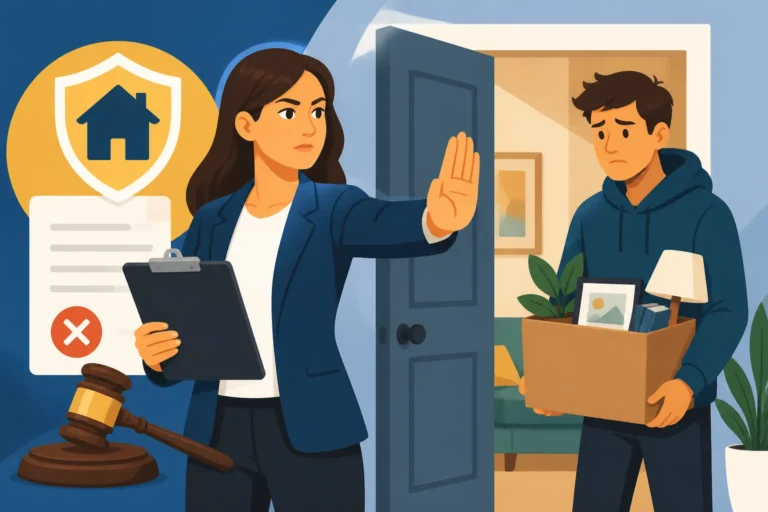
How to Evict a Tenant in South Dakota
Facing a tenant who just won't leave, or one who consistently breaks the rules, can feel incredibly frustrating and financially draining for a landlord. It's not just about losing rent; it's the stress, the uncertainty, and the feeling of having your property tied up. This comprehensive guide is here to walk you through the precise, legally mandated steps for how to evict a tenant in South Dakota, ensuring you protect your rights while navigating a complex process.
Understanding South Dakota's Eviction Landscape
Before you even think about issuing a notice, it's crucial to understand the foundation of landlord-tenant law in South Dakota. Eviction isn't just about telling someone to leave; it's a legal process with specific rules designed to protect both parties. Sidestepping these rules, even with good intentions, can land you in serious trouble.
Just Cause vs. No Cause Evictions
In South Dakota, most evictions require what's known as "just cause." This means you need a legitimate, legally recognized reason to terminate a tenancy and remove a tenant. You can't just wake up one morning and decide you want a tenant out because you don't like the color of their car.
-
Just Cause Evictions: These are the most common types and typically stem from a tenant's actions or inactions. The primary reasons include:
- Non-payment of Rent: This is perhaps the most straightforward and frequently cited reason. If a tenant fails to pay rent by the due date, and past any grace period, you generally have grounds to evict. It's important to remember that any amount of unpaid rent, even a partial payment, can constitute a default, although many landlords will try to work with tenants on partial payments if they are reasonable.
- Lease Violations: This covers a wide array of tenant behaviors or failures to adhere to the terms outlined in your rental agreement. This could be anything from unauthorized pets, excessive noise complaints, damage to the property, or violating occupancy limits. The key here is that the violation must be clearly stated in the lease. For example, if your lease explicitly forbids smoking indoors and your tenant is constantly puffing away, that's a violation. However, if your lease doesn't mention visitors, you can't evict them for having a friend stay for a week.
- Illegal Activity: If a tenant is engaging in illegal activities on the premises, such as drug manufacturing or dealing, it's a serious violation that can warrant a swift eviction process. This is often the most clear-cut "non-curable" violation.
- Expiration of Lease Term: While not technically an "eviction" in the traditional sense, if a fixed-term lease expires and the tenant refuses to move out, you can pursue an eviction action to regain possession. The tenant no longer has a legal right to occupy the property.
-
No Cause Evictions (for Month-to-Month Tenancies): For month-to-month agreements, landlords in South Dakota generally have the right to terminate the tenancy without needing a specific "cause," provided they give adequate notice. This means you don't need to state a reason like non-payment or a lease violation. You simply decide you want to end the tenancy. This is a crucial distinction, as it offers landlords more flexibility when they need to make changes to their property or management style without proving a fault on the tenant's part. However, even in a "no cause" scenario, you cannot terminate a tenancy for discriminatory or retaliatory reasons.
Key Terminology and Legal Actors
Navigating the eviction process means understanding the language of the court system and who does what. It can feel like learning a new language, but these terms are fundamental to protecting your interests.
- Unlawful Detainer Action: This is the formal legal term for an eviction lawsuit in South Dakota. It's the court process by which a landlord seeks to remove a tenant and regain possession of their property. When you file for eviction, you're initiating an unlawful detainer action. It's not a criminal proceeding; it's a civil one, focused on possession of the property and, often, recovery of unpaid rent or damages.
- Notice to Quit: This is the very first formal step in most eviction processes. It's a written document from the landlord to the tenant, informing them that they must either correct a lease violation (like paying overdue rent) or vacate the property by a certain date. The type of notice and the time period it provides are strictly defined by South Dakota law based on the reason for eviction. Getting this notice wrong can cause significant delays.
- Summons and Complaint: If the tenant doesn't comply with the Notice to Quit, the landlord files a "Complaint" with the court, detailing the reasons for eviction. The court then issues a "Summons," which is a formal document notifying the tenant that a lawsuit has been filed against them and that they must respond by a specific deadline. These documents are legally binding and must be served on the tenant properly.
- Plaintiff and Defendant: In an eviction lawsuit, you, the landlord, are the "Plaintiff" (the one bringing the suit). The tenant is the "Defendant" (the one being sued).
- Circuit Court: In South Dakota, unlawful detainer actions are typically heard in the Circuit Courts. This is where you'll file your paperwork and attend any hearings. Each county in South Dakota has a Circuit Court, and you'll file in the county where the rental property is located.
- Sheriff: If the court rules in your favor and the tenant still refuses to leave, the sheriff's department is the only legal entity authorized to physically remove a tenant and their belongings from the property. This comes after the court issues a "Writ of Restitution." It's critical to understand that landlords cannot physically remove tenants themselves; this is considered an illegal "self-help" eviction.
- Writ of Restitution: This is the court order issued after a landlord wins an unlawful detainer judgment. It authorizes the sheriff to restore possession of the rental property to the landlord by removing the tenant and their possessions. This is essentially the green light for the final step of physical removal.
Understanding these foundational concepts and the roles of the various parties involved will demystify the eviction process and help you proceed with confidence, knowing you're following the legal framework.
Step-by-Step Eviction Process in South Dakota
Evicting a tenant in South Dakota is a structured legal process, and skipping even one step can set you back significantly. It’s not a quick fix, but a deliberate series of actions designed to ensure due process.
Step 1: Providing Proper Notice to Quit
This is your crucial first official step. The "Notice to Quit" isn't just a polite request; it's a formal legal document that must be correctly worded and properly served to the tenant. The type of notice and the time period it gives the tenant depend entirely on the reason for the eviction. You want to make sure you use the right one, or you might have to start over. For example, if you need to create official legal documents like these, online resources such as LawDepot can be incredibly helpful for generating state-specific forms.
-
Notice for Non-Payment of Rent: If your tenant hasn't paid rent, South Dakota law requires you to give them a 3-day written notice to quit. This notice must clearly state the exact amount of rent owed, the period for which it's owed, and that the tenant has three days to either pay the full amount or vacate the premises. If they pay within these three days, the tenancy continues, and you generally cannot proceed with an eviction based on that specific instance of non-payment. This 3-day window is a strict requirement.
- Scenario: Let's say your tenant, Sarah, was supposed to pay rent on the 1st, but by the 5th, she still hasn't. You'd serve her a 3-day notice on the 5th, giving her until the end of the 8th to pay the full amount. If she doesn't, you can move to the next step.
-
Notice for Lease Violations: For tenants who violate a term of their lease agreement (other than non-payment of rent), South Dakota also requires a 3-day written notice to quit. This notice must specifically detail the lease violation. What's important here is whether the violation is "curable" or "non-curable."
- Curable Violations: These are violations that the tenant can fix. For instance, if the lease prohibits pets and the tenant gets a dog, the notice would state that they have three days to remove the pet or vacate. If they remove the pet, the tenancy continues.
- Non-Curable Violations: These are violations that, once committed, cannot be undone. Severe property damage, engaging in illegal activities, or repeated serious violations despite prior warnings often fall into this category. In such cases, the 3-day notice simply states that the tenancy is terminated, and the tenant must vacate.
- Scenario: Imagine your lease states "no excessive noise after 10 PM." Your tenant, Mark, throws loud parties every weekend. You'd serve him a 3-day notice detailing the noise violation and stating he must cease the behavior or vacate. If he continues, that might be a non-curable, repeated violation.
-
Notice for Terminating a Month-to-Month Tenancy: If you have a month-to-month tenant and simply wish to end the tenancy without cause, you must provide a 30-day written notice. This notice simply states that the tenancy will terminate on a specific date, which must be at least 30 days from the date the notice is served.
- Scenario: You have a month-to-month tenant, and you've decided to sell the property. You would serve them a 30-day notice, giving them ample time to find new housing.
-
Notice for Week-to-Week or Tenancy at Will: For shorter, less formal arrangements, a 7-day written notice is typically required to terminate the tenancy.
-
Proper Service of Notice: This is where many landlords make mistakes. Simply slipping the notice under the door might not be considered proper service. In South Dakota, acceptable methods include:
- Personal Service: Handing the notice directly to the tenant. This is always the best method as it ensures they received it.
- Substituted Service: If the tenant isn't home, you can leave the notice with another person of suitable age and discretion at the rental property, and then mail a copy to the tenant.
- Posting and Mailing: If personal and substituted service aren't possible, you may be able to post the notice conspicuously on the property (e.g., on the front door) AND mail a copy to the tenant's last known address. Always check with local court rules for specifics, as some courts prefer a process server. It’s also wise to keep a copy of the notice and document how and when it was served.
Step 2: Filing an Eviction Lawsuit (Summons and Complaint)
If the tenant doesn't comply with your Notice to Quit—meaning they haven't paid rent, cured the violation, or moved out by the deadline—your next step is to initiate a formal eviction lawsuit, known as an unlawful detainer action, in the South Dakota Circuit Court. This isn't optional; you must go through the courts to legally remove a tenant.
- Where to File: You'll file your case in the Circuit Court of the county where your rental property is located. For example, if your property is in Sioux Falls, you'd file in the Minnehaha County Circuit Court.
- Preparing the Complaint: This document outlines your request to the court. It must include:
- The names of the landlord (Plaintiff) and tenant (Defendant).
- The address of the rental property.
- The specific reason(s) for the eviction (e.g., non-payment of rent, lease violation, holding over after lease expiration).
- A statement that proper notice was given to the tenant (and attach a copy of the notice).
- What you are requesting from the court (e.g., possession of the property, unpaid rent, court costs, attorney fees if your lease allows).
- Filing Fees: There will be a filing fee to initiate the lawsuit, which varies by court and county. You can typically find the current fee schedule on the South Dakota Unified Judicial System website or by contacting the clerk of court. These fees can sometimes be recouped from the tenant if you win your case.
- Issuance of Summons: Once your Complaint is filed, the court clerk will issue a "Summons." This is the official document that informs the tenant they are being sued and must respond to the court by a specific deadline (usually a set number of days after they receive the summons, often around 10-20 days in South Dakota).
- Serving the Summons and Complaint: Just like the Notice to Quit, the Summons and Complaint must be properly served on the tenant. This is a legal requirement, and improper service can lead to your case being dismissed. While you might be able to serve the Notice to Quit yourself, the Summons and Complaint usually require formal service by a neutral third party.
- Process Server: This is the most reliable method. A professional process server is familiar with all the legal requirements for service and can provide proof of service to the court.
- Sheriff's Department: You can also typically pay the county sheriff's department to serve the documents.
- Documenting Service: Whichever method you choose, ensure you receive a "Proof of Service" or "Affidavit of Service" which states when, where, and how the documents were served. You'll need to file this with the court.
After proper service, the tenant has a limited time to file an "Answer" with the court, either admitting, denying, or providing defenses to your claims. If they don't respond, you might be able to get a default judgment, which can speed up the process.
Step 3: The Court Hearing (Unlawful Detainer Action)
If the tenant files an answer to your lawsuit, or if the court requires it even in a default scenario, a court hearing will be scheduled. This is your day in court to present your case. This is where all your diligent record-keeping pays off.
- Preparation is Key:
- Bring all relevant documents: This includes your lease agreement, the Notice to Quit (with proof of service), rent ledgers showing unpaid balances, correspondence with the tenant (emails, texts, certified letters), photos or videos of property damage (if applicable), and any police reports if illegal activity was involved. Organize everything clearly.
- Witnesses: If you have witnesses (e.g., neighbors who can testify to excessive noise, a contractor who can attest to property damage), make sure they are available to appear.
- Be Professional: Dress appropriately, arrive on time, and address the judge respectfully. Stick to the facts and avoid emotional outbursts.
- What to Expect:
- The judge will hear arguments from both sides. You, as the landlord, will present your evidence first, explaining why you are seeking eviction.
- The tenant will then have an opportunity to present their defenses. Common tenant defenses include claims of improper notice, that the landlord failed to make necessary repairs, that the eviction is retaliatory, or that there was an agreement regarding payment.
- The judge may ask questions of both parties and witnesses.
- Possible Outcomes:
- Judgment for Landlord: If the judge agrees with your case and finds that you have proven your grounds for eviction, they will issue a judgment in your favor. This judgment typically grants you possession of the property and may also award you any unpaid rent, late fees, court costs, and potentially attorney's fees if your lease allows and you requested them.
- Judgment for Tenant: If the tenant successfully proves a valid defense, the judge may rule in their favor, allowing them to remain in the property. In this case, you would not be able to evict them based on that specific lawsuit.
- Settlement: Sometimes, before or during the hearing, the parties might reach a settlement agreement. This could involve the tenant agreeing to move out by a certain date in exchange for the landlord dropping claims for unpaid rent, or a payment plan. If a settlement is reached, the court will typically approve it, and it becomes a binding order.
- Continuance: The judge might decide to postpone the hearing if more information is needed or if one party has a legitimate reason for needing more time.
The most important takeaway here is documentation. The more thorough your records are, the stronger your case will be. Services like DoorLoop, designed for property management, can be instrumental in keeping all your tenant records, lease agreements, and payment histories meticulously organized and easily accessible for court.
Step 4: The Writ of Possession and Tenant Removal
Even after you win in court, the eviction isn't over until the tenant has physically left the property. If your tenant still refuses to vacate after the judgment, you'll need the court's final order to have them removed by law enforcement.
- Applying for the Writ of Restitution: In South Dakota, this final court order is called a Writ of Restitution. After the judge issues a judgment in your favor, you will typically need to formally request this writ from the court clerk. There may be an additional small fee for this. This document is what empowers the sheriff to act.
- Sheriff's Role in Physical Removal: Once the Writ of Restitution is issued, you will take it to the county sheriff's department. The sheriff will then schedule a time to go to the property and physically remove the tenant and their belongings.
- Notice to Tenant: The sheriff will typically post a notice on the tenant's door, informing them of the date and time of the scheduled lockout. This usually gives the tenant a final warning and a short window (e.g., 24-48 hours) to gather their belongings and leave voluntarily.
- Physical Eviction: If the tenant is still present at the scheduled time, the sheriff will oversee their removal. This is a somber process but necessary for the landlord to regain legal possession. The sheriff will ensure the tenant and anyone else residing there leaves the property.
- Tenant's Abandoned Property: South Dakota law has specific rules about how to handle any property a tenant leaves behind. Generally, you cannot simply throw it away.
- If the tenant leaves personal property, you must store it for a reasonable period, usually around 30 days, and send a notice to the tenant's last known address informing them where to retrieve their belongings.
- If the property is not claimed within the specified timeframe, you may then be able to dispose of it or sell it, deducting reasonable storage and sale costs from the proceeds. Any remaining funds may need to be held for the tenant. It's crucial to follow these rules precisely to avoid further legal issues. You definitely want to avoid claims of stolen property.
- Lockout and Possession: Once the sheriff has completed the removal, you can change the locks and officially regain possession of your property. This is the absolute final step in the formal eviction process.
The entire process, from serving the initial notice to the final physical removal, can take anywhere from a few weeks to several months in South Dakota, depending on how quickly the tenant responds, court schedules, and whether there are any complications or appeals. Patience and adherence to every legal step are paramount.
Common Challenges and Defenses for Landlords
Even when you believe you have a strong case, the eviction process can be full of surprises. Understanding potential pitfalls and tenant defenses is crucial for landlords in South Dakota. Being prepared can save you time, money, and a lot of headaches.
Navigating Tenant Defenses
Tenants have rights, and they may present various defenses in court to fight an eviction. If you're not prepared, these defenses can significantly delay or even derail your case.
- Improper Notice: This is one of the most common and effective tenant defenses. If your Notice to Quit was incorrectly filled out (e.g., wrong amount owed, incorrect dates), or if it wasn't served properly according to South Dakota law, the judge might dismiss your case. This means you'd have to start all over again, issuing a new, correct notice.
- Example: You give a tenant a 3-day notice for non-payment but only slip it under their door and don't mail a copy, even though you know they haven't been home for days. If the court finds this wasn't proper service, you're back to square one.
- Payment or Attempted Payment: A tenant might argue they paid the rent, or attempted to pay it, within the notice period. This is why meticulously documented rent ledgers and receipts for all payments are critical. If they have proof of payment (e.g., a bank statement showing a transfer, a money order receipt), your case for non-payment will likely fail.
- Uninhabitable Conditions / Breach of Implied Warranty of Habitability: Tenants can claim that you, as the landlord, failed to maintain the property in a safe and livable condition. This is known as a breach of the "implied warranty of habitability." For example, if there was no heat in winter, a severe mold problem, or a lack of running water, and you failed to fix these issues despite receiving written notice from the tenant, they might argue this justifies their withholding of rent or lease violation. For more on this, you can look into what the law says about the Implied Warranty of Habitability Explained.
- Crucial Point: For this defense to be valid, the tenant usually needs to prove they notified you in writing about the problems, and you failed to make repairs within a "reasonable time" (which can vary depending on the severity of the issue). They generally cannot just decide to withhold rent without proper procedure. In South Dakota, tenants typically cannot withhold rent outright; instead, they might have a "repair and deduct" right in certain circumstances or need to place rent into an escrow account, but these actions have strict requirements.
- Retaliation: If you try to evict a tenant shortly after they exercised a legal right (e.g., complaining to a housing authority about unsafe conditions, joining a tenant's union, or requesting legitimate repairs), the tenant might claim retaliatory eviction. South Dakota law protects tenants from landlord retaliation. If the court believes the eviction is retaliatory, it will likely be dismissed.
- Example: Your tenant reports a leaky roof to the city. A week later, you serve them a no-cause 30-day eviction notice. The tenant could argue this is retaliation, and if you can't provide a legitimate, non-retaliatory reason for the notice, the court might side with the tenant.
- Discrimination: Evicting a tenant based on their race, religion, national origin, gender, familial status, or disability is strictly illegal under federal Fair Housing Act laws, and South Dakota may have additional protected classes. If a tenant can prove the eviction is discriminatory, you face severe penalties.
- To avoid this: Ensure your eviction criteria and process are applied consistently to all tenants, regardless of their protected characteristics.
- Waiver: Sometimes, a landlord's actions can unintentionally waive their right to evict. For example, if you consistently accept late rent payments without enforcing late fees or notices, a tenant might argue you've waived your right to evict for a single late payment. This highlights the importance of consistent lease enforcement.
Avoiding Self-Help Evictions
This cannot be stressed enough: NEVER attempt a "self-help" eviction. In your frustration with a difficult tenant, it might seem like a quick solution to just change the locks or shut off their utilities, but these actions are illegal in South Dakota and carry severe penalties.
- What Constitutes a Self-Help Eviction:
- Changing Locks: Physically locking the tenant out of the property.
- Shutting Off Utilities: Disconnecting electricity, water, gas, or heat.
- Removing Tenant's Belongings: Taking the tenant's possessions out of the property.
- Threats or Harassment: Any action intended to intimidate or force a tenant to leave without a court order.
- Penalties in South Dakota: If a landlord engages in self-help eviction, the tenant can sue them. In South Dakota, a tenant who has been illegally locked out or had utilities unlawfully shut off may recover actual damages (e.g., cost of a hotel, new food if the refrigerator was unplugged) and up to two months' rent from the landlord. This can quickly add up to a substantial financial loss for you, on top of the legal fees. It will also not remove the tenant; you will still have to go through the proper legal eviction process. It’s far better to follow the legal path, even if it feels slow, than to incur these penalties and prolong the overall problem.
Mitigating Losses and Collecting Damages
Even with a successful eviction, you're likely facing financial losses from unpaid rent, potential property damage, and legal fees. South Dakota law does provide avenues for landlords to mitigate these losses and seek compensation.
- Duty to Mitigate Damages: In South Dakota, if a tenant breaks a lease or is evicted, you generally have a "duty to mitigate damages." This means you are legally obligated to make reasonable efforts to re-rent the property as quickly as possible. You can't just let the property sit vacant and expect the former tenant to pay rent for the entire remaining lease term. You must actively advertise the property, screen new tenants, and try to minimize the vacancy period.
- Example: If a tenant breaks a 12-month lease six months early, you must try to find a new tenant. If you find one in two months, the former tenant is generally only liable for those two months of lost rent, plus any other legitimate damages.
- Unpaid Rent and Late Fees: During the eviction process, you can include a claim for any unpaid back rent and accumulated late fees (if stipulated in your lease and compliant with South Dakota law) in your eviction lawsuit. If the court rules in your favor, these amounts will be part of your judgment.
- Property Damage Beyond Normal Wear and Tear: Your security deposit is the primary buffer for tenant-caused damage. However, if the cost of repairs for damage (beyond Normal Wear and Tear vs Damage Complete Guide) exceeds the security deposit amount, you can also sue the tenant for these additional damages in your eviction lawsuit or in a separate small claims action. Make sure you have clear documentation (move-in/move-out inspection checklists, photos, repair estimates, receipts) to prove the extent and cost of the damage.
- Court Costs and Attorney Fees: If your lease agreement includes a clause stating that the losing party in a legal dispute will pay the winning party's court costs and attorney fees, and the judge agrees, these can also be added to your judgment. However, not all judges automatically award attorney fees, even if the lease allows for it.
- Collecting the Judgment: Obtaining a judgment is one thing; collecting it is another. If the former tenant has assets or income, you may be able to pursue collection methods such as wage garnishment or bank account levies. However, if the tenant has no assets or declares bankruptcy, collecting can be challenging. Many landlords simply accept that some judgments may be difficult to collect.
- Property Management Software: Using a robust property management system like DoorLoop can streamline the entire process of tracking rent payments, documenting lease violations, storing inspection photos, and generating necessary reports, which makes mitigating losses and pursuing damages much more efficient. It centralizes all the information you need, ensuring nothing gets lost when you need to present it in court.
By understanding these potential challenges and preparing thoroughly, you can navigate the eviction process in South Dakota more effectively and protect your investments.
South Dakota Eviction Notice Requirements
| Reason for Eviction | Notice Type | Notice Period | Tenant's Action to Avoid Eviction |
|---|---|---|---|
| Non-payment of Rent | Notice to Quit | 3 Days | Pay full amount of overdue rent |
| Lease Violation (Curable) | Notice to Quit | 3 Days | Remedy the violation |
| Lease Violation (Non-Curable) | Notice to Quit | 3 Days | Vacate the premises |
| Month-to-Month Tenancy End | Notice of Termination | 30 Days | Vacate the premises |
| Week-to-Week Tenancy End | Notice of Termination | 7 Days | Vacate the premises |
| End of Fixed-Term Lease | No formal notice needed | N/A | Vacate upon lease expiration |
Remember, while no formal notice is typically required by law for a fixed-term lease ending, it's always a good practice to send a friendly reminder to the tenant about their upcoming move-out date. You can also explore options like a Lease Renewals & Automatic Renewal Clauses to clarify expectations. If you're looking for information specific to your state, check out the Security Deposit Laws by State (2026) for more insight into other landlord-tenant regulations. For those times when rent isn't paid, you'll want to be familiar with Eviction for Nonpayment of Rent. And if you're dealing with a tenant who has committed a specific breach, understanding Eviction for a Lease Violation is crucial. Should you ever wonder what happens after the legal proceedings, The Writ of Possession & Sheriff Removal section offers details. Finally, ensure your documentation is top-notch with a solid Move-In / Move-Out Inspection Guide.
Disclaimer
Please remember that this guide provides general information about landlord-tenant laws in South Dakota and is not a substitute for legal advice. Landlord-tenant laws can be complex and are subject to change. It is always recommended to consult with a qualified attorney or legal professional familiar with South Dakota landlord-tenant law for advice tailored to your specific situation.