How to Evict a Tenant in New York
Dealing with a tenant who isn't upholding their end of the lease can be one of the most stressful experiences a property owner faces. It’s not just about the lost rent; it's the time, emotional toll, and the feeling of your property being out of your control. If you're a landlord in New York State and find yourself needing to regain possession of your property, understanding the precise legal steps to evict a tenant is absolutely crucial. This comprehensive guide will walk you through everything you need to know to navigate the complex New York eviction process.
Understanding New York Eviction Laws
New York is often considered a tenant-friendly state, and its laws are designed to protect renters from unfair practices. This means landlords must follow specific, strict procedures to ensure a legal eviction, or they risk significant penalties. Rushing or trying to take shortcuts can cost you far more in the long run than doing things by the book.
Key Tenant Protections in New York State
The Housing Stability and Tenant Protection Act (HSTPA) of 2019 dramatically changed landlord-tenant dynamics across New York, especially concerning evictions. This legislation introduced several protections, including longer notice periods for rent increases and non-renewals, stricter rules for security deposits, and expanded tenant rights in eviction proceedings. For example, the law now mandates that landlords provide tenants with more notice before starting an eviction case, which directly impacts the timeline. Understanding these overarching protections is your first step; otherwise, you might inadvertently violate a tenant's rights, which could lead to your case being dismissed and potential fines.
Beyond statewide laws, specific localities, particularly New York City, have their own additional layers of tenant protection, including various rent control and rent stabilization programs. If your property falls under these categories, the grounds for eviction and the procedures involved become even more stringent, often requiring approval from specialized agencies before you can even think about court action. This complexity highlights why taking a measured and informed approach is paramount.
Legal Grounds for Eviction in New York
Before you can even consider moving forward with an eviction, you need a legitimate legal reason. New York law doesn't allow for "no-cause" evictions in many scenarios, especially for tenants with valid leases.
- Nonpayment of Rent: This is perhaps the most common reason for eviction. If a tenant fails to pay rent by the due date, you can initiate proceedings. However, you must first provide a specific notice, which we'll detail shortly. Remember, late fees have specific limitations, and you cannot demand an exorbitant amount in court.
- Lease Violations: A tenant who breaches a significant term of their lease agreement can be evicted. Common violations include unauthorized pets, excessive damage to the property beyond normal wear and tear, subletting without permission, or using the property for illegal activities. The violation must be substantial, and you must give the tenant a chance to "cure" (fix) the violation if it's curable. For example, if a tenant gets an unauthorized pet, you generally must give them a chance to remove the pet before proceeding to eviction.
- Holdover Tenants (Lease Expiration): When a tenant's lease term ends and they refuse to move out, they become a "holdover" tenant. While this seems straightforward, under HSTPA, landlords must provide a much longer notice of non-renewal, depending on how long the tenant has lived in the property. For instance, if a tenant has occupied the premises for one year but less than two, you need to provide at least 60 days' notice. If they've been there for two years or more, it jumps to 90 days. This is a critical change to be aware of.
- Illegal Activity: If a tenant is engaging in illegal activities on the premises, such as drug dealing or operating an illegal business, this can be grounds for eviction. These cases are often more complex and may involve law enforcement.
- Owner Occupancy or Demolition: In some specific, highly regulated situations, a landlord may be able to evict a tenant if they genuinely intend to occupy the unit themselves or demolish the building. These grounds are usually subject to strict scrutiny and various conditions, especially in rent-controlled or rent-stabilized units.
Knowing your specific legal ground is the bedrock of a successful eviction. Without it, your case will likely fail.
The New York Eviction Process Step-by-Step
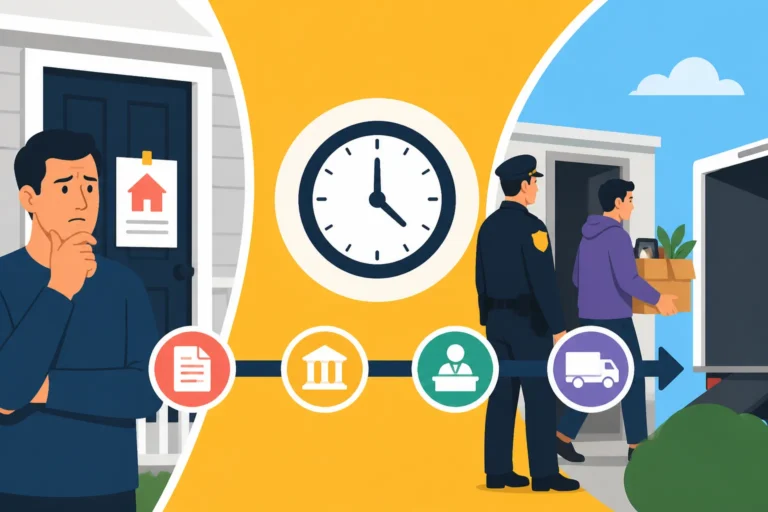
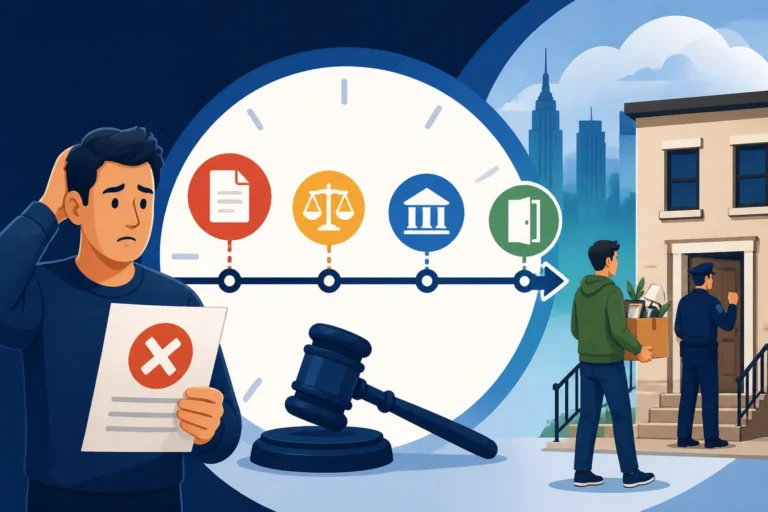
Navigating the eviction process in New York is a multi-step journey that requires precision and adherence to strict legal timelines. Missing a single step or failing to properly serve a notice can lead to significant delays, forcing you to restart the entire process, which can be both frustrating and costly.
Step 1: Serving the Correct Eviction Notice
This is where the eviction process officially begins. You can't just tell a tenant to leave; you must provide formal, written notice. The type of notice and the required timeframe depend entirely on your reason for eviction.
For nonpayment of rent, you'll issue a 3-Day Notice to Pay or Quit Explained if the lease allows, but under New York law, it's typically a 14-day notice to pay rent or vacate the premises. This notice informs the tenant that they owe rent and gives them a specific timeframe to either pay what's due or move out. If they pay within the 14 days, you generally cannot proceed with an eviction based on that specific missed payment.
For lease violations, you'll typically use a "Notice to Cure" or "Notice to Quit." A Notice to Cure gives the tenant a specified period (often 10 days, but can vary by lease or locality) to fix the violation. If they remedy the issue, the eviction process stops. If the violation is "incurable" (like significant property damage or illegal activity), or if the tenant fails to cure a curable violation, you then move to a Notice to Quit, which gives them a set number of days to vacate. For holdover tenants, as mentioned, you need to provide a 30, 60, or 90-day notice of non-renewal depending on the length of tenancy.
It's absolutely critical that these notices are prepared accurately and served correctly. Improper notice is one of the most common reasons eviction cases get dismissed. Many landlords find tools like those offered by LawDepot helpful for generating legally sound eviction notices tailored to New York State laws, ensuring they contain all necessary information and adhere to current regulations. Ensure the notice is delivered via certified mail, personal service, or another method explicitly allowed by New York law, and always keep proof of service.
Step 2: Filing and Serving the Court Papers
If the tenant fails to comply with the initial notice – meaning they haven't paid rent, cured the lease violation, or moved out after their lease expired – your next step is to initiate a lawsuit in court. This involves two primary documents: the Notice of Petition and the Petition.
The Petition is the formal complaint that outlines your case against the tenant. It includes details such as the property address, the names of the landlord and tenant, the reason for the eviction (e.g., nonpayment, lease violation), and the relief you are seeking (e.g., possession of the property, back rent). The Notice of Petition is the document that officially notifies the tenant that an eviction case has been filed against them and specifies the date, time, and location of their first court appearance.
In New York City, these cases are typically handled in Housing Court. Outside of NYC, they are often heard in Justice Courts (for towns and villages) or City Courts. You'll file these documents with the clerk of the appropriate court.
Once filed, these court papers must be served on the tenant according to strict legal rules. This usually involves "personal service" where a process server (not the landlord themselves!) hands the documents directly to the tenant. If personal service isn't possible after reasonable attempts, "substituted service" (leaving the papers with someone of suitable age and discretion at the property, plus mailing copies) or "conspicuous place service" (taping to the door, plus mailing) may be allowed, but always check local rules. Again, keeping meticulous records of how and when the papers were served is non-negotiable. This step formally notifies the tenant of the legal proceedings and the upcoming hearing, giving them their opportunity to respond.
Step 3: Attending the Court Hearing
After the court papers are filed and properly served, a court date will be set. Both landlord and tenant are expected to appear. This initial appearance might not be a full trial but rather a conference or an opportunity for the tenant to officially respond to the petition.
In many New York courts, especially Housing Courts in NYC, there's often an opportunity for mediation. This is where a neutral third party helps both sides try to reach a settlement agreement. Common settlements involve payment plans for back rent, agreements to vacate by a certain date, or arrangements to cure lease violations. Mediation can be a good option because it's often quicker, less stressful, and less expensive than a full trial.
If mediation fails, or if either party is unwilling to settle, the case will proceed to a trial. During a trial, both the landlord and the tenant will present their evidence, call witnesses, and argue their case before a judge or housing court attorney. The burden of proof is on the landlord to demonstrate that the eviction is legally justified. This is where your diligent record-keeping, from the initial lease agreement to rent payment records, communication logs, and photos of damages or violations, becomes invaluable. Understanding common tenant defenses, such as Retaliatory Eviction Defense or claims of unaddressed repair issues like those covered by the Implied Warranty of Habitability Explained, is also critical so you can prepare your counterarguments.
Step 4: Obtaining a Warrant of Eviction
If the court rules in your favor, a judgment will be issued, and crucially, a Warrant of Eviction. It’s important to understand that even after a favorable judgment, you still cannot physically remove the tenant yourself. The Warrant of Eviction is the only document that legally authorizes the physical removal of a tenant.
The Warrant of Eviction is then delivered to a local law enforcement officer – a City Marshal in New York City or a Sheriff outside of NYC. Once they receive the warrant, the Marshal or Sheriff will typically serve the tenant with a final written notice, often called a "Marshal's Notice" or "Sheriff's Notice." This notice informs the tenant of the impending eviction and gives them a minimum of 14 days (in most cases) to vacate the property voluntarily. This 14-day period is a critical tenant protection under New York law, providing a final window for the tenant to move their belongings and find new housing before being forcibly removed.
Step 5: The Actual Lockout
After the 14-day notice period (or whatever period is specified by the Marshal/Sheriff) has passed, and if the tenant still has not moved out, the Marshal or Sheriff will execute the Warrant of Eviction. This involves physically removing the tenant and their belongings from the property and officially changing the locks.
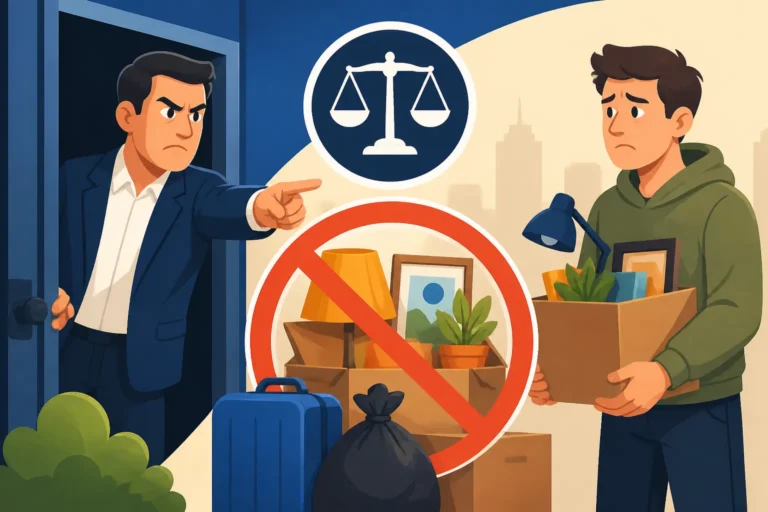
It cannot be stressed enough: only a City Marshal or Sheriff can perform the physical lockout. Landlords attempting to perform a self-help eviction – which includes changing locks, shutting off utilities, or removing a tenant's property – are engaging in illegal activities and face severe penalties under New York law. This could result in fines, damages awarded to the tenant, and even criminal charges. Understanding what happens after a What Happens After a Writ of Possession? is crucial for any landlord, as it clearly delineates responsibilities and tenant rights.
Common Pitfalls and How to Avoid Them
Navigating New York's eviction laws can feel like walking through a minefield. Many landlords, even with good intentions, make mistakes that can derail their case or lead to legal trouble. Being aware of these common pitfalls can save you immense headaches and financial strain.
The Dangers of Self-Help Evictions
This is perhaps the biggest and most dangerous trap for landlords in New York. Frustrated by non-paying or problematic tenants, some landlords are tempted to take matters into their own hands. This might look like changing locks, removing the tenant's belongings, shutting off utilities (heat, water, electricity), or even attempting to intimidate a tenant into leaving. Let me be clear: these actions are illegal in New York State. They are considered "self-help" evictions or Illegal Self-Help Eviction (Lockouts & Utility Shutoffs), and the penalties for landlords are severe.
A tenant who has been illegally locked out or had their utilities shut off can sue the landlord, potentially winning monetary damages, including treble damages (three times the actual damages suffered), and even being reinstated to the property. It's a lose-lose situation that undermines your legitimate legal claim and puts you in a legally precarious position. Always remember, the only legal way to remove a tenant who refuses to leave is through the court-ordered eviction process involving a Marshal or Sheriff.
Documenting Everything Meticulously
In any legal dispute, evidence is king. In an eviction case, impeccable documentation is your best defense and your strongest offense. This means keeping clear, organized records of absolutely everything related to your tenancy.
- Lease Agreement: A fully executed, clear, and comprehensive lease is your foundational document.
- Rent Payments: Maintain detailed records of all rent payments received, including dates and amounts. If rent is missed, note it immediately.
- Communication: Keep copies of all written communication with your tenant – emails, text messages, certified letters, notices to cure, etc. If you have verbal conversations, make a dated note summarizing the discussion.
- Property Condition: Document the condition of the property at move-in and any changes during the tenancy. How to Document Your Apartment at Move-In is a fantastic resource. Take dated photos and videos. This is vital if you're alleging property damage beyond normal wear and tear.
- Repair Requests and Responses: If the tenant claims you haven't made necessary repairs, having a clear log of their requests and your responses (or lack thereof, if that's the case) is crucial.
Platforms designed for property management, such as DoorLoop, can be incredibly helpful here. They allow landlords to centralize lease agreements, track rent payments, log communications, and store photos, creating a robust digital paper trail that can be easily accessed and presented in court. This level of organization simplifies the process and significantly strengthens your position if you ever need to file for Eviction for Nonpayment of Rent or Eviction for a Lease Violation.
Understanding Tenant Defenses
Tenants in New York have various legal defenses they can raise to challenge an eviction. Being prepared for these can help you build a stronger case.
- Retaliatory Eviction: A tenant might claim you're evicting them in retaliation for them exercising a legal right, such as reporting code violations, requesting repairs, or joining a tenant's union. If a tenant can prove this, your eviction case will likely be dismissed.
- Breach of Warranty of Habitability: New York law includes an Implied Warranty of Habitability Explained, meaning landlords must maintain the property in a safe and livable condition. If a tenant has repeatedly requested repairs for serious issues (like lack of heat, hot water, or pest infestations) and you haven't addressed them, they might argue that you breached this warranty, justifying their withholding of rent or challenging the eviction.
- Improper Notice or Service: As mentioned, failure to provide the correct eviction notice or improperly serving court papers are common procedural defenses that can lead to a case dismissal.
- Payment Plan or Agreement: If you and the tenant previously agreed to a payment plan for back rent, and the tenant adhered to it, they might use this as a defense against a nonpayment eviction.
It's essential to anticipate these defenses and have your documentation ready to prove your adherence to the law and your lease agreement. Knowing that tenants have rights and often legal counsel in New York City's Housing Court means you must be equally prepared.
Specific Considerations for New York City vs. Rest of State
While many eviction principles apply statewide, New York City operates under its own distinct set of rules and a highly specialized court system. Understanding these differences is vital for landlords with properties within the five boroughs.
NYC Housing Court Nuances
New York City's Housing Court is a high-volume, specialized court that deals exclusively with landlord-tenant matters. It has specific procedures, forms, and legal interpretations that can differ from Justice or City Courts in other parts of the state. The sheer volume of cases means proceedings can sometimes move slowly, and landlords must be exceptionally patient and organized.
One of the most significant differences is the "Right to Counsel" for tenants in NYC. This means that many low-income tenants facing eviction have access to free legal representation. While not universal, this program dramatically impacts the dynamics of Housing Court, as landlords are more likely to face a legally represented tenant, making the process even more challenging without legal assistance of their own. This makes proper legal advice and meticulous preparation more important than ever for NYC landlords. The courts also heavily emphasize mediation and settlement conferences, aiming to resolve cases without a full trial. Landlords should be prepared to engage in these discussions.
Rent Control and Rent Stabilization Implications
New York City, along with a few other localities in New York State (such as Albany, Buffalo, and Yonkers), has a significant number of rent-controlled and rent-stabilized apartments. If your property falls under these regulations, the grounds for eviction are far more limited than for unregulated apartments.
For rent-stabilized units, evictions are typically only allowed for "just cause," such as nonpayment of rent, nuisance, lease violations, or owner occupancy (with strict limitations). You cannot evict a tenant simply because their lease expired or you want to renovate, as you might with a market-rate apartment. Furthermore, rent increases and lease renewals are strictly regulated, impacting the conditions under which you might consider a holdover eviction. Before initiating an eviction for a rent-stabilized or rent-controlled unit, you may even need to seek approval from the New York State Homes and Community Renewal (HCR), the agency that oversees these programs. Ignoring these regulations can lead to immediate dismissal of your case and severe penalties. This additional layer of regulation means that Eviction Process by State (Step-by-Step) takes on added complexity in these specific areas.
These nuances underscore the importance of understanding the specific laws that govern your rental property, whether it's in Manhattan, Brooklyn, or a smaller town upstate.
Here’s a quick overview of typical notice periods in New York:
| Reason for Eviction | Typical Notice Period (Minimum) | Key Considerations |
|---|---|---|
| Nonpayment of Rent | 14-Day Notice to Pay or Quit | Tenant can avoid eviction by paying all rent due within 14 days. |
| Lease Violation (Curable) | 10-Day Notice to Cure | Tenant has 10 days to fix the violation. If cured, eviction stops. |
| Lease Violation (Incurable) | 30-Day Notice to Quit | For serious, unfixable violations (e.g., illegal activity). Can be shorter if specified in lease for serious breaches. |
| Holdover (Month-to-Month) | 30-Day Notice to Vacate | For tenants without a lease or whose lease expired. |
| Holdover (Lease Expiration) | 30, 60, or 90-Day Notice | Depends on tenancy length: 30 days (less than 1 yr), 60 days (1-2 yrs), 90 days (2+ yrs). |
| Owner Occupancy | 90-Day Notice | Highly regulated, especially for rent-controlled/stabilized units. |
| Illegal Activity | 30-Day Notice to Quit | Can sometimes be an Unconditional Quit Notice, depending on severity and local laws. |
Remember, these are general guidelines, and specific situations or local ordinances (especially in NYC) can alter these requirements. It's always best to consult with a landlord-tenant attorney to ensure you're using the correct notice and timeline for your unique circumstances. For comprehensive details on Eviction Notice Types (Pay or Quit, Cure or Quit, Unconditional), always double-check state and local statutes.
The entire Eviction Timeline: Every Stage Explained can be lengthy in New York, often stretching over several months, especially if the tenant fights the eviction. Persistence, patience, and impeccable legal adherence are your greatest assets as a landlord in New York. If you want to know how to effectively How to Remove a Tenant Who Won't Leave, it all comes back to following the process carefully.
Disclaimer
The information provided in this guide is intended for informational purposes only and does not constitute legal advice. Landlord-tenant laws, especially in New York, are complex and subject to change. It is highly recommended that you consult with a qualified attorney in your specific jurisdiction for advice regarding your individual situation.