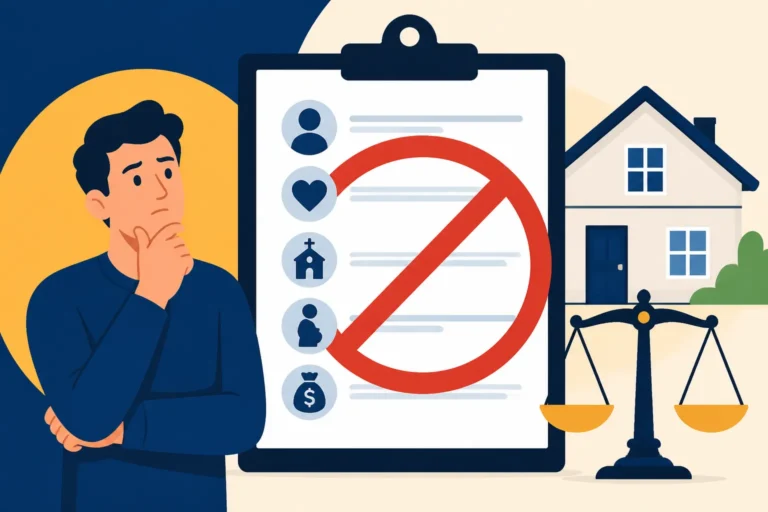
What Are the 7 Protected Classes?
Navigating the rental market can feel like a minefield, especially when you're trying to find a home that fits your needs and budget, only to face obstacles that feel unfair or discriminatory. It's incredibly frustrating to put in applications, pay fees, and open up your personal life, only to be rejected without a clear, legal reason. This comprehensive guide is here to unravel the complexities of housing discrimination, specifically focusing on the seven federally protected classes under the Fair Housing Act, and to empower you with the knowledge to protect your rights.
Understanding the Foundation of Fair Housing
Before we dive into the specific protected classes, it’s crucial to understand the bedrock legislation that ensures everyone has a fair shot at housing: the Fair Housing Act. This isn't just some abstract legal concept; it's a vital piece of legislation that protects real people from real hardship. Imagine trying to find a safe, affordable place to live, but everywhere you go, you’re subtly or overtly turned away because of who you are, not because of your ability to pay rent or follow lease terms. That’s the reality the Fair Housing Act was designed to prevent.
A Brief History of the Fair Housing Act
The Fair Housing Act (FHA) didn't just appear out of thin air; it was a response to widespread discrimination that plagued the housing market for decades. Signed into law in 1968, amidst the Civil Rights Movement and just days after the assassination of Dr. Martin Luther King Jr., the FHA aimed to eliminate housing discrimination based on race, color, religion, sex, and national origin. It was a monumental step forward, recognizing that access to housing is fundamental to opportunity and equality.
Over the years, the Act has been amended to broaden its protections. In 1988, for instance, it was expanded to include disability and familial status, recognizing that these groups also faced significant barriers in securing housing. These amendments reflected an evolving understanding of social justice and the diverse forms that discrimination can take. While the original intent was largely to address racial segregation, the FHA has grown to cover a much wider range of discriminatory practices, ensuring more people can find a place to call home without unfair hurdles. It's a living document, continuing to be interpreted and applied in new ways to address modern challenges.
Who the Fair Housing Act Applies To
The Fair Housing Act has a broad reach, but it’s not without its specific applications and exemptions. Generally, the FHA applies to most housing providers, including landlords, real estate agents, property managers, housing developers, and even lenders. If you're renting an apartment, buying a home, or applying for a mortgage, you're likely covered by its protections. This means a landlord cannot refuse to rent to you, charge you higher rent, evict you, or offer different terms and conditions based on your membership in a protected class.
However, there are a few narrow exemptions to the FHA. For example, some owner-occupied buildings with four or fewer units might be exempt, as might single-family homes rented or sold without the use of a real estate agent (provided the owner doesn't own more than three such homes). Religious organizations and private clubs may also have certain exemptions in housing they operate for their members. These exemptions are usually very specific and don't excuse discrimination in most rental or sales transactions. It’s critical to understand that even when an exemption might apply under federal law, many states and local jurisdictions have their own, often stricter, fair housing laws that close these loopholes. So, while federal law is the baseline, you might have even stronger protections depending on where you live. For more detailed information, exploring specific Security Deposit Laws by State (2026) or understanding Maximum Security Deposit Limits by State can give you an idea of how deeply local laws can vary and impact your housing experience beyond just discrimination.
The Seven Federal Protected Classes
The heart of the Fair Housing Act lies in its definition of protected classes. These are the specific characteristics that, if used as a basis for discrimination, violate federal law. It's crucial for both tenants and landlords to clearly understand these categories to ensure compliance and prevent unfair treatment. When a landlord says, "I don't rent to people like you," and "you" falls into one of these categories, that's a serious problem.
Race and Color
Discrimination based on race or color is perhaps the most historically significant and well-known violation of the FHA. This means a landlord cannot deny housing, set different rental terms, or provide different services because of someone's racial background or the color of their skin. This applies whether the discrimination is overt – like a landlord saying, "I don't rent to Black tenants" – or more subtle, such as advertising only in white neighborhoods, steering applicants to specific buildings based on their race, or holding properties vacant rather than renting to a person of color.
For example, if an apartment complex has a vacancy, and a landlord tells a white applicant that units are available immediately, but tells a Black applicant inquiring about the same unit that nothing is open for months, that could be clear racial discrimination. It's not just about refusing to rent; it's about making housing unavailable or offering it on unequal terms. The key is that the decision or treatment is based on someone's perceived race or skin color, rather than their qualifications as a tenant.
National Origin
National origin discrimination prohibits housing providers from treating individuals differently because of their country of birth, ancestry, ethnicity, accent, or the perception that they belong to a particular ethnic group. This also extends to the national origin of an applicant's spouse, parents, or friends. It’s a protection against xenophobia and prejudice.
Consider a situation where a landlord refuses to rent to a family with a Spanish surname, assuming they won’t speak English well enough or will be "problematic," despite their excellent credit and rental history. This is a classic example of national origin discrimination. Similarly, if a landlord demands to see a green card or asks about citizenship status from someone who appears to be an immigrant, but not from others, it could be discriminatory. Unless there's a specific, non-discriminatory reason related to the tenant's ability to live in the unit or adhere to the lease, making decisions based on where someone comes from is a violation. Landlords should focus on objective criteria like credit scores and verifiable income, not assumptions based on accent or name.
Religion
The FHA protects individuals from discrimination based on their religious beliefs, practices, or affiliations, or lack thereof. This means a landlord cannot refuse to rent to someone because they are Christian, Jewish, Muslim, Hindu, Buddhist, or atheist. It also means they can't impose different rules or conditions based on religion.
A common scenario might involve a landlord who has a blanket "no hats" policy in common areas, but specifically enforces it against a tenant wearing a hijab, while ignoring baseball caps. Or perhaps a landlord expresses discomfort with a tenant's religious symbols displayed inside their unit (where they have a reasonable expectation of privacy and it doesn't violate safety codes). These actions, driven by religious bias, are illegal. Housing providers must treat all tenants equally regardless of their faith, respecting their right to practice their religion freely within their private dwelling, as long as it doesn't infringe on other tenants' rights or property rules unrelated to religion.
Sex (Including Sexual Orientation and Gender Identity)
Initially, the "sex" category in the FHA primarily addressed discrimination based on biological sex. However, in recent years, the interpretation of "sex" has significantly expanded to include discrimination based on sexual orientation and gender identity. This means that landlords cannot discriminate against someone because they are gay, lesbian, bisexual, transgender, or non-binary.
For instance, a transgender woman being denied an apartment application after a landlord learns of her gender identity, despite meeting all other qualifications, would be considered sex discrimination. Similarly, if a landlord harasses a gay couple or attempts to evict them solely because of their sexual orientation, that's a direct violation. This expanded understanding of "sex" ensures that LGBTQ+ individuals are protected under federal housing law, creating a more inclusive and equitable housing market. It's about ensuring everyone, regardless of who they are or who they love, has the same opportunity to secure housing.
Familial Status
Familial status protection prevents discrimination against families with children under 18, pregnant women, people in the process of securing custody of children, and even foster parents. The intention is to ensure that families are not penalized or denied housing simply because they have children.
This means a landlord cannot refuse to rent to you because you have two children, cannot charge a higher security deposit (beyond legal limits) just because you have kids, or impose overly restrictive rules that disproportionately affect families. For example, a "no children allowed to play outside" rule that effectively makes the property unlivable for families could be seen as discriminatory. Similarly, landlords can't steer families with children to a specific, less desirable section of a property or refuse to renew a lease because a tenant became pregnant during their tenancy. However, landlords can enforce reasonable occupancy limits set by local codes, but these must be applied consistently to all tenants. It's a tricky balance, but the core principle is that families with children should not face unique hurdles compared to childless applicants. For further reading, check out Familial Status Discrimination (No Kids) for more context.
Disability
Disability is a broad and crucial protected class under the FHA. It protects individuals with a physical or mental impairment that substantially limits one or more major life activities, a record of such an impairment, or being regarded as having such an impairment. This includes a wide range of conditions, from mobility impairments to chronic illnesses, mental health conditions, and developmental disabilities.
Beyond simply not denying housing, landlords have specific obligations to individuals with disabilities. They must allow "reasonable accommodations" and "reasonable modifications." A reasonable accommodation is a change in rules, policies, or services that allows a person with a disability to use and enjoy their dwelling. For example, allowing a service animal or emotional support animal, even if there's a "no pets" policy, is a common reasonable accommodation. A reasonable modification is a structural change to the property, like installing a ramp or grab bars in a bathroom. While landlords typically must allow these modifications, they generally aren't required to pay for them (tenants usually bear the cost), and they might require the tenant to restore the property to its original condition when they move out, if reasonable. Landlords can use tools like TurboTenant to help them understand and document these requests properly, ensuring they stay compliant. The key is to remove barriers that prevent individuals with disabilities from enjoying their homes fully. For more details, you can read about Emotional Support Animals & Service Animals (FHA Rules) and Reasonable Accommodations & Modifications.
Beyond Federal Law: State and Local Protections
While the Fair Housing Act sets a vital federal baseline, it's really just the starting point. Many states and countless cities and counties have enacted their own fair housing laws that often expand protections beyond the federal seven. This means you might have more rights than you realize, depending on where you live. It's not uncommon for local jurisdictions to address specific forms of discrimination that are prevalent in their communities, making the legal landscape quite nuanced.
Common State-Added Protections
States and local municipalities frequently add their own categories to the list of protected classes, significantly broadening anti-discrimination efforts in housing. These additions reflect diverse societal values and respond to local needs. For instance, common state-level protections often include:
- Marital Status: Some states prohibit discrimination based on whether you are single, married, divorced, separated, or widowed. This means a landlord can't refuse to rent to you just because you're unmarried or, conversely, because you're a married couple.
- Age: While federal law addresses familial status (which indirectly protects families with young children), many states specifically protect against discrimination based on age across the board, ensuring seniors are also not unfairly denied housing.
- Source of Income: This is a growing area of protection, especially in states like California, Oregon, and many major cities. Source of income discrimination prohibits landlords from refusing to rent to tenants simply because they pay rent with a housing voucher, Section 8 assistance, Social Security benefits, or other lawful forms of income. This is a huge deal for many low-income families and individuals who often face invisible barriers. You can learn more about this by checking out Source-of-Income Discrimination & Section 8 by State and Can a Landlord Refuse Section 8?.
- Military Status or Veteran Status: To support those who serve or have served, several states and cities prevent discrimination against active military personnel or veterans.
- Sexual Orientation and Gender Identity: While recent federal interpretations now cover these under "sex," many states and localities had specific protections in place much earlier, providing an extra layer of clarity and enforcement.
- Ancestry: Sometimes a separate category from national origin, it explicitly protects individuals based on their family lineage or heritage.
- Citizenship/Immigration Status: A few jurisdictions explicitly protect against discrimination based on citizenship or immigration status, although this is less common and can be complex due to federal immigration laws.
These additional protections demonstrate a commitment to creating truly equitable housing opportunities for all residents, regardless of characteristics not covered by the original federal act.
How to Check Local Laws
Given the patchwork of federal, state, and local laws, figuring out your exact protections can feel daunting. However, it's a critical step if you suspect discrimination or simply want to be informed. The easiest way to get started is by visiting the official website of your state's housing authority or Attorney General's office. Many states, like California or New York, have extensive resources detailing their fair housing statutes, including any additional protected classes and specific enforcement agencies.
Beyond state laws, you should also look into your specific city or county ordinances. Larger cities, such as Seattle, San Francisco, or New York City, often have their own human rights commissions or housing departments that list local protected classes and offer guidance or avenues for filing complaints. A quick search for "[Your City/County] fair housing laws" or "[Your State] housing discrimination protections" will usually yield the official government resources you need. Don't rely solely on general online articles; always seek out the authoritative government source for your specific location. Knowing these laws is your best defense against unfair treatment.
Recognizing and Proving Discrimination
Spotting discrimination isn't always as obvious as a landlord outright saying, "I won't rent to you because you're [protected class]." Often, it's more subtle, hidden in evasive answers, suddenly unavailable units, or different treatment compared to other applicants. It's incredibly frustrating when you feel like you're being discriminated against but can't quite put your finger on it. Understanding the different forms discrimination can take and how to document it is crucial for taking action.
Overt vs. Disparate Impact Discrimination
Housing discrimination can manifest in two main ways: overt (or direct) discrimination and disparate impact discrimination.
Overt Discrimination is the most straightforward and, frankly, the easiest to recognize, even though it's less common today than in the past. This occurs when a housing provider explicitly states or acts on a discriminatory preference. Examples include:
- A landlord telling a prospective tenant, "We don't rent to families with children here."
- A real estate agent refusing to show properties in certain neighborhoods to a client based on their race.
- An advertisement that explicitly states, "No LGBTQ+ individuals allowed."
While these overt acts are clearly illegal, savvy discriminators rarely use such blunt language. They often try to mask their intentions.
Disparate Impact Discrimination is far more subtle and, unfortunately, much more common. This type of discrimination occurs when a policy or practice that appears neutral on its face actually has a disproportionately negative effect on a protected class. The intent to discriminate doesn't even have to be proven; it's the effect of the policy that matters.
For instance, imagine an apartment complex implements a new policy requiring all tenants to speak fluent English. While this might seem neutral, it could have a disparate impact on individuals of certain national origins, effectively excluding them from housing. Another common example is a landlord who refuses to rent to anyone with a criminal record, without considering the nature or age of the offense. While seemingly neutral, such a policy could disproportionately affect racial minorities due to historical biases in the criminal justice system. The key here is to look beyond the stated rule and examine its real-world consequences on protected groups. Understanding the nuances of this can be complex, and you can delve deeper into this specific topic by reading about Disparate Impact Explained.
Gathering Evidence
If you suspect you've been discriminated against, gathering solid evidence is paramount. Without documentation, it can be incredibly difficult to prove your case. This isn't about being paranoid; it's about being prepared and protecting your rights.
Here’s how you can go about collecting evidence:
- Document Everything in Writing: Whenever possible, communicate with landlords or property managers in writing (email, text, or certified mail). This creates a paper trail. If you have a phone conversation, immediately follow up with an email summarizing what was discussed and asking for confirmation. For example, "Following our call today, I understand that the apartment at 123 Main Street is no longer available, despite being listed online. Please confirm."
- Keep Detailed Records: Maintain a log of all interactions: dates, times, names of individuals you spoke with, what was said, and any specific actions taken or denied. Note down any excuses given for denying your application that seem suspicious or inconsistent.
- Save Advertisements and Listings: Keep copies of rental ads (screenshots are great) that show the property was available. If the listing suddenly disappears or changes after your inquiry, that's important to note.
- Application Records: Keep copies of your completed rental application, any application fees paid (and receipts), and any correspondence regarding your application status.
- Witnesses: If someone else was present during a discriminatory interaction, ask if they would be willing to provide a statement.
- "Testers": In some cases, fair housing organizations use "testers" – individuals who pose as prospective tenants – to determine if discriminatory practices are occurring. If you believe a landlord is discriminating, you might contact a local fair housing group to see if they can assist with a formal investigation.
- Compare Treatment: Try to compare your experience with that of people who are not in your protected class. If a landlord told you there were no vacancies, but told a person of a different race that units were available the same day, that's powerful evidence.
- Physical Evidence: If there are discriminatory signs or notices, take photos.
The more detailed and comprehensive your documentation, the stronger your potential case will be. Remember, the goal is to show a pattern or a clear instance of differential treatment based on your protected characteristic.
What Landlords Can and Cannot Do
It’s a common misconception that landlords are always trying to discriminate. Most landlords simply want reliable, responsible tenants. However, even with good intentions, it's easy to accidentally cross legal lines or to simply not know the full scope of fair housing laws. It's also true that some landlords knowingly engage in discriminatory practices. For both tenants and landlords, understanding the boundaries of legal screening and illegal red flags is essential. Landlords, in particular, can greatly benefit from resources like TurboTenant, which offers compliant tenant screening tools, helping them avoid accidental violations.
Legal Screening Practices
Landlords absolutely have the right to screen prospective tenants to ensure they are financially capable and responsible. This protects their investment and the peace of mind of other residents. Legal screening practices focus on objective criteria that are directly related to a tenant’s ability to uphold the terms of the lease.
Here are some common and perfectly legal screening methods:
- Credit Checks: A landlord can pull your credit report to assess your financial responsibility. They'll typically look for a good payment history, low debt, and any past bankruptcies or evictions. However, they cannot use the credit check to discriminate based on protected characteristics (e.g., denying an application based on a low credit score for a minority applicant while approving a white applicant with a similar score). For tenants wondering, What Credit Score Do You Need to Rent? provides useful insights.
- Income Verification: It’s legal for landlords to ask for proof of income (pay stubs, bank statements, employment verification) to ensure you can afford the rent. Many landlords use a "3x rent rule" as a guideline (gross monthly income should be three times the rent).
- Rental History: Landlords can contact previous landlords to inquire about your payment history, how well you maintained the property, whether you caused disturbances, and if you adhered to lease terms. They can also perform eviction checks.
- Criminal Background Checks: Landlords can run criminal background checks, but they must be careful. While they can deny tenancy for certain serious convictions, particularly those related to safety or property damage, broad, blanket exclusions of any criminal record can lead to disparate impact discrimination. HUD guidelines advise landlords to consider the nature and severity of the crime, and how much time has passed since the offense. They also cannot discriminate against individuals solely for arrest records without conviction.
- References: Personal and professional references are fair game to get a sense of an applicant's character and reliability.
- Application Fees: Landlords can charge a reasonable application fee to cover the costs of screening, such as credit and background checks. However, these fees are often capped by state law.
The key is that these criteria must be applied consistently to all applicants, and decisions must be based on objective findings rather than subjective biases about a protected class.
Illegal Screening Practices and Red Flags
On the flip side, many screening practices are either explicitly illegal or serve as major red flags for potential discrimination. It's important for tenants to be aware of these so they can identify unfair treatment, and for landlords to avoid them at all costs.
Here’s what landlords cannot legally do or what might indicate discriminatory intent:
- Asking Prohibited Questions: Landlords cannot ask questions that are directly related to a protected class. For example, they can't ask about your race, religion, sexual orientation, whether you have children (except for occupancy limits), if you're pregnant, or the nature of a disability. They can't ask about your immigration status unless directly related to verifying identity and eligibility for tenancy in a non-discriminatory way. For a deeper dive, check out What a Landlord Can & Cannot Ask.
- "Steering": This involves guiding applicants toward or away from certain units, floors, or buildings based on their protected characteristics. For example, telling a family with children, "The units on the first floor are better for kids," while only showing them those units, even if they expressed interest in another floor.
- Different Terms and Conditions: Charging a higher security deposit to a family with children (beyond legal limits), imposing stricter rules on tenants of a certain national origin, or offering different amenities based on race are all illegal.
- Discriminatory Advertising: Ads that explicitly state preferences or limitations based on protected classes are illegal ("No kids," "Christian tenants only"). Even seemingly neutral phrases can be problematic if they have a disparate impact ("Quiet neighborhood, perfect for a single professional" could implicitly deter families or older adults).
- Refusing Reasonable Accommodations/Modifications: As discussed, denying a reasonable accommodation for a disability (like allowing a service animal) is a violation.
- Inconsistent Application of Rules: Applying screening criteria differently to different applicants is a major red flag. If a landlord overlooks a minor credit issue for one applicant but denies another with a similar issue who is a member of a protected class, that suggests discrimination.
- False Information About Availability: Telling a qualified applicant that no units are available, then immediately telling someone not in a protected class that units are available, is a clear sign of discrimination.
- Retaliation: It's illegal for a landlord to retaliate against you for asserting your fair housing rights, for example, by increasing your rent or initiating an eviction after you filed a discrimination complaint.
Landlords should always strive for transparent, objective, and consistent screening practices. Using a reputable screening service like TurboTenant can help landlords ensure their screening process remains fair and compliant with federal and state laws, reducing the risk of unintentionally discriminating.
What to Do If You Experience Discrimination
Experiencing housing discrimination is not just disheartening; it's illegal. If you believe you've been unfairly treated based on your protected characteristics, you have rights and avenues for recourse. Don't let the feeling of injustice fester; taking action can lead to a resolution and help prevent others from facing similar treatment.
Reporting Discrimination to HUD or Local Agencies
The primary federal agency responsible for enforcing the Fair Housing Act is the U.S. Department of Housing and Urban Development (HUD). If you suspect discrimination, filing a complaint with HUD is a crucial first step. Their process is designed to investigate claims and mediate resolutions.
Here’s how it generally works:
- Contact HUD: You can file a complaint directly with HUD online through their website, by mail, or by calling their toll-free number. You usually have one year from the date of the alleged discrimination to file a complaint.
- Provide Information: You'll need to provide detailed information about what happened, when it happened, who was involved, and what evidence you have (this is where all that meticulous record-keeping comes in handy!).
- Investigation: Once a complaint is filed, HUD will investigate. This may involve interviewing you, the housing provider, and any witnesses, as well as reviewing documents. They might also use "testers" to gather additional evidence.
- Conciliation: HUD often attempts to resolve the complaint through conciliation, which is a negotiation process where they try to reach a voluntary settlement between you and the housing provider.
- Formal Charges or Referrals: If conciliation fails and HUD finds reasonable cause to believe discrimination occurred, they will issue a charge of discrimination. The case might then go before an administrative law judge, or either party can choose to have the case heard in federal court. In some cases, HUD may refer the case to the Department of Justice.
In addition to HUD, many states and local jurisdictions have their own fair housing agencies or human rights commissions. These local agencies often have similar complaint processes and can be an excellent resource, especially if your local laws offer broader protections. For example, if you live in Seattle, you might contact the Seattle Office for Civil Rights. These local agencies can often act more quickly and are familiar with specific local nuances. For a step-by-step guide, consider reading How Do I File a Fair Housing Complaint?.
Seeking Legal Counsel
While filing a complaint with HUD or a local agency is a strong starting point, it's often beneficial to also seek legal counsel, especially if your case is complex or involves significant damages. A fair housing attorney can provide invaluable guidance, help you understand your rights, assess the strength of your case, and navigate the legal system.
Here’s why legal counsel can be important:
- Expertise: Fair housing laws are intricate. An attorney specializing in this area will understand the nuances, precedents, and best strategies for your specific situation.
- Evidence Collection: They can help you identify and gather additional evidence you might not have considered, such as public records or expert testimony.
- Negotiation: Attorneys are skilled negotiators and can represent your interests during conciliation or settlement discussions, ensuring you get a fair outcome.
- Litigation: If a settlement isn't reached, an attorney can represent you in court, whether it's before an administrative law judge or in federal court. They can file lawsuits, present arguments, and pursue damages on your behalf.
- Damages: If discrimination is proven, you might be entitled to various forms of relief, including actual damages (e.g., costs incurred due to the discrimination, emotional distress), punitive damages (to punish the discriminator), and attorney's fees.
Many fair housing advocacy groups offer free or low-cost legal assistance and can refer you to experienced attorneys. Don't feel like you have to go through this alone. Protecting your rights and ensuring fair housing for everyone is a collective effort, and legal professionals are there to help you stand up against discriminatory practices. If you're wondering what happens if a landlord refuses to return your deposit or violates other terms, you might also find insights in articles like Tenant Rights If Landlord Won't Return Deposit or even how to pursue Suing a Landlord for Your Deposit (Small Claims & Penalties), as these situations can sometimes be intertwined with broader issues of unfair treatment.
| Protected Class | Federal Law Basis | Examples of Discrimination |
|---|---|---|
| Race | Civil Rights Act of 1866, Fair Housing Act (1968) | Refusing to rent to a Black person; steering white tenants to specific neighborhoods. |
| Color | Fair Housing Act (1968) | Denying housing based on the lightness or darkness of a person's skin. |
| National Origin | Fair Housing Act (1968) | Refusing to rent to someone with an accent; demanding proof of citizenship from certain groups. |
| Religion | Fair Housing Act (1968) | Denying housing to someone due to their faith; imposing different rules based on religion. |
| Sex | Fair Housing Act (1968), recent interpretation includes sexual orientation & gender identity | Harassing LGBTQ+ tenants; denying housing to single mothers. |
| Familial Status | Fair Housing Act (1988 Amendment) | Refusing to rent to families with children; enforcing overly restrictive rules for kids. |
| Disability | Fair Housing Act (1988 Amendment) | Denying housing to a wheelchair user; refusing reasonable accommodation for a service animal. |
| Common State/Local Additions | Varies by jurisdiction (e.g., California, New York City) | Marital status, age, source of income, veteran status, political ideology. |
Disclaimer
Please remember that this article provides general information and insights into landlord-tenant laws and fair housing. Laws can change, and interpretations may vary by jurisdiction and specific circumstances. This content is not a substitute for professional legal advice. For advice tailored to your specific situation, it is always recommended to consult with a qualified attorney or housing counselor in your state or local area.