How Do I File a Fair Housing Complaint?
Facing housing discrimination can feel incredibly isolating and overwhelming. It's a deeply frustrating experience when you're just trying to find a safe and stable home, only to encounter unfair treatment based on who you are. This comprehensive guide is here to walk you through exactly how to navigate that challenging situation, providing a clear, step-by-step process for filing a fair housing complaint and understanding your rights every step of the way.
Understanding Fair Housing and Discrimination
When you're searching for a place to live, whether it's an apartment, a house, or even just applying for a loan, you expect to be treated fairly. Unfortunately, that's not always the reality, and sometimes what feels like unfair treatment is actually illegal housing discrimination. Knowing what constitutes discrimination is your first line of defense.
What Exactly is Housing Discrimination?
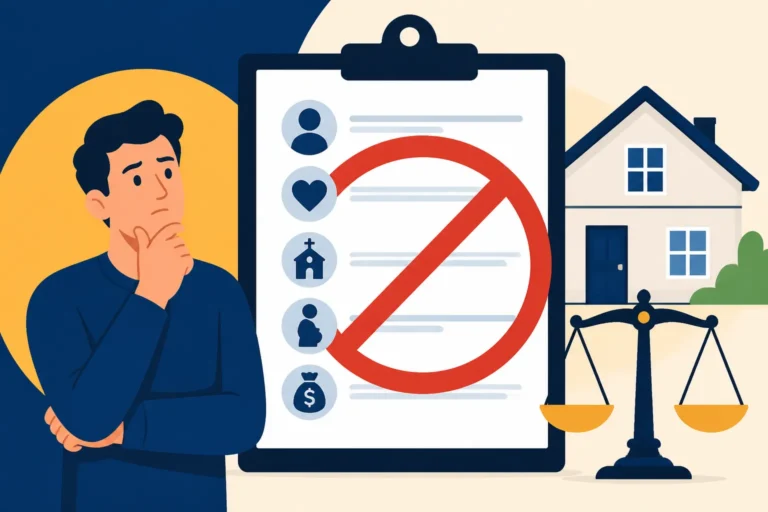
At its core, housing discrimination is any refusal to sell, rent, negotiate, or otherwise make housing unavailable to someone because they belong to a certain group, or treating them differently in terms of conditions or privileges. The federal Fair Housing Act, established in 1968, protects people from discrimination based on seven specific "protected classes":
- Race: This includes refusing to rent to someone because of their racial background.
- Color: Discrimination based on a person's skin tone.
- Religion: Treating someone unfairly due to their religious beliefs or practices.
- National Origin: Discriminating against someone based on the country they or their ancestors came from, or their ethnicity.
- Sex: This encompasses discrimination based on gender, including sexual harassment, gender identity, and sexual orientation.
- Familial Status: Refusing to rent to families with children under 18, pregnant women, or people in the process of securing custody of children. This also includes treating them differently in terms of access to amenities or rules.
- Disability: Discriminating against individuals with physical or mental impairments that substantially limit one or more major life activities, or those with a history of such an impairment. Landlords must also make reasonable accommodations and allow reasonable modifications.
It's not just about outright refusal. Discrimination can show up in many subtle ways, like steering certain applicants away from particular neighborhoods, imposing different rules for different tenants, or misrepresenting the availability of housing. Even advertising that discourages certain groups from applying can be a form of discrimination. To understand this in more depth, you might want to read our article on Fair Housing Act: Protected Classes Explained.
Identifying Potential Discrimination
Recognizing housing discrimination isn't always straightforward. Sometimes it's blatant, like a landlord explicitly saying they don't rent to families with kids. More often, it's subtle, cloaked in excuses or seemingly neutral policies that have a disproportionate impact.
For instance, imagine you call about an apartment listed online, and the landlord sounds perfectly friendly over the phone. But when you show up for the viewing and you’re a person of color, they suddenly tell you the unit was just rented, even though the listing is still up. Or perhaps a landlord insists on a higher security deposit from you because you have an accent, despite having excellent references and credit. These could be signs. Another common scenario involves landlords charging a higher pet deposit for an emotional support animal, which is generally not allowed under fair housing laws.
Another example: you see an apartment listed for $1,500 a month. When you inquire, the landlord tells you they actually prefer tenants who make at least four times the rent, not the standard three times, and then only mentions this rule after learning you have a Section 8 voucher. This kind of sudden change in criteria or application of a stricter rule could be a red flag for Source-of-Income Discrimination & Section 8 by State, depending on your local laws. It’s about looking for inconsistencies, changes in demeanor, or policies that seem to apply only to you or people like you.
Federal vs. State and Local Protections
While the federal Fair Housing Act provides a crucial baseline, many states and cities have expanded these protections, adding even more categories. This is incredibly important because it means what might not be protected federally, could be protected right where you live.
For example, states like California and New York offer robust additional protections. In California, you're also protected based on marital status, ancestry, sexual orientation, gender identity, source of income (like Section 8 vouchers), and medical condition. New York, similarly, protects against discrimination based on age, lawful occupation, sexual orientation, gender identity or expression, military status, and victim status in certain domestic violence situations.
Even smaller cities sometimes have their own local ordinances. For instance, some cities have protections for students or people with specific housing voucher programs. It's vital to research the specific fair housing laws in your state and locality. A quick search for "[Your State] fair housing laws" or "[Your City] housing discrimination" can often point you to relevant agencies or resources that list these expanded categories. Understanding these nuances is key to knowing if you have a legitimate complaint. For a broader look, you can also explore topics like Security Deposit Laws by State (2026) or Rent Control Cities List (2026) which can sometimes include anti-discrimination provisions.
Preparing to File Your Complaint
Successfully filing a fair housing complaint requires more than just a feeling that you've been wronged. You need to build a solid case, and that means being meticulous about documentation and acting swiftly.
Gathering Evidence: Your Critical First Steps
When you suspect housing discrimination, your immediate priority should be to gather every piece of evidence you can. Think of yourself as a detective. The more concrete information you have, the stronger your complaint will be.
Start by documenting every interaction. This includes:
- Emails and Text Messages: Save all written correspondence with the landlord, property manager, or real estate agent. These can provide direct proof of discriminatory statements or unequal treatment.
- Phone Call Logs: Record the dates, times, and summaries of phone conversations. If allowed in your state (be aware of one-party vs. two-party consent laws), consider recording calls, but only if you know it's legal. If not, detailed notes are paramount, including direct quotes.
- Advertisements: Save screenshots or printouts of rental listings. If the listing changes after your inquiry, or if certain requirements are only mentioned to you, having the original ad is crucial. Many landlords use online platforms, and while reputable ones like TurboTenant aim to ensure fair listing practices, individual landlords might still post discriminatory language.
- Witness Information: If anyone else was present during a discriminatory interaction, get their contact information and ask if they'd be willing to provide a statement.
- Rental Application Materials: Keep copies of your application, any denial letters, and any screening reports. This is especially important if you believe the criteria applied to you were different than to others. Our guide on What a Landlord Can & Cannot Ask can help you identify if certain questions were discriminatory.
- Comparison Evidence: If you know of other applicants who were treated differently, note their experiences. For example, if you, a person with a service animal, were denied but a non-disabled person with a pet was approved for the same unit, that’s powerful evidence. The guide Can a Landlord Deny an ESA? dives into specific rules around service animals and emotional support animals.
- Photos and Videos: If the discrimination involved physical conditions or unequal access (e.g., lack of ramp for a wheelchair user), visual evidence can be very compelling.
Detail is your best friend here. Don't just write "landlord was mean." Instead, write "On May 10th at 3:15 PM, John Smith (landlord) told me over the phone, 'We don't rent to families with more than one child,' when I inquired about the two-bedroom unit on Elm Street." Every date, time, name, and specific quote builds your case.
The Importance of Timelines
Time is of the essence when filing a fair housing complaint. There are strict deadlines, and missing them can mean losing your opportunity for recourse.
- HUD and State Agencies (1-Year Deadline): Generally, you have one year from the date of the last discriminatory act to file a complaint with the Department of Housing and Urban Development (HUD) or a substantially equivalent state or local fair housing agency. This year goes by faster than you think, especially when you're busy trying to find new housing. Don't delay in gathering your evidence and initiating the complaint process.
- Private Lawsuits (2-Year Deadline): If you choose to pursue a private lawsuit in federal court, you typically have two years from the date of the last discriminatory act. While this offers a longer window, it's generally advisable to contact a fair housing organization or attorney much sooner to discuss your options and ensure you meet all necessary legal requirements.
These deadlines are not flexible. If you miss them, even by a day, your complaint can be dismissed. This is why documenting everything as it happens and reaching out for help quickly is so crucial. The sooner you act, the better your chances of a successful outcome. If you're unsure where to start, many non-profit fair housing organizations can offer guidance and help you understand your options and deadlines for specific types of complaints, such as those covered in Tenant Rights If Landlord Won't Return Deposit which is another common area of dispute.
Step-by-Step Guide to Filing a Fair Housing Complaint
Once you've gathered your evidence and understand the timelines, it's time to actually file your complaint. You have a few main avenues, each with its own process.
Filing with HUD
The U.S. Department of Housing and Urban Development (HUD) is the primary federal agency responsible for enforcing the Fair Housing Act. Filing a complaint with HUD is often the first step for many individuals who believe they've experienced discrimination.
Here's how to do it:
- Contact HUD: You can initiate a complaint in several ways:
- Online: Visit HUD's website and use their online complaint form. This is generally the fastest and most convenient method.
- Phone: Call the toll-free Fair Housing Enforcement Center at 1-800-669-9777 (or TTY 1-800-927-9275). A HUD representative can help you describe your experience.
- Mail: Download the complaint form from HUD's website or request one by phone, then fill it out and mail it to the nearest HUD regional office.
- Provide Detailed Information: When you file, you'll need to provide your contact information, the contact information of the person or entity you're filing against (the landlord, property manager, etc.), and a detailed description of the discriminatory act(s). This is where all that evidence you gathered comes into play. Be specific about dates, times, locations, and what was said or done.
- HUD's Review: Once HUD receives your complaint, they will review it to see if it falls under the Fair Housing Act. If it does, they'll officially accept it.
- Investigation: HUD will then launch an investigation. This typically involves contacting the alleged discriminator to get their side of the story, interviewing witnesses, and gathering relevant documents. HUD acts as a neutral party, investigating the facts to determine if discrimination occurred. This phase can take some time, often several months.
- Conciliation: Throughout the investigation, HUD will try to facilitate conciliation—a voluntary settlement—between you and the alleged discriminator. This might involve mediation or a formal agreement to resolve the issue. If a satisfactory agreement is reached, the case is closed.
- Hearing or Lawsuit: If conciliation fails and HUD finds reasonable cause to believe discrimination occurred, they will either issue a charge of discrimination (leading to an administrative hearing before an Administrative Law Judge) or advise you of your right to file a lawsuit in federal court.
Filing with HUD is free, and they provide investigators and legal counsel if the case proceeds to an administrative hearing.
Filing with State or Local Agencies
Many states and even some cities have their own fair housing enforcement agencies that are "substantially equivalent" to HUD. This means they have similar protections and enforcement powers. Often, filing with these local agencies can be faster and sometimes offers broader protections than federal law.
- How to Find Them: Look for your state's Department of Fair Employment and Housing (DFEH in California), Human Rights Commission (like the New York State Division of Human Rights), or similar state or city agencies. A web search for "fair housing agency [Your State]" will usually lead you to the correct contact.
- The Process: The complaint process with state and local agencies is generally similar to HUD's:
- Initial Contact & Intake: You contact the agency, often through an online portal, phone, or in person, to describe your complaint.
- Investigation: The agency will investigate, gathering evidence, interviewing parties, and attempting to mediate a resolution.
- Conciliation/Mediation: They will usually attempt to resolve the issue through negotiation or mediation.
- Administrative Action or Referral: If a resolution isn't reached and discrimination is found, the agency might issue a formal charge, leading to an administrative hearing, or refer the case for litigation.
- Benefits: These local agencies often have a deeper understanding of specific local housing markets and state laws that go beyond federal protections. For instance, if you're dealing with Security Deposit Interest Requirements by State, a state agency might have more specific enforcement mechanisms. Also, because they often handle complaints within a smaller geographic area, their processes can sometimes move more quickly.
It's important to know that if you file a complaint with a state or local agency that is "substantially equivalent" to HUD, your complaint is automatically cross-filed with HUD. You don't need to file with both.
Pursuing a Private Lawsuit
While HUD and state agencies offer a robust avenue for complaints, you also have the option to pursue a private lawsuit in federal or state court. This is typically done with the assistance of a private attorney.
- When to Consider It:
- If you miss agency deadlines: If you've passed the one-year deadline for HUD or state agencies but are still within the two-year statute of limitations for a lawsuit, this might be your only recourse.
- If you want greater control: A private lawsuit gives you more control over the legal process and potential remedies.
- If you seek specific damages: You can sue for actual damages (e.g., higher rent paid due to discrimination), punitive damages (to punish the discriminator), and attorney's fees.
- Finding Legal Counsel: This route almost always requires an attorney specializing in fair housing or civil rights law. Organizations like the National Fair Housing Alliance (NFHA) or local legal aid societies can sometimes provide referrals.
- The Legal Process:
- Consultation: An attorney will review your case, evidence, and options.
- Filing the Complaint: Your attorney will file a lawsuit in the appropriate court.
- Discovery: Both sides exchange information, documents, and conduct depositions.
- Settlement or Trial: Many lawsuits are settled out of court through negotiation or mediation. If not, the case proceeds to trial.
- Considerations: This option can be more expensive, as you'll be responsible for legal fees, though some attorneys work on a contingency basis (they get paid if you win). It can also be more time-consuming and emotionally taxing. However, it can result in significant financial compensation and hold discriminators accountable in a public forum. When considering the path to resolving tenant issues, a private lawsuit can be a powerful tool, similar to when considering Suing a Landlord for Your Deposit (Small Claims & Penalties) if a security deposit is wrongfully withheld.
What Happens After You File? The Investigation Process
Filing a complaint is just the beginning. The real work starts with the investigation, a crucial phase where the facts are uncovered and evaluated.
The Investigation Phase
Whether you file with HUD or a state/local agency, the core of the process involves a thorough investigation. This isn't a quick phone call; it's a dedicated effort to understand what truly happened.
- Initial Contact: After accepting your complaint, the agency will contact the alleged discriminator (the landlord, property manager, etc.) to inform them of the complaint and request their response. They will usually be given an opportunity to provide their version of events and any supporting documentation.
- Evidence Collection: The investigator will meticulously gather evidence. This can include:
- Interviews: Speaking with you, the alleged discriminator, witnesses, and anyone else who might have relevant information. These interviews are typically recorded or thoroughly documented.
- Document Requests: Obtaining rental applications, screening policies, tenant registers, advertisements, emails, texts, and financial records. Landlords often use professional tenant screening tools, and if a landlord adheres to consistent, non-discriminatory criteria, platforms like TurboTenant can assist in maintaining records that demonstrate fair practices.
- Site Visits: In some cases, an investigator might visit the property to assess conditions, accessibility features, or verify information related to the complaint (e.g., if you claimed lack of reasonable accommodations for a disability).
- Testing: Sometimes, fair housing organizations or agencies conduct "testing." This involves sending individuals (testers) who are similarly qualified but differ in a protected characteristic (e.g., race, familial status) to inquire about the same housing. Any differential treatment they experience serves as powerful evidence.
- Analysis: The investigator will analyze all the collected evidence, looking for patterns, inconsistencies, and direct or circumstantial proof of discrimination. They'll compare your experience to the experiences of others, and to the landlord's stated policies and practices. This stage is critical for determining whether there is "reasonable cause" to believe discrimination occurred. The process is similar to how you might need to prove Normal Wear and Tear vs Damage: Complete Guide when trying to get a security deposit back.
Conciliation and Resolution
Throughout the investigation, and often after evidence has been gathered, the agency will typically attempt to resolve the complaint through conciliation. This is an opportunity for both parties to reach a voluntary settlement, avoiding a potentially lengthy and costly administrative hearing or lawsuit.
- Negotiation: The agency acts as a neutral facilitator, helping both sides discuss potential resolutions. This could involve direct negotiations or formal mediation sessions.
- Possible Outcomes: If conciliation is successful, the agreement can take many forms:
- Monetary Damages: Compensation for financial losses you incurred (e.g., higher rent paid, application fees, moving expenses) and for emotional distress.
- Non-Monetary Remedies: The housing provider might agree to rent the unit to you, change discriminatory policies, undergo fair housing training, or provide a positive rental reference.
- Public Interest Relief: In some cases, especially if a pattern of discrimination is found, the agreement might include provisions beneficial to the public, such as advertising in minority media or reporting to the agency regularly.
- Legally Binding Agreement: Any conciliation agreement reached is a legally binding contract. If either party violates its terms, the other party can take legal action to enforce it. The purpose of this stage is to find a mutually acceptable resolution without the need for a full legal battle. This type of resolution mechanism can be an effective way to address issues, just as understanding How to Dispute Security Deposit Deductions might involve negotiating with your landlord.
Administrative Hearings and Court
If conciliation efforts fail and the agency finds reasonable cause to believe discrimination occurred, the case doesn't just disappear. It moves into a more formal legal proceeding.
- Administrative Hearing: If HUD issues a "charge of discrimination," the case will be heard by an Administrative Law Judge (ALJ) within HUD. The ALJ acts like a judge in a regular court, hearing testimony, reviewing evidence, and making a decision. HUD attorneys will represent you at no cost. If the ALJ finds discrimination, they can order the housing provider to pay actual damages, impose civil penalties, and grant other relief.
- Federal Court Lawsuit: Alternatively, either you or the housing provider can elect to have the case heard in federal district court instead of an administrative hearing. If this happens, the U.S. Department of Justice represents you. This path is essentially a full-blown civil lawsuit, where a federal judge or jury would decide the outcome.
- Private Lawsuit Outcomes: If you pursued a private lawsuit from the outset, the outcome would similarly be determined by a judge or jury in federal or state court. Potential remedies include actual damages, punitive damages, and attorney's fees. Winning these cases can sometimes lead to significant compensation, particularly in situations involving egregious or repeated discrimination. It's a serious process, much like understanding Double vs Treble Damages for Wrongful Withholding in security deposit cases.
Here's a quick overview of the main avenues for filing a fair housing complaint:
| Filing Method | Initial Contact Point | Typical Timeline for Filing | Key Advantages | Potential Disadvantages |
|---|---|---|---|---|
| HUD (Federal) | HUD's website, phone (1-800-669-9777), mail | 1 year from last discriminatory act | Free, federal backing, investigators & lawyers provided (if charged) | Can be lengthy, federal protections only, less localized knowledge |
| State/Local Fair Housing Agency | State DFEH, Human Rights Commission, city agencies | 1 year from last discriminatory act | Free, may be faster, broader protections than federal, localized expertise | Varies by state/locality, might not exist in all areas |
| Private Lawsuit | Private attorney specializing in fair housing | 2 years from last discriminatory act | More control, potential for higher damages (including punitive), attorney choice | Can be expensive (attorney fees), more emotionally taxing, longer process |
Remember, the goal is to stop discrimination and, where appropriate, compensate those who have been harmed. The path you choose depends on your specific situation, the laws in your area, and your personal preferences for navigating the legal system.
Disclaimer
Please remember that this guide provides general information and is not a substitute for legal advice. Landlord-tenant laws, including fair housing regulations, vary significantly by state and locality. It is always recommended to consult with a qualified attorney or a local fair housing organization for advice tailored to your specific situation.