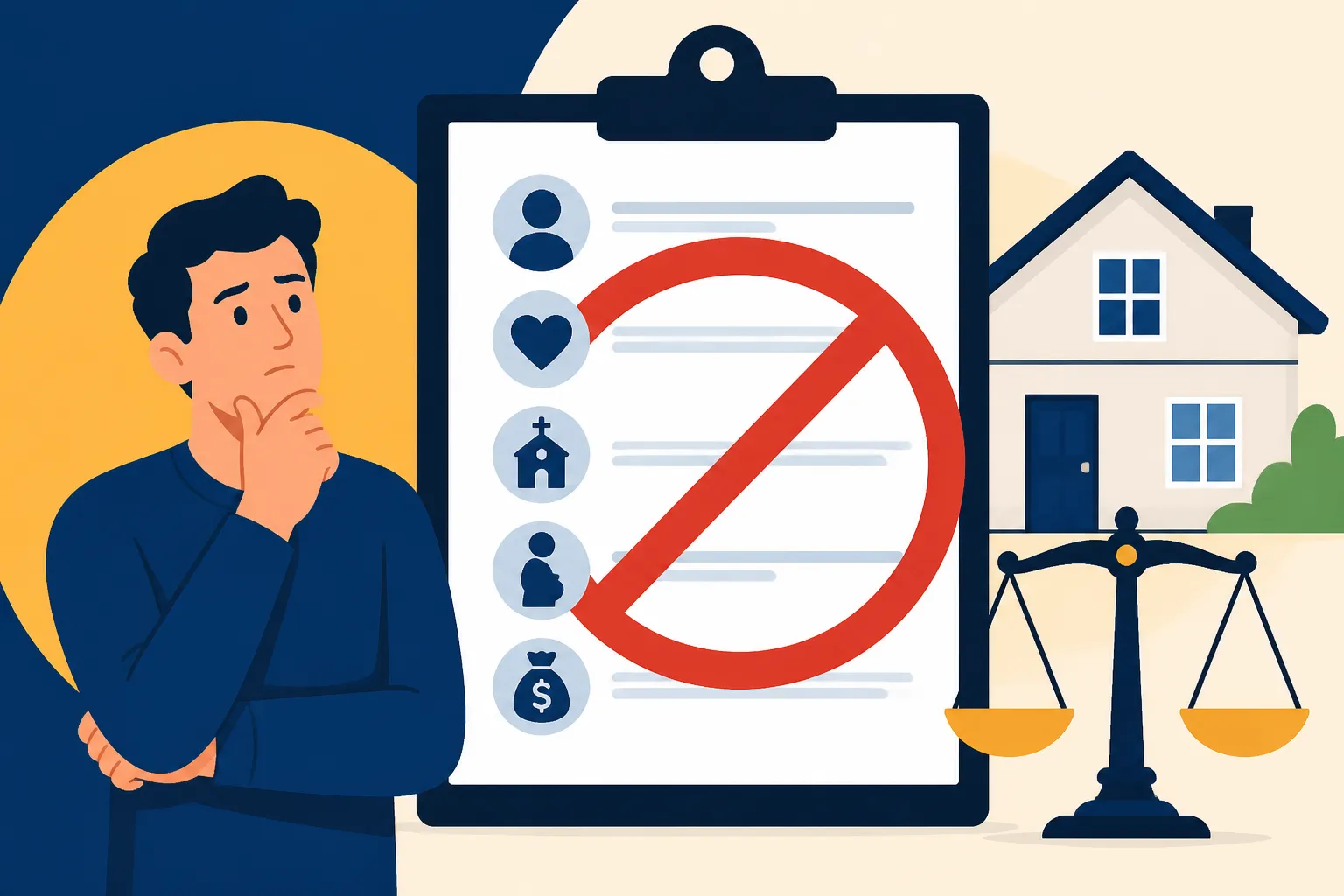
What Questions Are Illegal on a Rental Application?
Navigating the rental market can feel like walking a tightrope, especially when it comes to the application process. It’s natural to feel a bit exposed when a landlord or property manager starts asking questions about your life, and it can be incredibly frustrating to wonder if some of those inquiries are even allowed. This guide is here to shed light on what questions are perfectly fine on a rental application and, more importantly, which ones cross the line into illegal territory, helping you understand your rights as a prospective tenant.
The Foundation: Understanding Fair Housing Laws
Before diving into specific questions, it's crucial to understand the bedrock of tenant protection: Fair Housing Laws. These laws exist precisely because, sadly, discrimination has been a persistent problem in housing. They are designed to ensure everyone has an equal opportunity to secure housing, regardless of certain characteristics. When a landlord asks an illegal question, it's often because they're trying to gather information that could lead to discrimination, even if unintentionally.
The Federal Fair Housing Act
The federal Fair Housing Act, enacted in 1968, is the granddaddy of anti-discrimination housing laws. It specifically prohibits discrimination in housing based on seven "protected classes." These are race, color, religion, sex (including sexual orientation and gender identity), national origin, familial status, and disability. Think of these as the absolute minimum protections across the entire United States. If a landlord asks a question that directly or indirectly seeks to uncover information about one of these protected classes, and that information isn't needed for a legitimate business purpose, it's usually considered illegal.
For instance, asking about your specific religious practices, where your ancestors came from, or if you plan to have children would all be red flags under the federal act. Landlords need to focus on your ability to pay rent, your past rental behavior, and your creditworthiness, not your personal life details that fall under these protections. The spirit of the law is about equal access, making sure that your identity doesn't become a barrier to finding a home. You can learn more about these core protections in our detailed post on the Fair Housing Act: Protected Classes Explained.
State and Local Anti-Discrimination Laws
While the federal Fair Housing Act provides a baseline, many states and local municipalities have gone a step further, adding their own protected classes. This is where things can get a little more nuanced, and why it's so important to be aware of the laws where you live. For example, states like California and New York, and cities like Seattle, often include protections for things like marital status, age, sexual orientation, gender identity, military status, ancestry, and even source of income.
Source-of-income discrimination is a big one, especially in areas with high housing costs. This means landlords can't deny you simply because you use a housing voucher, like Section 8, or receive disability benefits, provided your income meets their stated requirements. A landlord in Washington D.C., for example, cannot refuse to rent to someone because they receive housing assistance, whereas a landlord in a state without such specific protections might be able to. It’s a good idea to research your specific state and local tenant laws to understand the full scope of your protections. These additional layers of protection are crucial for many, creating a more inclusive housing market.
Categories of Prohibited Inquiries on Rental Applications
Now, let’s get down to the nitty-gritty of what kind of questions can raise a red flag. Landlords are allowed to ask questions that help them assess your financial stability and your reliability as a tenant, but they cannot delve into areas that could lead to discrimination.
Questions About Protected Characteristics
This is the most straightforward category. Any question that directly asks about a federally or locally protected characteristic is almost certainly illegal.
Race, Color, Religion, National Origin
Asking about someone's race, skin color, religious beliefs, or country of origin is a direct violation of Fair Housing laws. You might think, "Who would ask that directly?" But sometimes, these questions can come in more subtle forms. A landlord might ask, "What church do you attend?" or "Where did you grow up?" if the intent is to deduce information about your religion or national origin. It's a tricky line because some of these questions could be innocent in other contexts, but on a rental application, they become suspicious.
For example, a landlord cannot ask if you celebrate Christmas or Hanukkah, or if you attend a mosque or temple. Nor can they ask to see a passport to determine your nationality unless it's a legitimate requirement for all applicants to prove identity for a background check, which is a different scenario from asking for the purpose of discerning national origin. The focus should always be on your qualifications as a tenant, not your background or beliefs.
Sex, Familial Status, Disability
Questions related to your sex (gender identity, sexual orientation), whether you have children, or if you have a disability are also firmly in the "illegal" camp. A landlord cannot ask a woman if she is pregnant or plans to become pregnant, as this is discriminatory based on familial status. They can't ask a couple if they are married or what their sexual orientation is. Similarly, inquiring about a potential tenant's medical history or specific disability is strictly forbidden.
A landlord can ask how many people will be living in the unit, but they cannot follow up with, "Are they all your children?" or "Do you plan on having more kids?" This is a key distinction. The number of occupants is relevant for occupancy limits and utility usage, but the relationship of those occupants or future plans are not. For individuals with disabilities, landlords must provide Reasonable Accommodations & Modifications if requested, and probing questions about the nature of a disability are typically illegal. For example, a landlord cannot ask if an applicant has a mental illness or requires specific medical treatments. However, they can ask if you will be able to live independently and comply with the lease terms.
Income and Financial Status Inquiries
While landlords absolutely have the right to verify your income and financial stability, there are limits to how they can do it. They can ask for proof of income, such as pay stubs, bank statements, or employment verification letters. They can also run a credit check with your permission to assess your creditworthiness. What they cannot do is discriminate based on the source of that income if there are state or local laws protecting it.
For instance, if you receive income from a Section 8 housing voucher, a landlord in a city with source-of-income protection cannot reject your application solely because of that voucher. They still have to apply their regular income-to-rent ratio (e.g., you must earn 3x the rent) to your portion of the rent, not the entire market rent. This is a common area of confusion and frustration for tenants, and landlords must be careful to avoid violating these protections. Tools like TurboTenant can help landlords understand compliant screening questions and income verification methods, ensuring they stay within legal boundaries.
Criminal History Questions
This area is one of the most complex and evolving in landlord-tenant law. While a landlord generally can ask about criminal history, the scope of what they can ask and how they use that information is increasingly restricted by federal guidance and local "Ban the Box" laws. The Department of Housing and Urban Development (HUD) has issued guidance stating that blanket bans on renting to anyone with a criminal record can have a discriminatory "disparate impact" on protected classes, particularly race and national origin, due to disproportionate arrest and incarceration rates.
This means landlords generally cannot have a policy that automatically rejects anyone with any criminal record. Instead, they should consider the nature and severity of the crime, how old the conviction is, and evidence of rehabilitation. For example, a conviction for murder from five years ago might be a legitimate reason for denial, but a minor misdemeanor from twenty years ago likely wouldn't be. Some states and cities also have "Ban the Box" laws that prevent landlords from asking about criminal history on the initial application. They can only inquire later in the process, after a conditional offer has been made. Understanding Criminal History & HUD Guidance is crucial for both landlords and tenants in this nuanced area.
Questions That Seem Illegal But Aren't Always
It’s easy to get confused about what's legal and what's not, especially when questions touch on sensitive topics. Here are a few areas where landlords can ask questions, provided they do so legally and for legitimate business purposes.
Occupancy and Household Size
A landlord has every right to ask how many people will be living in the rental unit. This is critical for several legitimate reasons: determining if the unit meets local occupancy limits, calculating utility usage (if included in rent), and ensuring the property isn't overcrowded, which can lead to excessive wear and tear or safety hazards. Local zoning ordinances and housing codes often dictate how many people can legally reside in a given size unit (e.g., two people per bedroom).
However, the line is crossed when the landlord's questioning about household size begins to probe into discriminatory areas, such as asking about the ages of children, expecting a certain number of children, or assuming familial relationships. For example, "How many people will live here?" is fine. "How many adults and how many children, and what are their ages?" could be problematic, especially if it's used to discriminate against families with children (familial status). The intent and context of the question truly matter here.
Relationship Status and Roommates
While a landlord cannot discriminate based on marital status (in many states and localities), they can ask about the legal relationship between tenants who will be signing the lease. This isn't about their personal relationship, but about establishing legal responsibility. For example, they might ask if multiple adult applicants are applying together as co-tenants or if one person is the primary tenant with others as occupants. They need to know who is legally bound by the lease agreement.
What's definitely off-limits is asking if you're married, single, divorced, or in a specific type of relationship, unless it pertains directly to their liability on the lease (e.g., joint and several liability). The key is whether the question is posed uniformly to all applicants and serves a clear, non-discriminatory business purpose related to the lease agreement. For instance, if two friends are applying, the landlord might ask if they both intend to be signatories on the lease, which is perfectly valid to establish financial responsibility. If you're planning on having roommates, it's also important to understand Security Deposit Rules for Roommates to avoid future disputes.
Background Checks and Rental History
Landlords are absolutely within their rights to conduct thorough background checks, including credit checks, eviction history reports, and reference checks from previous landlords. This is how they assess your financial responsibility and past behavior as a tenant. They need your consent for these checks, which is usually part of the application itself. They can ask for your Social Security Number for identity verification and to run these reports.
However, the scope of what they check and how far back they go must be consistent for all applicants. They also cannot use information obtained from these checks to discriminate against a protected class. For example, if a background check reveals a criminal record, the landlord must follow the HUD guidance mentioned earlier, not just blanket-deny based on any record. If they deny your application based on information from a background check, they are generally required to provide you with an Adverse Action Notices & the FCRA explaining the reason and providing information about the reporting agency, so you can dispute any inaccuracies. You might also be wondering, "How Far Back Do Landlords Check?" for things like credit and eviction history.
| Category | Legal Question Examples | Illegal Question Examples |
|---|---|---|
| Identity/Demographics | "Please provide government-issued photo identification." (for all applicants) | "What is your race/ethnicity?" "What church do you attend?" "Where are you from originally?" "Are you a U.S. citizen?" |
| Household | "How many individuals will reside in the unit?" "Will all adults be listed on the lease?" | "Are you married/single/divorced?" "Do you plan to have children?" "What are the ages of your children?" "Do you plan on hosting religious gatherings?" |
| Financial | "What is your monthly income?" "Please provide recent pay stubs/bank statements." "Can we contact your employer for verification?" | "What is the source of your income?" (if used to discriminate against protected income, e.g., Section 8 in states with source-of-income protection) "Are you on disability?" |
| Disability | "Will you be able to live independently and comply with lease terms?" (generally fine if asked uniformly and neutrally). | "Do you have any mental or physical disabilities?" "What is the nature of your disability?" "Do you require specific medical treatments?" |
| Criminal History | "Have you been convicted of a felony involving specific relevant crime in the last X years?" (Carefully worded, specific, and consistent with HUD guidance and local laws, if allowed on initial app). | "Have you ever been arrested?" "Have you ever been convicted of any crime?" (Blanket bans or asking about arrests without convictions are generally problematic). |
| Pets | "Do you have any pets?" "What type and breed of pet?" "What is the pet's weight?" "Have you paid the pet deposit/fee?" | "Is that an emotional support animal or service animal?" (without first allowing tenant to declare it and provide verification later). "Do you need an emotional support animal for your mental health?" (Probing for disability details). |
What to Do If You Encounter Illegal Questions
It's a tough spot to be in when you suspect you're being asked an illegal question on a rental application. You don't want to jeopardize your chances of getting the apartment, but you also don't want your rights trampled.
Document Everything and Respond Strategically
The first thing you should always do is document the interaction. Make a note of the specific question, when and where it was asked, and by whom. Keep copies of the application form if the question is written. If it's asked verbally, send a follow-up email confirming your conversation and asking for clarification on the question, putting it in writing. This is not to be confrontational but to create a paper trail.
When responding to an illegal question, you have a few options. You can politely refuse to answer, stating that you believe the question is not relevant to your qualifications as a tenant, or that you believe it may violate Fair Housing laws. You can also simply leave the question blank if it's on a written form. Sometimes, it might be strategic to answer broadly or vaguely without giving away specifics that could lead to discrimination. For example, if asked about your religion, you could say, "My religious practices do not interfere with my ability to pay rent or adhere to the lease terms." For more guidance on your rights, check out our article on What a Landlord Can & Cannot Ask.
Filing a Fair Housing Complaint
If you believe you have been discriminated against or subjected to illegal questioning that led to a denial, you have the right to file a complaint. The primary avenue for this is the Department of Housing and Urban Development (HUD). HUD investigates complaints of housing discrimination and can take action against landlords who violate Fair Housing laws. Many states and local jurisdictions also have their own fair housing agencies or human rights commissions that can handle complaints.
To file a complaint, you'll typically need to provide details about the alleged discrimination, including dates, names, addresses, and any supporting documentation you have gathered. These agencies will then investigate the claim, which may involve interviewing both you and the landlord. While filing a complaint can feel daunting, it’s an important step not just for your own rights, but for holding landlords accountable and protecting other future tenants. Remember, you can also consult with a tenant rights organization or legal aid attorney in your area for advice and assistance in navigating this process. For landlords seeking to avoid these issues, using professional screening services or platforms designed with compliance in mind can be a huge help. This is where a robust platform like TurboTenant can be beneficial for property owners, as it can guide them toward compliant practices.
Seeking Legal Counsel
In addition to filing a formal complaint, you might also consider seeking legal counsel from an attorney specializing in tenant law or civil rights. An attorney can advise you on the strength of your case, help you gather evidence, and represent you if you decide to pursue legal action, such as filing a lawsuit in state or federal court. In some cases, if discrimination is proven, you might be entitled to damages, including financial compensation for any harm suffered.
An attorney can also help you understand if you have experienced disparate impact discrimination, where a seemingly neutral policy disproportionately affects a protected group, even if there was no explicit intent to discriminate. This is a more complex area of law but still actionable. While it's always hoped that disputes can be resolved amicably or through administrative processes, knowing that legal recourse is available can be empowering.
Disclaimer
Please remember that this article provides general information and is not a substitute for legal advice. Landlord-tenant laws, especially those concerning protected classes and discrimination, can vary significantly by state and local jurisdiction. For specific legal guidance regarding your situation, always consult with a qualified attorney in your area.