What Can a Landlord Not Ask You?
Moving can be incredibly stressful, and part of that stress often comes from the uncertainty of the rental application process. You've probably filled out countless forms, divulged personal information, and perhaps even wondered if some questions crossed a line. It's frustrating to feel like you're being scrutinized beyond what's fair or legal. This guide is here to shed light on exactly what a landlord cannot legally ask you during the application or screening process, empowering you with the knowledge to protect your privacy and ensure you're treated fairly.
Understanding the Fair Housing Act The Foundation of Tenant Protection
When you're looking for a new place, it's easy to feel like landlords hold all the cards. They're asking for your financial history, your rental history, and sometimes even things that feel a bit too personal. But here's the thing: while landlords absolutely have the right to screen potential tenants, they also have strict limitations on what they can ask, all thanks to federal and, often, state and local fair housing laws. The big one everyone talks about is the Fair Housing Act, a landmark piece of legislation from 1968 that prohibits discrimination in housing. It was designed to ensure that everyone has an equal opportunity to find a home, free from bias.
The Seven Federally Protected Classes
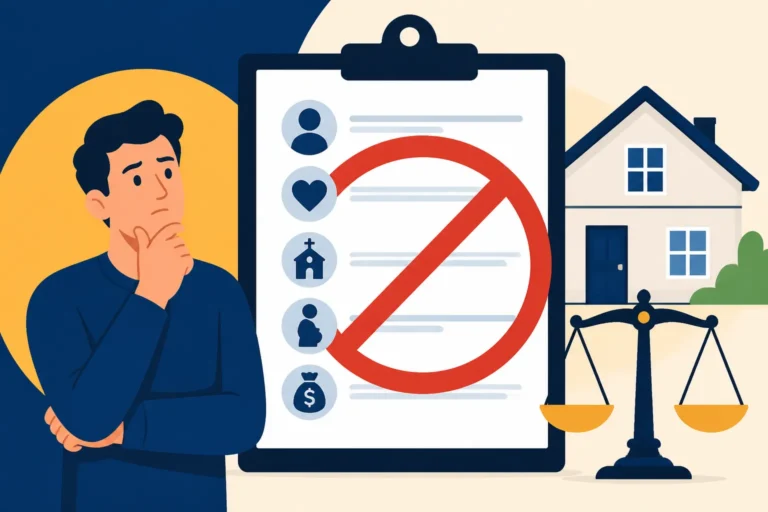
The Fair Housing Act doesn't just broadly say "don't discriminate"; it specifically outlines certain characteristics that cannot be used as a basis for denying housing, setting different terms, or asking inappropriate questions. These are known as federally protected classes, and understanding them is your first line of defense against unfair practices. The original act protected against discrimination based on race, color, religion, sex, and national origin. Later, disability and familial status were added to the list.
Think about it: this means a landlord can't reject your application just because of your skin color, where your family came from, your spiritual beliefs, your gender, whether you use a wheelchair, or if you have children. These are fundamental protections designed to create a level playing field. Any question that directly or indirectly tries to get at one of these characteristics, with the intent to discriminate, is generally off-limits. You'll often find resources, like our detailed guide on the Fair Housing Act: Protected Classes Explained, that break down each of these categories even further, providing crucial context for both tenants and landlords.
State and Local Protections Beyond Federal Law
While the federal Fair Housing Act sets a powerful baseline, many states and even individual cities have expanded these protections to include even more classes. This is where things can get a little nuanced, and it’s why understanding your local laws is so important. For example, states like California, New York, and Washington have added protections for characteristics like marital status, sexual orientation, gender identity, age, and even source of income.
What does "source of income" mean? It means that if you're using a housing voucher, like Section 8, a landlord in a state with this protection cannot refuse your application simply because you're using that voucher. This is a huge deal for many renters, and you can learn more about this by exploring resources on Source-of-Income Discrimination & Section 8 by State. Some cities might even protect against discrimination based on political affiliation, veteran status, or a history of being a victim of domestic violence. These additional layers of protection mean that what's off-limits in one city, say Seattle, might be perfectly acceptable to ask in a less regulated area. Always check your state and local housing authority websites for the most up-to-date information relevant to your area.
Questions Landlords Absolutely Cannot Ask
Now that we've covered the basics of fair housing, let's dive into the types of questions that are generally considered illegal for a landlord to ask. These aren't just rude or uncomfortable questions; they are queries that directly violate fair housing laws because they target one of those protected classes we just discussed.
Questions Related to Race, Color, and National Origin
This category might seem obvious, but sometimes discrimination can be subtle. A landlord cannot ask you about your racial background, the color of your skin, or where you or your family originally came from. This includes questions like:
- "Where are you from, originally?" (if not tied to legitimate identification like a driver's license for identity verification)
- "What is your ethnic background?"
- "Are you a citizen of the United States?" (This is often tricky and can be discriminatory, as we'll discuss later, but it often falls under national origin.)
While a landlord can ask for government-issued ID to verify your identity, they cannot use that information to make discriminatory housing decisions. The intent behind the question is key here. If the question is posed in a way that seems to be fishing for information about your heritage rather than legitimate identification, it's a red flag.
Inquiries into Religion or Creed
Your spiritual beliefs, or lack thereof, are deeply personal and have absolutely no bearing on your ability to be a good tenant. Therefore, a landlord cannot ask you about your religion or creed. This means no questions about:
- "What church do you attend?"
- "Are you Jewish/Christian/Muslim/etc.?"
- "Do you observe any religious holidays that would affect your tenancy?"
Again, this doesn't mean a landlord can't wish you a happy holiday if they genuinely mean it, but they can't probe into your religious practices as part of the application process. Your faith is private and irrelevant to paying rent on time or maintaining the property.
Questions About Sex, Gender, and Sexual Orientation
The Fair Housing Act specifically prohibits discrimination based on sex, and recent interpretations by HUD have clarified that this includes sexual orientation and gender identity. Therefore, landlords cannot ask questions that delve into your gender identity, sexual orientation, or even your marital status in a discriminatory way. Examples of illegal questions include:
- "Are you male or female?" (Unless it's for something like roommate matching in shared housing, which has its own specific rules and exceptions.)
- "Are you gay or straight?"
- "What pronouns do you use?" (While respectful in social settings, it can be problematic in a housing application if used to discriminate).
These questions are intrusive and have no place in a rental application. A landlord should evaluate you based on your financial stability, rental history, and character, not on your personal identity.
Questions About Familial Status and Children
This is a common area where landlords can inadvertently or intentionally discriminate. "Familial status" refers to whether you have children under 18 living with you, whether you're pregnant, or in the process of securing custody of a child. Landlords cannot ask:
- "Do you have any children?"
- "How many kids do you have?"
- "Are you planning to have children soon?"
- "Are there any single parents applying?"
They also cannot try to steer you towards or away from certain units based on whether you have children (e.g., "This unit isn't really suitable for kids"). The property cannot have an adult-only policy unless it qualifies as housing for older persons, which has very specific requirements. If you're encountering questions or policies that make you feel discriminated against because you have kids, our article on Familial Status Discrimination No Kids provides more in-depth information.
Disability-Related Questions and Accommodations
Disability is another federally protected class. Landlords cannot ask about the nature or severity of a disability. They can't ask:
- "What is your disability?"
- "Are you on disability benefits?"
- "Do you use a service animal?" (unless it's to confirm it's a service animal as opposed to a pet, but even then, there are strict rules).
What they can do is ask if you need a "reasonable accommodation" or "reasonable modification" to enjoy the property, but they cannot demand details of your disability. If you require an emotional support animal (ESA) or a service animal, the rules are very specific. Landlords cannot charge a pet fee for these animals and generally cannot deny them. This is covered extensively in our guide on Emotional Support Animals & Service Animals FHA Rules. A legitimate question might be, "Do you require any reasonable accommodations to fully use and enjoy the premises?" This allows you to volunteer information if needed, rather than being forced to disclose a disability. For landlords, screening tools like TurboTenant provide robust platforms that help ensure compliance with fair housing laws, guiding them on appropriate questions and avoiding discriminatory practices.
Questions That Are Often Tricky or Indirectly Discriminatory
Beyond the direct "no-go" questions, there's a whole category of questions that might seem innocuous on the surface but can be used to discriminate, or are just plain inappropriate. These require a bit more discernment from you as a tenant.
Financial Information Beyond Income Verification
A landlord has a clear right to verify that you can afford the rent. This typically involves asking for proof of income, like pay stubs, employment verification, or bank statements. What they generally cannot ask for is an excessive deep dive into your entire financial life beyond what's necessary to assess your ability to pay.
For instance, they can ask for your current employer and salary, but asking for every single bank account balance or detailed spending habits might cross a line. They also can't ask about the specific source of your income if it's from a protected source, like public assistance, in areas where source of income is a protected class. They're looking for stability and capacity to pay, not to judge your overall wealth or spending choices. Be prepared to provide proof of income, but be wary of overly invasive financial probes.
Marital Status or Relationship Questions
While some states explicitly protect marital status, even federally, questions about your relationship status can indirectly lead to discrimination based on sex or familial status. A landlord should not ask:
- "Are you married?"
- "Are you in a relationship?"
- "Are you single?"
These questions don't provide relevant information about your tenancy. What if you're a single woman and they have a bias against single women? What if you're an unmarried couple and they have a policy against that, which could be discriminatory? Your marital status has no bearing on your ability to pay rent or maintain a property. The only legitimate reason a landlord might need this information is if it directly affects who will be living in the unit and be responsible for the lease, in which case they'd typically ask for all adult occupants to be listed and screened, regardless of their relationship to each other.
Citizenship or Immigration Status Inquiries
This is a particularly fraught area. Generally, landlords cannot ask for your citizenship or immigration status. This is because such questions can easily lead to discrimination based on national origin, a federally protected class. A landlord can ask for a Social Security number (SSN) to run a credit and background check, and they can ask for government-issued identification to verify your identity.
However, they cannot refuse to rent to you simply because you are not a U.S. citizen, as long as you are legally residing in the country and can meet the other rental criteria. Asking for specific immigration documents, like a green card or visa, beyond what's needed for identity verification, is usually illegal and discriminatory. It's an area where landlords need to be extremely careful to avoid violating fair housing laws. You can explore more about this in articles like Can a Landlord Ask About Immigration Status?.
Criminal History Questions (with nuances)
This is perhaps one of the most complex areas. While landlords historically had broad leeway to ask about criminal history, recent guidance from the Department of Housing and Urban Development (HUD) has changed the landscape. Blanket bans on renting to anyone with any criminal record, especially arrest records without conviction, can have a "disparate impact" on protected classes (e.g., racial minorities are disproportionately arrested).
This doesn't mean landlords can't consider criminal history at all. They generally can consider convictions, particularly for crimes that directly relate to tenant safety or property damage, such as manufacturing methamphetamines on the premises. However, they need to have a clear, consistent policy, apply it equally, and consider factors like the nature and severity of the crime, how long ago it occurred, and evidence of rehabilitation. They cannot use criminal history as a pretext for discrimination. If you've been denied due to a criminal record, our piece on Can a Landlord Deny You for a Criminal Record? offers valuable insights. For landlords using services like TurboTenant, it's crucial to utilize screening tools that are designed to comply with these complex and evolving fair housing guidelines.
General "Lifestyle" Questions
Any question that probes into your personal life beyond what is necessary to assess your tenancy is generally inappropriate. This could include:
- "Do you drink alcohol or smoke?" (Unless smoking is prohibited on the property, which should be clearly stated in the lease, not asked as a personal habit.)
- "Do you have many visitors?"
- "What are your hobbies?"
- "How often do you travel?"
These questions, while perhaps framed as friendly conversation, can be used to form biases about you that are unrelated to your ability to be a responsible tenant. Focus on providing information that demonstrates your financial stability, respectful tenancy, and adherence to the lease terms.
Your Rights When Faced with Illegal Questions
It’s one thing to know your rights; it’s another to act on them when you’re in the middle of a stressful apartment search and really want a particular place. But remember, you have recourse.
How to Politely Redirect or Refuse to Answer
If a landlord asks an inappropriate or illegal question, you don't have to answer it. You have several options:
- Politely Redirect: You can say something like, "I'm happy to provide information relevant to my ability to pay rent and abide by the lease, but I prefer to keep my personal life separate from my application." Or, "That question isn't typically part of a rental application, so I'd rather not answer it."
- State the Law (Carefully): You could gently remind them, "Under fair housing laws, that question isn't typically asked." However, be aware that this might put the landlord on the defensive.
- Refuse to Answer: You can simply say, "I'm not comfortable answering that question."
- Answer with Caution: If you feel pressured, you might answer vaguely or minimally, then document the interaction. For example, if asked about religion, you could say, "I respect all beliefs," and leave it at that.
Your goal is to protect your rights without necessarily jeopardizing your application if you still want the unit, though an illegal question is a huge red flag about the landlord. If you feel like your application is being denied based on these refusals, that's further evidence of discrimination.
Documenting and Reporting Discrimination
If you believe you've been subjected to discriminatory questions or practices, documentation is your best friend. Keep a detailed record of everything:
- Dates and Times: When did the interaction occur?
- Names: Who asked the question?
- Specific Questions: Write down the exact questions asked.
- Your Response: How did you respond?
- Witnesses: Was anyone else present?
- Outcome: What happened after the question was asked (e.g., your application was suddenly denied)?
- Advertisements: Keep copies of any rental ads, especially if they contain discriminatory language.
Once you have your documentation, you can report the discrimination. The primary federal agency is the Department of Housing and Urban Development (HUD). Many states and cities also have their own fair housing councils or commissions that can help. Filing a complaint is a critical step in addressing and preventing further discrimination. Our guide on How to File a Fair Housing Complaint walks you through the process step-by-step.
Seeking Legal Aid and Fair Housing Assistance
Navigating fair housing laws can be complex, and you don't have to do it alone. There are numerous organizations and legal aid services dedicated to helping tenants understand and enforce their rights. Many local fair housing non-profits offer free counseling and can help you determine if you have a case. They can also mediate with landlords or guide you through the complaint process.
If the discrimination is severe, persistent, or involves significant financial damages, consulting with an attorney specializing in tenant-landlord law might be necessary. They can advise you on your legal options, which could include filing a lawsuit to recover damages. Remember, resources are available to support you, ensuring that you don't have to tolerate discriminatory practices when seeking a place to call home.
Summary of Prohibited and Tricky Questions
| Category | What Landlords Cannot Ask (Examples) | What Landlords Can Ask (Legitimate) |
|---|---|---|
| Race/Color/Origin | "Where are you from, originally?" "What is your ethnicity?" | Government-issued ID for identity verification |
| Religion/Creed | "What church do you attend?" "Are you religious?" | Nothing related to religion |
| Sex/Gender/Orientation | "Are you gay/straight?" "Are you male or female?" | Nothing related to sex/gender/orientation (unless shared housing exception) |
| Familial Status | "Do you have kids?" "Are you pregnant?" | Number of occupants (but not their familial relation) |
| Disability | "What is your disability?" "Are you on disability?" | "Do you need a reasonable accommodation to use the property?" |
| Financial (Tricky) | Excessive personal bank account details, specific benefit types (where protected) | Proof of income, employment verification, credit report |
| Marital Status (Tricky) | "Are you married/single/in a relationship?" | Identity of all adult occupants for screening |
| Citizenship (Tricky) | "Are you a U.S. citizen?" "Show me your green card." | Social Security Number (for credit check), government-issued ID |
| Criminal History (Tricky) | Blanket bans; questions about arrests without conviction | Convictions related to property safety/damage (with nuances) |
| Lifestyle (Tricky) | "Do you drink?" "What are your hobbies?" | Nothing related to personal lifestyle choices |
Disclaimer
Please remember, I’m a blogger, not a lawyer! This guide provides general information about landlord-tenant laws and fair housing practices. Landlord-tenant laws vary significantly by state and local jurisdiction. This content is for informational purposes only and not for the purpose of providing legal advice. You should always consult with a qualified legal professional or local housing authority for advice specific to your situation.