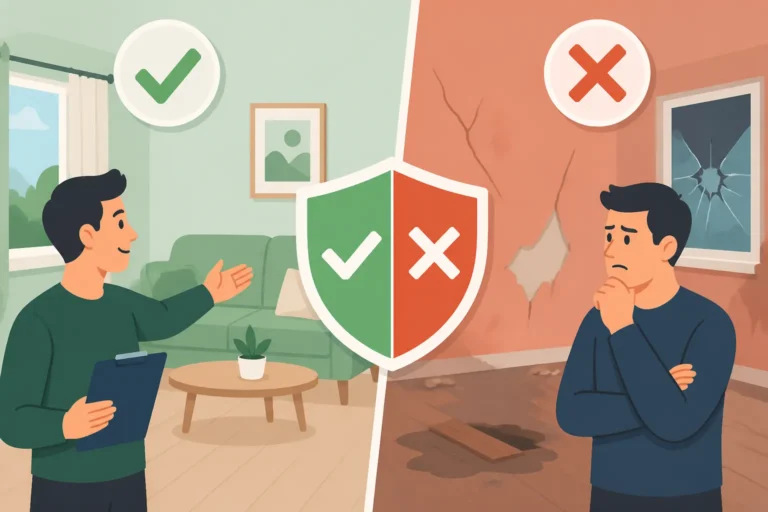
Maximum Security Deposit Limits by State
Moving into a new apartment is an expensive whirlwind, and nothing hits your bank account harder than the initial move-in costs. Many tenants find themselves blindsided when a landlord asks for two or even three months of rent upfront as a security deposit. This guide clarifies exactly how much a landlord can legally charge you in every state, helping you avoid overpaying before you even unpack your first box.
Why States Set Maximum Limits on Security Deposits
The concept of a security deposit is simple: it is a financial safety net for the landlord. If a tenant destroys the hardwood floors in a charming bungalow in Portland’s Pearl District or disappears in the middle of the night leaving three months of unpaid rent, the landlord uses that deposit to recoup their losses. However, without state-mandated caps, the barrier to entry for housing would become insurmountable for the average person. Imagine a scenario where a landlord in a high-demand area like Seattle or Boston decides they want six months of rent upfront just because they can. This would effectively gatekeep housing for everyone but the incredibly wealthy.
States step in to balance the scales. By setting a maximum limit, usually tied to a multiple of the monthly rent, they ensure that landlords have some protection while keeping the initial cost of renting a home somewhat tethered to reality. From a veteran blogger’s perspective, I’ve seen countless tenants in places like California or New York assume there are no rules, only to find out they were overcharged by thousands of dollars simply because they didn't know their rights. These laws aren't just suggestions; they are consumer protection measures designed to keep the rental market functional and fair for both parties.
Furthermore, these limits reflect the local economy and the perceived risk in different regions. In states with more "pro-tenant" legislation, you will often find strict one-month caps. In more "pro-landlord" states, the legislature might leave it up to the open market, believing that competition will naturally keep deposit amounts reasonable. As we move through 2026, we are seeing more states move toward the one-month model to combat the rising cost of living, making it more critical than ever to stay updated on Security Deposit Laws by State (2026).
Understanding the Different Types of Statutory Limits
Not every state uses a "one-size-fits-all" number for their deposit caps. In fact, many states get quite granular with their requirements. One of the most common distinctions is whether a unit is furnished or unfurnished. A landlord renting out a fully furnished luxury condo in downtown Miami is taking on significantly more risk than someone renting out an empty studio in a suburban complex. If the tenant’s dog chews up a designer sofa or a guest spills red wine on an expensive rug, the repair costs are much higher. Consequently, many states allow for a higher deposit—often up to two or three months' rent—for furnished units.
Another common variation is based on the age of the tenant. In certain jurisdictions, there are specific protections for senior citizens. For example, a state might cap the deposit at one month’s rent for anyone over the age of 65, even if the standard limit for younger adults is two months. This is an empathetic nod to the fact that many seniors are on fixed incomes and may have lived in their previous homes for decades. It's a way of ensuring that our older neighbors aren't priced out of the rental market when they need to downsize or move closer to family.
Lastly, some states differentiate based on the length of the lease. A month-to-month rental agreement might have a different deposit ceiling than a two-year fixed-term lease. Landlords often feel more vulnerable with short-term tenants who have less "skin in the game," leading some legislatures to allow slightly higher upfront costs to mitigate that perceived risk. When you are looking at a lease generated by a tool like LawDepot, it is vital to cross-reference the deposit amount with these specific state nuances to ensure the contract is actually enforceable.
State by State Breakdown of Security Deposit Limits
Navigating the map of the United States reveals a patchwork of regulations that can be confusing for anyone moving across state lines. In the West, California has recently made headlines with significant changes to its housing laws. For years, landlords could charge two months for unfurnished and three for furnished. However, under recent legislation aimed at increasing housing affordability, the Maximum Security Deposit in California is now generally capped at one month's rent for most residential leases, with very narrow exceptions for "small" landlords who own only a couple of properties. This has been a massive win for tenants in high-rent cities like Los Angeles and San Francisco.
On the flip side, we have states where the "wild west" mentality still partially exists. If you are looking at the Maximum Security Deposit in Texas, you might be surprised to find that the state has no statutory limit on how much a landlord can charge. In theory, a landlord in Austin or Dallas could ask for whatever they want. However, in practice, the market usually dictates a one-month deposit. If a landlord asks for too much, they simply won't find a tenant. This lack of a cap is also common in states like Florida and Georgia, where the legislature trusts the market to regulate itself rather than imposing a hard ceiling.
Then there are the "middle ground" states. Maryland, for instance, has a strict cap of two months' rent. If a landlord in Baltimore tries to charge a penny more, they are in violation of the law and could face penalties. Similarly, in Virginia, the cap is firmly set at two months. These states provide a predictable framework that gives landlords enough protection to feel secure while preventing the kind of extreme upfront costs seen in unregulated markets. It is always a good idea for landlords using management software like TurboTenant to double-check these limits, as the software will often flag if a deposit exceeds local legal standards.
| State | Unfurnished Limit | Furnished Limit | Special Conditions |
|---|---|---|---|
| Alabama | 1 Month | 1 Month | Includes pet deposits |
| Arizona | 1.5 Months | 1.5 Months | Tenant can voluntarily pay more |
| California | 1 Month | 1 Month | 2 months for small landlords |
| Connecticut | 2 Months | 2 Months | 1 month if tenant is 62+ |
| Delaware | 1 Month | 1 Month | No limit on leases 1+ year |
| Florida | No Limit | No Limit | Market rates apply |
| Illinois | No Limit | No Limit | Check local city ordinances |
| Maryland | 2 Months | 2 Months | Mandatory receipt required |
| New York | 1 Month | 1 Month | Strict 2019 reform laws |
| Texas | No Limit | No Limit | Usually 1 month in practice |
What Actually Counts Toward the Maximum Limit
One of the sneakiest ways a landlord might try to bypass state limits is by labeling various move-in costs under different names. You might see a "security deposit," a "holding fee," a "cleaning fee," and "prepaid rent" all listed on the same lease. In many states, the legal definition of a security deposit is very broad. It often encompasses any money held by the landlord to secure the performance of the lease. This means that if your state has a one-month limit, the landlord generally cannot charge you one month for a security deposit plus another half-month for a "move-in fee."
It is also crucial to distinguish between Pet Deposits, Last Month's Rent & Other Deposit Types. In some states, a pet deposit is considered part of the overall security deposit and must fit under the total cap. In others, it is treated as a separate, additional amount. For example, if a state has a one-month limit and your rent is $2,000, but the landlord wants $2,000 for the deposit and another $500 for your golden retriever, they might be breaking the law depending on local statutes. You have to look at the total "refundable" amount being held to see if it exceeds the statutory ceiling.
Furthermore, tenants often get confused about Last Month's Rent vs Security Deposit. While they are both paid upfront, they serve different purposes. Last month's rent is a prepayment of rent, whereas a security deposit is a safeguard against damage. Some states, like Massachusetts, have very specific rules about how these can be collected and whether they must be kept in interest-bearing accounts. If you find yourself in a situation where the landlord is asking for "First, Last, and Security," you need to ensure that the "Security" and "Last" portions combined don't violate any total limit established by the state or city.
How to Handle a Landlord Charging Over the Legal Limit
So, what do you do if you’ve found the perfect apartment in a trendy neighborhood like Chicago’s Wicker Park, but the landlord is asking for a three-month deposit in a state where only one month is allowed? First, don't panic or get confrontational immediately. Many individual landlords simply aren't aware of the specific laws. They might be using an old lease template they found online a decade ago. Start by politely pointing out the state law. You can say something like, "I'm really excited about the place, but I noticed the deposit is two months' rent. Based on my research of the current state statutes, it looks like the limit for this type of unit is one month. Can we adjust the lease to reflect that?"
If the landlord refuses to budge, you have a decision to make. You can walk away, or you can sign the lease and address the issue later. However, signing an illegal lease can be risky. A better middle ground is to provide the landlord with a printed copy of the state's official landlord-tenant handbook. Often, seeing the law on official government letterhead is enough to make a landlord reconsider. If you have already paid an illegal amount, you may have the right to sue in small claims court for the return of the excess funds, and in some states, you might even be entitled to "treble damages," which is three times the overcharged amount.
Before you get to that point, though, consider looking into Security Deposit Interest Requirements by State. If a landlord is holding a large sum of your money, they may be required by law to pay you interest on it. Knowing this can sometimes be a bargaining chip. If a landlord realizes that holding a massive, illegal deposit also means they have to deal with the administrative headache of tracking interest and paying it out annually, they might be more willing to stick to the legal one-month limit. Always keep a paper trail of every conversation regarding the deposit amount.
Evolving Legislation: What to Watch for in 2026
The landscape of rental law is shifting rapidly. As we move forward, the trend is clearly leaning toward more tenant protections. We are seeing a "California-ification" of rental laws across the country, where states that previously had no limits are now considering caps to address the housing crisis. Legislators are realizing that high security deposits are a leading cause of homelessness, as people often have the monthly income to afford rent but cannot scrape together $4,000 to $6,000 in cash just to get the keys to a modest apartment.
One of the most interesting developments is the rise of "Renter's Choice" legislation. This type of law requires landlords to offer tenants an alternative to a traditional cash security deposit. These alternatives, such as those provided by companies like Rhino or Jetty, allow a tenant to pay a small monthly insurance premium instead of a large upfront sum. While these can be a lifesaver for cash-strapped renters, they are not without controversy, as some advocates argue they end up costing the tenant more in the long run without providing the same refundability as a traditional deposit. You can read more about these in our guide on Security Deposit Alternatives (Rhino, Jetty, Surety Bonds).
Additionally, more states are implementing strict rules about how landlords must document the move-in condition of the property. This is intended to prevent landlords from keeping the deposit for "pre-existing" damage. Many jurisdictions now require a signed move-in checklist and photos to be exchanged before a deposit can even be collected. This level of transparency is great for everyone. It protects the tenant's money and protects the landlord from false claims that they are withholding funds unfairly. Being proactive about these requirements is the best way to ensure you eventually see that money again when you move out.
Documenting the Move-In to Protect Your Deposit
Even if your landlord stays within the legal limit, your goal is to get that money back in full when your lease ends. The process of getting your deposit back starts on day one, not on the day you move out. When you first get your keys, walk through every single room with your phone's camera. Take high-resolution photos and videos of everything—the inside of the oven, the back of the closets, the condition of the carpets, and even the seals on the windows. If you see a tiny crack in a floor tile or a scuff mark on the baseboard in the hallway, document it.
Most states require an itemized statement if a landlord chooses to withhold any part of your deposit. By having your own photos, you can easily dispute a claim that you caused a stain or a hole that was already there. If you're using a service like Lemonade for renters insurance, they often have great resources or blog posts about protecting your assets, and your security deposit is definitely one of your biggest rental assets. If a landlord sees that you are meticulous about documentation, they are far less likely to try and "nickel and dime" you for Normal Wear and Tear vs Damage: Complete Guide issues.
Once you have your photos, email them to yourself and, if possible, share a link to the folder with your landlord. This creates a time-stamped record that both parties have access to. It's a "friendly but firm" way of saying, "I know the condition of this apartment, and I expect my deposit back." If things do go south later on, these photos will be your primary evidence in a dispute. For a step-by-step walkthrough on this process, check out our How to Get Your Security Deposit Back guide, which covers everything from the initial walk-through to sending a demand letter.
Why Some Landlords Fight Against Deposit Caps
It's helpful to understand the landlord's perspective to navigate these negotiations effectively. From their side, a security deposit isn't just about damage; it's about the "turnover" cost. If a tenant moves out, the landlord has to pay for professional cleaning, repainting, and marketing the property. While they can't legally use a security deposit for standard turnover costs (unless the tenant left the place unusually dirty), having that cash on hand provides a sense of security. Landlords in high-risk areas or those who have been "burned" by previous tenants are often the ones most resistant to new, lower caps.
They also argue that lower deposits might lead to higher monthly rents. If a landlord feels they aren't protected enough by a one-month deposit, they might raise the rent by $50 or $100 a month to build up their own "insurance fund" for potential repairs. This is the classic tug-of-war in housing policy: how do you keep entry costs low without making the ongoing costs unaffordable? As a veteran of this industry, I’ve seen that the best landlords—the ones who use professional tools like TurboTenant to find high-quality tenants—are usually the most comfortable with standard legal limits because they have screened their applicants thoroughly.
Ultimately, the law is the law. Whether a landlord agrees with the cap or not, they must follow it. For tenants, knowing the What Can a Landlord Deduct From a Security Deposit? rules is the best defense against a landlord who thinks the deposit is just a "bonus" they get to keep at the end of the year. By staying informed and documenting everything, you turn the security deposit from a source of anxiety into what it's supposed to be: a temporary holding of your money that will eventually return to your pocket.
Legal Information Disclaimer
This article is provided for informational purposes only and does not constitute legal advice. Landlord-tenant laws, including security deposit limits, vary significantly by state and local jurisdiction and are subject to frequent changes. While we strive to keep this information up to date, you should always consult with a qualified attorney or local housing authority before making decisions based on this content. No attorney-client relationship is formed by reading this guide.