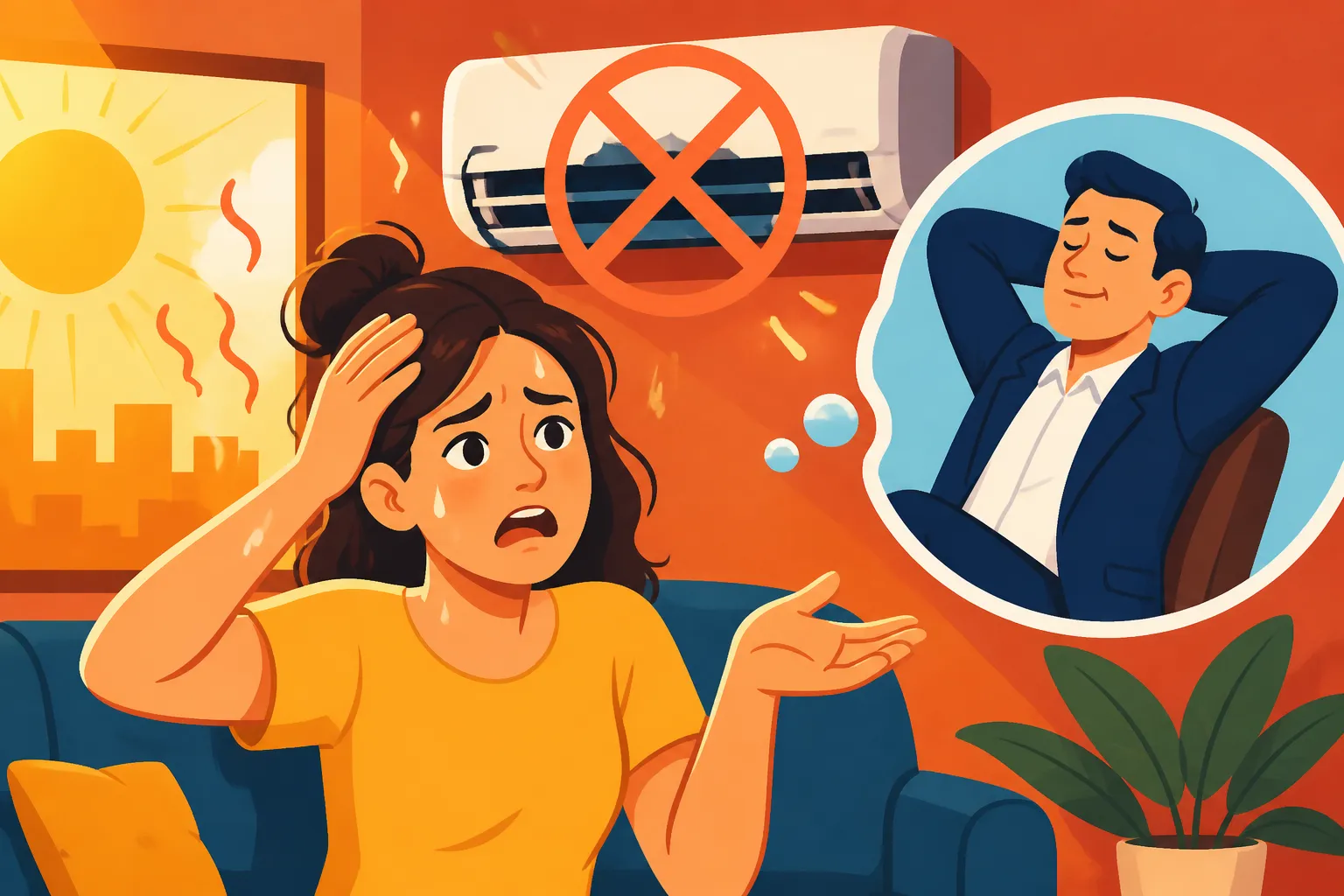
Landlord Won’t Fix the AC and It’s 95 Degrees: Help
When the summer heat hits and your air conditioner decides to take a permanent vacation, it's more than just an inconvenience – it can feel like a genuine crisis, especially when temperatures soar to 95 degrees or higher. You're left sweating, uncomfortable, and wondering what your options are if your landlord isn't responding or flat-out refuses to fix it. This guide is here to walk you through your rights and the practical steps you can take to get that blessed cool air flowing again, or at least understand what to do when your landlord leaves you in the sweltering heat.
Is Air Conditioning a Landlord's Responsibility?
This is the million-dollar question, and unfortunately, the answer isn't always a straightforward "yes." Landlord responsibilities regarding air conditioning can vary significantly based on several factors, including state law, local ordinances, and what's explicitly written in your lease agreement.
The Implied Warranty of Habitability
Most states have an "implied warranty of habitability," which means that landlords are legally required to provide a rental property that is safe, clean, and fit for human habitation. This generally covers essential services like heat, hot water, electricity, and structural integrity. The tricky part is whether air conditioning falls under this umbrella.
In many states, especially those with milder climates, AC is often not considered a fundamental habitability requirement unless the temperatures reach extreme, life-threatening levels. However, in regions known for intense, prolonged heat, like Arizona, Texas, Florida, or the Central Valley of California, the conversation changes. Some municipalities or even state laws in these hotter areas are starting to recognize extreme heat as a habitability issue. For example, in some parts of Arizona, if the indoor temperature exceeds a certain threshold (often around 82-86 degrees Fahrenheit) for an extended period, especially with an older, vulnerable tenant, it could potentially violate habitability standards. It really depends on how local courts interpret "safe and fit for human habitation" in the context of persistent, dangerous heat.
Lease Agreement Specifics
Your lease agreement is your first and most important document to consult. Many leases will explicitly state whether the landlord is responsible for providing and maintaining an air conditioning unit.
- If your lease explicitly lists AC as an amenity: If the air conditioner was part of the unit when you moved in, or if the lease agreement specifically mentions AC as an amenity the landlord provides and maintains, then it generally is their responsibility to repair it. This is your strongest argument. For instance, if your lease for an apartment in Phoenix, Arizona, says "central air conditioning included," then your landlord is on the hook.
- If your lease is silent on AC: This is where it gets murky. If the lease doesn't mention AC at all, and it's not mandated by state or local law as a habitability requirement, then the landlord might argue it's not their responsibility. However, even if not explicitly stated, if the AC was functioning when you moved in and was advertised as part of the unit's features, you might still have a case that it was an implied amenity the landlord is expected to maintain.
- Tenant-provided AC: Sometimes, tenants bring their own window units. In these cases, the landlord has no responsibility for their repair or maintenance. Always double-check your lease for clauses about installing window units or other tenant-owned appliances.
State and Local Laws
As we touched upon, laws vary significantly. Some cities, particularly in very warm climates, may have ordinances that specifically mandate landlords provide functional cooling systems.
For instance, cities like Dallas or Houston in Texas, or even some counties in Florida, might have codes that require a certain temperature range inside rental properties, especially during specific months. It's crucial to look up your specific city and state's landlord-tenant laws. Websites for your state's housing department or local tenant unions are excellent resources for this information. This patchwork of regulations means that what's acceptable in Minneapolis during a heatwave might be considered an uninhabitable condition in Miami. It's not just about comfort; it's about health and safety when temperatures soar.
Documenting the Problem and Notifying Your Landlord
When your AC goes out, your immediate instinct might be to panic. But the absolute first step, and arguably the most important one, is to create a clear, detailed paper trail. This documentation will be your best friend if things escalate.
Initial Contact and Paper Trail
You need to inform your landlord about the broken AC in writing as soon as possible. While a phone call might seem quicker, it leaves no verifiable record.
- Email is King: Send an email clearly stating the problem, the date it occurred, and the current high temperatures both inside and outside your unit. Include your address and unit number. For example, "Dear [Landlord Name], This email is to formally notify you that the air conditioning unit in my apartment at 123 Main Street, Apt 4B, stopped working on [Date]. The indoor temperature is currently 95 degrees Fahrenheit, and the outside temperature is 98 degrees. This makes the unit uninhabitable. Please arrange for immediate repair."
- Text Messages: These can also be useful, especially for initial quick notifications, but follow up with an email for more detailed communication. Screenshots of text exchanges can serve as evidence.
- Certified Mail with Return Receipt: For formal notices, especially if you're not getting a response, certified mail provides undeniable proof that your landlord received your communication. This is a big deal in legal proceedings. Keep the return receipt in your records.
- Keep Copies: Every email, every text, every letter – keep a copy. Create a dedicated folder on your computer or a physical folder for all communications related to this issue. It might seem tedious, but this paper trail is invaluable. Some landlords use property management software like TurboTenant, which logs communications. If your landlord uses such a system, ensure you're communicating through it and keeping your own records too.
Gathering Evidence
Beyond just communicating, you need to prove the severity of the problem.
- Photos and Videos: Take photos and videos of your thermostat showing the high indoor temperature. Capture visual cues of the heat, like sweat on surfaces or even yourself looking uncomfortable. Date and timestamp these whenever possible.
- Thermometer Readings: If you have an indoor-outdoor thermometer, take readings multiple times a day. If not, consider buying a cheap one for this purpose. Document the date, time, and temperature.
- Witness Statements: If friends, family, or neighbors visit and can attest to the extreme heat inside your unit, ask them if they'd be willing to write a brief statement.
- Medical Documentation: If anyone in your household has a medical condition exacerbated by heat (e.g., elderly individuals, young children, or those with respiratory issues), and they experience symptoms due to the broken AC, document doctor visits or medical advice. This strengthens your case regarding the unit being uninhabitable and a health risk.
- Local Weather Records: Keep screenshots or printouts of local weather reports showing the extreme outdoor temperatures during the period your AC was out. This helps establish the severity of the problem.
This meticulous documentation helps establish a clear timeline and proves the ongoing nature and impact of the issue, making it harder for a landlord to claim ignorance or dismiss your concerns.
What to Do If Your Landlord Still Refuses to Act
So, you’ve done your part. You’ve documented everything, sent polite but firm notices, and you’re still baking in your apartment. Now what? This is where things can get a little more complex, and your next steps depend heavily on your state and local laws, as well as your personal risk tolerance.
Sending a Formal Demand Letter
If your initial communications aren't yielding results, it's time to escalate to a more formal "demand letter." This letter should reiterate the problem, refer to your previous attempts to contact them, cite relevant lease clauses or habitability laws, and state a specific deadline for repair (e.g., 24-72 hours for an emergency like extreme heat).
- What to Include:
- Your name, address, and contact information.
- The date the AC broke and the dates of all previous communications.
- A clear statement that the AC is broken and is creating an uninhabitable or unsafe living condition, especially given the 95-degree weather.
- Reference any specific clause in your lease that makes AC a landlord responsibility.
- Reference any state or local laws regarding habitability or extreme heat, if applicable.
- A demand for prompt repair and a reasonable deadline.
- A statement of your intended next steps if they fail to comply (e.g., contacting housing authorities, pursuing legal action).
- Delivery is Key: Always send this letter via certified mail with a return receipt. This provides irrefutable proof that the landlord received your demand. You can also send it via email as a follow-up to the certified letter.
- Example: "Failure to address this critical repair by [Date – e.g., 48 hours from receipt of this letter] will compel me to explore all legal avenues available to me as a tenant, including but not limited to, contacting local housing authorities, pursuing repair and deduct options if permitted by state law, or seeking damages in small claims court."
A well-crafted letter can often spur a reluctant landlord into action because it signals you are serious and informed about your rights. For more guidance, you might find resources like a Security Deposit Demand Letter (How-To + Template) helpful for understanding the structure of a formal letter, even if the content differs.
Repair and Deduct Options (with caveats)
The "repair and deduct" remedy allows tenants in some states to pay for a necessary repair themselves and then deduct the cost from their next rent payment. This sounds like a perfect solution, but it comes with major caveats.
- State-Specific: This right is not universal. Many states do not allow it, or they have very strict conditions. California, for example, allows it under certain circumstances for necessary repairs, but often limits the amount to one month's rent and how frequently it can be used. Other states, like Arizona, have specific procedures that must be followed precisely.
- Strict Requirements: Typically, you must first give your landlord proper written notice and a reasonable amount of time to make the repair. What's "reasonable" can vary, but for essential services like heat or cooling in extreme temperatures, it's often 24-72 hours. You must use a licensed professional for the repair and keep all receipts.
- Risk: If you don't follow the state's specific rules perfectly, your landlord could claim you underpaid rent, leading to an eviction notice for non-payment. This is a serious risk.
- Legal Advice: Before attempting a repair and deduct, it is highly recommended to consult with a tenant rights attorney or a local housing agency to ensure you understand your specific state's laws and procedures. You'll want to review guides like Repair and Deduct by State to see if this option is even available to you and what the steps are.
Withholding Rent (Extreme Caution)
Withholding rent is perhaps the most extreme and risky measure a tenant can take. In most jurisdictions, you cannot simply stop paying rent because a repair isn't made.
- Illegal in Most Cases: In many states, withholding rent is illegal and can lead to immediate eviction proceedings for non-payment, even if your landlord is in breach of the lease.
- Rent Escrow Accounts: Some states allow tenants to place rent into an escrow account (a third-party account) rather than directly paying the landlord, specifically for serious habitability issues that the landlord refuses to fix. This demonstrates that you have the rent money but are withholding it until repairs are made. Even this, however, usually requires going through a court process.
- High Risk of Eviction: If you withhold rent without proper legal grounds or without following specific legal procedures (like a rent escrow account where permitted), you put yourself at severe risk of eviction. You could end up with an eviction on your record, which can make it incredibly difficult to find future housing.
- Not Recommended for AC Alone (Usually): Unless your local laws explicitly define a lack of AC in extreme heat as a direct violation of habitability rendering the unit unsafe (not just uncomfortable), withholding rent is generally too risky for a broken AC unit. For deeper dives into this complex issue, explore topics like Withholding Rent & Rent Escrow.
Contacting Local Housing Authorities
Many cities and counties have housing departments or code enforcement offices that regulate rental property standards.
- Inspection and Enforcement: You can file a complaint with your local housing authority. They may send an inspector to your unit to verify the conditions. If they find violations of local housing codes (e.g., specific mandates for cooling in extreme heat, or a general habitability violation due to unsafe temperatures), they can issue a citation to your landlord, ordering them to make repairs within a certain timeframe.
- No Direct Tenant Relief: While housing authorities can compel landlords to act, they typically don't offer direct remedies like rent reduction or financial compensation for tenants. Their role is to enforce codes.
- Finding Them: A quick web search for "your city/county housing authority" or "code enforcement" should point you in the right direction. For instance, if you're in Los Angeles, you'd contact the Los Angeles Housing Department.
Legal Action and Tenant Advocacy Groups
If all else fails, legal action might be your only recourse.
- Small Claims Court: You can sue your landlord in small claims court for damages, such as the cost of temporary housing, medical bills related to heat exposure, or a reduction in rent for the period your unit was uninhabitable. You don't usually need an attorney for small claims, though having one can certainly help. This is often the path taken when landlords illegally withhold security deposits, and you can learn more about that process through resources like Suing a Landlord for Your Deposit (Small Claims & Penalties).
- Tenant Rights Attorneys: A tenant rights attorney can advise you on the best course of action, help you draft legal documents, and represent you in court if necessary. Many cities have legal aid societies that offer free or low-cost legal services to tenants.
- Tenant Unions and Advocacy Groups: These organizations can provide advice, support, and sometimes even legal referrals. They often have experience dealing with difficult landlords and can offer community resources. Search for "tenant union [your city/state]" to find local groups.
- Consider Renters Insurance: While it won't force your landlord to fix the AC, having renters insurance from providers like Lemonade could offer coverage for your belongings if they are damaged due to a related issue (e.g., a burst pipe from a frozen AC unit, though less common). More importantly, if the unit becomes truly uninhabitable and you need temporary housing, your policy might cover those costs. It's always a good idea to understand what your policy covers. Likewise, landlords often protect their investments with landlord insurance from companies like Steadily, which might cover property damage, but typically won't directly assist with tenant disputes over amenities unless a policy specifically covers loss of rent due to habitability issues.
It's a tough situation, but remember, you have rights. Staying informed and methodical in your approach gives you the best chance of resolving this unbearable problem.
Summary of Actions and Risks
Here's a quick overview of the actions you can take, along with their associated risks and where to seek further help.
| Action | Description | Potential Risks | Where to Get Help / Information |
|---|---|---|---|
| Document Everything | Photos, videos, temperature logs, written communications (email, certified mail). | None (only helps your case) | Your personal records, tenant forums. |
| Send Formal Demand Letter | Written notice specifying problem, deadline, and intent to pursue further action. | Landlord may still ignore. | Tenant rights organizations, online templates. |
| Contact Housing Authorities | File a complaint with local code enforcement for inspection and citations. | Might take time; doesn't directly solve your financial issues. | City/County Housing Department, Code Enforcement Office. |
| Repair and Deduct (if permitted) | Pay for urgent repairs yourself and deduct from rent, after proper notice. | Illegal in many states; risks eviction if not followed perfectly. | Tenant rights attorney, state landlord-tenant laws, Repair and Deduct by State. |
| Withhold Rent (very risky) | Refuse to pay rent until repairs are made, often by placing it in an escrow account. | High risk of eviction if not legal or done improperly; not for all issues. | Tenant rights attorney, state landlord-tenant laws, Withholding Rent & Rent Escrow. |
| Small Claims Court | Sue landlord for damages (e.g., temporary housing, rent abatement) due to uninhabitable conditions. | Time-consuming; success depends on documentation and legal grounds. | Legal aid societies, tenant rights attorneys, small claims court resources, Suing a Landlord for Your Deposit (Small Claims & Penalties). |
| Seek Temporary Housing | Find alternative accommodation during extreme heat. | Can be costly if not covered by renters insurance or recoverable from landlord. | Friends, family, hotels; check your Lemonade renters insurance policy. |
Disclaimer
This article is for general informational purposes only and does not constitute professional advice. Laws and regulations vary by location and change over time. Consult a qualified professional for guidance on your specific situation.