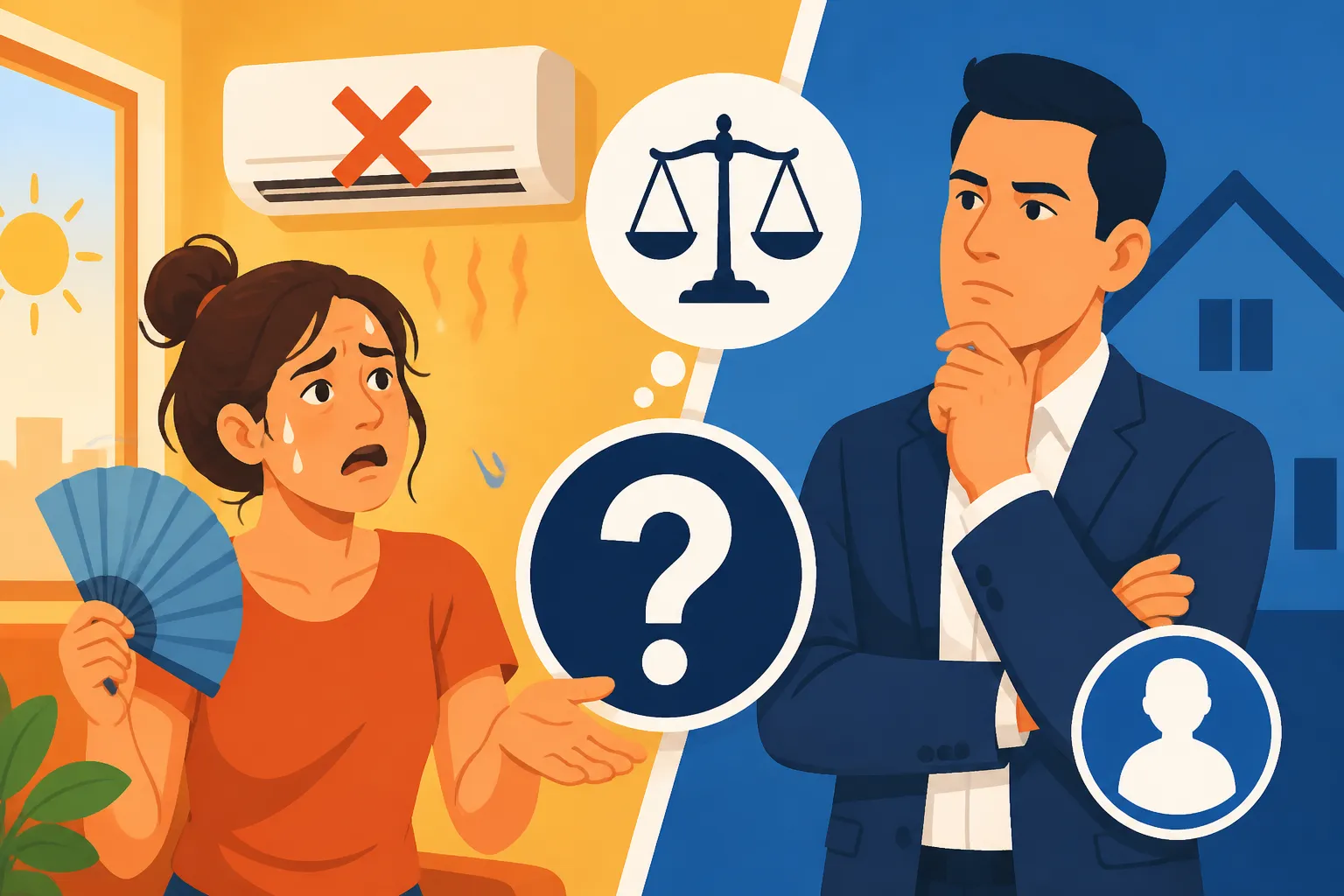
Is My Landlord Responsible for No AC?
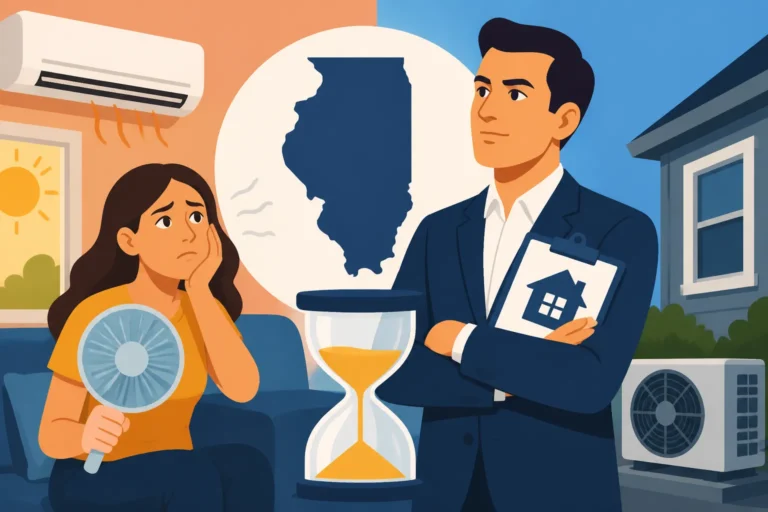
That feeling when the summer heat hits, and your air conditioning unit decides to take an unplanned vacation right along with you? It's more than just an inconvenience; it can quickly turn your comfortable home into an unbearable sauna. You’re left wondering, "Is this even my responsibility? Can my landlord actually let me suffer in this heat?" This comprehensive guide is here to shed light on your landlord's responsibilities regarding AC repairs, the legal nuances, and the steps you can take to get that cool air flowing again.
Understanding Your Landlord's AC Responsibilities
Navigating landlord-tenant law, especially around something as seemingly straightforward as air conditioning, can feel like walking through a labyrinth. It’s rarely a simple "yes" or "no" answer because so much depends on your specific lease, local ordinances, and even the climate you live in.
Implied Warranty of Habitability and AC
First off, let's talk about the "implied warranty of habitability." This fancy legal term essentially means that your landlord is legally obligated to provide a living space that is safe and livable, even if it's not explicitly spelled out in your lease. This typically covers essentials like working plumbing, safe electrical wiring, a roof that doesn't leak, and heat in colder climates.
Now, here's where AC gets tricky: for most states, air conditioning is not considered a fundamental component of habitability. In other words, a landlord typically isn't legally required to provide or maintain AC under the implied warranty unless it's explicitly stated in your lease or mandated by local law. Think about it: folks in Anchorage, Alaska, have very different climate needs than those in Phoenix, Arizona. What's considered an "essential service" often depends on the region. However, a landlord is still responsible for keeping the property structurally sound and safe, and if a provided AC unit creates a hazard (like an electrical issue), that falls under their general duty to maintain a safe environment.
The Lease Agreement is King
When it comes to AC, your lease agreement is arguably the single most important document you possess. It’s not just a formality; it’s a legally binding contract that outlines the specific responsibilities of both you and your landlord. This is where you'll find the explicit details that can make or break your case for a repair.
Carefully review your lease for any clauses related to appliances, maintenance, or specifically, air conditioning. Does it state that the landlord provides an AC unit? Does it say they are responsible for maintaining it? Or does it merely mention that the unit is included "as-is" and any repairs are the tenant's burden? Some leases might be very detailed, specifying whether it's central air, a window unit, or even a mini-split system. For example, a lease might say, "Landlord shall maintain the central air conditioning system in good working order." This is a clear indicator of responsibility. If it's a "take it or leave it" situation where the landlord supplied a window unit but the lease doesn't mention maintenance, it can be a gray area. Before signing any lease, it's always smart to understand What to Include in a Lease Agreement and ensure these details are covered.
State and Local Laws on AC
While the implied warranty of habitability might not universally cover AC, individual states and even specific cities can have their own rules. These laws often fill in the gaps where the lease might be vague or silent.
For instance, in some hotter climates like parts of Texas or Arizona, or cities with very high summer temperatures, local ordinances might require landlords to provide and maintain cooling systems. This is particularly true in areas where extreme heat can pose a significant health risk, especially for vulnerable populations like the elderly or young children. Some municipalities might set minimum and maximum indoor temperature requirements, though these are more common for heating in winter.
It's crucial to understand your local tenancy laws. Websites for your state's housing department or local tenant unions are excellent resources. For example, some states might have general Landlord Repair Responsibilities What They Must Fix that could be interpreted to include AC if it's considered an essential amenity in that specific region or if the unit was advertised as having working AC. However, generally speaking, if AC isn't explicitly mentioned in state law or local ordinance as a habitability requirement, and it's not in your lease, then your landlord might not have a legal obligation to fix it.
When Your Landlord IS Responsible for AC Issues
Okay, so we've established the lease is paramount, and state/local laws can play a role. Let's dig into the specific scenarios where your landlord is typically on the hook for a broken AC.
AC as an Essential Service (The Extreme Cases)
Even if AC isn't universally considered a habitability requirement, there are situations where it becomes one. This often happens in places with truly oppressive summer heat, where prolonged exposure to high indoor temperatures can be genuinely dangerous. Think places like Phoenix, Las Vegas, or Miami in the dead of summer, where temperatures regularly soar past 100 degrees Fahrenheit.
In these extreme scenarios, a local ordinance or court ruling might deem a working AC unit an "essential service," especially if the property was advertised with one. Moreover, specific situations involving vulnerable tenants might trigger a landlord’s responsibility. If you or someone in your household has a documented medical condition that requires a temperature-controlled environment, and you've made your landlord aware of this with proper documentation (like a doctor's note), then a broken AC could quickly become a serious issue. Failure to address it in such cases could potentially lead to claims of constructive eviction or even health code violations.
Broken AC in a Provided Unit
This is perhaps the most common scenario where a landlord is responsible. If your rental unit came equipped with an air conditioning system—be it central air, a wall unit, or a window unit—and it breaks down, your landlord is generally obligated to repair or replace it. This is usually implied even if not explicitly stated, as it was a provided amenity that contributed to the value and usability of the rental.
The expectation is that the landlord maintains the property in the condition it was rented. If you moved into an apartment with central air, and that central air stops working due to mechanical failure or normal wear and tear, your landlord should fix it. This doesn't mean they're responsible for your personal window unit that you brought in, but any unit that was part of the original rental property is usually their burden. Keep in mind that "normal wear and tear vs damage" is a key distinction here; if you accidentally put a baseball through the condenser unit, that’s on you! But if the compressor simply gives out after years of use, that’s typically the landlord’s problem.
When the Lease Specifies AC Maintenance
As we covered, the lease is your best friend. If your lease agreement explicitly states that the landlord is responsible for maintaining or repairing the air conditioning system, then there's no ambiguity. They are legally bound by that clause.
This might look like a sentence such as: "Landlord agrees to maintain all major appliances, including the central air conditioning system, in good working order throughout the tenancy." Such a clause places the responsibility squarely on their shoulders, regardless of general state laws or local ordinances. This is why a thorough review of your lease before signing is absolutely essential. Don't be shy about asking questions or even negotiating for clearer language around AC responsibilities if it's a priority for you, especially in warmer climates. A good landlord might even use property management software, like that offered by TurboTenant, which helps them track maintenance requests efficiently and ensures they're meeting their obligations.
What to Do If Your Landlord Isn't Fixing the AC
So, your AC is out, it's hot as blazes, and your landlord isn't responding or seems reluctant to fix it. This is incredibly frustrating, but you have steps you can take. Remember, documentation and clear communication are your superpowers here.
Document Everything
In any landlord-tenant dispute, a clear paper trail is your most valuable asset. As soon as you notice the AC isn't working, start documenting:
- Dates and Times: Note when the AC stopped working and every time you attempt to contact your landlord.
- Written Communication: Always make your repair requests in writing. An email, text message, or certified letter (with a return receipt) is better than a phone call because it provides verifiable proof. Make sure to clearly state the problem (e.g., "The central AC unit is blowing hot air and the temperature in the apartment is 88 degrees Fahrenheit") and request a prompt repair. You might even refer to this as a formal How to Request Repairs in Writing.
- Photos/Videos: While difficult for a non-functional AC, document visible issues like leaks, ice buildup on coils (if you can see them), or even a thermometer showing the indoor temperature.
- Conversations: If you do speak by phone, follow up with an email summarizing the conversation: "Per our phone call today, [Date], you stated a technician would be out by [Date]."
This meticulous record-keeping is crucial if you ever need to take further action, like pursuing legal remedies or filing a complaint.
Formal Repair Request and Follow-Up
Once you've documented the initial issue, send a formal written notice to your landlord requesting the repair. This letter should:
- Clearly state the problem: "The air conditioning unit is not functioning."
- Refer to your lease agreement if it specifies their responsibility: "As per Section X of our lease agreement, the landlord is responsible for maintaining the central air conditioning system."
- Mention the date the problem started and any previous attempts to contact them.
- Request a repair within a "reasonable time frame." What's "reasonable" can vary by state, but for a broken AC in summer heat, it's often considered a matter of days, not weeks. Check your state's laws on How Long Does a Landlord Have to Make Repairs? By State.
If you don't hear back or the repair isn't made within that reasonable timeframe, send a follow-up letter, again, in writing. Reiterate your previous request and mention the lack of action. This shows a consistent effort on your part to resolve the issue through proper channels.
Understanding Your Options
If your landlord continues to ignore your requests, you might have more drastic options, but these should always be approached with caution and ideally, legal advice.
- Repair and Deduct: In some states, after providing proper notice and allowing a reasonable time for the landlord to act, you may be able to arrange for the repair yourself and deduct the cost from your next rent payment. This is a powerful remedy but is often complex and strictly regulated. You must follow state laws precisely, as improper use can lead to eviction. Understand the specific rules for Repair and Deduct by State before considering this.
- Withholding Rent: This is another high-risk option. In most states, you generally cannot simply withhold rent without specific legal justification. If your AC is deemed a habitability issue (which, as discussed, is rare unless specifically legislated or extreme circumstances), you might be able to place rent into an escrow account. This means you pay the rent, but it's held by a third party (like the court) until the landlord makes repairs. Again, this is highly regulated, and you risk eviction if you don't follow the process perfectly. Research Withholding Rent for Repairs in your state.
- Breaking the Lease: In extreme cases, if the lack of AC makes the unit truly uninhabitable (again, very rare for just AC unless medically necessary or extreme local laws apply), you might have grounds to break your lease. This is effectively a claim of "constructive eviction." This is an absolute last resort and carries significant legal risks. Consult legal counsel before attempting to Breaking a Lease for Uninhabitable Conditions.
- Contact Local Housing Authorities: If the issue persists and especially if it falls under a local health or safety code violation (e.g., extreme heat causing health risks), you can contact your local housing authority or code enforcement office. They can investigate and potentially issue citations to your landlord, forcing them to make repairs.
- Small Claims Court: If all else fails and you've incurred damages (e.g., medical bills due to heat exposure, spoiled food due to refrigerator malfunction caused by heat, or the cost of temporary relocation), you might consider suing your landlord in small claims court.
Consider Tenant's Insurance
While tenant's insurance won't fix your AC, policies from providers like Lemonade can be a lifesaver in other ways. If a malfunctioning AC unit leads to secondary damage—say, a leak from the unit damages your personal belongings, or mold develops because of moisture issues related to the AC (though What to Do If Your Apartment Has Mold would be a separate issue for your landlord to handle)—your renter's insurance can help cover the cost of replacing your damaged property. It’s a good safety net for unexpected situations, even if it doesn't directly address the repair itself.
Preventing Future AC Headaches
Nobody wants to deal with a broken AC, especially when temperatures soar. A little proactive effort and understanding can save you a lot of grief.
Thoroughly Reviewing Your Lease Before Signing
Seriously, I can't stress this enough: read your lease! Don't just skim it. Before you sign, pay close attention to any clauses regarding maintenance, appliances, and utility responsibilities. Look for:
- Specific AC clauses: Does it mention central air, window units, or mini-splits? Who is responsible for repairs and routine maintenance?
- Appliance clauses: What appliances are included, and who fixes them if they break?
- Maintenance requests: How does your landlord prefer to receive repair requests? What are their stated response times?
If the lease is silent on AC, and you're moving to a warm climate, ask for an addendum specifically stating the landlord's responsibility for maintaining any provided AC unit. This negotiation upfront is far easier than fighting for repairs later. When you complete your initial Move-In / Move-Out Inspection Guide, ensure the AC's working status is clearly documented.
Communicating Proactively
Good communication with your landlord can prevent small issues from becoming big, costly problems. If you notice your AC isn't cooling as well as it used to, or if you hear strange noises, don't wait for it to completely break down. Send a polite, written message (email is great for this) describing the issue.
Early intervention often means a simpler, less expensive repair. A good landlord, especially one who uses efficient property management tools, appreciates being informed promptly. They might even use services like Steadily for landlord insurance, which motivates them to keep properties well-maintained to avoid claims, indirectly benefiting you. Understanding Landlord Repair Responsibilities What They Must Fix helps you know when to reach out and what to expect.
Regular Tenant Maintenance
While major repairs are typically the landlord's responsibility, tenants often have simple maintenance tasks that can help prevent AC breakdowns and keep the unit running efficiently.
- Change air filters regularly: This is probably the most important and easiest task. Dirty filters restrict airflow, make the AC work harder, and can lead to breakdowns. Most leases specify this as a tenant responsibility, usually every 1-3 months.
- Keep vents clear: Ensure no furniture, curtains, or rugs are blocking air vents, which can impede airflow and strain the system.
- Report issues promptly: As mentioned, if you hear odd noises, notice strange smells, or see leaks, let your landlord know immediately.
By doing your part, you not only contribute to the longevity of the unit but also demonstrate that you're a responsible tenant, which can make a big difference if you ever need to advocate for a larger repair.
Landlord AC Responsibility at a Glance
This table provides a quick overview of common scenarios and who is typically responsible for AC repairs.
| Scenario | Landlord Responsible? | Rationale |
|---|---|---|
| AC explicitly mentioned in lease as L's duty | Yes | Explicit contractual obligation. |
| AC provided by L, breaks due to wear/tear | Yes | Provided amenity; normal wear and tear is L's burden. |
| AC is required by local ordinance/law | Yes | Legal requirement, especially in extreme climates or for vulnerable tenants. |
| L provided AC, tenant causes damage | No | Tenant responsible for damage beyond normal wear and tear. |
| Tenant brings own window unit | No | L not responsible for tenant's personal appliances. |
| Lease is silent on AC, not required by law | Unlikely | AC usually not considered a "habitability" requirement unless specified in lease or local/state law. |
| AC causes a safety hazard (e.g., electrical) | Yes | L's general duty to maintain a safe, habitable environment. |
Disclaimer
Please remember that this guide provides general information and is not a substitute for legal advice. Landlord-tenant laws vary significantly by state and municipality. Always consult with a qualified attorney or your local tenant's rights organization for advice specific to your situation and location.