Is My Landlord Responsible for Bed Bugs?
There are few things as unsettling as discovering your apartment has been invaded by bed bugs. That creeping dread, the itchy bites, the thought of these tiny creatures feasting on you while you sleep – it’s a nightmare no renter should have to face. When you’re dealing with an infestation, the last thing you want to worry about is who’s responsible for getting rid of them and footing the bill. This guide is here to help you understand your rights and your landlord's obligations when it comes to bed bugs in your rental home.
Understanding Bed Bugs and Their Impact
Before we dive into the legalities, let's get real about what you're up against. Bed bugs aren't just an inconvenience; they're a serious problem that can disrupt your life, health, and finances. Knowing a bit about them helps you understand why resolving an infestation quickly is so crucial.
The Unwanted Houseguests: What Are Bed Bugs?
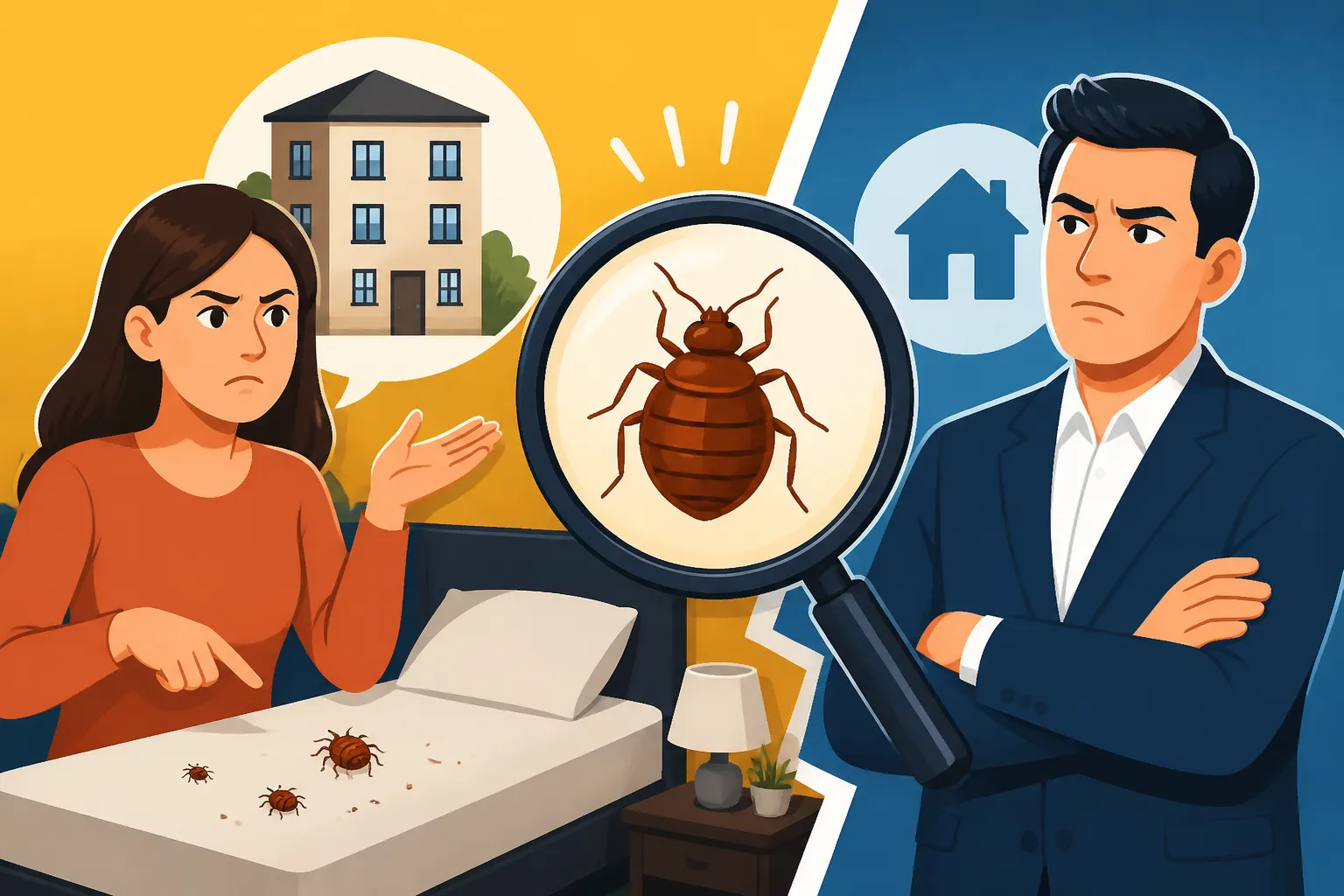
Bed bugs (Cimex lectularius, if you want to get scientific) are tiny, reddish-brown, oval-shaped insects about the size of an apple seed. They’re nocturnal, meaning they mostly come out at night to feed on the blood of humans and animals. During the day, they're experts at hiding in cracks and crevices – think mattress seams, bed frames, headboards, behind wallpaper, in electrical outlets, or even in piles of clutter. They don't jump or fly, but they are champion hitchhikers, often spreading by clinging to luggage, used furniture, or clothing.
The thing is, a bed bug infestation doesn't mean your place is dirty. These little critters are equal-opportunity invaders. They’re not attracted to grime; they’re attracted to warmth and carbon dioxide, which means they're attracted to you. They can pop up in the cleanest, most meticulously maintained homes, often carried in from another infested location like a hotel, a friend's house, or a public place. Once they're in, they multiply quickly, turning a small problem into a full-blown crisis in no time.
The Real-Life Consequences of an Infestation
Beyond the obvious "ick" factor, living with bed bugs takes a huge toll. The bites themselves, while not usually dangerous, can be incredibly itchy, leading to skin irritation, infections from scratching, and allergic reactions in some people. But it's not just physical. The mental and emotional stress of a bed bug infestation is immense. Many tenants report anxiety, insomnia, and paranoia, constantly checking for bugs and feeling uncomfortable in their own homes. It can affect your sleep, your work, and your overall well-being.
Then there's the financial aspect. Treating bed bugs isn't cheap, and it often requires multiple visits from professional exterminators. You might also face costs for laundry, special mattress covers, and potentially even replacing furniture if it's too heavily infested. Imagine having to bag up every single item of clothing, strip your bed down to the frame, and endure multiple rounds of chemical treatments in your living space. It's a massive undertaking, and the question of who pays for it becomes a critical source of stress for tenants already at their wits' end.
Deciphering Landlord Responsibility by State
When it comes to who's on the hook for a bed bug infestation, there's no single federal law. It all boils down to state and local regulations, and sometimes even specific clauses in your lease agreement. This is where things get a bit tricky and often lead to frustrating disputes between tenants and landlords.
General Rule: Landlord's Implied Warranty of Habitability
Most states operate under an "implied warranty of habitability." This legal principle essentially means that a landlord must provide and maintain a rental property that is safe, healthy, and fit for human habitation. This includes keeping the premises free from serious health hazards, and in many places, that absolutely includes severe pest infestations like bed bugs, especially if they make the apartment uninhabitable.
However, the "implied warranty" isn't a blanket statement that landlords are always responsible for pest control. The key often lies in when the infestation began. If the bed bugs were present before you moved in, or if they originated from common areas of a multi-unit building, it’s much more likely to be the landlord’s responsibility under this warranty. But if the infestation can be clearly traced to your actions or negligence after you moved in, the responsibility might shift. This nuance is why documenting everything from day one is so important, which we'll discuss in a bit. Many tenants find themselves wondering, "What counts as an emergency repair?" – and for many, a bed bug infestation certainly feels like one.
State-Specific Bed Bug Laws
While the implied warranty of habitability is a good starting point, many states and even individual cities have specific laws regarding bed bugs. These laws often try to clarify who is responsible based on the timing of the infestation:
- Landlord Always Responsible (or presumptive responsibility): Some areas place the primary responsibility on landlords, especially in multi-unit buildings, recognizing that bed bugs can easily spread between units regardless of a single tenant's actions. For example, in New York City, landlords are generally responsible for investigating and eradicating bed bugs, though tenants are usually required to cooperate with treatment. This is a huge relief for tenants in that area.
- Tenant Responsible if Caused: Other states or local ordinances might stipulate that the landlord is responsible for initial infestations, but if the tenant is found to be negligent (e.g., bringing in infested furniture, failing to prepare for treatment), the responsibility shifts. This can be incredibly hard to prove one way or another, leading to a lot of finger-pointing.
- Timing-Based Responsibility: A common approach is a grace period. For instance, in Washington D.C., landlords are responsible for bed bug treatment for the first year of a tenancy, after which the burden shifts to the tenant unless the tenant can prove the infestation existed before moving in. This kind of nuanced law exists in places like Seattle as well. California has generally sided with landlords being responsible to maintain a habitable premises free of pests, but they also have rules about disclosure and what a landlord can deduct from a security deposit if the tenant caused the damage.
It's crucial to look up the specific Security Deposit Laws by State (2026) and tenant-landlord laws for your exact location. A quick search for "tenant rights bed bugs [Your City/State]" can yield invaluable information. Some cities might even require landlords to disclose prior bed bug infestations to new tenants.
Lease Agreements and Clauses
Your lease agreement is a critical document, and it might contain specific clauses about pest control. Some leases will explicitly state who is responsible for bed bug treatment. However, even if your lease tries to put all the responsibility on you, it might not be enforceable if it contradicts state or local law. Landlords can't simply write away their legal obligations.
For example, a lease might state that pest control is the tenant's responsibility. But if you moved into a New York City apartment that was already infested, that clause might be overridden by the city's tenant protection laws. On the other hand, a well-crafted lease from a platform like TurboTenant might clearly outline procedures and responsibilities within the bounds of local law, aiming to prevent disputes later. It’s always worth reading your lease very carefully before signing, looking for any clauses related to pest control or maintaining habitability. Even if you signed a lease with such a clause, it’s important to understand your rights, as clauses can sometimes be deemed unenforceable if they violate state or local statutes.
What to Do If You Suspect Bed Bugs
Finding bed bugs is jarring, but panicking won't help. What will help is taking immediate, systematic action to protect your rights and ensure the problem is addressed effectively. This is where your inner detective comes out.
Documenting the Evidence
This is perhaps the most crucial step you can take. You need to gather irrefutable proof of the infestation, ideally before it spreads or your landlord has a chance to deny it.
- Photographs and Videos: Take clear, close-up pictures and videos of any bed bugs you find (live ones are best, as dead ones could be old), their eggs (tiny white specks), and dark fecal stains (small black or reddish spots, often on mattresses, bed frames, or walls). Capture the location where you found them.
- Bite Marks: Document any bites you or other occupants have, noting their appearance and location on your body. Bed bug bites often appear in lines or clusters of three ("breakfast, lunch, and dinner").
- Dates and Times: Keep a detailed log of when you first noticed bites, when you found bugs, and every time you communicate with your landlord.
- Samples: If you can safely capture a live bed bug in a sealed container (like a Ziploc bag or a jar with tape over the lid), do so. This provides undeniable proof for your landlord or a pest control professional.
This evidence will be invaluable if you need to dispute responsibility or even pursue legal action later on. It’s your word against theirs without it.
Notifying Your Landlord Formally
Once you have your evidence, it's time to inform your landlord – and you need to do it in writing. Verbal conversations are easily forgotten or denied.
- Written Notice is Key: Send a formal letter or email to your landlord describing the problem, including the date you discovered it, where you found the bugs, and the evidence you’ve collected. Attach your photos.
- Request Prompt Action: Clearly state that you are requesting immediate pest control treatment due to a bed bug infestation, emphasizing that this is a habitability issue.
- Send Via Certified Mail: If sending a letter, use certified mail with a return receipt requested. This provides legal proof that your landlord received the notice and when. If emailing, ensure you get a read receipt or follow up to confirm receipt.
- Keep Copies: Always keep copies of all correspondence for your records.
By formally notifying your landlord, you're not only fulfilling your tenant obligation but also starting an official paper trail. This documentation is vital if your landlord is slow to respond or tries to shift blame. You might also want to look into your specific state's laws on How to Request Repairs in Writing to ensure your notice meets all legal requirements.
Tenant's Role in Prevention and Cooperation
While the landlord might be primarily responsible for treatment, you, as the tenant, have an important role to play to ensure the treatment is successful and to prevent future infestations.
- Keep Your Unit Clean: While cleanliness doesn't prevent bed bugs, it can help in detecting them early and makes treatment more effective. Reduce clutter, vacuum regularly, and avoid bringing in used furniture without thoroughly inspecting it.
- Prepare for Treatment: Professionals will typically give you a detailed list of instructions before they arrive. This often includes:
- Laundering all bedding, clothing, and curtains in hot water and drying them on high heat.
- Emptying dressers and closets and bagging all items.
- Moving furniture away from walls.
- Vacuuming floors thoroughly.
- Discarding infested items that cannot be treated (like severely infested mattresses, but wrap them in plastic first to prevent spreading bugs during transport).
- Cooperate with Entry: Your landlord will need access to your unit for inspections and multiple treatments. You must cooperate with these entries, provided they give you proper notice. For more details, check out guides on Landlord Entry for Repairs Notice Rules.
- Follow-Up: Attend follow-up treatments and continue to be vigilant. Bed bugs can be notoriously difficult to eradicate, and it often takes several rounds of treatment to get rid of them completely.
Failure to cooperate with reasonable treatment requests could shift some of the responsibility (and costs) back to you, even if the initial infestation wasn't your fault.
Navigating Treatment and Costs
Once the infestation is confirmed and notice is given, the real work begins: the treatment process. This isn't a DIY job; it requires professional expertise and can be a significant financial burden, which again brings us back to who is ultimately responsible.
Professional Extermination: Why It's Crucial
Let's be clear: you cannot effectively get rid of bed bugs on your own. They are incredibly resilient, reproduce quickly, and hide in countless tiny spaces. Over-the-counter sprays and home remedies are often ineffective and can even make the problem worse by scattering the bugs into other units or deeper into hiding.
Professional exterminators use a combination of methods, including chemical treatments, heat treatments (which can be very effective but also costly), and thorough inspections. They know where to look, what products to use, and how to safely apply them. Expect multiple treatment sessions over several weeks or even months to ensure all eggs hatch and are then eliminated. Skipping treatments or trying to cut corners will almost certainly lead to the bugs returning.
Who Bears the Financial Burden?
This is often the million-dollar question. As discussed, it largely depends on your state and local laws, and when the infestation started.
Here’s a general breakdown of common scenarios for financial responsibility:
| Scenario | Typical Financial Responsibility (Varies by State) | Key Considerations |
|---|---|---|
| Infestation Present at Move-In | Landlord | Tenant must prove bugs were there before occupancy (e.g., photos from move-in inspection, quick discovery). Landlord generally has a duty to provide a habitable unit. |
| Infestation in Common Areas | Landlord | If bed bugs spread from hallways, laundry rooms, or adjacent units, the landlord is usually responsible, especially in multi-unit dwellings. |
| Infestation After Move-In (Early) | Often Landlord | Many states place initial responsibility on the landlord for infestations that arise early in a tenancy (e.g., first 30-90 days), as it's harder to prove tenant causation quickly. |
| Infestation After Move-In (Later) | Can be Tenant or Landlord (Often Disputed) | If the infestation appears much later, the landlord might argue the tenant introduced them. Tenant would need to prove otherwise or rely on strong state laws. This is where documentation becomes paramount. |
| Tenant Negligence/Lack of Cooperation | Tenant | If a tenant refuses treatment, brings in infested items knowingly, or fails to properly prepare for treatment, the financial burden may shift to them. Landlords could use this to make deductions from a security deposit if they can prove the tenant caused the infestation. |
It’s important to remember that standard renters insurance, such as policies from providers like Lemonade or Steadily, typically do not cover bed bug extermination costs or damage to your property directly caused by pests. These policies are generally for sudden, unexpected events like fire, theft, or water damage, not infestations. While they might cover the cost of a hotel if your unit is uninhabitable due to a covered peril (which bed bugs usually aren't classified as), don't count on them to pay for pest control.
If your landlord tries to charge you for extermination, ask for an itemized security deposit deduction statement. You have the right to dispute charges you believe are unfair, especially if you have evidence that the infestation wasn't your fault. Learning How to Dispute Security Deposit Deductions can be incredibly helpful here.
When a Landlord Fails to Act
What happens if you've done everything right – documented, notified, cooperated – and your landlord still drags their feet or outright refuses to address the bed bug problem? This is where your tenant rights become critical, but you must proceed with caution.
- Further Communication: Send another written notice, reminding them of your previous attempts and the legal implications of failing to provide a habitable living space. Refer to the implied warranty of habitability and any specific state laws you've found.
- Contact Local Housing Authorities: Many cities and counties have housing departments or health departments that can intervene. They can inspect your unit, verify the problem, and order your landlord to take action. Filing a complaint with them creates an official record and can put significant pressure on an unresponsive landlord. This is a common step when you need to Report a Landlord Code Violations and Retaliation.
- Repair and Deduct: In some states, after giving proper notice and allowing a "reasonable time for repairs," you may be able to arrange for professional pest control yourself and then deduct the cost from your rent. This is known as "repair and deduct" and is a serious step with strict legal requirements. You must know your state's specific Repair and Deduct by State laws before attempting this, as doing it incorrectly can lead to eviction.
- Withholding Rent: Even more serious is withholding rent. This is generally only allowed in extreme cases where the unit is truly uninhabitable and your landlord has failed to make repairs after proper notice. Similar to repair and deduct, it carries significant risks, including potential eviction, if not done precisely according to your state's laws. You must consult legal counsel before considering Withholding Rent for Repairs.
- Breaking the Lease: In very severe and unaddressed cases, you might have grounds to break your lease without penalty due to uninhabitable conditions. This is a last resort and also requires careful legal consideration to avoid penalties for What Happens If You Break a Lease.
Dealing with bed bugs is never easy, but by understanding your rights, documenting diligently, and communicating formally, you can navigate this unwelcome situation and push for a solution that gets your home back to being a safe and comfortable space.
Disclaimer
This article is for general informational purposes only and does not constitute professional advice. Laws and regulations vary by location and change over time. Consult a qualified professional for guidance on your specific situation.