Quiet Enjoyment & Habitability
Moving into a new place, we all hope for that perfect sanctuary—a spot where we can truly relax, feel safe, and live without constant disruption. But let's be real, the rental journey isn't always smooth sailing. Tenants often find themselves grappling with homes that don't quite meet basic living standards or dealing with persistent disturbances that make their own space feel anything but peaceful. On the flip side, landlords can face a minefield of regulations trying to balance their responsibilities with tenants' expectations. This comprehensive guide is here to untangle two fundamental, yet frequently misunderstood, pillars of tenant rights and landlord duties: the implied warranty of habitability and the covenant of quiet enjoyment.
Understanding the Implied Warranty of Habitability
When you rent a home, apartment, or even a room, you're not just paying for four walls and a roof. Implicit in every residential lease, regardless of whether it's explicitly written down, is an agreement that the property will be safe, clean, and fit for human habitation. This is known as the "implied warranty of habitability," and it's a cornerstone of landlord-tenant law across the United States. It means your landlord has a legal obligation to provide and maintain a living space that meets essential health and safety standards throughout your tenancy.
What Exactly Does "Habitable" Mean?
The term "habitable" isn't just a vague feeling of comfort; it refers to a set of concrete conditions that ensure a property is suitable for living. While specifics can vary slightly by state and local ordinances, the core idea is universal. A habitable residence must provide basic necessities that protect a tenant's health and safety. Think of it as the bare minimum required to live without undue risk or hardship. This usually includes structural soundness, functional utilities, and freedom from severe hazards.
For instance, the property should have reliable access to potable running water, including hot water, and a functional sewage system. It needs adequate heating, especially in colder climates, and often proper ventilation. Electrical systems must be safe and operational, and the building structure itself—roof, walls, floors—must be secure and weather-tight, protecting against rain, snow, and extreme temperatures. Locks on doors and windows are also typically considered part of a habitable environment, ensuring a basic level of security. If you're wondering what your landlord is legally obligated to fix, our guide on Landlord Repair Responsibilities (What They Must Fix) can provide a detailed overview.
Common Violations of Habitability
Unfortunately, real life often falls short of these ideals. Violations of the implied warranty of habitability are widespread and can range from annoying inconveniences to genuinely dangerous living situations. These are not minor issues; they are fundamental breakdowns in the landlord's duty to provide a livable space.
One of the most frequent complaints revolves around pest infestations, such as rodents, cockroaches, or bed bugs, which can make a home feel unsanitary and even cause health problems. Another major issue is mold, especially extensive mold growth, which can trigger respiratory issues and allergies. Structural problems, like a leaking roof that causes water damage, unstable ceilings, or broken windows that compromise security and insulation, also fall under habitability concerns. Imagine living in a drafty apartment in winter with a broken heater—that's a clear violation of the implied warranty. Furthermore, a lack of essential utilities, like prolonged absence of hot water or consistent power outages due to faulty wiring, makes a home uninhabitable. It's not just about comfort; it's about the fundamental ability to live safely and hygienically within your rented space.
Landlord's Core Responsibilities
A landlord's responsibility doesn't end after handing over the keys; it's an ongoing commitment to maintain the property. This means not only ensuring the property is habitable at the outset but also taking proactive steps and responding promptly when issues arise. Regular maintenance checks, like inspecting heating systems before winter or checking for leaks in plumbing, are crucial for preventative care.
When a tenant reports a problem, the landlord is expected to address it within a reasonable timeframe, depending on the severity of the issue. An emergency repair, like a burst pipe or a complete loss of heat in freezing temperatures, warrants immediate attention, often within 24 hours. Non-emergency repairs, such as a leaky faucet or a broken oven, might have a longer, but still prompt, response time, typically a few days to a week. The specific timelines can vary by state, so it's always a good idea to know How Long Does a Landlord Have to Make Repairs? (By State) where you live. This duty to maintain means a landlord can't just ignore repair requests or delay them indefinitely. Insurance providers like Steadily often emphasize the importance of preventative maintenance for landlords, as it reduces risks and potential claims from habitability issues.
Deciphering the Covenant of Quiet Enjoyment
While habitability focuses on the physical condition and safety of your rental, the "covenant of quiet enjoyment" delves into your right to peaceful and undisturbed use of your home. It’s a common law principle, also implied in every lease, that guarantees tenants the right to enjoy their property without interference from the landlord or others whose conduct is controlled by the landlord. This doesn't mean your apartment will be absolutely silent, but rather that you have the right to a reasonable level of peace and privacy.
More Than Just Noise: What Quiet Enjoyment Encompasses
When most people hear "quiet enjoyment," they immediately think about loud neighbors, booming music, or construction noise. And while those are certainly part of it, the covenant extends far beyond just decibel levels. It's about your right to possess and use your rental property free from significant interference. This includes protection from constant and disruptive invasions of privacy by your landlord, freedom from harassment, and the ability to use your home for its intended residential purpose without constant interruption.
For example, a landlord repeatedly entering your apartment without proper notice or a valid reason would be a violation of your quiet enjoyment, even if they aren't making a sound. Similarly, if your landlord constantly threatens eviction or creates an uncomfortable living environment to try and force you out, that's also a breach. The core idea is that you, as the tenant, have exclusive possession of the property during your lease term, and your landlord cannot undermine that right. It essentially guarantees you the right to occupy your rental property undisturbed, whether by physical intrusion, excessive noise, or other forms of nuisance.
Common Breaches of Quiet Enjoyment
Breaches of the covenant of quiet enjoyment can manifest in several ways, often making a tenant feel unwelcome or stressed in their own home. Landlord-related issues are often the most straightforward to address. This includes a landlord showing up unannounced repeatedly or entering your unit without proper notice for non-emergency reasons. Most states require at least 24 or 48 hours' notice for entry, as detailed in guides like Landlord Entry for Repairs: Notice Rules. If a landlord is constantly hovering, requesting unnecessary inspections, or allowing potential new tenants to tour your apartment at all hours without respecting notice, that's a problem.
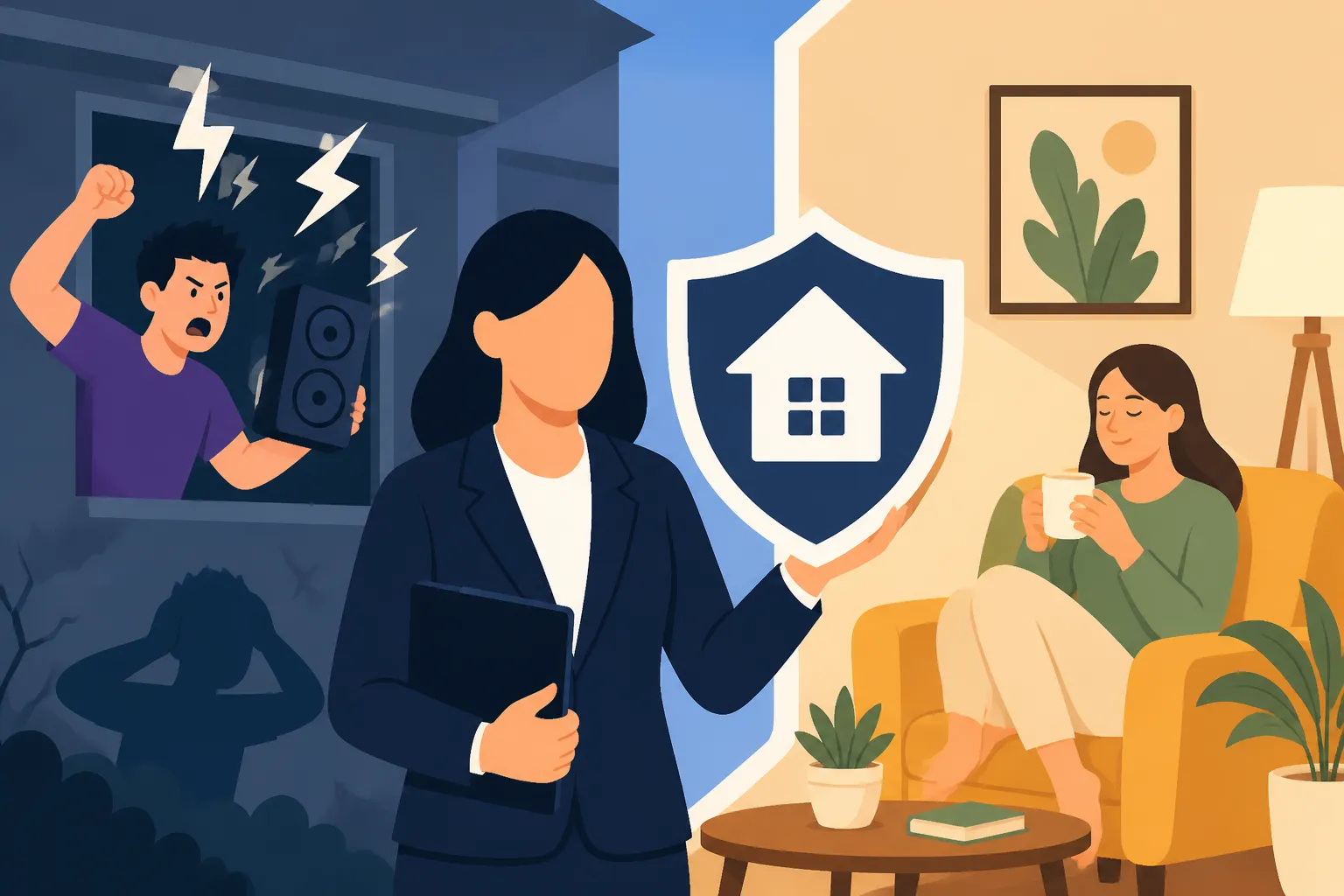
Disruptive neighbors can also be a source of quiet enjoyment violations, especially if the landlord has the power to address the disturbance but fails to do so. This could be consistent loud parties, barking dogs at all hours, or aggressive behavior that your landlord is aware of but doesn't take steps to mitigate. While landlords aren't generally responsible for all neighborly disputes, they are expected to enforce lease clauses regarding noise and conduct. Lastly, ongoing, excessive construction noise that wasn't disclosed, especially if it's directly attributable to the landlord's actions or inaction (e.g., renovations in an adjacent unit owned by the same landlord that extend for months with no end in sight and significantly impact your ability to work or sleep), can also be a breach.
The Difference Between Annoyances and Breaches
It's crucial to distinguish between minor inconveniences and actual legal breaches of quiet enjoyment. Not every noise or landlord interaction constitutes a violation. For instance, a neighbor occasionally having a loud gathering, or a landlord entering with proper notice for a legitimate repair, are generally not breaches. Life happens, and some level of ambient noise or necessary landlord access is part of living in a rental community.
The key factor is typically the severity, frequency, and duration of the interference. Is it a one-off event, or is it a persistent pattern? Does it significantly impair your ability to use and enjoy your home? A dog barking for an hour once a month is an annoyance; a dog barking for hours every night, despite multiple complaints to the landlord who does nothing, could be a breach. Similarly, one unexpected landlord visit (even if improper) might be forgiven, but a pattern of unauthorized entries is a serious violation. It comes down to what is reasonable—a standard often debated in courtrooms, but generally understood as something that substantially deprives you of the peaceful use of your home.
The Interplay Between Habitability and Quiet Enjoyment
While often discussed as separate concepts, the implied warranty of habitability and the covenant of quiet enjoyment can sometimes overlap, particularly when a severe habitability issue also leads to a loss of peaceful enjoyment. They both stem from the fundamental idea that a tenant has a right to a safe, livable, and reasonably peaceful home. Understanding where they connect can strengthen a tenant's position when seeking remedies.
When Conditions Overlap
There are times when a problem might seem to fit into both categories, essentially hitting a tenant with a double whammy. For example, a severe pest infestation (a habitability issue) can also make it impossible to sleep, eat, or relax peacefully in your home, thus breaching quiet enjoyment. Imagine an apartment plagued by rats or cockroaches to the point where you can't prepare food, you hear them scurrying in the walls at night, and you constantly feel uneasy. This isn't just an unsanitary condition; it's a constant disturbance that prevents you from enjoying your home.
Similarly, a significant structural problem like a persistent roof leak that leads to extensive mold growth and makes parts of your apartment unusable (a habitability issue) could also create a situation where you can't peacefully enjoy your space due to the smell, health concerns, and general deterioration of your living conditions. The noise from chronic plumbing leaks that keep you awake at night or the constant repair work by a landlord that leaves your apartment in disarray for weeks on end, while also being habitability failures, infringe upon your ability to simply live undisturbed. In such cases, the issues are so pervasive that they degrade both the physical condition of the property and the tenant's ability to live peacefully within it.
Legal Standing: Different Paths, Similar Goals
Despite their occasional overlap, it's important to remember that these two legal concepts address slightly different aspects of the landlord-tenant relationship and may have distinct legal remedies, though both aim to ensure a tenant has a safe and livable home. A breach of habitability often leads to remedies focused on forcing repairs or compensating for the reduced value of the property. For example, a tenant might pursue Repair and Deduct by State or even Withholding Rent for Repairs in certain situations, which are direct responses to the physical condition of the property.
On the other hand, a breach of quiet enjoyment might involve seeking an injunction to stop the offending behavior (like unauthorized entries) or seeking damages for emotional distress or diminished rental value due to ongoing disturbances. While the specific legal claims might differ, the ultimate goal for the tenant is the same: to restore their right to a safe, comfortable, and peaceful living environment. Both principles reinforce the fundamental idea that a lease is not just a transaction for space, but a guarantee of a certain quality of life within that space. For landlords, understanding these distinctions is key to developing clear lease agreements and maintaining good tenant relations; tools like TurboTenant can help landlords create comprehensive leases that address these crucial aspects.
Tenant Recourse When Rights are Violated
When a landlord fails to uphold the implied warranty of habitability or breaches the covenant of quiet enjoyment, it can feel incredibly frustrating and disempowering. However, tenants are not without options. The law provides several avenues for recourse, but the success of these actions often hinges on proper documentation and following specific legal procedures. It’s important to remember that laws vary by state, so always check your local regulations.
Documenting the Issues
The absolute first step, and arguably the most crucial, is to meticulously document everything. Without solid evidence, your claims might not hold up. This means keeping a detailed log of dates, times, and descriptions of every incident or repair issue. For habitability problems, take photos and videos of physical damage, mold, pests, or non-functioning utilities. Ensure the date and time stamps are visible if possible. For quiet enjoyment issues, record videos of excessive noise, note down dates and times of unauthorized entries, and gather any communications (emails, texts, written letters) with your landlord where you've reported the issue.
Also, keep records of any expenses incurred due to the landlord's failure, such as the cost of a temporary heater if your furnace broke, or receipts for pest control if you had to call them yourself. Every piece of evidence helps build a strong case. This thorough documentation provides undeniable proof of the problems and your attempts to resolve them.
Formalizing Your Request: The Written Notice
Once you have your documentation, the next critical step is to formally notify your landlord in writing. Verbal complaints, while common, are often hard to prove in court. A written notice creates a clear paper trail and demonstrates that you've given your landlord a fair opportunity to fix the problem. This could be a formal "notice to repair" or a "demand letter."
Your letter should:
- Clearly state the issue(s) with specific dates and details (referencing your documentation).
- Reference the relevant lease clause or legal right (habitability, quiet enjoyment).
- Request specific action (e.g., "Please repair the leaking roof within 7 days" or "Please ensure proper 24-hour notice for all future entries").
- State your intent to pursue further action if the issue isn't resolved.
- Keep a copy for your records and send it via certified mail with a return receipt requested, or email with a read receipt, to prove it was sent and received.
This formal communication is often a legal prerequisite before a tenant can pursue more aggressive actions like withholding rent or going to court. Our guide on How to Request Repairs in Writing offers templates and advice for crafting effective notices.
Potential Legal Avenues
If your written notices are ignored or the problems persist, several legal avenues might be available, depending on your state's laws. These should always be considered after exhausting direct communication and with a clear understanding of the risks involved.
- Withholding Rent: In some states, if a landlord fails to make necessary repairs after proper written notice, tenants may be legally allowed to withhold a portion of their rent and place it into an escrow account until repairs are made. However, this is a risky move and can lead to eviction if done improperly. It's crucial to understand state-specific rules on Withholding Rent & Rent Escrow before attempting this.
- Repair and Deduct: Another option in certain jurisdictions is the "repair and deduct" remedy. After providing proper notice and a reasonable amount of time for the landlord to act, a tenant might be able to arrange for the repair themselves and then deduct the cost from their next rent payment. Again, this must be done strictly according to state law to avoid legal repercussions. More details can be found in our guide on Repair and Deduct by State.
- Constructive Eviction: In severe cases where the landlord's actions (or inactions) make the property uninhabitable or effectively deny the tenant quiet enjoyment, a tenant might claim "constructive eviction." This allows the tenant to move out without liability for future rent, as the landlord's breach essentially forced them out. This is a high-stakes move and typically requires a substantial breach, often involving Breaking a Lease for Uninhabitable Conditions.
- Suing for Damages: Tenants can also sue their landlord in small claims court for damages, such as the diminished value of the rental, out-of-pocket expenses for repairs, or even emotional distress in cases of severe harassment. This can also apply if a landlord wrongfully withholds your security deposit after a constructive eviction. For advice on this, check out our guide on Suing a Landlord for Your Deposit (Small Claims & Penalties). Before taking any of these steps, it is always wise to consult with a local tenant rights organization or an attorney to understand the specific laws in your area and the potential consequences.
Landlord Best Practices to Uphold Tenant Rights
For landlords, understanding and proactively upholding the implied warranty of habitability and the covenant of quiet enjoyment isn't just about avoiding legal troubles; it's about fostering positive tenant relationships and protecting your investment. A good landlord cultivates trust, minimizes turnover, and ensures their properties remain valuable assets. Integrating robust management practices and clear communication is key to meeting these fundamental obligations.
Proactive Maintenance and Timely Repairs
The cornerstone of good property management is a commitment to proactive maintenance and prompt, efficient repairs. Don't wait for tenants to report problems; anticipate them. Implement a regular inspection schedule for your properties, perhaps annually or bi-annually, to check on major systems like plumbing, heating, and roofing. A comprehensive Move-In / Move-Out Inspection Guide is essential for documenting the property's condition, both for habitability and for managing security deposits.
When a repair request does come in, prioritize it based on urgency. Emergency issues (no heat in winter, burst pipes, fire hazards) require immediate attention, typically within 24 hours. Non-emergency but important issues (leaky faucet, broken appliance) should be addressed promptly, usually within a few days to a week. Maintain a network of reliable, licensed contractors and handymen to ensure quick response times. Keeping your properties in top shape not only fulfills your habitability obligations but also makes your tenants feel valued and reduces the likelihood of costly, extensive repairs down the line. Many landlords utilize platforms like TurboTenant to manage maintenance requests efficiently, ensuring proper documentation and timely responses.
Clear Communication and Respecting Privacy
Open, clear, and consistent communication with your tenants is paramount to maintaining quiet enjoyment. Always provide proper notice before entering a tenant's unit, even for routine maintenance or showing the property to prospective renters. Most states require 24 or 48 hours' written notice, except in genuine emergencies. Be transparent about any planned maintenance or construction that might cause temporary disruption, providing timelines and updates.
When tenants raise concerns, whether about repairs or neighbor noise, listen carefully and respond respectfully. Acknowledging their issue, even if you can't solve it immediately, goes a long way. For example, if there's extensive construction on an adjacent property not under your control, communicate empathy and explore any possible remedies or temporary accommodations. Remember, your tenants have a right to privacy and peace within their home, and respecting that right builds a strong, trusting relationship.
Navigating Neighbor Disputes
While landlords aren't responsible for every spat between neighbors, you do have a role in enforcing lease agreements that prohibit excessive noise or disruptive behavior. If a tenant repeatedly complains about a neighbor's conduct that breaches their quiet enjoyment, and that conduct violates a clause in the neighbor's lease (e.g., quiet hours, pet rules, excessive noise), you have a responsibility to intervene.
Start by communicating with the offending tenant, reminding them of the lease terms and the impact of their actions. Often, a polite but firm letter from the landlord can resolve the issue. If the problem persists, escalate your response according to your lease and local laws, which might include warnings, fines, or even eviction for serious, ongoing violations. Document all communications and actions taken. In some cases, mediation services might be available to help neighbors resolve their differences. While you can't control every aspect of tenant behavior, demonstrating a genuine effort to uphold all tenants' right to quiet enjoyment can prevent minor squabbles from escalating into major legal issues. Renters often consider purchasing renters insurance from companies like Lemonade, which can cover their personal belongings in case of certain damages, providing an extra layer of peace of mind in their homes.
| Feature | Implied Warranty of Habitability | Covenant of Quiet Enjoyment |
|---|---|---|
| Primary Focus | Physical condition, safety, and basic functionality of the property | Tenant's right to peaceful and undisturbed use of the property |
| What it Guarantees | A safe, clean, and livable dwelling | Freedom from substantial interference by landlord or related parties |
| Common Violations | Structural issues, pests, mold, lack of utilities, broken essential appliances | Excessive landlord entry, harassment, severe noise, disruptive behavior (if landlord fails to act) |
| Examples | Leaking roof, no heat/hot water, severe pest infestation, unsafe wiring | Landlord entering without notice, constant loud parties from adjacent unit (if landlord can control), landlord harassment |
| Typical Remedies | Repair and deduct, withholding rent (escrow), suing for damages, constructive eviction | Injunctions, suing for damages, constructive eviction, lease termination |
| Landlord Duty | Maintain property to meet health/safety standards and make prompt repairs | Respect tenant's privacy, control nuisances under landlord's power, provide proper entry notice |
Disclaimer
Please note that this guide provides general information about landlord-tenant laws and should not be considered legal advice. Landlord-tenant laws vary significantly by state and local jurisdiction. It is always recommended to consult with a qualified attorney or a local tenant rights organization for advice specific to your situation.