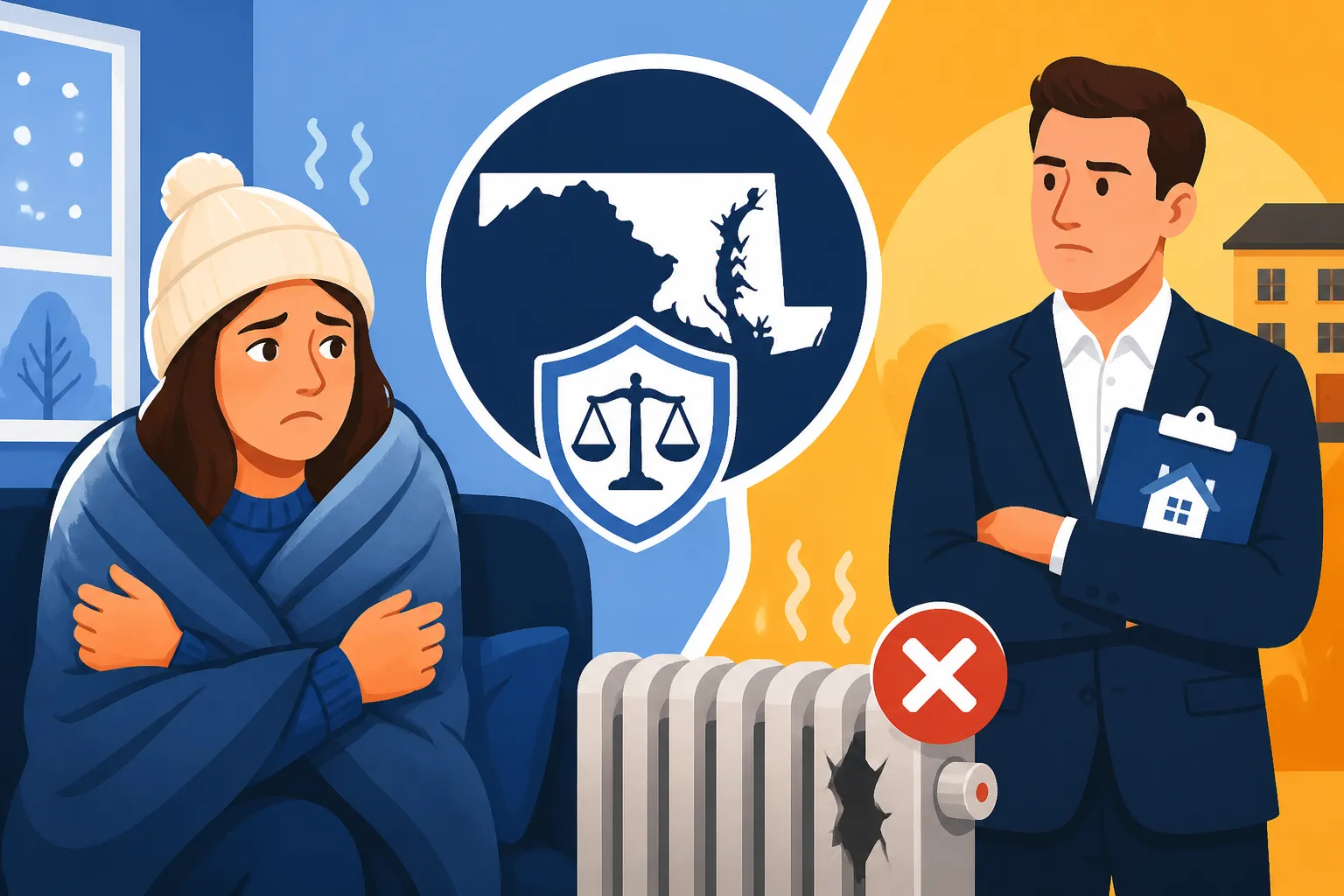
How Long Does a Landlord Have to Fix Heat in Maryland?
It's incredibly frustrating, not to mention unhealthy, when your heat goes out, especially during Maryland's chilly autumns and biting winters. You're left wondering not just how to stay warm, but also what your landlord is legally obligated to do and, critically, how quickly they need to act. This guide is here to walk you through your rights and the steps you can take when you're facing a heating crisis in your rental home.
Maryland's Fundamental Expectation for Heat in Rentals
When you rent a property in Maryland, you're not just getting a roof over your head; you're entitled to a safe, habitable living space. Heat is undeniably one of the most basic elements of that habitability, especially in a region that experiences significant cold.
The Implied Warranty of Habitability and Heat
At the core of your tenant rights in Maryland is something called the "implied warranty of habitability." This isn't usually something explicitly written into every lease agreement you sign; rather, it's a legal principle that's implied in all residential leases, even if it's not directly stated. What it essentially means is that your landlord promises that the rental property is fit for human habitation and will remain so throughout your tenancy.
When we talk about what "habitable" truly means, especially as the temperatures drop outside, heat comes to mind immediately. A rental unit without adequate heating, particularly during the colder months, simply doesn't meet this fundamental standard. It's not just about comfort; it's about health and safety. Imagine a family with young children or an elderly tenant trying to get by in a freezing apartment for days on end. The stress and potential health risks are immense. This is why heat is considered a primary component of basic habitability. If your landlord fails to provide proper heating, they may be in breach of this implied warranty, which opens the door for you to take action. You can learn more about this vital tenant protection by exploring the topic of the Implied Warranty of Habitability Explained.
Minimum Temperature Standards Across Maryland
While the implied warranty of habitability sets a general standard, many tenants ask, "Is there a specific temperature my landlord must maintain?" This is where it gets a little more specific, and you'll find that while Maryland state law generally requires landlords to maintain a safe and habitable living environment, which includes adequate heating, the specifics often come down to local ordinances rather than a statewide minimum temperature.
For instance, if you live in Baltimore City, the local code (specifically, Section 10-203 of the Baltimore City Code) mandates that heating facilities must be capable of maintaining a temperature of at least 68 degrees Fahrenheit. This specific requirement applies from October 15th to May 15th, which is often referred to as the "heating season." This means if your indoor temperature drops below 68 degrees during these months, and your heating system isn't able to keep up, your landlord might be violating the local housing code. Similarly, other populous areas like Montgomery County and Prince George's County have their own detailed housing codes that often include explicit temperature requirements, sometimes specifying slightly different temperatures or periods. These local provisions are incredibly important because they provide a concrete benchmark. It's always a good idea to check your specific city or county's housing code for these hyper-local details. A quick search on your city or county's official website for "housing code" or "tenant rights" can usually point you in the right direction.
Understanding Repair Timelines for Heat Issues in Maryland
The question of "how long" is often the most pressing for tenants shivering in their homes. While Maryland law offers a general guideline of "reasonable time" for repairs, this timeframe shrinks considerably when it comes to essential services like heat.
What Constitutes an Emergency Heat Repair?
Let's be clear: a lack of heat is often, but not always, considered an emergency. It's more than just feeling a bit chilly or needing to put on an extra sweater. An emergency heat repair situation arises when the absence of heat poses an immediate and serious risk to your health, safety, or well-being. This is particularly true for vulnerable populations within your household, such as the elderly, very young children, or individuals with chronic health conditions.
Consider a scenario where the outdoor temperatures are plummeting below freezing, and your apartment's internal temperature has dropped to, say, 50 degrees Fahrenheit or lower. This is unequivocally an emergency. Beyond the immediate discomfort and health risks, sustained low temperatures can also lead to secondary problems, like frozen and bursting pipes, which can cause significant water damage to your personal belongings. In such dire situations, even though it won't fix your heat, having renter's insurance from providers like Lemonade or Steadily can be incredibly helpful for covering the costs of damaged property. A non-emergency situation, on the other hand, might be a radiator that isn't quite as warm as others but still provides some heat, or an intermittent issue where the heat comes on eventually but not consistently. The key distinction lies in the immediate danger posed by the lack of adequate heating.
"Reasonable Time" vs. Explicit Deadlines in Maryland
Maryland state law, generally speaking, doesn't provide a precise, statewide number of hours or days within which a landlord must fix a heating issue. Instead, it often refers to a "reasonable time" for making repairs. This can feel frustratingly vague when you're cold and waiting for a solution. However, for critical repairs like a total heat outage, especially during cold weather, "reasonable time" is understood to be much shorter than for minor issues.
In practice, for an emergency heat repair, "reasonable time" is often interpreted as 24 to 48 hours. Many local jurisdictions, echoing the spirit of the state's implied warranty, expect landlords to take immediate action. For example, while Baltimore City's housing code dictates the 68-degree minimum, it implicitly expects a very prompt response to a complete heat failure. Some counties might have specific timelines for emergencies, sometimes even less than 24 hours, depending on the severity and external weather conditions. If it's not an emergency – perhaps the heat is just not working efficiently, or one zone is out – the "reasonable time" might extend to 3 to 7 days. However, landlords are still expected to address these issues diligently. It's critical for tenants to understand that these timelines are often influenced by the severity of the problem and local municipal codes. You can learn more about how different states handle repair requests by looking into How Long Does a Landlord Have to Make Repairs? (By State).
Actionable Steps When Your Heat Fails
When your heat goes out, the first few steps you take can make all the difference in getting the issue resolved quickly and effectively. Documentation and clear communication are your best friends here.
Immediate Documentation and Communication
Before you even reach out to your landlord, do a quick check: Is the thermostat set correctly? Is the furnace switch on? Have any circuit breakers tripped? Sometimes, it’s a simple fix. Once you've ruled out the obvious, it's time to document the problem thoroughly. Take photos or videos of your thermostat displaying the low temperature inside your unit, making sure the date and time are visible if possible. Note the outdoor temperature as well. This verifiable evidence is crucial.
Next, you need to notify your landlord, and this is where formal, written communication becomes paramount. While a phone call might be your first instinct, always follow it up with an email or text message. Even better, send a certified letter for official record-keeping. In your communication, be precise: include the date, time, a clear description of the problem (e.g., "The furnace is completely out, and the indoor temperature is 55 degrees Fahrenheit"), and emphasize the urgency of the situation, especially if it's an emergency. Request prompt repair and remind them of their obligations under the lease and the implied warranty of habitability. It's a good practice to keep a detailed log of all communications, including who you spoke to, what was discussed, and any promises made. While mostly for landlords, platforms like TurboTenant can help property managers track maintenance requests, which inadvertently creates a transparent record that benefits tenants by confirming when and how issues were reported. For guidance on how to structure your request, consider reading How to Request Repairs in Writing.
Escalating the Issue if Your Landlord is Unresponsive
If a "reasonable time" has passed – say, 24 to 48 hours for an emergency, or 3 to 7 days for a less urgent but still critical issue like inconsistent heating – and your landlord hasn't responded or hasn't fixed the problem, it's time to escalate. Your next step should be to contact your local housing authority or code enforcement office. These municipal agencies are specifically tasked with enforcing housing standards, including those related to heating.
When you contact them, provide all the documentation you've collected: photos, communication logs, and details of your landlord's unresponsiveness. The housing authority can dispatch an inspector to your unit. If they find that the conditions violate local housing codes, they have the power to issue citations, fines, or even orders for your landlord to make the necessary repairs within a specific timeframe. This often puts significant legal pressure on landlords to act. Understanding how to find and contact these local departments (usually found on your city or county's official website under "housing," "code enforcement," or "inspections") is vital. Don't hesitate to reach out to them; they are there to help protect tenants. Exploring resources like How to Report a Landlord (Code Violations & Retaliation) can give you further insight into this process.
Legal Avenues and Tenant Protections in Maryland
When all else fails, or if your landlord remains stubbornly unresponsive to a heating issue, Maryland law does provide tenants with certain legal avenues, though these must be approached with caution and a thorough understanding of the requirements.
Exploring Repair and Deduct or Rent Escrow
It’s crucial to understand that Maryland law has very specific and strict conditions for a tenant to legally take actions like repairing a heating issue and deducting the cost from rent, or withholding rent altogether. These are not steps to be taken lightly without understanding the potential repercussions.
Generally, Maryland state law does not broadly allow tenants to simply perform a repair and deduct the cost from their rent. There are no explicit statewide statutes granting this right for most issues, including heat, unless it's specifically allowed in your lease agreement or under extremely limited and specific circumstances after giving proper notice and waiting. Some local ordinances might offer slightly more flexibility, but it's rare and usually comes with strict procedural requirements. Attempting a repair and deduct without legal basis could put you in breach of your lease and even lead to an eviction notice.
A more recognized and established legal pathway in Maryland for serious habitability issues, such as a prolonged lack of heat, is filing a "Rent Escrow" action in District Court. This process allows tenants to pay their rent directly to the court instead of to the landlord, effectively putting the rent into an escrow account until the necessary repairs are made. The steps typically involve:
- Providing Proper Written Notice: You must send your landlord a certified letter detailing the specific defect (lack of heat), stating your intent to file a rent escrow action if repairs aren't made within a certain timeframe (often 30 days, or less for emergency issues like total heat failure).
- Landlord's Failure to Repair: The landlord must fail to make the repairs within the specified notice period.
- Filing in Court: You then file a "Tenant's Petition for Rent Escrow" with the District Court and continue to pay your full rent to the court clerk. It is absolutely critical that you do not simply stop paying rent; you must pay it to the court.
The court will then hold a hearing, and if it finds in your favor, it can order the landlord to make repairs, abate (reduce) your rent, or even allow you to terminate the lease. This process is complex, and missteps can lead to an eviction. Therefore, it is always advisable to consult with a landlord-tenant attorney or a legal aid organization before pursuing rent escrow. You can dive deeper into the complexities of these actions by looking into Withholding Rent & Rent Escrow or Repair and Deduct by State.
When to Consider Lease Termination or Legal Action
If, despite all your efforts, including contacting code enforcement and even considering rent escrow, your living conditions remain uninhabitable due to a persistent lack of heat, you may have grounds to consider more extreme measures, such as terminating your lease or taking legal action.
Terminating your lease due to uninhabitable conditions, often known as "constructive eviction," is a very serious step. It means you're arguing that your landlord's failure to provide essential services like heat has made the property so unlivable that you've been effectively forced to move out. This is a last resort and requires significant proof that the conditions were severe, the landlord was given adequate notice, and they failed to remedy the situation. Taking this step without legal guidance can be risky, as the landlord might argue you broke the lease. For more on this, check out Breaking a Lease Due to Mold or Uninhabitable Conditions.
Beyond lease termination, you might consider small claims court if you've incurred direct financial damages as a result of the heating failure. This could include costs for temporary alternative housing (like a hotel stay), medical expenses due to illness caused by the cold, or even damage to personal property if, for example, pipes burst from lack of heat. These cases require meticulous record-keeping of all expenses and communications.
Again, these are significant legal steps with potentially serious consequences. Before taking any action that involves withholding rent, terminating your lease, or suing your landlord, always, always seek advice from a qualified landlord-tenant attorney or a local legal aid organization. They can provide guidance specific to your situation and ensure you follow all necessary legal procedures. Understanding your full range of rights when facing issues like these is important, so you might also want to read up on No Heat / No Hot Water / No AC: Your Rights and What Is Considered Uninhabitable?.
| Repair Type | Issue Severity | General Timeline Expectation (Maryland) | Specific Local Examples (e.g., Baltimore) | Tenant Action & Evidence |
|---|---|---|---|---|
| Emergency Heat Outage | Critical, immediate health/safety risk (e.g., indoor temps < 60°F during cold weather) | Immediately, typically 24-48 hours | 24 hours (Baltimore City guidance for extreme cold, maintaining 68°F) | Document low temps, immediate formal written notice to landlord, log all communications, contact local code enforcement. |
| Non-Emergency Heat Issue | Inconsistent heat, minor malfunction, not immediate health risk (e.g., one radiator cold) | "Reasonable time," typically 3-7 business days | "Reasonable time" (may vary by specific county/city ordinance for non-emergencies) | Document specific problem (photos/video if applicable), formal written notice to landlord, clear communication log. |
Disclaimer
Please remember, this guide provides general information about landlord-tenant laws in Maryland and is not intended as legal advice. Laws can change, and specific situations may require different approaches. Always consult with a qualified legal professional for advice tailored to your individual circumstances.