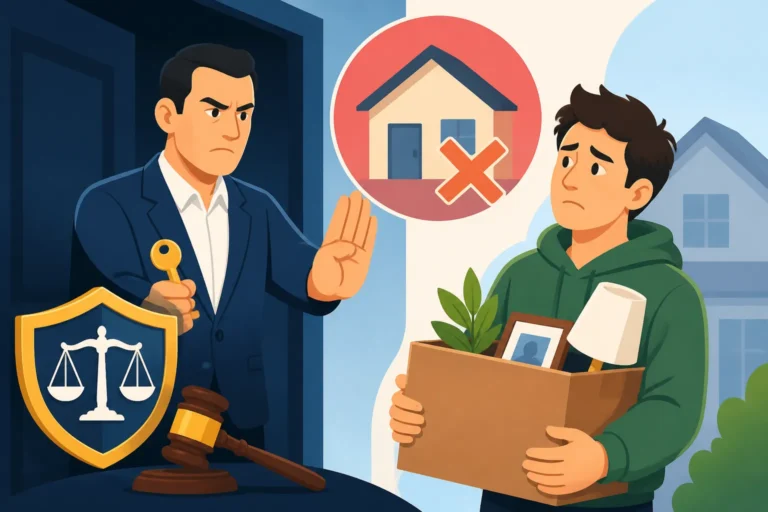
How to Evict a Tenant in North Dakota
Dealing with a tenant who isn't upholding their end of the lease agreement can be incredibly frustrating, whether it's because they've stopped paying rent, are causing damage, or violating other terms. It's a stressful situation that no landlord wants to be in, but sometimes, eviction becomes the only viable path forward to protect your property and your investment. This comprehensive guide is here to walk you through the specific eviction process in North Dakota, detailing the legal grounds, necessary steps, and crucial landlord responsibilities to ensure you navigate this complex territory correctly and avoid costly mistakes.
Understanding North Dakota Eviction Laws and Legal Grounds
Before you even think about serving an eviction notice, it’s absolutely critical to understand the legal reasons, or "grounds," for eviction in North Dakota. The state’s laws are designed to protect both landlords and tenants, meaning you can't just evict someone on a whim. There has to be a legitimate, documented reason that holds up in court. Trying to evict without proper grounds will not only fail but could also put you in legal hot water.
Valid Reasons for Eviction in North Dakota
North Dakota law, like most states, outlines specific circumstances under which a landlord can legally initiate an eviction. These grounds are typically tied to the tenant's failure to adhere to the terms of their lease agreement or state landlord-tenant laws. Knowing these inside and out will save you a lot of grief.
- Non-Payment of Rent: This is, by far, the most common reason landlords pursue eviction. If a tenant fails to pay rent when it's due, you generally have the right to begin the eviction process. In North Dakota, there isn't a mandatory grace period for rent payment unless explicitly stated in your lease agreement. If your lease says rent is due on the 1st and it's not paid, it's considered late. You then typically issue a 3-Day Notice to Quit for non-payment, giving the tenant a short window to either pay up or move out. This path is fairly straightforward, but you must be able to prove that rent was indeed not paid, and that you followed all notice procedures correctly. For a deeper dive, read our guide on Eviction for Nonpayment of Rent.
- Lease Violations: Beyond just not paying rent, tenants can breach other terms of the rental agreement. This could include things like having unauthorized pets, causing significant damage to the property beyond normal wear and tear, engaging in illegal activity on the premises (like drug dealing), or consistently disturbing neighbors with excessive noise. For these types of violations, North Dakota generally requires a 3-Day Notice to Quit, giving the tenant a chance to "cure" the violation (fix the problem) or vacate the property. However, if the violation is severe, such as illegal activity, the notice might not offer an opportunity to cure. It's essential to have a clear, well-written lease that explicitly states all rules and regulations, so there's no ambiguity about what constitutes a violation. Our comprehensive article on Eviction for a Lease Violation has more details.
- Expiration of Lease Term or "Holding Over": If you have a fixed-term lease (e.g., 12 months) and it expires, and you choose not to renew it, the tenant is expected to move out. If they stay past the lease end date without your permission, they are considered to be "holding over." For month-to-month tenancies, you can terminate the agreement without cause, usually by providing a 30-day written notice to vacate. This is often called a "no-fault" eviction. As long as you give proper notice and aren't acting for discriminatory or retaliatory reasons, this is a legitimate ground for eviction. Our guide on Eviction Notice Without Cause When Allowed might be helpful here.
- Tenant at Will or Without a Lease: Even if you don't have a formal written lease, North Dakota law still recognizes certain tenancy types, such as a "tenant at will" or someone renting month-to-month. If you need to evict a tenant who doesn't have a written lease, the process still requires proper notice, usually a 30-day notice to quit, depending on the specifics of the unwritten agreement. It's always best to have a written lease, but if you don't, understand that you still have rights and responsibilities. Our article, How to Evict a Tenant Without a Lease, provides valuable insights for this tricky situation.
The Importance of a Written Lease and Documentation
I can't stress this enough: a solid, legally sound written lease agreement is your absolute best friend as a landlord. It's the foundation of your entire landlord-tenant relationship and your strongest piece of evidence if you ever need to pursue an eviction. Without it, you're trying to prove things in court based on verbal agreements or assumptions, which is incredibly difficult and often ends poorly.
A comprehensive lease clearly outlines:
- Rent amount, due date, and late fees: No room for argument about when rent is late or how much is owed.
- Tenant and landlord responsibilities: Who fixes what, who pays for what utilities.
- Rules and regulations: Pet policies, noise clauses, guest policies, maintenance expectations.
- Lease term and renewal options: Clearly defines the start and end dates of the tenancy.
Beyond the lease itself, meticulous documentation is paramount. Keep detailed records of everything:
- Rent payments: When rent was paid, how it was paid, and any outstanding balances.
- Communications: All emails, texts, and certified letters regarding lease violations, repair requests, or other issues. Date and timestamp everything.
- Photographs and videos: Document the property's condition before move-in, after move-out, and any damage caused during the tenancy. An Move-In / Move-Out Inspection Guide can walk you through this.
- Repair requests and resolutions: Document when a tenant reported a problem and how you addressed it.
If you end up in court, the judge will want to see proof. Your word against the tenant's rarely goes far without solid evidence. Tools like LawDepot offer templates for leases and notices, which can help ensure you cover all your bases legally. Being prepared with clear documentation significantly strengthens your case and speeds up the eviction process.
The North Dakota Eviction Process Step-by-Step
Evicting a tenant in North Dakota isn't a quick or easy endeavor; it’s a specific legal process that demands adherence to state statutes. Even if you're certain you have valid grounds, skipping steps or making procedural errors can lead to significant delays, force you to restart the process, or even result in your case being dismissed. It's crucial to follow each stage carefully, from initial notice to actual tenant removal.
Serving Proper Eviction Notices
This is where the eviction process truly begins, and it's a step where many landlords make critical mistakes. A valid eviction notice informs the tenant of the lease violation or termination, gives them a chance to rectify it (if applicable), and specifies a deadline for them to move out. In North Dakota, the type of notice and the time period depend on the reason for eviction.
- 3-Day Notice to Quit for Non-Payment or Lease Violations:
- When to Use It: If your tenant hasn't paid rent on time, or if they've committed a serious lease violation (like damaging the property or engaging in illegal activities) that can either be "cured" or warrants immediate departure.
- What it Says: This notice must clearly state the reason for the eviction (e.g., specific amount of unpaid rent and the period it covers, or the exact lease clause violated and the date of the violation). It must inform the tenant that they have three calendar days to either pay the overdue rent, correct the violation, or move out.
- Serving the Notice: Proper service is paramount. In North Dakota, you can serve the notice by:
- Personal Service: Handing it directly to the tenant. This is usually the most effective method, as it ensures they receive it.
- Substituted Service: If the tenant isn't home, you can leave it with a person of suitable age and discretion who resides at the premises and mail a copy by first-class mail.
- Posting and Mailing: If neither of the above options is possible, you can post the notice in a conspicuous place on the property (like the front door) and mail a copy by first-class mail.
- Proof of Service: Always document how and when you served the notice. Take a photo of the notice on the door, get a witness for personal service, or keep certified mail receipts. This proof will be essential if the case goes to court.
- 30-Day Notice to Terminate Tenancy for Month-to-Month Agreements:
- When to Use It: If you have a month-to-month lease and wish to terminate the tenancy without cause, or if a fixed-term lease is expiring and you don't want to renew it, and the tenant is staying past the agreed-upon end date.
- What it Says: This notice simply informs the tenant that their tenancy will terminate in 30 days and they must vacate the property by a specific date. You don't need to provide a reason, as long as it's not discriminatory or retaliatory.
- Serving the Notice: Similar methods apply as with the 3-day notice: personal service, substituted service, or posting and mailing. Again, document everything.
Remember, the clock starts ticking after the notice is properly served. If the tenant complies within the notice period (pays rent, fixes the violation, or moves out), then the eviction process stops. If not, you proceed to the next stage. It’s also important to understand the different Eviction Notice Types Pay or Quit Cure or Quit Unconditional to choose the right one for your situation.
Filing an Eviction Lawsuit Unlawful Detainer
If the tenant fails to comply with the eviction notice within the specified timeframe, the next step is to initiate a formal eviction lawsuit, known as an "Unlawful Detainer" action, in North Dakota District Court. This is where you ask the court to legally compel the tenant to leave.
- Where to File: You'll need to file your lawsuit at the District Court in the county where the rental property is located. For example, if your property is in Fargo, you'd file in Cass County District Court.
- Required Documents:
- Summons and Complaint: These are the foundational documents of your lawsuit. The complaint outlines your reasons for eviction, specifies the lease violations, and states what you're asking the court for (possession of the property, unpaid rent, and potentially damages). The summons formally notifies the tenant they are being sued and must appear in court. You can find forms for these documents, or use services like LawDepot or DoorLoop that provide state-specific legal forms.
- Copy of Eviction Notice: The exact notice you served the tenant.
- Proof of Service: Documentation showing how and when you served the initial eviction notice.
- Lease Agreement: A copy of the signed lease.
- Any Supporting Evidence: Photos, communication records, payment ledgers, etc.
- Court Fees: There will be filing fees associated with initiating the lawsuit and service fees for having the sheriff or a private process server formally deliver the summons and complaint to the tenant. These fees vary by county and can typically be found on the North Dakota Courts website.
- Serving the Summons and Complaint: Just like the initial notice, the tenant must be properly served with the summons and complaint. This is usually done by a sheriff or a certified private process server to ensure legal compliance. Personal service is generally required for the summons and complaint, and it's essential to get proof of this service filed with the court.
Once the tenant is served, they will have a specific amount of time, usually a few days (often 3 to 7 business days in North Dakota for unlawful detainer actions), to file an answer with the court. If they don't respond, you might be able to win a default judgment. Our article on How to File for Eviction Landlord Step-by-Step can give you more general guidance here.
Attending the Court Hearing and Obtaining a Judgment
If the tenant files an answer, or if the court requires a hearing even without one, you'll need to appear before a judge. This is your opportunity to present your case and convince the court that you have a legal right to regain possession of your property.
- Preparing for Court: This is where all your meticulous documentation pays off. Organize your evidence:
- The lease agreement.
- Copies of all notices served (with proof of service).
- Detailed rent ledgers showing unpaid amounts.
- Photos or videos of property damage or lease violations.
- Emails, texts, or letters of communication with the tenant.
- Any witnesses who can corroborate your claims (e.g., a maintenance worker who saw damage, a neighbor who witnessed disturbances).
Practice what you're going to say. Present your case clearly, concisely, and factually, avoiding emotional language.
- What Happens at the Hearing: The judge will hear both sides of the story. You, as the plaintiff, will present your evidence first. The tenant will then have an opportunity to present their defense (e.g., they paid rent, you failed to make repairs, or they weren't properly served). The judge will listen to arguments, examine evidence, and then make a decision.
- If the Tenant Doesn't Show Up: If the tenant was properly served but fails to appear at the hearing, the judge will likely issue a "default judgment" in your favor. This means you win by default, as the tenant didn't contest your claims.
- The Judge's Decision and Order for Eviction: If the judge rules in your favor, they will issue an "Order for Eviction" (sometimes called a Judgment for Possession). This is the official court document that legally entitles you to take back your property. In some cases, the judge might also award you monetary damages for unpaid rent or significant property damage, though collecting these funds often requires a separate process.
The Writ of Restitution and Tenant Removal
Receiving an Order for Eviction is a huge step, but it's not the final one. You cannot physically remove the tenant yourself. That's illegal, and it's a common mistake that can lead to severe penalties. The only entity authorized to physically remove a tenant is the county sheriff.
- Obtaining the Writ of Restitution: After you receive the Order for Eviction, you'll need to take it to the court clerk's office and request a "Writ of Restitution" (sometimes referred to as a Writ of Possession in other states). This is a separate court order directed to the sheriff, authorizing them to remove the tenant from your property. There may be an additional fee for this writ. Our detailed article on The Writ of Possession & Sheriff Removal provides helpful context, though note the specific term used in North Dakota.
- Involving the Sheriff: Once you have the Writ of Restitution, you must deliver it to the local sheriff's department. The sheriff will then schedule a time to go to the property, serve the writ on the tenant (giving them a final notice to vacate, usually within 24-48 hours), and if the tenant still hasn't left, physically remove them and their belongings.
- Prohibited Self-Help Evictions: It is absolutely critical to allow the sheriff to handle the physical removal. Under no circumstances should you change locks, remove the tenant's belongings, shut off utilities, or harass them to leave. These are illegal "self-help" evictions, and North Dakota law imposes strict penalties on landlords who engage in them, including financial liability to the tenant and even criminal charges. If you're concerned about Illegal Self-Help Eviction Lockouts & Utility Shutoffs, make sure you understand the severe consequences.
- Tenant's Abandoned Property: If the tenant leaves belongings behind, North Dakota law has specific procedures you must follow to handle them. You typically need to store the property, send the tenant a written notice about it, and provide a reasonable time for them to reclaim it before you can dispose of or sell it. Neglecting these rules can also create legal problems for you.
The entire process, from serving the initial notice to the sheriff’s final action, can take several weeks or even months, depending on court schedules, how quickly the tenant responds, and other factors. Our guide on How Long Does an Eviction Take explains typical timelines. Using a property management tool like DoorLoop can help keep all your notices, communications, and court dates organized throughout this lengthy process.
Common Pitfalls and How to Avoid Them
Even with a clear understanding of North Dakota's eviction process, it's surprisingly easy to make missteps that can prolong the ordeal or even cost you your case. Many landlords, especially first-timers, fall into common traps. Being aware of these pitfalls and taking proactive steps to avoid them is just as important as knowing the process itself.
Illegal Self-Help Evictions and Retaliation
This cannot be stressed enough: never attempt to evict a tenant yourself. It's not only illegal but also carries significant penalties in North Dakota. The legal system is designed to prevent landlords from taking matters into their own hands, no matter how frustrating a tenant may be.
- What Constitutes Self-Help Eviction?
- Changing Locks: Even if the tenant is clearly in violation, you cannot change the locks to prevent them from entering.
- Shutting Off Utilities: Disconnecting power, water, gas, or other essential utilities is illegal. This is considered making the premises uninhabitable to force the tenant out.
- Removing Tenant's Belongings: You cannot clear out a tenant's possessions from the property.
- Harassment or Intimidation: Any actions intended to make the tenant's living conditions so uncomfortable that they feel forced to leave are illegal.
- Penalties in North Dakota: If found guilty of an illegal self-help eviction, you could face:
- Monetary Damages: The tenant might be able to sue you for actual damages, emotional distress, and even punitive damages (often double or treble the actual damages) as a penalty.
- Court Costs and Attorney Fees: You could be ordered to pay the tenant's legal fees.
- Criminal Charges: In some severe cases, illegal actions like utility shutoffs or property destruction could lead to criminal charges.
- Avoiding Retaliatory Eviction Defenses: North Dakota law also protects tenants from retaliatory evictions. This means you cannot evict a tenant simply because they exercised a legal right, such as reporting a health or safety violation, joining a tenant union, or requesting necessary repairs. If a tenant can prove your eviction action is retaliatory, your case will likely be dismissed, and you could face legal consequences. Understanding Retaliatory Eviction Defense is crucial. Always ensure your eviction grounds are legitimate and well-documented, and that your actions are not a response to a tenant exercising their rights.
The bottom line is to always go through the proper legal channels, even if it feels slower. The slight delay is far better than the substantial legal and financial risks of illegal actions.
Ensuring Proper Notice and Service
One of the most frequent reasons eviction cases get dismissed is due to improper notice or service. The courts are sticklers for procedure, and any deviation can invalidate your entire efforts, forcing you to start from scratch.
- The Notice Itself:
- Accuracy: Double-check that all information on the notice is accurate: tenant names, property address, exact rent amount due, specific lease clauses violated, and the correct dates.
- Type of Notice: Make sure you're using the correct notice for the specific violation (e.g., a 3-day for non-payment versus a 30-day for month-to-month termination). Our guide on How to Serve an Eviction Notice Correctly offers more detail.
- Clarity: The language must be unambiguous and clearly state what the tenant needs to do and by when.
- Method of Service:
- Adhere to North Dakota Rules: As discussed, North Dakota has specific rules for how notices must be served (personal, substituted, or posting and mailing for initial notices; typically personal for summons and complaint). Don't cut corners.
- Documentation: This is where you prove you did everything by the book.
- Affidavit of Service: This is a sworn statement, often from yourself, a witness, or a process server, detailing exactly when, where, and how the notice was delivered.
- Photographs: If posting, take a photo of the notice on the door.
- Certified Mail Receipts: If mailing is allowed and used, keep the green card as proof of delivery.
- Witnesses: Have a neutral third party witness the service if possible.
- The "Cure" Period: If your notice allows the tenant to "cure" a violation (like paying overdue rent), make sure you give them the full legal timeframe before proceeding to file in court. If they attempt to cure within that period, you generally cannot move forward with the eviction for that specific reason.
By being meticulous with your notices and their service, you build a strong, defensible case that can withstand scrutiny in court. This attention to detail will significantly streamline your eviction process and increase your chances of a successful outcome. Tools that track tenant interactions and provide state-specific forms, such as DoorLoop, can be invaluable for maintaining this level of precision.
North Dakota Eviction Notice Periods Overview
Here’s a quick reference for common eviction notice periods in North Dakota. Remember, these are general guidelines, and your specific lease terms or unique circumstances might alter them. Always consult the most current North Dakota Century Code.
| Reason for Eviction | Notice Period | Notes |
|---|---|---|
| Non-Payment of Rent | 3-Day Notice to Quit | Tenant has 3 days to pay rent or move out. |
| Lease Violation | 3-Day Notice to Quit | Tenant has 3 days to fix the violation or move out. For severe violations (e.g., illegal activity), no opportunity to cure may be offered. |
| End of Lease (Month-to-Month) | 30-Day Notice to Quit | For terminating a periodic tenancy without cause. Must be given at least one month prior to the next rent due date. |
| Illegal Activity | 3-Day Notice to Quit | No opportunity to cure the violation. |
| Holding Over | 3-Day Notice to Quit | If a fixed-term lease has expired and the tenant remains without permission. |
This table highlights the crucial differences in timelines. Missing these windows or serving the wrong notice type can lead to frustrating delays and wasted effort.
Disclaimer
This article is for general informational purposes only and does not constitute professional advice. Laws and regulations vary by location and change over time. Consult a qualified professional for guidance on your specific situation.