How to Evict a Tenant in Iowa
Evicting a tenant is, without a doubt, one of the most stressful and often heartbreaking situations a landlord can face. It's not just about regaining control of your property; it's a complicated legal dance that, if not performed perfectly, can cost you time, money, and even lead to bigger headaches down the road. If you're navigating the process of how to evict a tenant in Iowa, you know the stakes are high, and getting it wrong can feel like an impossible burden. This guide is here to walk you through every step of the Iowa eviction process, offering clarity and practical advice to help you regain possession of your property legally and efficiently.
Understanding Iowa's Eviction Landscape
Before diving into the nuts and bolts of eviction, it’s crucial to understand the legal framework that governs landlord-tenant relationships in Iowa. The state's eviction laws are primarily found in the Iowa Uniform Residential Landlord and Tenant Act (Iowa Code Chapter 562A). While Iowa is often seen as a landlord-friendly state compared to some others on the coasts, it still demands strict adherence to specific procedures. Any misstep can delay the process significantly or even lead to the case being dismissed, forcing you to start all over again.
Many landlords come into this expecting a quick resolution, only to find themselves bogged down by legalities. It's frustrating when you have a clear reason to evict, but the law requires you to jump through a series of hoops. This framework is designed to protect both landlords and tenants, ensuring due process is followed, but for landlords, it can feel like a maze. Knowing what to expect and precisely what is required is your best defense against prolonged disputes.
Key Eviction Grounds in Iowa
So, what exactly gives you the legal right to evict a tenant in Iowa? It generally boils down to a few common reasons, all of which stem from a breach of the lease agreement or the law itself. Each ground for eviction has its own specific notice requirements and timelines, which we’ll explore in detail.
The most frequent reason for eviction is non-payment of rent. Tenants are legally obligated to pay rent on time, and when they don't, it directly impacts your ability to cover mortgage payments, property taxes, and maintenance. Another significant reason is a lease violation, which can range from unauthorized pets to property damage or disruptive behavior. Finally, if a tenant overstays their welcome after their lease has ended without renewing, it falls under the "holding over" category. Understanding these fundamental grounds is the first step in determining your legal standing.
The Importance of a Valid Lease Agreement
A clear, legally sound lease agreement is your cornerstone for any eviction proceeding. Think of it as your roadmap and your rulebook all rolled into one. It outlines the responsibilities of both you and your tenant, from rent payment schedules to property maintenance and rules regarding pets or guests. Without a written lease, or with an improperly drafted one, the eviction process can become significantly more complicated.
Many landlords, especially those just starting out or renting to friends and family, might operate on verbal agreements. While Iowa law does recognize oral agreements, proving the terms in court can be a nightmare. A well-drafted lease specifies everything, making it clear what constitutes a breach and what remedies are available. Using a reliable platform like LawDepot can help you create robust, state-specific lease agreements that minimize ambiguity and provide a solid legal foundation should eviction become necessary.
The Step-by-Step Iowa Eviction Process
Now, let's break down the actual process of evicting a tenant in Iowa. It's a multi-stage journey, each with specific requirements that must be met precisely. Skipping a step or making an error in documentation or service can force you to restart, adding weeks or even months to an already frustrating situation.
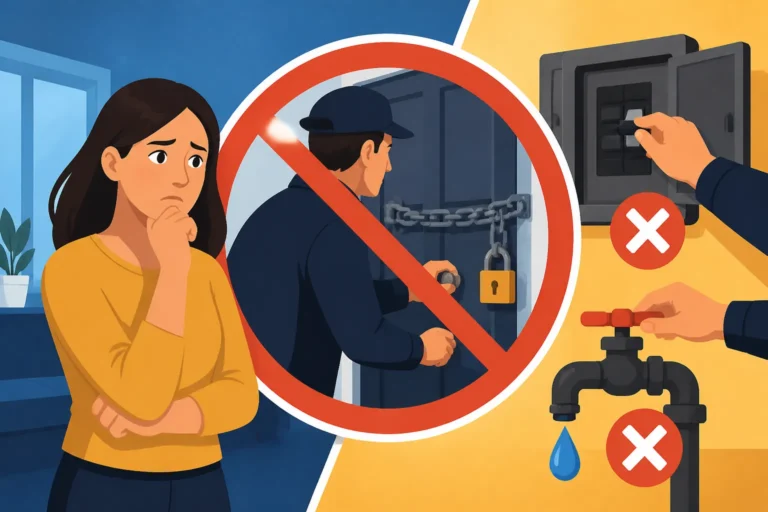
Imagine you're trying to remove a tenant who hasn't paid rent in two months. You're losing income, feeling the financial pinch, and just want them out so you can find a reliable tenant. But you can't simply change the locks or throw their belongings out on the curb – that's an illegal self-help eviction and can land you in serious legal trouble. Instead, you must follow the strict legal procedure laid out by Iowa law.
Delivering the Initial Eviction Notice
This is the very first, critical step in the formal eviction process. You can't just tell a tenant to leave; you have to provide them with a formal, written eviction notice that clearly states the reason for eviction and the time frame they have to remedy the situation or move out. The type of notice and the time period depend entirely on the reason for the eviction.
For instance, if your tenant hasn't paid rent, Iowa Code Chapter 562A.27(2) allows you to serve a 3-day notice to quit. This notice informs them that they have three days to either pay the overdue rent or vacate the property. If they pay within those three days, the lease continues, and you cannot proceed with the eviction on those grounds. It’s crucial that this notice clearly states the amount of rent due and the deadline.
For lease violations other than non-payment of rent, Iowa generally requires a 7-day notice to cure or quit. This notice gives the tenant seven days to correct the violation (e.g., remove an unauthorized pet, stop excessive noise) or move out. If the violation is something that cannot be "cured" (like severe property damage or engaging in illegal activity), or if the tenant commits the same curable violation within six months of a previous notice, you might be able to issue an unconditional 3-day notice to quit, meaning they just have to leave with no option to fix it. This is a very specific situation, so always consult current Iowa statutes or legal counsel. For month-to-month tenancies where you simply want the tenant to move out, you must provide a 30-day notice of termination, effective at the end of the rental period.
Proper service of this notice is paramount. You can’t just slide it under the door and hope for the best. Generally, notice must be served personally to the tenant, or if they are absent, to an adult residing in the premises. If that's not possible, it can be posted conspicuously on the premises and mailed via certified mail. The exact requirements for your specific situation can be tricky, so make sure you understand how to serve an eviction notice correctly. Many landlords use services or legal platforms to ensure these notices are drafted and served properly.
Here’s a quick overview of common notice periods in Iowa:
| Eviction Reason | Notice Type (Iowa Code) | Notice Period |
|---|---|---|
| Non-payment of rent | 3-Day Notice to Quit | 3 days |
| Lease violation (curable) | 7-Day Notice to Cure or Quit | 7 days |
| Lease violation (non-curable, or repeat offense) | 3-Day Notice to Quit (unconditional) | 3 days |
| End of month-to-month tenancy | 30-Day Notice of Termination | 30 days |
Internal Link: Eviction Notice Types (Pay or Quit, Cure or Quit, Unconditional)
Filing the Forcible Entry and Detainer Lawsuit
If the tenant fails to comply with the eviction notice (e.g., doesn't pay rent or fix the violation, or doesn't move out), your next step is to file a "Forcible Entry and Detainer" (FED) lawsuit in Iowa's District Court, specifically within the small claims division. This is the formal legal action to reclaim possession of your property.
To initiate this, you'll need to prepare and file a "Complaint" with the court clerk. This document outlines your reasons for eviction, attaches a copy of the notice you served, and asks the court to grant you possession of the property. You'll also need to have a "Summons" issued, which officially notifies the tenant that a lawsuit has been filed against them and instructs them when and where to appear in court. There are filing fees associated with this step, which vary by county but typically range from $85 to $100 for the filing fee, plus additional costs for serving the summons. Many property management platforms, like DoorLoop, can help you keep track of all the necessary documentation and timelines for these critical legal steps, ensuring nothing falls through the cracks.
Proper service of the summons and complaint is just as critical as the initial notice. A sheriff or a private process server must deliver these documents to the tenant. They need to be served in a way that gives the tenant proper legal notice of the court date. If the tenant isn't properly served, the court can dismiss your case, forcing you to pay additional fees and extend the eviction timeline.
The Court Hearing and Judgment
Once the complaint and summons are properly served, a court hearing will be scheduled. In Iowa, FED actions are typically expedited, but the exact timeline can still vary depending on the court's calendar and local rules. At this hearing, both you and the tenant will present your cases to a judge.
As the landlord, it's your responsibility to prove that the tenant has violated the lease or the law, and that you have followed all proper legal procedures up to this point. This means bringing all your evidence: the lease agreement, copies of the eviction notice and proof of service, rent ledgers showing non-payment, photos of damage, communication records, and any other relevant documentation. Essentially, you need to show the judge a clear, undeniable paper trail demonstrating the tenant’s failure to adhere to the agreement and your meticulous following of the law.
The tenant also has the opportunity to present their defense. They might argue that they didn't receive proper notice, that you failed to make necessary repairs, or that the eviction is retaliatory. We'll delve into common tenant defenses shortly.
If the judge rules in your favor, they will issue a "Judgment for Possession." This legally declares that you are entitled to regain possession of your property. The judgment may also include an order for the tenant to pay any unpaid rent or damages, though collecting on that can sometimes be a separate challenge.
The Writ of Possession and Tenant Removal
Even after you receive a Judgment for Possession, you still cannot physically remove the tenant or their belongings yourself. This is a common point of confusion and a frequent source of illegal actions by landlords. In Iowa, only a law enforcement officer, typically the county sheriff, can physically remove a tenant from the property.
To initiate this final step, you must obtain a "Writ of Possession" (sometimes called a Writ of Removal) from the court clerk after the judgment has been entered. You then deliver this writ to the sheriff's office in your county. The sheriff will then schedule a time to execute the writ, which usually involves posting a final notice on the tenant's door, giving them a short window (often 24-72 hours, though it can vary) to vacate voluntarily. If the tenant still hasn't left by the specified deadline, the sheriff will return to the property and physically remove them.
This final step can feel like it takes forever, especially when you're desperate to get your property back. But patience and adherence to this process are vital to avoid legal repercussions. Remember, any attempt to perform a self-help eviction, such as changing locks, shutting off utilities, or removing the tenant's belongings yourself, is illegal in Iowa and can result in severe penalties, including fines and potential liability for damages to the tenant.
Internal Link: The Writ of Possession & Sheriff Removal
Common Pitfalls and Tenant Defenses in Iowa
As a landlord, understanding potential roadblocks and tenant defenses is just as important as knowing the steps to eviction. Forewarned is forearmed, and recognizing these common issues can help you avoid making costly mistakes or prepare a stronger case. It's truly disheartening to go through the entire process only to have it derailed by a technicality.
Improper Notice or Service
This is arguably the most common pitfall for landlords. If your initial eviction notice, or the subsequent summons and complaint, were not filled out correctly or were not served according to Iowa law, the tenant can use this as a defense, and the judge may dismiss your case. This means starting from scratch, re-serving notices, and waiting for new court dates.
Imagine you tried to save money by serving the notice yourself and just left it on the tenant's porch. If the tenant argues in court that they never received it, and you don't have proof of proper service (like an affidavit from a process server or a certified mail receipt), the judge might side with the tenant. This is why investing in proper service is crucial. It’s not just a formality; it’s a legal requirement that protects everyone involved.
Retaliatory Eviction and Discrimination Claims
Tenants in Iowa are protected from retaliatory evictions. This means you cannot evict a tenant simply because they exercised a legal right, such as complaining to a housing authority about unsafe living conditions or joining a tenant's union. If a tenant can prove that your eviction attempt is in retaliation for such actions, the court may rule in their favor. Generally, if you initiate an eviction within six months of a tenant making a legitimate complaint, it might be presumed retaliatory, and you would need to prove otherwise.
Similarly, landlords cannot discriminate against tenants based on protected characteristics like race, color, religion, sex, national origin, familial status, or disability. If a tenant alleges that the eviction is discriminatory, you would need to demonstrate that the eviction is based solely on legitimate, non-discriminatory reasons related to the lease agreement or their conduct. These claims can be very serious and lead to significant legal consequences. Understanding the nuances of a Retaliatory Eviction Defense is critical for any landlord.
Uninhabitable Conditions or Failure to Repair
Iowa law, specifically Chapter 562A.15, includes an "implied warranty of habitability," meaning landlords must maintain the rental unit in a safe and livable condition. This includes providing essential services like heat, running water, and functioning plumbing. If a landlord fails to make necessary repairs after receiving proper written notice from the tenant, the tenant might have a defense against eviction.
A tenant could argue, for example, that they withheld rent because the landlord refused to fix a severe plumbing leak that made part of the apartment unusable, despite repeated requests. In some cases, tenants have the right to Withholding Rent & Rent Escrow or even to "repair and deduct" (make repairs themselves and deduct the cost from rent), though this must be done very carefully and strictly according to specific legal guidelines. If a judge finds that the property was indeed uninhabitable and the landlord failed their duties, the eviction case could be dismissed. It highlights the importance of keeping up with maintenance and responding promptly to repair requests. For a deeper dive, check out our guide on the Implied Warranty of Habitability Explained.
Navigating the Post-Eviction Phase
Congratulations, the court has ruled in your favor, and the sheriff has executed the writ of possession. You've officially regained control of your property. But even after the tenant is out, your work isn't quite done. There are still a few important matters to handle, especially concerning abandoned property and any lingering financial claims. This phase requires careful attention to detail, just like every other step.
Handling Abandoned Property
It’s not uncommon for tenants, especially those who were forcibly removed, to leave behind personal belongings. You might find anything from furniture and clothing to old documents and forgotten sentimental items. In Iowa, landlords cannot simply throw out a tenant’s abandoned property. There are specific legal procedures you must follow to avoid being liable for the tenant’s lost possessions.
Under Iowa Code § 562A.29A, if a tenant abandons the property, or if they are evicted and leave personal belongings behind, you must provide written notice to the tenant. This notice informs them that their property has been left behind, that you intend to dispose of it, and gives them a reasonable amount of time (typically at least 10 days, but often longer depending on the value) to reclaim it. The notice should be sent to the tenant's last known address, and if different, to any forwarding address they've provided.
If the tenant doesn't retrieve their property within the specified timeframe, you can then dispose of it. For items of significant value, you might be required to sell them at a public auction and apply the proceeds to any outstanding debts (like unpaid rent or damages), with any remaining balance going to the tenant. For items of little value, you can generally discard them. It’s best practice to photograph all abandoned property and keep detailed records of notices sent and actions taken, especially since this can impact whether Can a Landlord Charge More Than the Deposit for Damage?.
Collecting Unpaid Rent and Damages
Often, an eviction results not just in the loss of possession but also financial losses from unpaid rent, utility bills, or property damage beyond normal wear and tear. While the Judgment for Possession may include an order for these amounts, actually collecting the money can be another challenge entirely.
If your tenant owes you money, you can pursue them for it. If the judgment from the FED case included an amount for unpaid rent or damages, it becomes a money judgment. You might need to take further steps, such as wage garnishment, bank account levies, or placing a lien on their property (if they own any), to collect. These collection methods can be complex and often require the assistance of an attorney. The maximum amount you can typically claim in Iowa's small claims court is $6,500, but larger amounts would require filing in a different court division.
Remember, the security deposit is your first line of defense for covering these costs. However, there are strict rules about what a landlord can deduct from a security deposit and how quickly it must be returned (or an itemized statement of deductions provided) in Iowa, typically within 30 days.
Tenant's Eviction Record
For the tenant, an eviction can have long-lasting consequences. An eviction judgment becomes part of their public record, often appearing on tenant screening reports for years. This makes it significantly more difficult for them to find future housing, as many landlords conduct thorough background and eviction checks.
While this doesn't directly affect you as the landlord, it's part of the broader impact of the eviction process. For landlords who use professional property management software like DoorLoop, screening new tenants becomes a much more streamlined process, reducing the likelihood of facing another eviction down the line by identifying applicants with problematic rental histories. If you're a tenant looking to understand the repercussions, you might be interested in knowing more about Evictions on Your Record & Expungement.
Evicting a tenant in Iowa is a serious undertaking that demands precision, patience, and a thorough understanding of the law. While it can be an emotionally draining and financially challenging experience, following these steps meticulously will help ensure you navigate the process successfully and legally.
Disclaimer
Please remember that this article provides general information and guidance regarding the eviction process in Iowa and is not a substitute for legal advice. Landlord-tenant laws can be complex and are subject to change. It is always recommended to consult with a qualified attorney in Iowa for advice specific to your situation before taking any action.