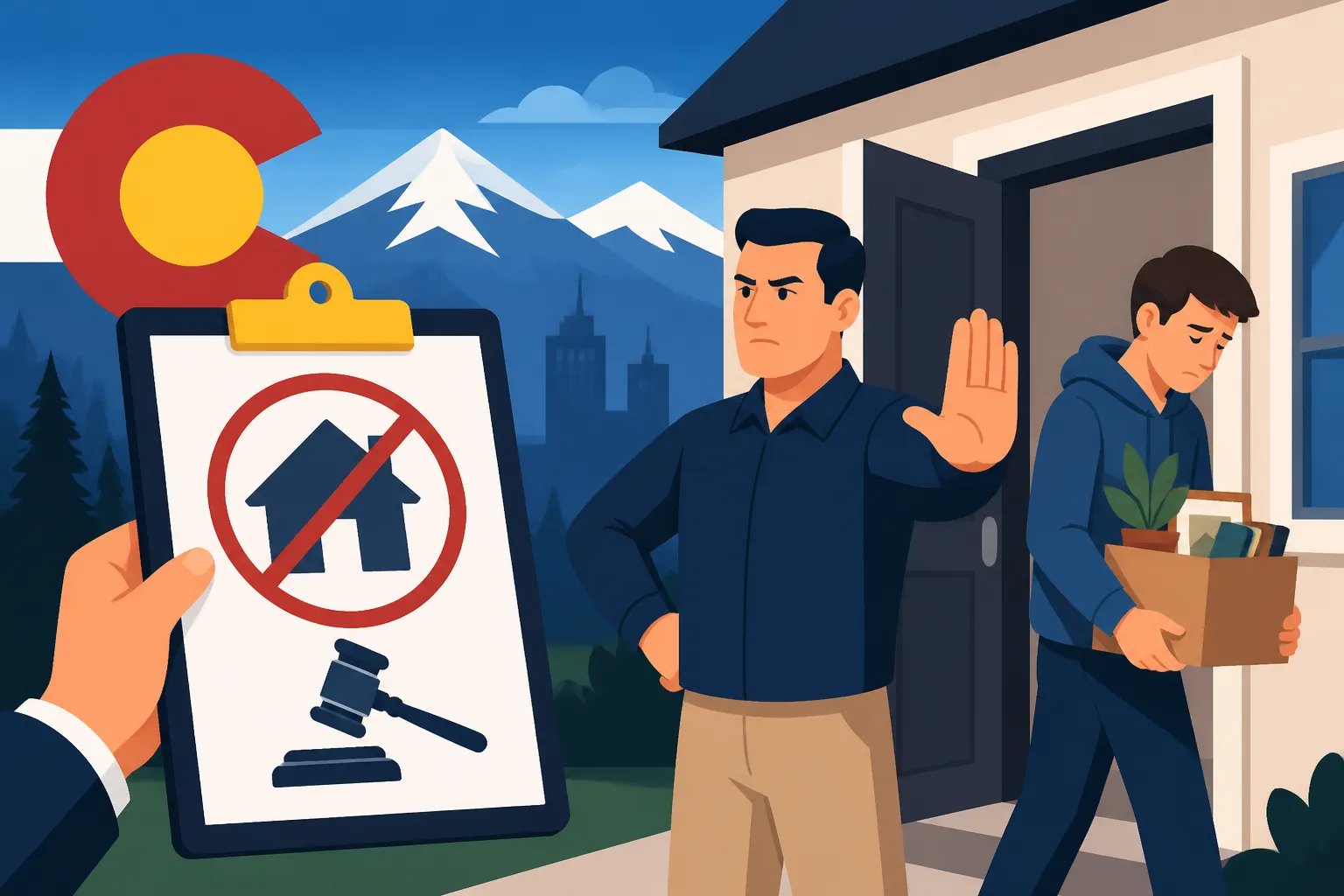
How to Evict a Tenant in Colorado
Dealing with a tenant who isn't upholding their end of the lease agreement can be incredibly frustrating and stressful, especially when you're a landlord trying to manage your property and finances. Whether it's unpaid rent, property damage, or consistent lease violations, the path to regaining control of your investment can seem daunting and confusing. This comprehensive guide is here to demystify the eviction process in Colorado, providing you with a clear, step-by-step roadmap to legally and effectively remove a problematic tenant.
Understanding Colorado's Eviction Landscape
Navigating landlord-tenant law can often feel like walking through a minefield. Colorado has specific rules and regulations that landlords must follow, and even a small misstep can lead to delays, financial penalties, or even the dismissal of your eviction case. Understanding the foundation of these laws is the first critical step toward a successful eviction.
Key Laws and Regulations
In Colorado, the primary legal framework for evictions falls under the "Forcible Entry and Detainer" (FED) statutes, specifically Colorado Revised Statutes Title 13, Article 40. These laws outline the precise steps a landlord must take to regain possession of their property from a tenant. It's a structured process designed to prevent "self-help" evictions (which are strictly illegal) and ensure due process for tenants. While the term "Forcible Entry and Detainer" sounds intimidating, it essentially means a lawsuit filed by a landlord to remove a tenant who is unlawfully occupying the property.
It's crucial to remember that Colorado landlord-tenant law is designed to protect both parties, but tenants often have specific protections that require landlords to be meticulous. For instance, tenants have rights if a landlord won't return a deposit, which can sometimes become entangled with eviction proceedings if not handled correctly. Any deviation from the legal process, no matter how minor, can be grounds for a tenant to fight the eviction, potentially delaying your case by weeks or even months and incurring significant legal costs. Always ensure you're compliant with all state and local regulations, which can sometimes vary, so it's wise to double-check local ordinances in cities like Denver or Colorado Springs.
Common Reasons for Eviction
Before you can even think about serving an eviction notice, you need a legitimate, legal reason. You can't just evict a tenant because you don't like them or want to raise the rent mid-lease (unless the lease specifically allows it and proper notice is given). In Colorado, the most common and legally sound reasons for eviction include:
- Nonpayment of Rent: This is perhaps the most frequent cause for eviction. If a tenant fails to pay rent by the due date, even if it's only a day late, you typically have grounds to begin the eviction process after the grace period, if any, stipulated in the lease has passed.
- Lease Violations: This covers a wide array of issues beyond just rent. It could include unauthorized pets, excessive noise, property damage, violating occupancy limits, or unauthorized subletting. The key here is that the violation must be explicitly prohibited in your lease agreement.
- Holding Over After Lease Expiration: If a tenant's lease term has ended, and they refuse to move out, they are considered "holding over" or "at-will" tenants, and you can initiate an eviction to regain possession. This is a common situation for tenants who simply won't leave after a lease ended.
- Illegal Activity: Engaging in illegal activities on the property, such as drug manufacturing or distribution, is a serious lease violation and often warrants an expedited eviction process, depending on the severity and local laws.
It’s important to distinguish between minor annoyances and actual lease violations that warrant eviction. A tenant having a messy apartment, for instance, might be frustrating but usually isn't a legal basis for eviction unless it violates specific health or safety clauses in the lease. Always refer back to your signed lease agreement, as it forms the contract governing the landlord-tenant relationship.
The Colorado Eviction Process Step-by-Step
Evicting a tenant in Colorado is a precise legal procedure that demands careful attention to detail. Skipping even one small step can result in your case being thrown out of court, forcing you to start all over again. Here’s a breakdown of the typical eviction process.
Serving the Proper Eviction Notice
This is where the eviction process officially begins, and it's critical to get it right. In Colorado, you must provide the tenant with a written eviction notice (often called a "Demand for Compliance or Possession") before you can file anything in court. The type of notice and the time period given depend on the reason for the eviction and sometimes the type of property.
For most residential properties in Colorado, if a tenant has failed to pay rent or has violated a term of the lease, you generally must provide a 10-day Demand for Compliance or Possession. This means the tenant has 10 days to either "cure" the violation (pay the rent or fix the lease breach) or move out. If they do neither, you can proceed with filing an eviction lawsuit. For those residential agreements that are considered "exempt" from the 10-day rule (e.g., properties with 4 or fewer units, or single-family homes, where the landlord owns 5 or fewer residential rental properties in Colorado), a shorter 5-day notice period may apply for non-payment of rent. However, if the tenant commits a serious, substantial violation (e.g., repeated lease violations, criminal activity, or specific types of property damage), you might be able to use a 3-day Demand for Compliance or Possession, often with no opportunity to cure the violation.
It's paramount that you serve this notice correctly. Proper service typically means delivering the notice to the tenant in person, by certified mail, or by posting it visibly on the property and also mailing a copy. Many landlords find it useful to use a service that provides legally compliant forms, like those found on LawDepot, to ensure all the necessary information is included and the language meets Colorado's legal standards. After the notice period expires, if the tenant has not complied or vacated, you can move to the next step.
Filing an Eviction Lawsuit (Unlawful Detainer)
If your tenant hasn't responded to the notice or moved out within the specified timeframe, your next step is to file an eviction lawsuit, officially known as a Forcible Entry and Detainer (FED) action, with the appropriate county court. This involves submitting a Summons and Complaint. The Complaint details why you are evicting the tenant, including a copy of the lease and the notice you served.
You will need to pay filing fees to the court when you submit these documents. After filing, the Summons and Complaint must be legally "served" on the tenant. This is usually done by a sheriff or a professional process server to ensure it meets legal requirements. Proper service of the Summons informs the tenant that an eviction lawsuit has been filed against them and provides them with a deadline to respond to the court, typically 7-14 days. This response is called an "Answer." If the tenant fails to file an Answer by the deadline, you can often win the case by default, though you still may need to attend a short hearing to finalize the judgment.
The Court Hearing
If the tenant files an Answer, a court hearing will be scheduled. This hearing, often referred to as a "First Appearance" or "Return Date," is your opportunity to present your case to a judge or magistrate. You’ll need to bring all relevant documentation, including:
- A copy of the lease agreement
- Proof of proper service of the initial eviction notice
- Payment records (showing unpaid rent, if applicable)
- Evidence of lease violations (photos, videos, witness statements, communications)
- Any other communication between you and the tenant regarding the issues
The tenant will also have the chance to present their defense. Common defenses might include claims of a retaliatory eviction, issues with the condition of the property, or improper notice. If the court rules in your favor, they will issue an order for the tenant to vacate the property. If the court rules in the tenant's favor, your eviction case will be dismissed, and you might have to pay their court costs. Understanding the various Tenant Rights If Landlord Won't Return Deposit can sometimes be relevant here, as tenants might bring up counterclaim issues in court.
Obtaining a Writ of Restitution
Even after winning in court, you cannot physically remove the tenant yourself. That's a huge no-no and falls under illegal self-help eviction. Instead, if the tenant still hasn't moved out after the court has ruled in your favor, you must obtain a "Writ of Restitution." This is a court order that authorizes the county sheriff to forcibly remove the tenant and their belongings from the property.
Once you have the Writ of Restitution, you deliver it to the sheriff's department. The sheriff will then schedule a time to execute the writ, typically giving the tenant a final notice, often 24 to 48 hours, before arriving to perform the physical lockout. It's important to coordinate with the sheriff and be present during the lockout to take possession of your property. This is truly the final step in the legal eviction process.
Navigating Common Eviction Challenges
The eviction process, even when followed perfectly, can hit snags. Knowing what challenges might arise and how to prepare for them can save you a lot of headaches and potential legal troubles.
Self-Help Evictions Are Illegal
Let's be absolutely clear: in Colorado, "self-help" evictions are against the law. This means you cannot change the locks, remove the tenant's belongings, shut off utilities, or take any other action to force a tenant out without a court order and the presence of the sheriff. Doing so can lead to severe penalties, including fines, legal action from the tenant, and could even result in the tenant getting to move back into the property. It's not worth the risk, no matter how frustrated you might be. Always follow the proper legal channels, even if it feels slow or burdensome. For more on this, you can look into the article on Illegal Self-Help Eviction (Lockouts & Utility Shutoffs).
Tenant Defenses and Mediation
Tenants have rights, and they may present defenses in court to fight the eviction. Common defenses include claims that:
- The eviction notice was improper or not served correctly.
- The landlord failed to maintain the property, making it uninhabitable (e.g., issues with heat, hot water, or structural problems).
- The eviction is retaliatory, meaning the landlord is evicting them for reporting a code violation or exercising their legal rights.
- The landlord discriminated against them based on a protected characteristic.
In some cases, courts or local housing authorities may offer eviction mediation services. Mediation is a process where a neutral third party helps the landlord and tenant come to a mutually agreeable solution outside of court. This can sometimes be a quicker and less costly alternative to a full court trial, especially if there's a possibility of resolving the underlying issues, such as a payment plan for past-due rent. Considering Eviction Mediation: How It Works can be a good strategy to explore.
Record Keeping and Documentation
Meticulous record-keeping is your best friend throughout the entire eviction process. You need to be able to prove every step you’ve taken and every claim you make. This includes:
- Lease Agreement: A fully executed copy of the current lease.
- Payment Records: Detailed records of all rent payments, including dates received, amounts, and any outstanding balances.
- Communication Logs: A comprehensive log of all communications with the tenant—emails, texts, letters, and notes from phone calls. Document dates, times, and summaries of conversations.
- Notices: Copies of all notices served to the tenant, including the initial eviction notice, with proof of service.
- Evidence of Violations: Photos, videos, police reports, or written statements from witnesses proving lease violations or property damage. For example, if you're dealing with an Eviction for a Lease Violation, having clear evidence is non-negotiable.
- Court Documents: Copies of the Summons, Complaint, and any other filings.
Keeping these records organized and accessible will be invaluable if your case goes to court. Property management software, such as DoorLoop, can be incredibly helpful for landlords in Colorado and elsewhere to centralize all these documents, track rent payments, and manage tenant communications efficiently. This level of organization simplifies the process and strengthens your legal standing.
| Eviction Reason | Minimum Notice Period in Colorado (most common residential) | Opportunity to Cure? |
|---|---|---|
| Nonpayment of Rent | 10-day Demand (5-day for exempt properties) | Yes (pay rent within notice period) |
| Lease Violation | 10-day Demand (3-day for "substantial violation") | Yes (fix violation within notice period, unless substantial) |
| Holding Over / No Cause | 10-day Demand (if month-to-month or after lease) | No (expected to vacate) |
| Substantial Violation | 3-day Demand | No (no opportunity to fix, must vacate) |
Finalizing the Eviction and Moving Forward
Once the Writ of Restitution has been executed and the tenant has been physically removed, the eviction process is officially complete, and you regain legal possession of your property. However, there are still a few practical considerations to address.
Handling Abandoned Property
It’s not uncommon for tenants to leave personal belongings behind after an eviction. In Colorado, landlords have specific responsibilities regarding abandoned property. Generally, you must provide written notice to the former tenant, giving them a reasonable amount of time (often 15-30 days, depending on value) to retrieve their items. If the property is not claimed, you can then dispose of it, usually by selling it and applying the proceeds to any outstanding debts (like unpaid rent or damages) or donating it. Always document the abandoned property with photos and an inventory before moving or storing it. Following the precise legal requirements here helps prevent future disputes.
Addressing Damages and Unpaid Rent
After the tenant has vacated, you'll want to conduct a thorough move-out inspection to assess any damages beyond normal wear and tear. You can use the security deposit to cover these damages, as well as any unpaid rent or cleaning costs. Remember, Colorado has strict Security Deposit Laws by State (2026), including deadlines for returning the deposit or providing an itemized statement of deductions. You must send an itemized security deposit deduction statement within 30 days of the tenant vacating, or up to 60 days if stipulated in the lease. If the damages exceed the security deposit, you may choose to pursue the tenant in small claims court to recover the additional costs. This is often where proper documentation from the move-in inspection and during the tenancy becomes invaluable.
Learning from the Experience
Every eviction is a learning experience. Review your lease agreement to see if there are clauses you could strengthen to prevent similar issues in the future. Perhaps clearer language on Pet Deposits, Last Month's Rent & Other Deposit Types or clearer stipulations on lease violations. Consider improving your tenant screening process, including more thorough background checks and income verification. While the eviction process can be emotionally and financially draining, it’s a necessary tool for protecting your investment and ensuring a stable rental business. By understanding and meticulously following Colorado's legal framework, you can navigate these challenges with confidence.
Disclaimer
Please remember that this guide provides general information and is not a substitute for legal advice. Landlord-tenant laws are complex and can change. Always consult with a qualified attorney in Colorado for specific advice regarding your situation.