Can I Break My Lease Because of Bad Neighbors?
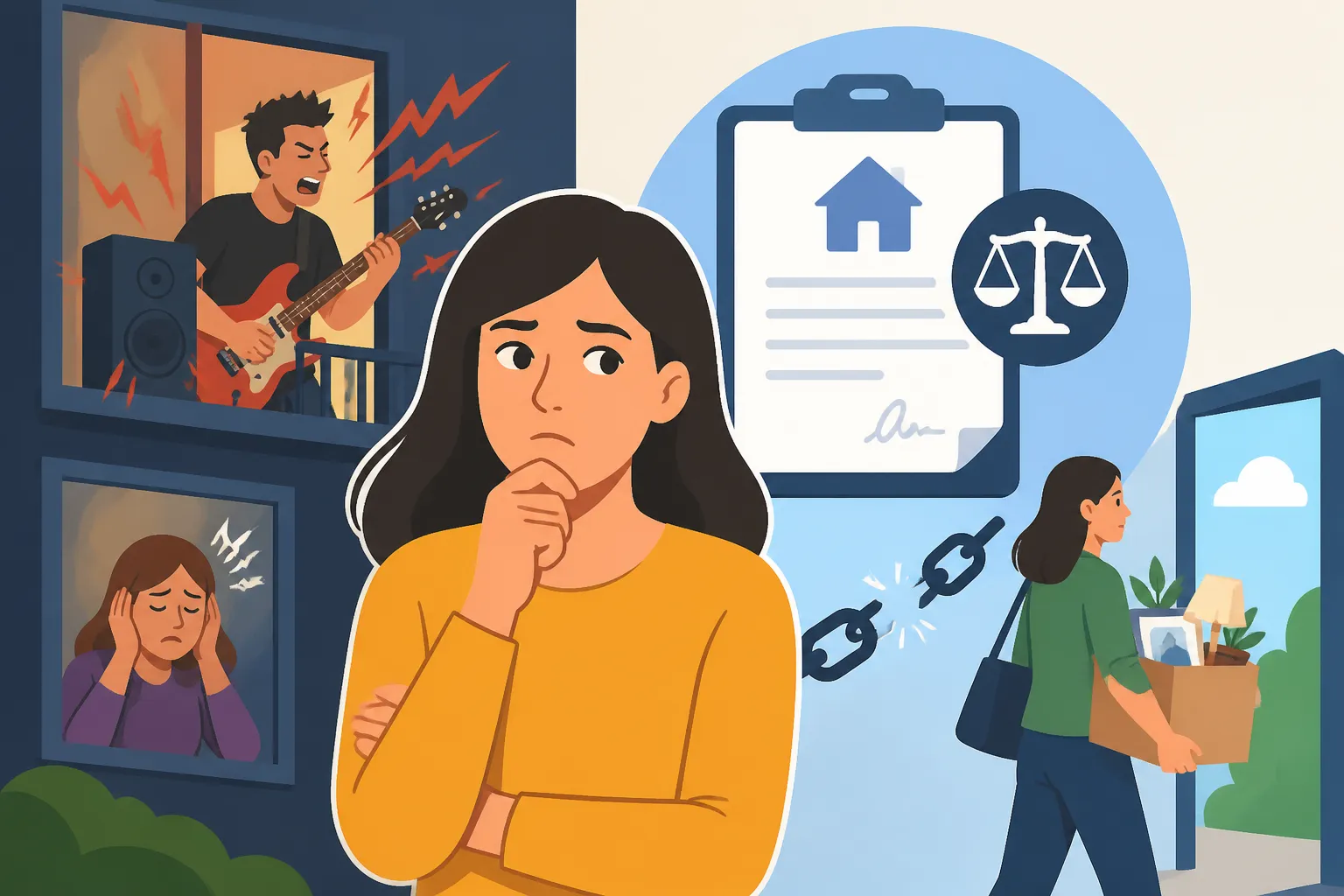
Dealing with truly awful neighbors can turn your dream rental into a living nightmare, making you question if you're stuck until your lease ends. From constant noise to disrespectful behavior, these situations can seriously impact your quality of life. This guide will walk you through whether a bad neighbor situation legally allows you to break your lease and what concrete steps you can take before making such a significant decision.
The Harsh Reality: When Bad Neighbors Aren't Legally a Lease-Breaking Reason
It's a tough pill to swallow, but the vast majority of "bad neighbor" situations, while incredibly frustrating and stressful, don't automatically grant you the right to break your lease without penalty. Landlord-tenant law generally operates on the principle that your lease is a binding contract between you and your landlord, not a guarantee of perfect neighborly harmony. The onus is often on you, the tenant, to demonstrate that the landlord has failed in their fundamental duties, which is a much higher bar than simply being annoyed by a loud party next door.
Understanding the "Quiet Enjoyment" Clause (and its limits)
You’ve probably heard of the "right to quiet enjoyment," and it sounds like exactly what you need when your neighbors are driving you up the wall. This legal principle is indeed a fundamental tenant right, implying that you have the right to occupy your rental property without substantial interference from your landlord or other tenants. However, its application is often misunderstood.
The right to quiet enjoyment primarily protects you from your landlord's direct interference (like entering your apartment without proper notice or constantly harassing you) or from significant, ongoing issues the landlord can control but refuses to address. Think about it this way: your landlord can't prevent Mrs. Henderson from playing her opera music too loud at 3 PM, but they can enforce a clause in her lease about excessive noise after 10 PM. The key here is "enforce." If the landlord is completely unresponsive to legitimate, repeated complaints that violate lease terms or local ordinances, that's when quiet enjoyment might come into play. But a single loud party or a grumpy resident often falls outside this protective umbrella.
What Constitutes a Lease Violation by Neighbors (and who enforces it)
For a neighbor's behavior to escalate to a lease-violating issue that could impact your lease, it typically needs to be something that:
- Violates the terms of their lease agreement: Most standard lease agreements, which you can easily find templates for on sites like LawDepot, include clauses about noise, common area usage, illegal activity, and general respectful conduct. If your neighbor is consistently violating these explicit terms, it becomes a landlord issue.
- Violates local ordinances or laws: This includes things like excessive noise during quiet hours, illegal activities, health code violations, or even harboring dangerous animals. These are usually enforced by local authorities (police, animal control, health department) but can become a landlord's responsibility if they fail to act after being made aware.
The critical distinction is that you don't enforce their lease; your landlord does. Your role is to report, document, and insist on action. If a neighbor is constantly throwing loud parties every weekend, and their lease clearly states "no excessive noise after 10 PM," then your landlord has a responsibility to address that. If they don't, especially after repeated, documented complaints, that's when you might start building a case for your own lease concerns. It's a tricky line to walk, and many landlords prefer to mediate rather than confront, which can leave you feeling ignored.
When Bad Neighbors Can Lead to Breaking Your Lease
While rare, there are specific circumstances where a bad neighbor situation could give you legal grounds to break your lease without penalty. These usually involve severe, persistent issues that render your home uninhabitable or demonstrate a clear failure on your landlord's part to uphold their responsibilities.
Documenting Severe and Persistent Nuisances
The absolute cornerstone of any successful argument for breaking a lease due to neighbors is thorough, consistent documentation. You cannot simply say "my neighbors are loud"; you need to prove it. This means keeping a detailed log of every incident, including:
- Date and Time: Be precise.
- Nature of the Incident: What exactly happened? (e.g., "music blaring, heavy bass," "dog barking continuously," "screaming match," "smell of marijuana smoke").
- Duration: How long did it last?
- Impact: How did it affect you? (e.g., "couldn't sleep," "couldn't work from home," "children woke up crying").
- Actions Taken: Did you call the police (non-emergency line), speak to the neighbor, or record anything?
- Evidence: Recordings (audio/video), photos (if applicable, like trash piled up), police report numbers.
Beyond individual incidents, document every communication with your landlord or property management. Send emails, not just calls, so you have a paper trail. Each email should reference previous communications and reiterate the lack of resolution. This creates a clear timeline of your efforts and their response (or lack thereof). Imagine presenting a judge with a binder full of detailed logs and unanswered emails – it paints a much clearer picture than just your word. TurboTenant, primarily for landlords, emphasizes detailed record-keeping; tenants should adopt the same principle. This meticulous record-keeping is vital when understanding what happens if you break a lease.
The "Constructive Eviction" Angle (and why it's a high bar)
"Constructive eviction" is a legal doctrine that suggests if your landlord allows conditions in your rental to become so intolerable that you are essentially forced to move out, it's as if they legally evicted you. This means you might be able to break your lease without penalty and potentially even sue for damages. Sounds promising, right? Here's the catch: it's an incredibly high legal bar to meet.
For a constructive eviction claim to succeed because of a neighbor, the conditions must be:
- So severe that they render the property uninhabitable: This goes beyond mere annoyance. We're talking about situations that fundamentally deprive you of the beneficial use and enjoyment of your home. Think persistent, egregious noise at all hours that prevents sleep, constant threats or harassment, or ongoing illegal activity that makes you fear for your safety.
- Caused by the landlord's intentional actions or, more commonly, their failure to act: Your landlord must have had notice of the problem and failed to remedy it within a reasonable timeframe. This is where your meticulous documentation comes into play. If you haven't given your landlord ample opportunity to resolve the issue and shown their negligence, you won't have a case.
- You must actually vacate the premises: You cannot claim constructive eviction while still living there. This makes it a high-risk strategy, as you're essentially betting that a court will agree with your assessment after you've already moved out and potentially incurred costs.
Winning a constructive eviction case based on a bad neighbor is challenging because courts often give landlords significant leeway to address issues. It's not enough that the situation is unpleasant; it must be genuinely unbearable and the landlord unresponsive. This ties closely to the concept of the Implied Warranty of Habitability Explained, which your landlord might be violating if they fail to provide a safe and livable environment.
Landlord Negligence and Failure to Act
This is often the most practical avenue for tenants looking to break a lease due to neighbor issues. If your landlord consistently ignores your documented complaints about lease-violating or illegal behavior by other tenants, it could be considered a breach of their duties.
Here’s how landlord negligence can create grounds for breaking your lease:
- Repeated, Unaddressed Lease Violations: If you have clearly demonstrated that your neighbors are repeatedly violating their lease terms (e.g., excessive noise, prohibited pets, illegal activity, dangerous behavior) and the landlord has taken no discernible action (warnings, eviction notices, mediation), that constitutes negligence.
- Failure to Maintain a Safe Environment: In extreme cases, if a neighbor's behavior leads to an unsafe environment (e.g., threats, violence, drug dealing that attracts dangerous elements), and your landlord does nothing, they could be seen as failing to provide a safe dwelling, which is part of the Landlord Repair Responsibilities What They Must Fix doctrine.
- Breach of Contract: Your lease is a contract. While it doesn't guarantee quiet neighbors, it often implies a reasonable expectation of peace and safety, and that the landlord will enforce the community rules. If the landlord consistently fails to uphold their end by ignoring severe lease violations by other tenants, they might be in breach of your contract.
Before you consider breaking your lease, you must give your landlord a fair chance to remedy the situation. Send a formal written notice, perhaps a Security Deposit Demand Letter How-To + Template adapted for a complaint, detailing the issues and demanding specific action within a reasonable timeframe. State laws dictate How Long Does a Landlord Have to Make Repairs? By State, which can offer a precedent for response times to other serious issues.
Actionable Steps Before Considering Breaking Your Lease
Before you even think about the legal ramifications of breaking your lease, there are several crucial steps you should take. Many tenant-neighbor disputes can be resolved or at least mitigated through proper channels and persistent effort.
Communication with Your Neighbors (the initial, uncomfortable step)
I know, I know. Confrontation is often the last thing anyone wants, especially with neighbors you’re already frustrated with. But sometimes, a direct, polite conversation can work wonders. Often, people genuinely don't realize how much their actions are impacting others.
Here's how to approach it:
- Choose your moment wisely: Don't approach them when you're angry or in the middle of an incident. Wait until you're calm.
- Be polite and non-accusatory: Start with "Hi, I'm [Your Name] from next door. I just wanted to politely mention…" instead of "Can you turn that down?!"
- Focus on the impact, not their character: "The noise has been carrying quite a bit, and it's making it hard for me to sleep/work," is better than "You're so inconsiderate."
- Be specific: "I hear the TV really loudly between 11 PM and 2 AM" is more helpful than "You're always loud."
- Suggest a solution: "Would you mind closing your window when you have company?" or "Perhaps using headphones after a certain hour could help?"
Of course, if you have any reason to fear for your safety or believe the neighbors are hostile, skip this step entirely and go straight to your landlord or the authorities. Your safety is paramount.
Formal Complaints to Your Landlord (and how to make them count)
Once direct communication fails (or isn't an option), it's time to engage your landlord officially. This is where your detailed log of incidents becomes invaluable.
- Send Written Notices: Always communicate in writing (email or certified mail). This creates a paper trail, which is essential if legal action becomes necessary. Clearly state the problem, the dates and times of incidents, and how it's affecting your quiet enjoyment.
- Reference Lease Terms and Local Ordinances: If possible, cite specific clauses in your lease (or your neighbor's, if you know them) or local noise ordinances that are being violated. For example, "As per Section 5b of our lease agreement, excessive noise after 10 PM is prohibited, and the bass from Unit 3B was clearly audible in my unit until 3 AM on [Date]."
- Request Specific Action: Don't just complain; ask your landlord to do something. Request that they speak to the neighbors, issue a warning, or enforce the lease. Keep copies of everything you send.
- Follow Up Regularly: If you don't hear back or see improvement, follow up. Each follow-up should reference your previous communications and the ongoing nature of the problem. This shows persistence and establishes a record of your landlord's inaction.
Remember, landlords have a Landlord Duty to Mitigate Damages Explained. If you are forced to break your lease due to their inaction, they may still be held responsible for costs associated with finding a new tenant.
Exploring Alternative Solutions and Lease Negotiations
Breaking a lease is a serious step with significant financial and credit implications. Before you take that plunge, explore all other possible avenues.
- Mediation: Some larger apartment complexes or property management companies offer mediation services. A neutral third party might be able to help you and your neighbors reach a compromise.
- Transferring Units: Is there another available unit in the same complex? Your landlord might be willing to let you transfer, especially if they recognize the validity of your complaints and want to avoid a lease break or legal dispute. Be prepared for potential transfer fees.
- Negotiating an Early Release: Even if you don't have strong legal grounds, you can always try to negotiate. Approach your landlord with your extensive documentation, explain the unbearable situation, and ask if you can mutually agree to terminate the lease early. Offer to help find a suitable replacement tenant or forfeit a portion of your security deposit as a "break lease fee." Sometimes, a landlord would rather agree to an early release than deal with an unhappy tenant who might cause further issues or even legal action. This is different from a forced early lease termination clause. You can learn more about How to Get Out of a Lease You Just Signed if you're early in your tenancy.
| Issue Type | Severity | Landlord Responsibility (Generally) | Potential Lease-Breaking Grounds |
|---|---|---|---|
| Minor Nuisance | Low | Minimal, encourages tenant-to-tenant resolution. | Unlikely |
| Examples | Occasional loud music, neighbor's kids playing loudly during the day, slight cooking odors. | ||
| Persistent Nuisance | Medium-High | Address through warnings, lease enforcement (if violations are clear). | Possible, if landlord is negligent. |
| Examples | Frequent loud parties at late hours, constant dog barking, strong recurring smoke smell (if smoking is prohibited in lease). | ||
| Severe Harassment/Safety Threat | High | Immediate action, including police involvement and eviction proceedings. | High, especially if landlord fails to act. |
| Examples | Threats of violence, illegal drug activity, physical assault, property damage, hate speech. | ||
| Property Damage | High | Address immediately, seek compensation from offending tenant. | Possible, if directly impacts your habitability and landlord inaction. |
| Examples | Neighbor's water leak damages your unit, intentional destruction of shared property. |
Legal Considerations and Potential Consequences of Breaking Your Lease
Deciding to break your lease, even with compelling reasons, is a significant legal step. It's crucial to understand the potential repercussions and how your actions could affect your finances and future housing opportunities.
Financial Liabilities and Impact on Your Rental History
If you break your lease without legally justifiable cause (like a successful constructive eviction claim or mutual agreement), you could face a range of financial penalties. Your landlord has the right to seek damages for the breach of contract.
Common financial liabilities include:
- Remaining Rent: You could be liable for all rent due for the remainder of your lease term, or until the landlord finds a new, qualified tenant. Most states have a "duty to mitigate damages," meaning the landlord must make a reasonable effort to re-rent the unit, but you are still responsible until they do.
- Loss of Security Deposit: Your landlord will almost certainly keep your security deposit to cover lost rent, re-rental costs, or any damages. Understanding what can a landlord deduct from a security deposit is key.
- Re-rental Fees: This could include advertising costs, tenant screening fees, and even the lost rent for the period the unit was vacant.
- Legal Fees: If your landlord has to take you to court to recover these costs, you might be responsible for their legal fees as well.
The financial hit can be substantial. Beyond the money, breaking a lease can severely impact your rental history. Future landlords performing background checks will see an early lease termination, which can make it much harder to rent in the future. It could also negatively affect your credit score if the landlord reports the outstanding debt to collection agencies. Knowing How Much Does It Cost to Break a Lease? is critical before making a decision. You should also check the specific rules in your state regarding Security Deposit and Broken Lease What Happens.
Understanding State-Specific Tenant Protection Laws
Tenant protection laws vary dramatically from state to state, and even city to city. What might be considered a valid reason to break a lease in one area could be completely unrecognized in another.
For example, some states or cities might have stronger noise ordinances, or specific provisions regarding repeated nuisances that make it easier for tenants to seek relief. Others might have very strict definitions of what constitutes "uninhabitable" conditions, making constructive eviction a near-impossible argument for anything less than a complete breakdown of essential services.
It's absolutely essential to research your local and state landlord-tenant laws. Websites like those for your state's bar association or HUD (Housing and Urban Development) can be good starting points. You might also find specific guidance on Breaking a Lease by State. For instance, California tenants have different protections than those in Texas. Knowing your rights under the Security Deposit Laws by State (2026) can also be beneficial if a dispute arises. Consulting with a local tenant rights organization or an attorney specializing in landlord-tenant law can provide you with the most accurate and up-to-date information for your specific situation. They can help you understand Tenant Rights If Landlord Won't Return Deposit in the event of a dispute following a lease break.
Ultimately, while the frustration of dealing with bad neighbors is incredibly real and utterly draining, breaking a lease should be a last resort after exhausting all other options and thoroughly understanding the legal landscape.
Disclaimer
This article is for general informational purposes only and does not constitute professional advice. Laws and regulations vary by location and change over time. Consult a qualified professional for guidance on your specific situation.