Can I Break My Lease Because of Noise?
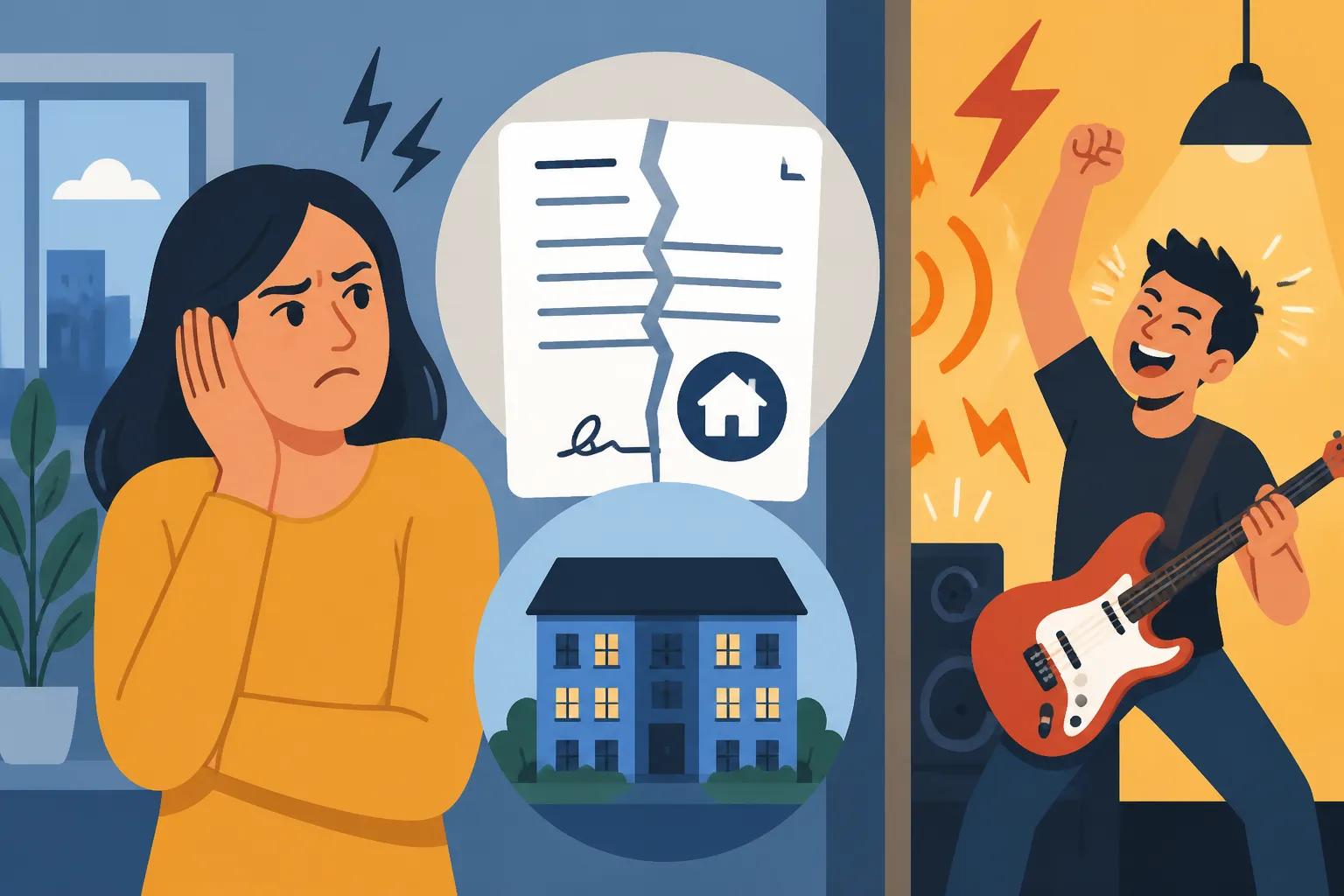
Dealing with persistent, disruptive noise in your rental can turn your sanctuary into a source of constant stress and anxiety. You signed a lease expecting a certain level of peace and quiet, only to find yourself constantly listening to loud neighbors, incessant construction, or blaring music. It’s a truly frustrating situation that makes you wonder if you’re trapped and if there's any way out. This guide will walk you through whether noise can legally justify breaking your lease and what steps you can take to protect your rights and well-being.
Understanding Your Lease Agreement and Noise Clauses
Before you even think about packing a single box, it’s absolutely essential to dive deep into the lease agreement you signed. Many tenants overlook these details, but your lease is the primary contract governing your tenancy, and it often contains provisions that are highly relevant to noise issues.
Explicit Noise Provisions
Some leases are quite specific about what constitutes acceptable noise levels and what doesn't. You might find clauses detailing quiet hours, often from late evening until early morning, during which noise should be kept to a minimum. These clauses might specify that stereos, televisions, or loud conversations shouldn't be audible outside your unit during these times. It's also common to see rules against excessive noise at any time that disturbs other residents.
For example, your lease might state something like, "Tenants shall not create or permit any loud or offensive noises that disturb the comfort, quiet, or enjoyment of other tenants, especially between the hours of 10:00 PM and 8:00 AM." If your neighbor is consistently blasting music at 2 AM, clearly violating these explicit terms, you have a solid foundation for your complaint. Make sure to highlight these specific sections when communicating with your landlord, as it shows you've done your homework and are not just making a vague complaint. For landlords, including clear and concise rules about noise is good practice, and resources like LawDepot can provide customizable lease agreement templates that include such clauses.
General Quiet Enjoyment Clause
Even if your lease doesn't spell out every single noise scenario, it almost certainly includes a "covenant of quiet enjoyment." This isn't just about actual quiet, but rather your right to use and enjoy your rental property without substantial interference from the landlord or other tenants under the landlord's control. It’s often an implied term, meaning it exists even if it's not explicitly written out in black and white in every single lease.
The key here is "substantial interference." A one-off noisy party might be annoying, but it probably doesn't breach quiet enjoyment. However, if you're subjected to constant, severe noise that makes it impossible to sleep, work from home, or simply relax in your own space, that could very well cross the line. This could be anything from a neighbor's continuously barking dog to ongoing, unannounced construction work directly impacting your unit. The specifics of what constitutes a breach of quiet enjoyment can vary by state and even locality, so it's worth understanding the Implied Warranty of Habitability Explained and how it relates to your ability to live peacefully.
The Implied Warranty of Quiet Enjoyment
The concept of quiet enjoyment is a cornerstone of landlord-tenant law. It's not just a nice idea; it's a fundamental right you have as a tenant. However, what sounds simple in theory can be quite complex in practice.
What "Quiet Enjoyment" Really Means
When we talk about "quiet enjoyment," it doesn't mean your apartment will be perfectly silent all the time. Living in an apartment building, especially in a city like New York or Los Angeles, inherently comes with some level of ambient noise from neighbors, traffic, and everyday life. What it does mean is that your landlord has a responsibility to ensure you can occupy your rental property undisturbed by significant nuisances. This includes preventing their own actions from interfering with your peace, and in many cases, taking reasonable steps to address significant disturbances caused by other tenants.
Imagine living in a downstairs apartment where the upstairs neighbors constantly stomp, drop heavy objects, and have loud arguments late into the night. While some noise is expected, if it's so pervasive and disruptive that you can't sleep, concentrate, or enjoy your home, your right to quiet enjoyment is being violated. This is different from a minor annoyance; it's a significant impediment to your ability to comfortably live in your rented space.
When Noise Becomes a Breach
For noise to constitute a breach of the covenant of quiet enjoyment significant enough to potentially break a lease, it generally needs to meet a few criteria:
- Substantial and Habitual: It's not a single incident but a recurring pattern of noise that severely impacts your daily life.
- Interference with Use: The noise must genuinely interfere with your ability to use your property for its intended purpose (e.g., sleeping, working, relaxing).
- Landlord's Knowledge and Inaction: The landlord must be aware of the issue and fail to take reasonable steps to remedy it. They can't fix what they don't know about, but once they know, they have a duty to act.
Consider a scenario where your next-door neighbor starts running a home-based business involving loud machinery that operates from 6 AM to 10 PM daily, seven days a week. You've reported it multiple times to your landlord, provided detailed recordings, and even pointed out local noise ordinances being violated. If the landlord does nothing, and the noise prevents you from working remotely or getting any rest, this could very well be grounds for claiming a breach of quiet enjoyment, potentially leading to a Constructive Eviction Explained. In such cases, you might explore Legal Reasons to Break a Lease (SCRA, DV, Uninhabitable) which can include certain severe breaches of quiet enjoyment that render the property effectively uninhabitable.
Documenting Noise Violations Effectively
When it comes to addressing noise issues and potentially breaking a lease, documentation is your absolute best friend. Without clear, consistent records, your claims might be seen as subjective complaints. This isn't about being overly dramatic; it's about building a solid case.
Keeping a Detailed Noise Log
Start a detailed log the moment you identify a recurring noise problem. This isn't just a mental note; it's a written record of every incident. For each entry, include:
- Date and Time: Be precise, noting the start and end times of the noise.
- Duration: How long did the noise last?
- Description of Noise: Be specific. "Loud music with heavy bass" is more useful than "noisy neighbor." "Dog barking continuously for 30 minutes" is better than "barking dog."
- Source of Noise: Which neighbor, which apartment, what kind of construction?
- Impact on You: How did it affect you? "Woke me up from sleep," "couldn't hear my work calls," "child couldn't sleep."
- Actions Taken: Did you knock on the wall? Call the landlord? Call security? Note it down.
This log will paint a clear picture of the frequency, severity, and impact of the noise. It also demonstrates that you've been diligently tracking the issue.
Gathering Evidence Beyond Your Own Records
While your log is crucial, supplementing it with other forms of evidence can strengthen your case significantly.
- Recordings: Use your phone to record the noise. Be mindful of privacy laws in your state regarding recording others, but generally, recording noise within your own unit is permissible as evidence of disturbance. Make sure the recordings are timestamped if possible.
- Witness Statements: If other neighbors are also affected, ask them to write statements or logs themselves. Their corroboration can be powerful.
- Police or Security Reports: If the noise warrants a call to the police or building security, get a report number or document the interaction. Official reports carry significant weight.
- Communication Records: Keep copies of all communication with your landlord or property management. This includes emails, letters, text messages, and detailed notes of phone calls (including date, time, who you spoke to, and what was discussed). This demonstrates your attempts to resolve the issue.
When you're gathering this evidence, remember that consistency is key. A single recording won't tell the full story, but a consistent pattern documented over weeks or months will. Learn more about How to Document Your Apartment at Move-In as those same principles of meticulous record-keeping apply here.
Official Complaints and Communication
Once you have a solid body of documentation, it's time to formally communicate with your landlord. Don't just make a casual complaint; send a written notice. This letter should:
- Reference your lease: Point to the specific clauses about quiet enjoyment or noise, or the implied warranty.
- Detail the issues: Summarize your noise log, providing specific examples of dates, times, and types of noise.
- State the impact: Explain how the noise is affecting your quality of life.
- Request action: Clearly state what you expect the landlord to do (e.g., enforce the lease, communicate with the offending tenants, address structural issues).
- Set a reasonable deadline: Give them a timeframe to respond or act, usually 7-14 days, depending on your state's laws and the severity of the issue.
Send this letter via certified mail with a return receipt requested, or via email with a read receipt, so you have proof it was received. If your landlord uses an online portal, make sure to save screenshots or copies of your submissions. This formal approach establishes a paper trail that proves you gave your landlord ample opportunity to resolve the problem. TurboTenant offers various landlord tools, and while primarily for landlords, their emphasis on clear communication and record-keeping is a good lesson for tenants too.
Steps to Take Before Breaking Your Lease
Breaking a lease is a serious step with potentially significant financial and legal repercussions. It should always be a last resort, taken only after exhausting other avenues.
Communicating with Your Landlord Formally
As mentioned, formal communication is vital. Your initial letter is just the first step. If the noise persists after your landlord has had a reasonable opportunity to respond or intervene, you'll need to follow up. Send another letter, referencing your previous communication, detailing continued noise issues, and reminding them of their obligations under the lease and the implied covenant of quiet enjoyment.
This second (or third) letter might need to be more assertive, clearly stating that if the problem isn't resolved, you will consider your lease breached and explore your options, which could include breaking the lease. In some states, you might be required to give the landlord written notice of the breach and an opportunity to cure it before you can legally terminate the lease without penalty. This is often part of the process for How to Break a Lease (Without Penalty Where Possible).
Exploring Alternative Solutions
Sometimes, a direct confrontation or legal action isn't the only way. Consider:
- Mediation: In some communities or apartment complexes, there are mediation services available. A neutral third party can help facilitate a conversation between you, your noisy neighbor, and/or the landlord to find a mutually agreeable solution. This can be less adversarial and sometimes more effective than simply complaining.
- Soundproofing: While not your responsibility, if the landlord is willing to contribute or you can afford it, minor soundproofing measures (like weatherstripping doors, adding heavy curtains, or even moving furniture) can sometimes reduce noise transfer. This is a band-aid, not a cure, but can offer temporary relief.
- Negotiating a Lease Buyout: If the situation is truly unbearable and your landlord is unwilling or unable to fix the problem, you might try to negotiate a lease buyout. This involves offering to pay a fee (often one or two months' rent) in exchange for being released from your lease early. While it costs money, it can be cheaper and less stressful than legal battles or being on the hook for the remainder of the lease term.
Consulting with a Legal Professional
Before you make any final decisions about breaking your lease, it is highly advisable to consult with a tenant rights attorney. Landlord-tenant laws vary drastically by state and even by city. What might be sufficient grounds to break a lease in California might not be in Texas or Florida.
An attorney can:
- Assess your case: Review your lease, your documentation, and the specific laws in your jurisdiction (e.g., Security Deposit Laws by State (2026), Maximum Security Deposit Limits by State) to determine the strength of your claim.
- Advise on next steps: Guide you on the precise legal process for breaking a lease due to noise and whether you have grounds for Suing a Landlord for Your Deposit (Small Claims & Penalties) if they wrongly withhold funds.
- Represent you: If necessary, an attorney can help you draft legal notices, negotiate with your landlord, or represent you in court if it comes to that.
- Explain potential risks: Clearly lay out the financial and credit implications if your attempt to break the lease is deemed unlawful.
This isn't an expense; it's an investment in protecting your rights and avoiding costly mistakes. You might be surprised at how much difference proper legal advice makes.
The Risks and Consequences of Breaking a Lease Due to Noise
Breaking a lease, even for seemingly legitimate reasons like unbearable noise, carries inherent risks. You need to be fully aware of these before taking action.
Potential Financial Liabilities
If a court or arbitrator determines that your reasons for breaking the lease were not legally justified under state law (e.g., the noise wasn't severe enough to constitute a breach of quiet enjoyment or constructive eviction, or you didn't give your landlord sufficient opportunity to remedy the situation), you could face significant financial penalties.
- Remaining Rent: You might be held responsible for the rent for the entire remaining term of your lease, or until the landlord finds a new tenant. Most states require landlords to "mitigate damages" by making a reasonable effort to re-rent the property, but you could still be liable for the rent during any vacancy period. This is often covered under a concept like Landlord Duty to Mitigate Damages Explained.
- Lease Termination Fees: Your lease might include an early termination fee clause. While these can sometimes be challenged if they're excessively high, they are often enforceable.
- Loss of Security Deposit: Your landlord could claim your security deposit to cover lost rent, re-rental costs, or damages. You might then need to know How to Dispute Security Deposit Deductions.
- Legal Fees: If your landlord sues you for breach of contract, you could be responsible for their legal fees in addition to your own.
Imagine you prematurely vacate an apartment in Denver, Colorado, in December, claiming noise. If your landlord can prove they made reasonable efforts to re-rent but couldn't find a new tenant until February, you could still be on the hook for December and January's rent, plus any re-listing fees.
Impact on Rental History and Credit
Beyond immediate financial costs, breaking a lease can have long-lasting negative impacts on your rental history and credit score.
- Eviction Record: While not a formal eviction, a landlord might report the lease breach to tenant screening agencies. This can make it incredibly difficult to find new housing in the future, as many landlords conduct How to Screen a Tenant (Landlord Guide) and will see the negative mark.
- Credit Score Damage: If you default on payments (like the remaining rent or termination fees), your landlord might send the debt to collections, which will appear on your credit report and significantly lower your credit score. This can affect your ability to get loans, credit cards, or even certain jobs.
It’s a tough spot, and understanding What Happens If You Break a Lease? is crucial. Weighing these risks against the benefit of moving out is a serious calculation.
State-Specific Considerations for Noise-Related Lease Breaks
Landlord-tenant law is incredibly localized, meaning what's legal and actionable in one state or city might be completely different just a few miles away. This is particularly true for nuanced issues like noise.
Varying Interpretations of Habitability and Quiet Enjoyment
While the "implied warranty of habitability" and the "covenant of quiet enjoyment" are generally recognized across the U.S., their specific interpretations and the thresholds for breach vary.
- Severity Thresholds: Some states have higher thresholds for what constitutes an "uninhabitable condition" or a "substantial interference" with quiet enjoyment. For example, a court in a bustling urban environment might consider a certain level of noise "normal," whereas the same noise in a quiet suburban area might be deemed a severe disturbance. What might be considered grounds for Breaking a Lease Due to Mold or Uninhabitable Conditions may not apply as easily to noise unless it's extreme.
- Landlord's Duty to Act: States differ on how quickly a landlord must respond to and rectify a problem, and what "reasonable efforts" entail. Some states have stricter timelines for repairs or addressing tenant complaints.
- Legal Remedies: The specific remedies available to a tenant, such as the right to "repair and deduct" (which is usually for physical defects, not noise), or the ability to legally withhold rent, are highly state-dependent. While some states allow tenants to Withholding Rent & Rent Escrow under certain conditions, using this for a noise complaint is generally much riskier and less often supported.
Local Ordinances and Noise Regulations
Beyond state law, your local municipality (city or county) often has its own set of noise ordinances. These are specific rules about noise levels, quiet hours, and what constitutes a public nuisance.
- Specific Decibel Limits: Many cities, like San Francisco or Seattle, have clear decibel limits for residential areas, especially during certain hours. If your neighbor's noise consistently exceeds these limits, you have a strong, objective piece of evidence.
- Enforcement Mechanisms: Local police departments or code enforcement offices are usually responsible for enforcing noise ordinances. Obtaining official reports from these agencies can provide powerful documentation of a lease violation.
- Permit Requirements: If the noise is from construction, check local regulations. Construction often requires permits and has specific hours of operation. If work is being done outside these hours or without proper permits, that's another violation to document.
For instance, in certain neighborhoods in Los Angeles, there are very strict rules about construction noise before 7 AM, while other areas might be more lenient. Knowing these local rules can significantly bolster your case. You'd want to look up "noise ordinances [your city/county]" to find the specific details that apply to your situation.
It's clear that while the desire to escape incessant noise is understandable, the path to legally breaking your lease is fraught with legal nuances and potential pitfalls. Thorough documentation, persistent communication with your landlord, and expert legal advice are your best defenses.
| Type of Noise Disturbance | Potential for Lease Break (Low/Medium/High) | Required Documentation | Landlord's Role | Tenant's Best Action |
|---|---|---|---|---|
| Occasional Loud Party | Low | Date, time, description, police report (if called) | Address complaint, remind tenant of lease rules, usually one warning | Direct communication (if safe), report to landlord/security |
| Frequent Dog Barking | Medium | Detailed log (date, time, duration), recordings, neighbor statements | Enforce pet policy, communicate with pet owner, potential fines | Noise log, formal written complaints to landlord, vet local ordinances |
| Continuous Loud Music | Medium-High | Detailed log, recordings, police reports, tenant statements | Enforce quiet hours, issue warnings/notices to cure or quit | Noise log, formal written complaints, involve local authorities |
| Ongoing Construction Noise | Medium-High | Detailed log, recordings, local permit checks, photos | Investigate source, ensure compliance with permits/hours, communicate with tenant | Research local ordinances, formal complaints to landlord/city officials |
| Severe Structural Noise | High | Professional inspection report, detailed log, repair requests | Investigate structural issues, undertake necessary repairs, offer temporary relocation | Formal repair requests, consider Repair and Deduct by State, legal counsel |
| Harassment/Threatening Noise | High | Police reports, restraining orders, detailed log, witness statements | Take immediate action against perpetrator, cooperate with authorities | Contact police immediately, seek legal protection |
Disclaimer
This article is for general informational purposes only and does not constitute professional advice. Laws and regulations vary by location and change over time. Consult a qualified professional for guidance on your specific situation.