Early Lease Termination Clause Explained
Let's be real, signing a lease can feel like you're signing away a piece of your soul for the next year or two. And while we all hope to ride out our lease term smoothly, life, as it often does, throws curveballs. That sudden job relocation, a family emergency, or even an unexpected change in your personal life can make staying put impossible. The sheer stress of wondering "How do I get out of this without completely ruining my finances or my rental history?" is a heavy burden. This comprehensive guide is here to demystify one of the most confusing parts of any rental agreement: the early lease termination clause, offering practical advice and insight into your rights and responsibilities.
Understanding the Early Lease Termination Clause
It's a common scenario: you’re excited about a new apartment, and the lease agreement is a stack of papers thick enough to be a small novel. You skim, you sign, and suddenly six months later, you're in a bind. You need to move, but you remember something about a "termination clause." What exactly is this thing, and why is it even there?
What Exactly is This Clause?
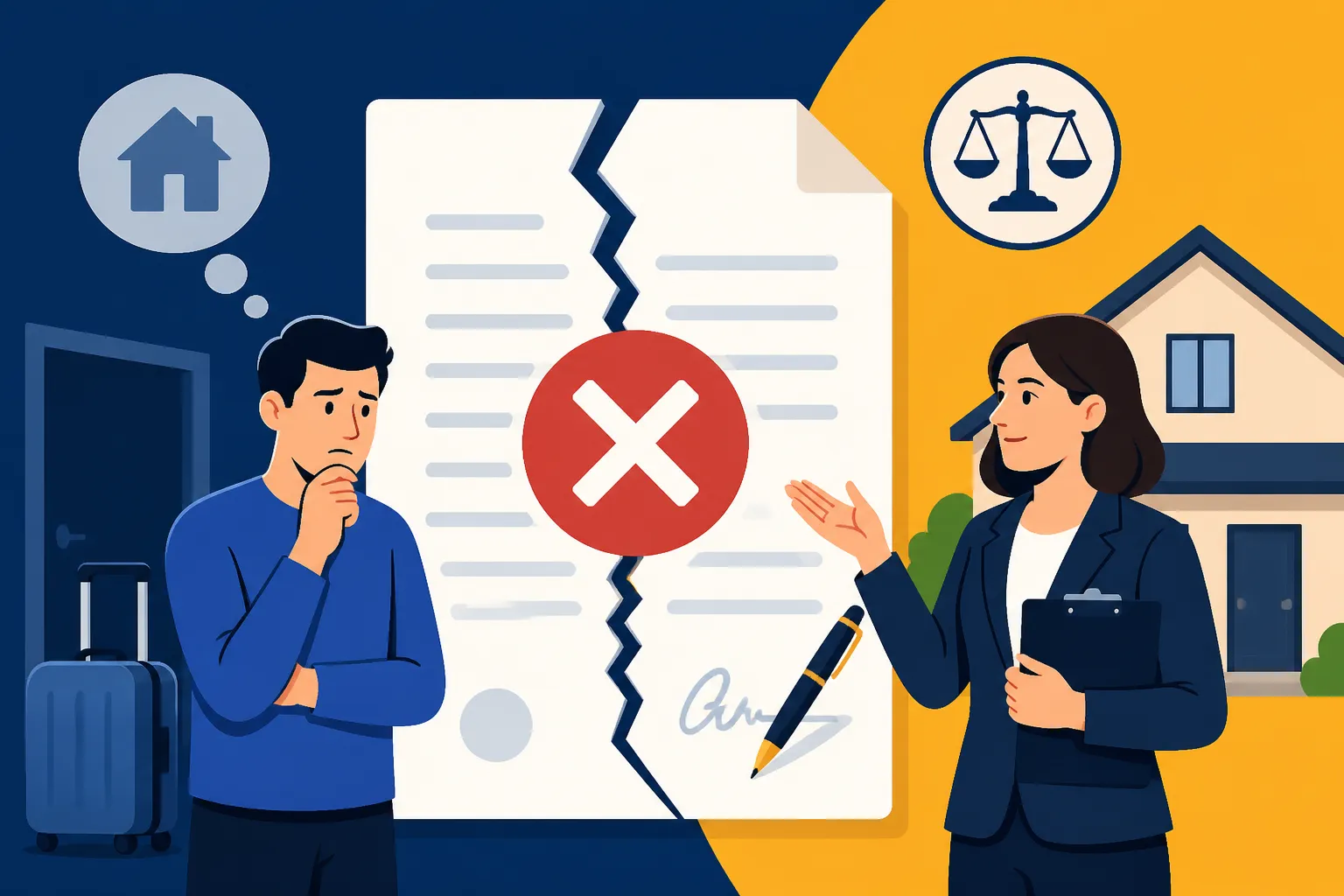
At its heart, an early lease termination clause is a specific section within your rental agreement that outlines the conditions and consequences if you, the tenant, need to end your lease before its agreed-upon term expires. It’s essentially a pre-negotiated agreement for what happens when life gets in the way of your 12-month commitment. Think of it as an escape hatch, but one with a very detailed instruction manual and often, a price tag attached. Without such a clause, breaking a lease would generally mean you're liable for all remaining rent until the lease naturally ends or until the landlord finds a new tenant. This clause attempts to standardize that process and its associated costs.
For example, your lease might state something like, "Tenant may terminate this lease early by providing 60 days' written notice and paying an early termination fee equal to two months' rent." This clear language, while potentially costly, at least gives you a roadmap. It’s far better than the ambiguity and potential endless liability of a lease without such a provision. Understanding this clause before you sign is paramount, as it dictates your options if you ever find yourself needing to How to Break a Lease (Without Penalty Where Possible).
Why Landlords Include Them in Lease Agreements
Now, you might be thinking, "Why would my landlord want to make it easier for me to leave?" It's not about making it easy; it's about making it predictable and manageable for both parties. Landlords operate a business, and unexpected vacancies can lead to significant financial losses.
Protecting Against Vacancy Costs
When a tenant moves out early, the landlord faces several immediate costs and inconveniences. There's the lost income from rent for the period the unit sits empty, the expenses of cleaning and preparing the apartment for new renters, and the marketing costs to attract new applicants. An early termination clause, particularly one with a fixed fee, helps to offset these potential losses. It acts as a form of liquidated damages – a pre-agreed amount designed to compensate the landlord for the projected costs and lost rent, rather than having to chase a tenant for potentially months of rent in court. This protects the landlord's bottom line and ensures they aren't left entirely in the lurch if you need to leave. Many landlords use services like TurboTenant or leverage legal document platforms like LawDepot to ensure their lease agreements, including these clauses, are legally sound and comprehensive, reflecting industry standards and protecting their interests.
Maintaining Rental Income Stability
Beyond immediate costs, landlords value stability. A long-term lease provides a predictable income stream, which is crucial for paying mortgages, property taxes, insurance, and maintenance. If tenants can simply walk away without consequence, that stability is shattered. The early termination clause, by imposing a financial penalty, acts as a deterrent to casual lease-breaking, encouraging tenants to honor their commitments while also providing a defined process if they absolutely cannot. It’s a balance: offering a way out while ensuring the landlord isn't unduly penalized for a tenant's change in circumstances.
Common Types of Early Termination Provisions
Just like every lease is a little different, so are the early termination clauses. It’s not a one-size-fits-all situation, and understanding the nuances can really help you anticipate potential costs or even realize you have protections you didn't know about.
Fixed-Fee or Liquidated Damages Clauses
This is perhaps the most straightforward and common type of early termination clause you'll encounter. It simply states that if you break your lease early, you agree to pay a predetermined fee. This fee is often equivalent to one, two, or sometimes three months' rent, though it can vary. The beauty of this clause (if you can call it that) is its clarity. You know exactly what you'll owe if you need to leave.
For example, if your rent is $1,500 a month and your clause specifies a two-month liquidated damages fee, you'd pay $3,000. Once you pay this amount and follow any other stipulations (like giving proper notice and vacating the property), your lease obligations are typically fulfilled, and you're released from any further rent liability. This simplifies things for both you and the landlord, avoiding lengthy disputes about actual damages. However, it's crucial to understand that even with such a clause, your landlord still has a Landlord Duty to Mitigate Damages Explained by trying to re-rent the unit. Depending on your state, if they find a new tenant quickly, the fixed fee might need to be adjusted or even challenged if it's considered an excessive penalty and not a reasonable estimate of actual damages. It's a fine line and something to research when considering How Much Does It Cost to Break a Lease?.
Military Service Member Protections SCRA
Here’s where federal law steps in to offer crucial protections. The Servicemembers Civil Relief Act (SCRA) is a lifesaver for military personnel and their families. This act allows active-duty servicemembers to terminate a residential lease early without penalty if they receive Permanent Change of Station (PCS) orders or orders to deploy for at least 90 days.
To invoke SCRA rights, you typically need to:
- Provide written notice to your landlord.
- Include a copy of your military orders.
- Ensure the lease was entered into before starting active duty, or while on active duty and you later received PCS orders or deployment orders.
The termination usually becomes effective 30 days after the next rent payment is due following the notice. So, if you give notice on May 15th and rent is due June 1st, your lease would terminate 30 days after June 1st. This is a powerful protection, ensuring that military families aren't financially penalized for serving their country. For a step-by-step guide, check out resources on Military (SCRA) Lease Termination Step-by-Step.
Special Circumstances Clauses: Domestic Violence, Job Relocation
Some states and individual leases recognize other specific, sensitive circumstances that may warrant early termination or reduced penalties.
- Domestic Violence: Many states have laws that allow victims of domestic violence, sexual assault, or stalking to terminate their lease early, often with specific notice requirements and documentation (like a protection order or police report). These laws are designed to help individuals escape dangerous situations without being trapped by a lease. For instance, in states like Washington or California, there are explicit statutory provisions for Domestic Violence Lease Termination by State.
- Job Relocation: While less common to be explicitly written into a standard lease without a fixed-fee clause, some employers offer relocation packages that include lease-breaking assistance. In some competitive rental markets or for high-value tenants, a landlord might be open to a job relocation clause, or at least be more flexible if you approach them with official company documentation.
- Uninhabitable Conditions: This isn't strictly an early termination clause, but it's a critical tenant right. If your rental becomes legally uninhabitable due to severe issues like lack of heat, dangerous mold, or structural problems that the landlord fails to address, you might have the right to terminate your lease, sometimes even without penalty. This falls under the "implied warranty of habitability" and can lead to you breaking a lease for Legal Reasons to Break a Lease (SCRA, DV, Uninhabitable).
Subletting and Assignment as Alternatives
Even if your lease doesn't have a specific early termination clause, or if the fee is simply too high, you might have other options: subletting or assignment.
- Subletting: This is when you find a new tenant (the sublessee) to live in your unit and pay rent directly to you, and you, in turn, pay the landlord. You remain legally responsible for the lease, so if the sublessee fails to pay or damages the property, you're still on the hook. Many leases require landlord approval for subletting.
- Lease Assignment: With an assignment, you transfer your entire lease agreement, including all rights and responsibilities, to a new tenant (the assignee). Once the assignment is complete and approved by the landlord, you are typically no longer liable for the lease. This is often the preferred route if you want a clean break.
Whether you can sublet or assign depends entirely on your lease and state law. Some leases forbid it, while others require landlord consent, which cannot be unreasonably withheld in some jurisdictions. This can be a great way to Subletting & Lease Assignment Explained without incurring hefty penalties.
Navigating Your Rights and Responsibilities
When you find yourself needing to end your lease early, it can feel like you're entering a landlord's battlefield. But you're not without defenses! Understanding your rights and responsibilities is key to minimizing financial impact and avoiding legal headaches.
The Landlord's Duty to Mitigate Damages
This is one of the most critical tenant protections when breaking a lease. In most states, if you move out early, your landlord can't just let the property sit empty and charge you for all the remaining months of rent. They have a legal obligation to "mitigate damages" – meaning they must make a reasonable, good-faith effort to find a new tenant and re-rent the property.
What does "reasonable effort" mean? It generally means advertising the property, showing it to prospective tenants, and accepting a qualified applicant. They can't, for example, intentionally overprice the unit or drag their feet on repairs just to keep you on the hook for rent. If they successfully re-rent the unit, your financial liability generally ends when the new tenant's lease begins. However, you might still be responsible for the period the unit was vacant, along with legitimate re-rental costs (like advertising fees). It's a complex area, and the specifics of Landlord Duty to Mitigate Damages Explained can vary significantly by state. It's often where disputes arise, so documenting everything is crucial.
Providing Proper Notice for Early Termination
Even if your lease has an early termination clause, you can't just pack up and leave. Almost every clause, and certainly state law, requires you to provide written notice. This isn't just a courtesy; it's a legal requirement that protects both parties.
- Check Your Lease: The first step is always to reread your early termination clause. It will explicitly state how much notice is required – commonly 30 or 60 days.
- Written is Key: Never, ever give verbal notice. It’s too easy to dispute. Send a formal letter, dated and signed, clearly stating your intention to vacate and the effective date.
- Proof of Delivery: Send your notice via certified mail with a return receipt requested, or deliver it in person and get a dated signature from the landlord or property manager. This creates a clear paper trail, proving when and how you notified them.
Failing to provide proper notice can invalidate your ability to use the early termination clause and could leave you liable for more rent or additional penalties. This step is non-negotiable for a smooth exit.
Potential Financial Consequences and Penalties
Let's not sugarcoat it: breaking a lease early, even with a clause, usually comes with financial repercussions. These can include:
- Early Termination Fee: As discussed, often 1-3 months' rent. This is usually the primary cost.
- Lost Rent: If the landlord cannot find a new tenant immediately, you may be liable for rent during the vacancy period, even with a liquidated damages clause, depending on state law and the specific wording of your agreement.
- Re-rental Costs: This can include advertising fees, tenant screening fees for new applicants, and possibly a portion of a real estate agent's commission if one is used.
- Loss of Security Deposit: While a security deposit is primarily for damages beyond normal wear and tear, it can sometimes be used to cover unpaid rent or fees associated with an early lease break, especially if you didn't adhere to the lease's terms. Understanding What Can a Landlord Deduct From a Security Deposit? is important here.
- Collection Actions and Credit Impact: If you fail to pay agreed-upon fees or rent, the landlord could send the debt to collections, which will negatively impact your credit score. They could also sue you in small claims court. This is why understanding What Happens If You Break a Lease? is so crucial.
It’s a tough pill to swallow, but facing these realities upfront and understanding your potential liability can help you budget and negotiate.
Proactive Steps Before and During Your Lease
The best defense is a good offense, right? When it comes to early lease termination, proactive measures taken both before and during your tenancy can save you a world of stress and money down the line.
Reviewing the Lease Document Meticulously
This step cannot be emphasized enough. Before you put your signature on that dotted line, read the entire lease agreement. Don't just skim it. Pay particular attention to:
- The Early Termination Clause: Does it exist? What are the conditions? Is there a fixed fee? How much notice is required? Is subletting or assignment allowed?
- Rent Due Dates and Grace Periods: Know exactly when rent is due and if there’s any leeway before late fees kick in.
- Repair and Maintenance Responsibilities: Understand what your landlord is responsible for and what falls to you. This is crucial if conditions become uninhabitable, potentially allowing for termination.
- Pet Policies: If you have pets, ensure their presence is properly documented and understood.
- Automatic Renewal Clauses: Be aware of clauses that might automatically renew your lease if you don't give notice to vacate by a certain deadline.
If anything is unclear or seems unfair, ask questions before you sign. Don’t be afraid to try to negotiate terms, especially regarding early termination fees, although landlords of larger complexes may be less flexible. You might even consider using a reputable lease agreement template from platforms like LawDepot for comparison, just to see common clauses and language. It's much easier to clarify and negotiate terms now than to try and dispute them later when you're in a bind. Remember, once you sign, you're generally bound by everything in that document.
Open Communication and Written Agreements
Life happens. If you anticipate needing to break your lease early, the absolute best thing you can do is communicate openly and honestly with your landlord as soon as possible.
- Early Disclosure: As soon as you know you might need to move, reach out. The more notice you give, the more time your landlord has to find a new tenant, which ultimately helps you by mitigating your financial liability.
- Be Professional and Empathetic: Explain your situation calmly and respectfully. While they don't have to sympathize, a landlord is more likely to work with a respectful tenant than one who disappears or is confrontational.
- Get Everything in Writing: If you negotiate a different early termination agreement (e.g., a reduced fee, a specific timeline), get it in writing and signed by both parties. Do not rely on verbal agreements, as they are incredibly difficult to prove in court and often are not legally binding when a written lease exists. This written modification becomes an addendum to your original lease.
- Document Everything: Keep copies of all correspondence, emails, and any notices you send or receive regarding your tenancy and potential termination. This paper trail is invaluable if any disputes arise down the road.
This proactive approach can often lead to a more amicable and less costly resolution than simply assuming the worst or ignoring the problem.
Seeking Professional Legal Guidance
Sometimes, despite your best efforts, things get complicated. You might feel the landlord is being unreasonable, the fees seem excessive, or you're unsure if your situation falls under a protected category. In these instances, don't try to navigate the legal labyrinth alone.
- Tenant Rights Organizations: Many cities and states have tenant advocacy groups or non-profits that offer free or low-cost legal advice. They can help you understand your specific state and local laws, and review your lease.
- Legal Aid Services: If you meet income requirements, legal aid societies can provide valuable assistance and even representation.
- Consult a Landlord-Tenant Attorney: For more complex situations, especially if significant money is at stake or you believe your rights are being violated, hiring a private attorney specializing in landlord-tenant law is a wise investment. They can interpret ambiguous clauses, advise you on Security Deposit Laws by State (2026), negotiate on your behalf, and represent you if the matter goes to court. They can explain nuances like Double vs Treble Damages for Wrongful Withholding if your security deposit is improperly held.
Don't wait until you're in deep trouble. A timely consultation can prevent much larger problems and financial losses.
State-Specific Laws and Legal Recourse
Rental laws are not uniform across the United States. What's legal in California might be completely different in Texas or New York. This variability is a huge reason why relying solely on general advice can be risky when dealing with lease termination.
How State Laws Impact Termination Clauses
Every state has its own set of landlord-tenant laws that govern what can and cannot be included in a lease agreement, including early termination clauses. Some states might:
- Cap Liquidated Damages: For example, California law limits what a landlord can charge as a liquidated damages clause in some residential leases. If the amount specified in your lease is deemed an unreasonable penalty rather than a reasonable estimate of actual damages, a court might not uphold it.
- Mandate Mitigation: As discussed, almost all states have some form of a landlord's duty to mitigate damages, though the specifics of what constitutes a "reasonable effort" can vary.
- Provide Specific Protections: Laws regarding military deployment (SCRA is federal, but states may have additional provisions), victims of domestic violence, or even tenants needing to move due to health reasons (with proper documentation) differ.
- Notice Requirements: The amount of notice a landlord must give a tenant, or a tenant must give a landlord, for various situations, including lease termination, is usually codified in state law.
This means that even if your lease says something, state law might override or modify it. Always research your specific state's landlord-tenant laws to understand your full rights and obligations when considering Breaking a Lease by State.
What Voids a Lease or Makes a Clause Unenforceable
There are specific situations where a lease, or a particular clause within it, might be considered unenforceable or even void.
- Illegal Clauses: Any clause in a lease that violates state or federal law is generally unenforceable. For example, a clause stating the landlord has no duty to mitigate damages would likely be void in states where mitigation is legally required.
- Uninhabitable Conditions: If a landlord fails to maintain a habitable living environment (e.g., persistent lack of essential utilities, severe mold, pest infestations) and doesn't rectify the issues after proper written notice, this can be considered a constructive eviction. In such cases, you may be able to break your lease without penalty because the landlord breached the "implied warranty of habitability." For more on this, see What Is Considered Uninhabitable?.
- Landlord Harassment or Retaliation: If your landlord engages in harassment or retaliates against you (e.g., tries to evict you or raises rent unfairly) after you've exercised a legal right (like requesting repairs), your lease might be terminated or voidable, and you could potentially sue them.
- Mutual Agreement: The simplest way to void a lease is if both landlord and tenant mutually agree to terminate it. This should always be put in writing, outlining any agreed-upon financial settlements.
Understanding What Voids a Lease? is crucial because it can provide an avenue for early termination that circumvents costly early termination clauses.
When to Consider Legal Action or Mediation
If you and your landlord can't agree, or if you believe your rights are being violated, you have options beyond simply paying up or moving out quietly.
- Demand Letter: Often, a formal Security Deposit Demand Letter (How-To + Template) or a letter outlining your understanding of the early termination clause and your state rights can prompt a landlord to reconsider an unreasonable stance.
- Mediation: This is often an excellent first step before court. A neutral third party helps both sides communicate and reach a mutually acceptable agreement. Many cities and counties offer mediation services for landlord-tenant disputes, and it's typically far less expensive and stressful than litigation.
- Small Claims Court: If mediation fails, and the amount of money in dispute falls within your state's small claims court limits (which can range from a few thousand to over $10,000), this is often the next step. You don't necessarily need a lawyer in small claims court, though having one can certainly help. This is where you might end up if you're Suing a Landlord for Your Deposit (Small Claims & Penalties) or challenging an unfair early termination fee.
- Full Civil Lawsuit: For larger sums or more complex legal issues, a full civil lawsuit might be necessary. This almost always requires legal representation.
It's natural to want to avoid legal battles, but knowing these avenues exist empowers you to stand up for your rights and potentially save a significant amount of money and heartache. Don't be afraid to explore them if the situation warrants it.
Here's a quick overview of common early termination scenarios:
| Scenario | Typical Lease/Legal Outcome | Tenant Action/Consideration |
|---|---|---|
| Fixed-Fee Clause | Tenant pays a pre-determined fee (e.g., 2 months' rent) and is released from further obligation. Landlord still has duty to mitigate in many states. | Provide required notice, pay fee, document property condition. Be aware that state law might cap or regulate such fees; check if the fee is reasonable compared to actual damages. |
| No Early Termination Clause | Tenant typically remains liable for rent until the end of the lease term or until a new tenant is found. Landlord has a duty to mitigate damages. | Provide written notice of intent to vacate. Help landlord find a replacement tenant (e.g., by advertising, showing unit). Document landlord's efforts (or lack thereof) to mitigate. |
| Military Orders (SCRA) | Lease can be terminated without penalty. Termination effective 30 days after next rent due date following notice. | Provide written notice and copy of military orders (PCS or deployment > 90 days). Keep copies of all documentation. |
| Domestic Violence/Stalking | State laws often allow early termination without penalty, with proper documentation (e.g., protection order, police report). | Provide written notice with required documentation. Seek support from local victim advocacy groups. |
| Uninhabitable Conditions | Lease can be terminated without penalty if landlord fails to make essential repairs after proper written notice, constituting constructive eviction. | Document issues thoroughly (photos, dates). Send written repair requests. If no action, send written notice of intent to terminate if conditions aren't fixed. Consult legal aid or attorney. |
| Mutual Agreement | Lease is terminated on agreed-upon terms (e.g., specific move-out date, partial payment). | Negotiate with landlord. Get everything in writing, signed by both parties, detailing all agreed-upon terms and releasing you from the original lease. |
| Subletting/Assignment | Original tenant may remain liable (subletting) or be fully released (assignment), depending on lease terms and state law, with landlord approval. | Check lease for provisions. Seek landlord's written approval. For subletting, thoroughly vet sublessee. For assignment, ensure full release from liability is documented. Research Subletting vs Assignment: Differences. |
Disclaimer
Please remember, I'm a lifestyle blogger and SEO content writer, not a lawyer. This information is intended for educational and informational purposes only and not as a substitute for professional legal advice. Landlord-tenant laws vary significantly by state and even by city. Always consult with a qualified attorney or local tenant's rights organization for advice specific to your situation and jurisdiction.