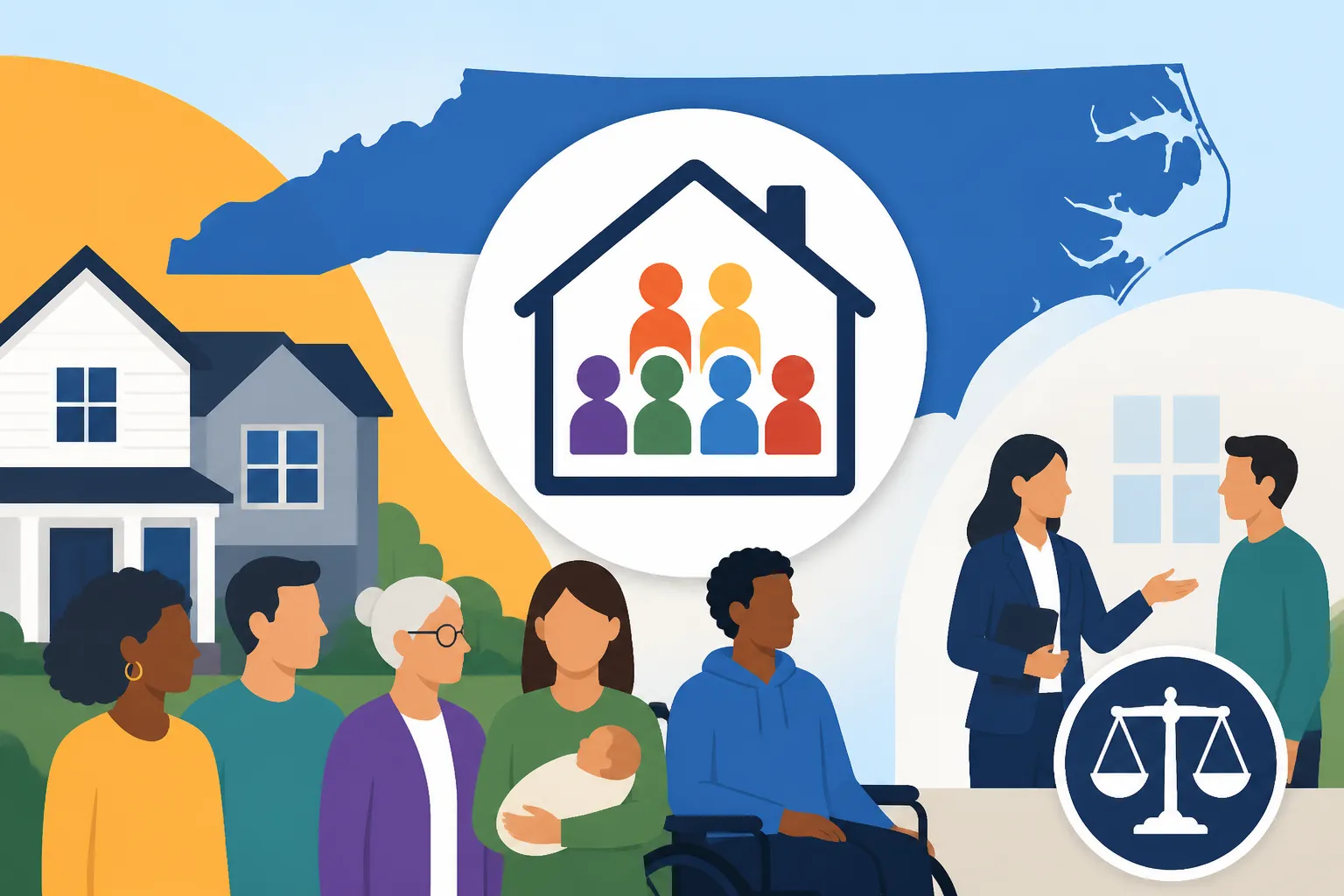
Fair Housing Protected Classes in North Carolina
Navigating the world of renting can feel like walking through a minefield, especially when it comes to understanding your rights and a landlord's obligations. It's frustrating when you're trying to find a safe, stable home, and you encounter what feels like unfair treatment or outright discrimination. This comprehensive guide is here to shed light on the fair housing protected classes specifically in North Carolina, empowering both tenants and landlords with the knowledge needed to ensure equitable housing practices.
Understanding Fair Housing Laws in North Carolina
When we talk about fair housing, we're really discussing a set of laws designed to prevent discrimination in housing-related transactions. This isn't just a nicety; it's a fundamental right. These laws apply to almost every stage of the housing process, from advertising a rental property to the terms of a lease and even eviction proceedings. The goal is to ensure that everyone has an equal opportunity to find a home without facing prejudice based on who they are.
The Federal Fair Housing Act: The Foundation
At the very core of fair housing in North Carolina, and indeed across the entire United States, is the Federal Fair Housing Act. This landmark legislation, originally passed in 1968, was designed to eliminate housing discrimination. It established seven primary protected classes. These are the foundational groups that landlords, property managers, and real estate professionals cannot discriminate against.
Imagine you're searching for an apartment in Asheville, and you're turned down, but you suspect it's because of your ethnicity. The Federal Fair Housing Act would be your first line of defense. It prohibits discrimination based on:
- Race: Treating someone differently because of their racial background.
- Color: Discrimination based on a person's skin pigmentation.
- Religion: Refusing to rent to someone due to their religious beliefs or practices.
- Sex: This now includes discrimination based on gender, gender identity, and sexual orientation, thanks to recent interpretations by HUD (Housing and Urban Development). So, if you're a member of the LGBTQ+ community, you're protected under this category.
- National Origin: Discriminating against someone because of their country of birth, ancestry, culture, or language.
- Familial Status: This is super important for families! It protects families with children under 18, pregnant women, and people in the process of securing custody of children. So, a landlord can't legally refuse to rent to you just because you have kids. You can learn more about Familial Status Discrimination No Kids.
- Disability: This protects individuals with physical or mental impairments that substantially limit one or more major life activities. It also includes those with a history of such impairment, or those regarded as having one. Landlords are also generally required to make reasonable accommodations or allow reasonable modifications for people with disabilities.
These federal protections are non-negotiable and set the baseline for all fair housing practices throughout the country, including right here in North Carolina.
North Carolina's Specific Protected Classes
Now, here's where it gets a little nuanced, and it's something many people get confused about. While many states expand upon the federal protected classes by adding their own, North Carolina's statewide Fair Housing Act largely mirrors the federal law. This means that at the state level, the protected classes are the same seven we just discussed: race, color, religion, sex (including sexual orientation and gender identity), national origin, familial status, and disability.
So, if you're looking for an apartment in Raleigh, the North Carolina state law offers you the same core protections as federal law. This can be a bit surprising to some, as states like California or New York have often added more categories like marital status, age, or source of income. However, it's crucial to understand that even if the state law doesn't add more, local municipalities and counties in North Carolina can and sometimes do enact their own anti-discrimination ordinances.
For example, a city like Charlotte or Durham might have a local ordinance that adds "source of income" as a protected class, meaning a landlord there couldn't refuse to rent to you just because you pay with a Section 8 voucher. Other cities might explicitly add protections for veteran status or political affiliation. It's always a good idea to check your specific city or county ordinances if you suspect discrimination based on a characteristic not covered by the federal list. However, for the statewide North Carolina Fair Housing Act, the list remains consistent with the federal law. This distinction is vital for both tenants seeking to understand their rights and landlords aiming for compliance, particularly if they manage properties across different localities.
Common Forms of Housing Discrimination to Watch For
Discrimination isn't always blatant or obvious; sometimes it's subtle, cloaked in vague excuses, or comes in the form of policies that seem neutral but disproportionately affect certain groups. Recognizing these signs is the first step in protecting your rights.
Overt vs. Disparate Impact Discrimination
When we talk about discrimination, it often falls into one of two categories: overt or disparate impact.
Overt Discrimination is what most people think of – it's explicit, direct, and usually pretty easy to spot. This is when a landlord outright says, "I don't rent to families with young children because they make too much noise," or "We don't rent to people from your country." These are clear violations of the federal and North Carolina Fair Housing Acts.
Imagine a situation in Greensboro where a landlord puts up a "For Rent" sign, but when a prospective tenant who uses a wheelchair calls, the landlord immediately states, "Oh, this unit isn't suitable for you," without even showing the property. Or perhaps a landlord tells a prospective tenant, "I'm sorry, we already rented the unit," only to show it to someone else of a different race minutes later. These are examples of clear, overt discrimination. Landlords using screening services like TurboTenant must be careful not to apply criteria that directly target protected classes. You might also want to read about What a Landlord Can & Cannot Ask to understand the boundaries.
Disparate Impact Discrimination is trickier. It occurs when a landlord's policy or practice, which appears neutral on the surface, has a disproportionate negative effect on members of a protected class. The intent to discriminate might not be there, but the effect is discriminatory.
Let's say a property management company in Winston-Salem decides that all applicants must have a credit score above 750, or that they will only consider applicants who speak fluent English. While these policies might seem neutral, they could disproportionately exclude certain racial or national origin groups who might have less access to traditional credit or whose primary language isn't English. Another example might be a "no children" policy in a non-senior housing community – this would have a disparate impact on families with children and thus violate familial status protections. The key here is the outcome of the policy, not necessarily the motive behind it. It's about ensuring fair access for everyone, regardless of these protected characteristics.
Real-World Scenarios and Red Flags
It's vital for renters to be aware of the subtle red flags that might indicate discrimination. Sometimes, it's not a direct "no" but a series of obstacles or changes in behavior that should make you pause.
Here are some real-world scenarios that could point to discrimination:
- Vague excuses or inconsistent information: You inquire about a rental in Charlotte and are told it's unavailable, but a friend of a different background calls shortly after and is offered a showing. Or the landlord suddenly raises the rent or demands a higher security deposit than advertised once they meet you.
- Different terms or conditions: Being asked to pay a higher security deposit or different rent amount than other tenants for the same unit, solely because of your race, gender, or family status. For instance, a landlord charging families with children an extra "child fee" on top of the security deposit, which is illegal. Understanding Maximum Security Deposit Limits by State can help you spot such issues.
- Refusal to make reasonable accommodations: If you have a disability and request a reasonable accommodation (like a ramp if you use a wheelchair, or permission for a service animal), and the landlord refuses without a legitimate reason or without exploring alternatives. This falls under your rights as a disabled individual. You might want to learn more about Emotional Support Animals & Service Animals FHA Rules.
- Steering: Being subtly directed away from certain neighborhoods or types of units. For example, a landlord might tell a family with children that "these apartments are really more for singles" and suggest units in a different, less desirable area.
- Discriminatory advertising: Ads that state "No Children" (unless it's a legitimate senior housing community), "Christian tenants only," or explicitly prefer tenants of a certain background are illegal. Rental listings should never imply a preference or limitation based on protected classes.
- Harassment or intimidation: While less common, any form of harassment or intimidation related to your protected class, designed to make you move out or feel unwelcome, is also a form of discrimination.
If you experience any of these situations, it's not just "bad luck." It could very well be a violation of your fair housing rights in North Carolina, and you have avenues to seek recourse.
Your Rights and How to Take Action
Discovering you might be a victim of housing discrimination is disheartening, and it can feel overwhelming. However, knowing your rights and the steps you can take is incredibly empowering. You don't have to face this alone.
Documenting Discrimination
The most crucial step you can take if you suspect discrimination is to document everything. Thorough records are your best friend when filing a complaint or pursuing legal action. Think of yourself as building a case, piece by painstaking piece.
Here's what you should aim to document:
- Dates and Times: When did each incident occur? Be specific.
- Names and Contact Information: Who did you speak with (landlord, property manager, leasing agent)? Get their full names and titles if possible.
- Detailed Notes: Write down exactly what was said or done. Quote discriminatory statements verbatim if you can. If a landlord told you, "We don't rent to people like you," write that down immediately.
- Copies of Communications: Keep all emails, texts, letters, and rental applications. If you applied online, take screenshots. If the property was advertised, save a copy of the ad.
- Witness Information: If anyone else saw or heard the discriminatory act, get their contact information and a statement from them.
- Property Information: The address of the rental unit, the landlord's name and contact information, and any property management company details.
- Comparison Evidence: If a friend or family member (who isn't in your protected class) inquired about the same property and received different information, document that comparison. For instance, if you, a person of color, were told the apartment was rented, but your white friend was offered a showing an hour later, this is strong evidence.
- Photographs or Videos: If applicable, visual evidence of discriminatory practices (e.g., discriminatory signs, conditions related to your disability not being accommodated) can be helpful, though be mindful of privacy laws.
The more detailed and organized your documentation, the stronger your position will be. This detailed record will be invaluable if you decide to file a formal complaint.
Filing a Complaint in North Carolina
Once you've gathered your evidence, you have several options for filing a complaint. The path you choose often depends on the severity of the situation and your desired outcome.
Here are the primary avenues:
-
Contact the North Carolina Human Relations Commission (NCHRC): This is often the first and most direct step for housing discrimination within the state. The NCHRC is tasked with enforcing the North Carolina Fair Housing Act. They can investigate complaints, mediate disputes, and help enforce fair housing laws. You can find their contact information and complaint forms on the North Carolina Department of Administration website. They will guide you through the process, which typically involves filing a formal written complaint within one year of the discriminatory act.
-
Contact the U.S. Department of Housing and Urban Development (HUD): Since North Carolina's Fair Housing Act largely aligns with federal law, you can also file a complaint directly with HUD. HUD's Office of Fair Housing and Equal Opportunity (FHEO) investigates complaints of housing discrimination nationwide. They can pursue conciliation, administrative hearings, or refer cases to the U.S. Department of Justice. Filing with HUD can be done online, by mail, or by phone. Generally, you have one year from the date of the alleged discrimination to file a complaint with HUD. It's important to note that if you file with one, the other will typically defer to that agency to avoid duplicate investigations.
-
Legal Aid or Private Attorney: For more complex cases or if you're seeking specific damages, you might consider contacting a private attorney specializing in civil rights or landlord-tenant law. Legal aid organizations in North Carolina may also offer free or low-cost legal assistance to individuals who meet certain income requirements. An attorney can advise you on whether to pursue a lawsuit in federal or state court, which is another option for seeking justice and potential financial compensation. Remember, going to court can be a lengthy and costly process, so it's usually considered after administrative options have been explored. For more information on what constitutes discrimination or how to approach it, you might find articles like What Is Considered Housing Discrimination? or How Do I File a Fair Housing Complaint? to be very helpful resources.
Taking action can be daunting, but it's essential for holding discriminatory actors accountable and ensuring fair housing for everyone in North Carolina.
Exemptions to Fair Housing Laws in North Carolina
While fair housing laws are broad and protect many, there are some limited circumstances where certain types of properties or landlords may be exempt from parts of the Fair Housing Act. It's crucial to understand these exemptions so you know when the rules apply and when they don't. These are not loopholes for widespread discrimination but specific, narrowly defined exceptions.
Owner-Occupied Buildings
One of the most common exemptions is for owner-occupied dwellings. In North Carolina, much like under federal law, if you live in a building with no more than four units, and you, the owner, also reside in one of those units, you might be exempt from certain aspects of the Fair Housing Act.
For example, imagine a homeowner in downtown Wilmington who rents out a single spare bedroom in their house or a duplex where the owner lives on one side and rents out the other. In such cases, the owner generally does not have to comply with the Fair Housing Act's prohibitions against discrimination based on race, color, religion, sex, national origin, familial status, or disability. This exemption, often referred to as the "Mrs. Murphy" exemption, is intended to protect the privacy and personal choices of individuals living in close quarters with their tenants.
However, there's a significant caveat: this exemption does not apply to discriminatory advertising. Even if you're an owner-occupant, you cannot publish any advertisement that indicates a preference, limitation, or discrimination based on any of the protected classes. So, you couldn't put out a "For Rent" sign saying, "No [specific religion] allowed," even if you live on the property. This ensures that the public at large is not subjected to discriminatory messages.
Single-Family Home Rentals Without a Broker
Another important exemption applies to certain single-family homes. If you own a single-family home and you rent it out without the use of a real estate broker or agent, and you do not own more than three such rental homes at any one time, you may also be exempt from parts of the Fair Housing Act. Additionally, if the owner is not residing on the property, they can only make one such sale or rental in any 24-month period.
Let's say a private individual in Cary owns one rental house, and they handle all aspects of renting it themselves – they post a "For Rent" sign, interview applicants, and draw up the lease. If they don't use a licensed real estate professional, and they meet the "three homes or less" criteria, they might be exempt from the bulk of the Fair Housing Act's anti-discrimination provisions.
However, just like with the owner-occupied exemption, this exception does not allow for discriminatory advertising. You still cannot place an ad that expresses a discriminatory preference. Furthermore, this exemption never applies if you are renting rooms in a home where you live. This specific exemption is really about private landlords of a very small number of properties. The moment you involve a licensed real estate agent or broker, or if you own more than three properties, all Fair Housing Act protections immediately kick in.
It's important to remember that these exemptions are specific and limited. Most rental properties and landlords in North Carolina are fully subject to both federal and state fair housing laws. When in doubt, it's always best to assume the laws apply and consult with a fair housing expert or legal professional to ensure compliance. Knowing the boundaries of these exemptions helps both landlords avoid legal trouble and tenants understand when their rights are fully protected.
Table of Protected Classes: Federal vs. North Carolina
To give you a clearer picture, here's a comparison of the protected classes under federal law and North Carolina's state law. This table highlights that North Carolina's state-level protections mirror the federal standards.
| Protected Class | Federal Fair Housing Act | North Carolina Fair Housing Act |
|---|---|---|
| Race | Yes | Yes |
| Color | Yes | Yes |
| Religion | Yes | Yes |
| Sex (Gender, Sexual Orientation, Gender Identity) | Yes | Yes |
| National Origin | Yes | Yes |
| Familial Status | Yes | Yes |
| Disability | Yes | Yes |
| Additional State-Level Classes | N/A | (None statewide, but local ordinances may add protections) |
Remember, while North Carolina's state law doesn't add more protected classes beyond the federal ones, individual cities and counties may have local ordinances that expand these protections. Always check your local jurisdiction's rules for the most complete picture.
Disclaimer
The information provided in this guide is intended for general informational purposes only and does not constitute legal advice. Landlord-tenant laws, including fair housing regulations, can be complex and vary by specific circumstances and local ordinances. It is always recommended to consult with a qualified legal professional or fair housing expert for advice tailored to your individual situation.