What Makes an Apartment Legally Uninhabitable?
Moving into a new apartment or even staying in your long-term rental can bring a lot of peace of mind, but that feeling can vanish fast when things start to go wrong. Maybe the heat cuts out in the dead of winter, or you discover a growing patch of mold, or perhaps pests have decided your home is now theirs too. It’s incredibly frustrating and often terrifying to live in a place that feels unsafe or unhealthy, and you might be wondering: "Is this even legal?" This guide is here to walk you through exactly what constitutes an "uninhabitable" apartment under the law, empowering you with the knowledge to understand your rights and take action when your living situation becomes untenable.
Understanding the Implied Warranty of Habitability
When you rent a property, you're not just renting four walls and a roof; you're entering into an agreement that the landlord will provide a safe and livable space. This fundamental concept is known as the "implied warranty of habitability," and it's something many tenants aren't fully aware of until they're knee-deep in a housing crisis.
What the Implied Warranty of Habitability Means
The implied warranty of habitability is a legal principle that essentially acts as an unspoken promise from your landlord. It means that regardless of what your written lease agreement might say, your landlord is legally obligated to maintain the rental property in a condition that is fit for human habitation throughout your tenancy. This isn't just a nicety; it's a core expectation of landlord-tenant law in most states, including populous ones like California and New York. This warranty ensures that the property meets basic health and safety standards and that it's safe and sanitary enough for you to live in.
Think of it this way: when you move into an apartment, you expect to have reliable running water, a functioning toilet, electricity, and a roof that doesn't leak. You expect the doors and windows to lock properly for your security, and you certainly don't expect to share your space with an uncontrolled pest infestation. The implied warranty of habitability covers these kinds of fundamental expectations. If your landlord fails to provide these basic necessities and the living conditions become truly unbearable, they could be considered in breach of this warranty. Understanding this can be a powerful tool when you need to address serious issues with your landlord. We have a whole article dedicated to the topic, so you can dive even deeper into the nuances of the Implied Warranty of Habitability Explained.
Key Elements of a Habitable Dwelling
So, what exactly does "habitable" entail? While the specific legal definitions can vary slightly from state to state and even city to city, there are generally accepted core elements that every rental property must meet to be considered habitable. These aren't luxurious amenities; they are the bare minimum for a safe and healthy living environment.
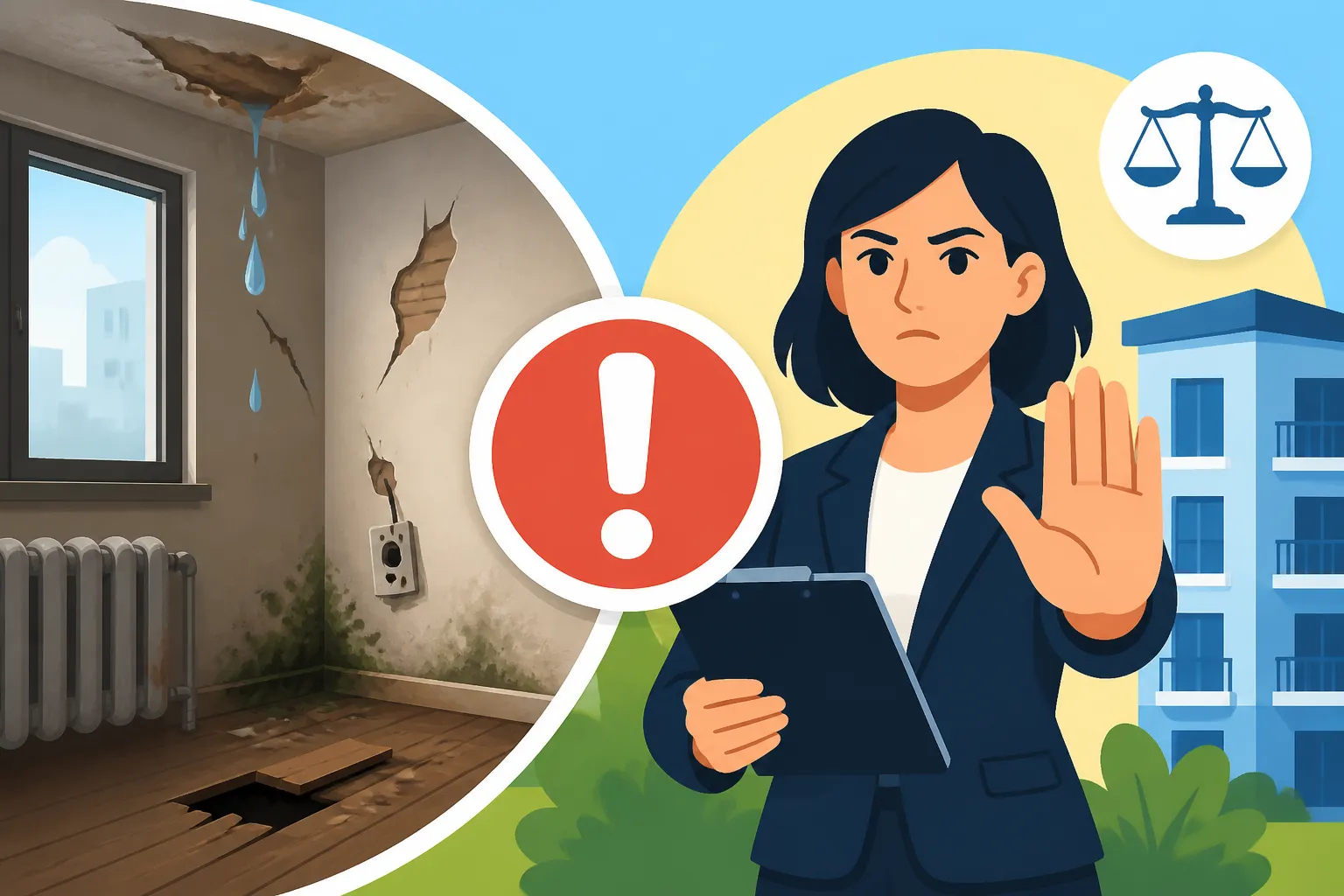
First and foremost, the dwelling must be structurally sound. This means no major holes in the roof, walls, or floors, and a foundation that isn't crumbling. Ceilings shouldn't be collapsing, and stairs should be safe to use. Next, essential utilities are non-negotiable. This includes access to hot and cold running water, adequate heating (especially crucial in colder climates like those in Massachusetts or Illinois), and functional electricity. Proper plumbing and sanitation facilities, meaning a working toilet and shower, are also critical. Beyond the basic structure and utilities, habitability often extends to preventing serious health hazards. This includes reasonable pest control measures to prevent infestations of rodents, roaches, or bed bugs. It also means addressing severe mold growth that poses a health risk, ensuring proper ventilation, and making sure the property is free from hazardous materials like lead paint or asbestos (if present and posing a danger). Lastly, safety features such as working smoke detectors, carbon monoxide detectors, and secure locks on all doors and windows are typically considered part of a habitable dwelling. If any of these core elements are missing or severely compromised, you might be looking at an uninhabitable situation.
Common Issues That Render an Apartment Uninhabitable
It’s one thing to read about "structural soundness" and "essential services" in theory, but it hits differently when you’re facing these problems in your own home. Let’s talk about specific, real-world issues that often cross the line from annoying inconvenience to legally uninhabitable conditions.
Lack of Essential Services
Imagine coming home after a long day in January, and your heater is completely out, with temperatures plummeting below freezing. Or perhaps your only toilet stops working, or there's no running water at all for days on end. These aren't just uncomfortable situations; they are often direct violations of the implied warranty of habitability. A landlord's primary duty is to ensure the provision of these critical utilities.
Specifically, a prolonged lack of adequate heating, particularly during cold weather months, is a major habitability issue. Many jurisdictions have minimum temperature requirements for rental units. Similarly, no hot water for an extended period, or a complete absence of running water, makes an apartment profoundly difficult to live in. Major electrical failures that prevent you from safely using appliances or lighting your home also fall into this category. The keyword here is "prolonged" – a brief outage due to a city-wide issue or a quick repair might not make a unit uninhabitable, but a landlord's failure to address these critical issues promptly and effectively certainly can. You can check our guide on No Heat / No Hot Water / No AC: Your Rights for more detailed information on what to do in these scenarios.
Structural and Safety Hazards
Beyond utilities, the very integrity and safety of your living space are paramount. Living with significant structural damage or unresolved safety hazards can not only be dangerous but also render your apartment legally uninhabitable.
Think about a ceiling actively collapsing, a floor that has soft spots and feels like it could give way, or walls with large, gaping holes exposing you to the elements or pests. These are not minor cosmetic issues. Unsafe stairs, especially those with broken railings or rotting treads, pose an immediate fall risk. Furthermore, a severe and persistent pest infestation – we're talking rats, cockroaches, or bed bugs that the landlord has failed to eradicate despite your repeated requests – can make a dwelling not only disgusting but also a serious health risk. An inability to secure your home due to non-functional locks on exterior doors or windows also creates an uninhabitable condition by compromising your personal safety. If you're dealing with bed bugs, you might want to review our article on Bedbugs & Pest Control Responsibility to understand who's on the hook for fixing it.
Environmental and Health Risks
Some of the most insidious threats to habitability are those that impact your health directly, often without immediate visible signs. These environmental hazards can slowly, or rapidly, make your home a dangerous place to be.
One of the most common and concerning health risks is severe mold growth, particularly widespread black mold, that results from leaks or moisture problems the landlord hasn't fixed. This isn't just about aesthetics; certain types of mold can cause significant respiratory issues and allergic reactions. Sewage backups, where wastewater enters your living space, are undeniably severe health hazards due to bacteria and pathogens. A lack of proper ventilation can also contribute to unhealthy indoor air quality, trapping pollutants and moisture. In older buildings, the presence of lead paint or asbestos, if it's disturbed and releasing particles into the air, can also make a unit uninhabitable, especially if the landlord refuses to mitigate the danger. These are the kinds of issues where your physical well-being is directly at stake, and your landlord has a clear responsibility to address them immediately.
Differentiating Minor Issues from Uninhabitable Conditions
This is where it gets tricky for many tenants. Not every dripping faucet or chipped paint job makes your apartment uninhabitable. It’s vital to understand the difference between a minor inconvenience that needs repair and a serious breach of habitability that might warrant stronger action.
Minor Inconveniences vs. Major Breaches
Let's be real: no apartment is perfect forever. Things wear out, break, or get a little dinged up. A leaky faucet, while annoying, typically doesn't make your entire home unlivable. The same goes for a small crack in a window that lets in a draft, or a light fixture that needs a new bulb. These are generally considered minor repair issues.
However, a burst pipe that floods your bathroom and risks structural damage is a major breach. A small, isolated patch of mildew in a shower that can be wiped away is different from widespread black mold covering walls due to a persistent leak. Finding a single spider or a couple of ants isn't a pest infestation; an overwhelming presence of rodents or cockroaches that makes it impossible to prepare food or sleep soundly certainly is. The key distinction often lies in the severity of the problem, its impact on your health and safety, and whether it prevents you from using a significant portion of your rental unit as intended. It's about whether the issue significantly deprives you of the basic necessities and protections that a habitable home should provide.
The Role of Timeliness and Landlord Responsiveness
Even if an issue is severe enough to potentially render a unit uninhabitable, your landlord's response time plays a huge role in how the situation is legally viewed. An emergency like a burst pipe requires immediate attention. Most states, like Texas or Florida, have laws dictating how quickly a landlord must address emergency repairs (often within 24-72 hours) and non-emergency repairs (sometimes 7-30 days).
If your landlord addresses a serious issue, like a broken furnace in winter, within a reasonable timeframe (which might be just a day or two for critical issues), then the apartment might not be considered legally uninhabitable for the entire duration, even if it was uncomfortable. The problem arises when a landlord drags their feet, ignores your requests, or makes superficial repairs that don't solve the underlying issue. This lack of responsiveness, especially for critical items, is what often turns a serious problem into a breach of the implied warranty of habitability. It emphasizes why documenting all your communication and the timeline of events is absolutely crucial. For more on this, check out How Long Does a Landlord Have to Make Repairs? (By State).
Tenant Actions When an Apartment is Uninhabitable
If you find yourself living in a situation that you believe is legally uninhabitable, it's natural to feel overwhelmed and unsure of your next steps. But don't despair – you have rights and options, and taking the correct actions can make all the difference in resolving the issue or pursuing legal remedies.
Documenting the Problems
Before you do anything else, you need to build a strong case by documenting everything. This isn't just good advice; it's often a legal necessity if you end up in court. Start by taking clear, timestamped photos and videos of all the problems. Capture the mold, the leaking ceiling, the non-functioning appliances, or the pest droppings. Show the extent of the issue.
Beyond visual evidence, keep a detailed log. Note the date and time you first noticed the problem, every time you contacted your landlord, what method you used (text, email, phone call), and what their response was (or wasn't). Save all correspondence – emails, text messages, certified mail receipts. If you've had to pay for temporary fixes or professional opinions (like a mold inspection), keep those receipts. This paper trail is your best friend. For tips on gathering evidence, our article How to Document Your Apartment at Move-In offers advice that can also apply to documenting issues during tenancy.
Notifying Your Landlord in Writing
Once you have your documentation, the next critical step is to formally notify your landlord of the issues in writing. Verbal conversations are easily forgotten or denied, which makes them very difficult to prove in a dispute. A written notice creates an undeniable record.
Send a detailed letter outlining all the problems, referencing your documentation (e.g., "see attached photos from [date]"), and clearly stating that these conditions render your apartment uninhabitable and violate the implied warranty of habitability. Request that repairs be made within a specific, reasonable timeframe, generally in line with your state's laws for emergency or non-emergency repairs. Send this notice via certified mail with a return receipt requested, or via email with a read receipt, so you have proof that your landlord received it. Keep a copy for your records. This formal notice is often a legal prerequisite before you can pursue more drastic actions like withholding rent or breaking your lease. You can also refer to our guide on How to Request Repairs in Writing for templates and further advice. For landlords, managing these requests efficiently can be aided by platforms like TurboTenant, which streamline communication.
Legal Remedies for Uninhabitable Conditions
If your landlord fails to act after receiving proper written notice, you may have several legal avenues available, depending heavily on your state's laws. It's crucial to understand these options, as taking the wrong step could put you in breach of your lease.
One common remedy is "repair and deduct," where you pay for the necessary repairs yourself and then deduct the cost from your next rent payment. This is usually only allowed for essential repairs and up to a certain monetary limit, and it's not legal in all states (check Repair and Deduct by State to see if it's an option for you). Another option, also highly regulated, is "withholding rent." This doesn't mean you just stop paying rent; it typically involves placing your rent into an escrow account until the repairs are made. This signals to your landlord that you are ready and willing to pay, but not for an uninhabitable unit. Our article on Withholding Rent & Rent Escrow explains this complex process in detail. In severe cases where the landlord still refuses to fix critical issues, you may have grounds for what's called "constructive eviction." This allows you to break your lease and move out without penalty, arguing that the landlord's failure to maintain a habitable property effectively "evicted" you. Learn more about this in Constructive Eviction Explained. Lastly, you might consider suing your landlord in small claims court to recover damages, such as the difference in value between a habitable and uninhabitable apartment, or costs incurred due to the conditions. Some tenants even consider legal action to recover their security deposit if it's improperly withheld after vacating due to uninhabitable conditions, which you can read more about in Suing a Landlord for Your Deposit (Small Claims & Penalties). When considering legal action, having all your documentation prepared is invaluable, and you might want to look into services like Steadily that offer landlord insurance, as it can sometimes cover legal defense for landlords facing such claims, ensuring they are prepared.
State-Specific Considerations and Local Laws
Tenant-landlord law is not uniform across the United States. What's considered uninhabitable in one state, or what actions a tenant can take, might differ significantly from another. It's essential to understand that your rights are often carved out by the specific laws of where you live.
How State Laws Impact Habitability
Every state has its own statutes governing landlord-tenant relationships, and these laws define the parameters of the implied warranty of habitability. For example, some states, like Washington, have very explicit lists of what constitutes a "fit and habitable" dwelling, including things like reasonable security, pest-free premises, and functional plumbing. Other states might have more general language. Crucially, the timelines for landlords to make repairs also vary widely. What's considered a "reasonable time" for an emergency repair in Arizona might be different from that in Pennsylvania.
Some states also have stricter requirements around specific issues, such as mold remediation or lead paint disclosure. Understanding these nuances is critical. Before taking any drastic steps, always research your state's specific laws or consult with a local tenant rights organization or attorney. Knowing your state’s specific Landlord Repair Responsibilities (What They Must Fix) and deadlines is crucial for effective action.
Local Ordinances and Health Codes
Beyond state law, cities and counties often have their own local ordinances and housing codes that further detail habitability standards. These local rules can sometimes be even more stringent than state laws. For instance, a city might have specific rules about minimum heating temperatures during certain months, or stricter requirements for pest control in multi-unit buildings.
Your local housing authority or city's code enforcement department can be an invaluable resource. They often have inspectors who can assess conditions and issue citations to landlords who are not meeting the local health and safety codes. Filing a complaint with code enforcement can be a powerful way to get your landlord's attention and force them to make repairs, as it often comes with fines and legal pressure. This is a crucial step for tenants who want to know How to Report a Landlord (Code Violations & Retaliation). Also, consider protecting your belongings with renters insurance from providers like Lemonade; while it won't force your landlord to make repairs, it can offer peace of mind if an uninhabitable condition causes damage to your personal property.
Here’s a quick glance at how some common issues might be viewed, emphasizing that severity and context are always key:
| Issue Type | Minor Inconvenience | Uninhabitable Condition (Potential) |
|---|---|---|
| Water | Dripping faucet, low water pressure | No running water, burst pipes, sewage backup, no hot water |
| Temperature | Slight draft, AC not as cold as desired | No heat in winter, no AC in extreme summer heat (if provided) |
| Pests | Occasional spider, a few ants | Widespread infestation (rats, roaches, bed bugs) |
| Structure | Small nail holes, minor paint chips | Collapsing ceiling, rotting floor, major holes in walls/roof |
| Safety | Loose cabinet handle, burnt-out lightbulb | Non-functional exterior locks, exposed wiring, unsafe stairs |
| Health | Small mildew spot in shower | Widespread black mold, hazardous waste, lead paint dust |
Disclaimer
Please remember that this article provides general information and guidance regarding landlord-tenant laws and habitability standards. This information is not intended as legal advice. Landlord-tenant laws vary significantly by state and locality, and new legislation can be enacted at any time. If you are facing a specific issue with your rental property, it is highly recommended that you consult with a qualified attorney or a local tenant rights organization to get advice tailored to your situation and jurisdiction.