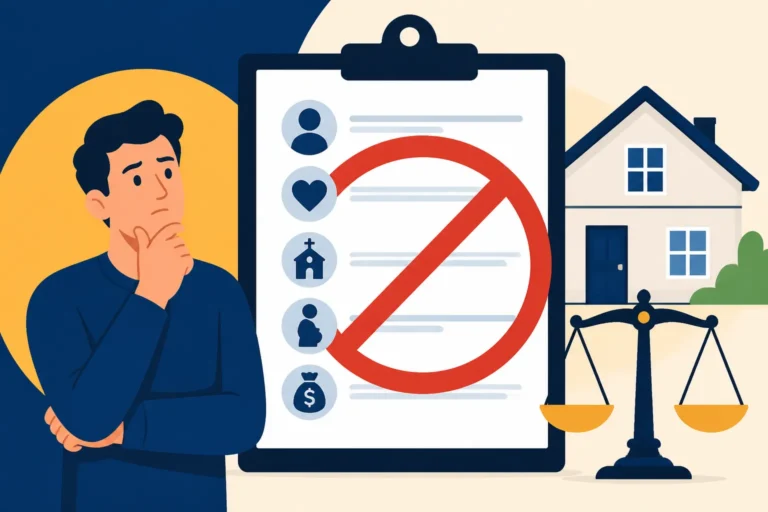
Fair Housing Protected Classes in Tennessee
Navigating the rental market can feel like walking through a minefield, especially when you're trying to understand your rights or responsibilities regarding fair housing. Many renters and landlords alike are often confused about what constitutes legal and illegal discrimination, and where state and local laws fit in with federal protections. This comprehensive guide is here to demystify the protected classes under fair housing laws specifically for Tennessee, helping both tenants and property owners understand their rights and obligations to ensure a fair and equitable housing experience.
Understanding Federal Fair Housing Protections in Tennessee
Before we dive into what makes Tennessee's fair housing laws unique, it’s absolutely crucial to grasp the bedrock upon which all other housing protections are built: the federal Fair Housing Act. Enacted in 1968, this landmark legislation was designed to eliminate discrimination in housing, making it illegal to refuse to sell or rent to someone, or otherwise make housing unavailable, based on specific characteristics. Even if you're in Tennessee, these federal laws are the baseline, the absolute minimum standard that every landlord and tenant must adhere to.
The federal Fair Housing Act protects individuals based on seven distinct categories, often referred to as the "protected classes." These protections apply to virtually all housing, including apartments, houses, condominiums, and even some single-family homes rented without a real estate agent.
The Seven Federally Protected Classes
Let's break down these seven core protections, because understanding them is the first step in recognizing potential discrimination.
- Race: This is perhaps the most widely recognized protected class, prohibiting discrimination against individuals based on their racial background. This means a landlord cannot refuse to rent to someone, or offer them different terms, because they are Black, White, Asian, Native American, or any other race. For instance, if a landlord shows a Black applicant only units in a specific, less desirable building, while offering a White applicant options across their entire portfolio, that could be a clear violation.
- Color: While often linked to race, "color" specifically refers to the shade of a person's skin. It's a distinct protection, meaning discrimination can occur even between individuals of the same race but different skin tones. Imagine two applicants, both identifying as Hispanic, but one is denied due to their darker skin color while the lighter-skinned applicant is approved. This would be a form of color discrimination.
- Religion: The Fair Housing Act protects individuals of all religious faiths, as well as those with no religious beliefs. A landlord cannot deny housing to a tenant because they are Jewish, Christian, Muslim, Buddhist, Hindu, or atheist. For example, a property manager can't refuse to rent to a family because they wear religious head coverings or practice a particular faith.
- National Origin: This protection prohibits discrimination based on a person's country of birth, ancestry, culture, or linguistic characteristics. This means someone from Mexico cannot be denied housing simply because they are Mexican, or someone from Germany because they are German. If a landlord insists on speaking only English in a non-essential conversation, or requires applicants to have a specific accent, it could be a subtle form of national origin discrimination.
- Sex: This category has evolved significantly and now broadly protects against discrimination based on gender, including gender identity, sexual orientation, and pregnancy. This means a landlord cannot refuse to rent to someone because they are a woman, a man, transgender, gay, lesbian, or pregnant. For example, a landlord cannot refuse to rent to a single mother because they believe she will be a "burden" or deny an apartment to a transgender individual based on their gender identity. This is a critical area where interpretation and enforcement have expanded to cover more nuanced forms of discrimination, ensuring that housing is available regardless of one's gender or sexual orientation.
- Familial Status: This protection is designed to prevent discrimination against families with children under 18, pregnant women, and people in the process of securing legal custody of a child. This means "no kids" policies are generally illegal. A landlord cannot refuse to rent to a family with two children, or charge them a higher security deposit just because they have kids. There are very narrow exceptions for "housing for older persons" (senior housing), but these are strict and do not apply to general rental properties. It’s also important to remember that this covers prospective parents too, so a pregnant woman is also protected.
- Disability (Handicap): The Fair Housing Act prohibits discrimination against individuals with physical or mental disabilities. This not only means a landlord can't refuse to rent to someone with a disability but also requires them to make reasonable accommodations (changes to rules, policies, practices) and reasonable modifications (physical changes to the property, often at the tenant's expense, if not covered by state/local law) to allow a person with a disability to enjoy their home. For instance, if a tenant uses a wheelchair, a landlord might need to allow them to install a ramp if feasible, or allow a service animal even if there's a "no pets" policy. Understanding the nuances of Emotional Support Animals & Service Animals FHA Rules is crucial here.
These federal protections are universal across the United States, including every city and county in Tennessee, from Nashville to Memphis, Knoxville to Chattanooga. Any landlord operating in Tennessee must, at a minimum, comply with these federal guidelines.
Tennessee's Specific Fair Housing Laws and Additional Protections
While federal law sets the baseline, individual states and even local municipalities often expand upon these protections. In Tennessee, the primary state law governing fair housing is the Tennessee Human Rights Act (THRA), codified under Tennessee Code Annotated § 4-21-601 et seq.
State-Level Protections in Tennessee
The Tennessee Human Rights Act mirrors the federal Fair Housing Act by protecting individuals from discrimination in housing based on the same seven classes:
- Race
- Color
- Religion
- Sex
- National Origin
- Familial Status
- Disability
Essentially, Tennessee state law reinforces the federal protections, providing another avenue for recourse if discrimination occurs. This means that if you experience discrimination in housing in Tennessee based on any of these categories, you can pursue a complaint through both federal channels (like HUD) and state channels (like the Tennessee Human Rights Commission).
It's a common misconception that many states add numerous protected classes beyond the federal seven. However, Tennessee state law, at the time of this writing, does not include additional protected classes beyond those established by the federal Fair Housing Act. This means you won't find statewide protections for categories like sexual orientation, gender identity, age, or source of income directly within the Tennessee Human Rights Act that apply across all 95 counties.
Local Ordinances: Where Tennessee Diverges
This is where it gets a little more complex and where proactive tenants and landlords truly need to pay attention. While state law doesn't add protections, several individual cities and counties in Tennessee have passed their own local ordinances that do offer additional protections. These local laws are valid within their specific jurisdictions and provide a broader scope of non-discrimination in housing for their residents.
For example, cities like Nashville (Davidson County) and Memphis (Shelby County) have local ordinances that expand protected classes.
- Nashville's Metropolitan Code includes protections based on sexual orientation and gender identity. This means in Nashville, a landlord cannot refuse to rent to someone because they are gay, lesbian, bisexual, or transgender.
- Memphis's city ordinances also expand protections to include sexual orientation and gender identity.
Other cities or counties might have their own specific additions as well, and these can change. It's crucial for anyone involved in housing transactions to check the specific non-discrimination ordinances of their local city or county government. Landlords using platforms like TurboTenant might find tools that help them keep their listings and screening processes compliant with federal and, where applicable, local fair housing laws.
Here's a quick comparison of the protections:
| Protected Class | Federal Fair Housing Act | Tennessee Human Rights Act (State) | Example Nashville/Memphis City Ordinances |
|---|---|---|---|
| Race | Yes | Yes | Yes |
| Color | Yes | Yes | Yes |
| Religion | Yes | Yes | Yes |
| Sex (includes gender, sexual orientation, gender identity) | Yes (broadly interpreted) | Yes | Yes (explicitly for sexual orientation/gender identity) |
| National Origin | Yes | Yes | Yes |
| Familial Status | Yes | Yes | Yes |
| Disability | Yes | Yes | Yes |
| Sexual Orientation | No (federally, but via "sex") | No (state law) | Yes (e.g., Nashville, Memphis) |
| Gender Identity | No (federally, but via "sex") | No (state law) | Yes (e.g., Nashville, Memphis) |
| Source of Income | No | No | Some cities/counties may have this |
| Age | No | No | Some cities/counties may have this |
Important Note for Landlords: This patchwork of local laws means that a landlord owning properties in different Tennessee cities might have different sets of protected classes to consider. What's legal in rural Grundy County might not be legal in downtown Nashville. Always verify local ordinances for each property you manage. For tenants, knowing your specific local protections can be a powerful tool when you feel you've been unfairly treated. If you're looking for guidance on Source-of-Income Discrimination & Section 8 by State, remember that while not state-mandated in Tennessee, local ordinances could apply.
Common Scenarios and What Constitutes Discrimination
Recognizing housing discrimination isn't always as obvious as a blatant refusal based on race. Often, discrimination can be subtle, implicit, or even unintentional. Many landlords, with the best of intentions, might inadvertently discriminate through their policies or practices. Similarly, tenants might not realize they're experiencing discrimination until they understand the full scope of their protections.
Examples of Discriminatory Practices
Let's look at some common scenarios that could violate fair housing laws in Tennessee:
- Refusing to Rent or Sell: This is the most direct form. A landlord explicitly tells a prospective tenant they won't rent to them because of their religion, or that "we don't allow kids here." This is a clear violation of familial status.
- Offering Different Terms or Conditions: Imagine a landlord charges a higher security deposit or different rent amount to a tenant because of their national origin, even if they approve their application. Or, they might assign a tenant of a certain race to units in a less desirable part of the property, while offering more options to others. Providing different amenities or services based on a protected characteristic also falls under this.
- Steering: This practice involves guiding prospective tenants or buyers towards or away from certain neighborhoods or sections of a complex based on their protected class. For example, a real estate agent telling a family with children, "You'd probably be happier in a more family-friendly neighborhood across town" when suitable units are available locally, could be a form of familial status discrimination.
- False Availability: A property manager tells a person from a protected class that a unit is unavailable when, in fact, it is, and then tells someone from a non-protected class that the same unit is available. This can be hard to prove but is a common tactic.
- Harassment: This can take many forms, from verbal abuse to intimidation, directed at a tenant because of their race, religion, sexual orientation (in protected cities), or any other protected characteristic.
- Failure to Make Reasonable Accommodations or Modifications: A landlord refusing to allow a tenant with a disability to have a service animal or denying a request to install a grab bar in the bathroom (at the tenant's expense, if not covered by law) could be a violation. Understanding Reasonable Accommodations & Modifications is vital here.
- Discriminatory Advertising: Advertisements that explicitly or implicitly discourage or encourage applicants from a certain protected class are illegal. Examples include "no children," "Christian tenants only," or "ideal for single professionals." Even subtle wording can be problematic.
It's important to remember that discrimination doesn't always require malicious intent. A landlord who has a blanket "no pets" policy, without considering exceptions for service or emotional support animals, could be unintentionally discriminating against individuals with disabilities. This is why tools that help landlords standardize their application and screening processes are so valuable. Programs like TurboTenant can help landlords avoid pitfalls by ensuring consistent application questions and criteria. When setting your tenant screening criteria, it's crucial to know What a Landlord Can & Cannot Ask to avoid inadvertently violating fair housing laws.
What Doesn't Count as Discrimination
Of course, not every denial or difficulty in finding housing is discrimination. Landlords have a legitimate right to screen tenants based on non-discriminatory factors. For instance, a landlord can legally deny an applicant based on:
- Poor credit history
- Insufficient income to pay the rent (e.g., not meeting the 3x rent rule, as long as this rule is applied consistently to all applicants)
- Negative rental history (e.g., previous evictions or damage to property)
- Certain criminal history (consistent with HUD guidance, avoiding blanket bans)
- Lack of references
The key is consistency. Screening criteria must be applied equally to all applicants, regardless of their protected class. If a landlord denies a white applicant for bad credit but approves a Black applicant with equally bad credit, that's not discrimination. It's when the criteria are applied unevenly, or when an otherwise qualified applicant is denied based on a protected characteristic, that fair housing laws are likely being violated. If you've been denied for an apartment and are wondering Can a Landlord Deny You?, understanding these distinctions is crucial.
How to Report Housing Discrimination in Tennessee
If you believe you've experienced housing discrimination in Tennessee, or if you're a landlord unsure about compliance, there are clear steps you can take. It's important to remember that reporting discrimination is a legal right and that retaliation for doing so is strictly prohibited.
Steps for Tenants Facing Discrimination
- Document Everything: This is perhaps the most crucial step. Keep detailed records of dates, times, names of individuals involved, and specific incidents. Save emails, text messages, voicemails, and any written correspondence. Note down exactly what was said or done. If you visited a property, record what you observed.
- Gather Evidence: Collect any advertisements, rental applications, lease agreements, or other documents related to your housing search. If you have witnesses, get their contact information. Photos or videos can also be powerful evidence. When you are denied housing, make sure to get the reason for denial in writing if possible.
- Contact the Tennessee Human Rights Commission (THRC): This is the state agency responsible for enforcing the Tennessee Human Rights Act. They can investigate complaints of discrimination. You can find their contact information and complaint forms on the State of Tennessee's official website. They will guide you through the process of filing a formal complaint.
- Contact the U.S. Department of Housing and Urban Development (HUD): HUD is the federal agency responsible for enforcing the Fair Housing Act. You can file a complaint directly with HUD online, by phone, or by mail. HUD works with state and local agencies, and they may refer your complaint to the THRC if appropriate. Both agencies have the power to investigate, conciliate disputes, and, if necessary, pursue legal action.
- Seek Legal Counsel: In complex cases, or if you prefer to take direct legal action, consider consulting with an attorney specializing in fair housing law. They can advise you on your rights and represent you in court. Many non-profit organizations also offer free or low-cost legal assistance for fair housing complaints.
Remember, the deadlines for filing a complaint are typically strict. You generally have one year from the date of the alleged discrimination to file a complaint with HUD or the THRC. Don't delay if you suspect a violation. For more general advice on dealing with landlord issues, you might find information on topics like Tenant Rights If Landlord Won't Return Deposit helpful, as the principles of documentation and seeking recourse are similar.
Guidance for Landlords Ensuring Compliance
For landlords in Tennessee, proactive compliance is far better than reactive damage control. Avoiding discrimination protects you from legal action, financial penalties, and reputational damage.
- Educate Yourself and Your Staff: Understand the federal Fair Housing Act, the Tennessee Human Rights Act, and any specific local ordinances that apply to your rental properties. Regular training for all staff involved in leasing, property management, and maintenance is crucial. A thorough understanding of Fair Housing Act Protected Classes Explained is the first step.
- Apply Consistent, Objective Screening Criteria: Develop clear, non-discriminatory criteria for tenant selection and apply them uniformly to every applicant. Use objective factors like credit score, income-to-rent ratio, and rental history. Avoid making exceptions based on protected characteristics. Tools like TurboTenant can help you standardize your application and screening processes, reducing the risk of unconscious bias.
- Review Your Advertising: Ensure all your rental advertisements are compliant and avoid any language that could be seen as discriminatory. Focus on the property's features, not the preferred tenant.
- Be Prepared for Reasonable Accommodations and Modifications: Understand your obligations under the disability protection. Have a clear process for handling requests for reasonable accommodations (like allowing a service animal) and modifications (like allowing ramp installation). Don't delay or deny these requests without a legitimate, non-discriminatory reason.
- Keep Meticulous Records: Document all interactions with applicants and tenants, including inquiries, applications, rejections, and reasons for decisions. This paper trail can be invaluable if a discrimination complaint arises.
- Avoid Retaliation: Never take adverse action against a tenant or applicant for inquiring about their rights, filing a complaint, or participating in an investigation. Retaliation is illegal. This ties into broader tenant protections against negative actions for exercising their rights, like those discussed in How to Report a Landlord Code Violations & Retaliation.
Being a landlord can be complex, and laws are always evolving. By staying informed and adopting fair practices, you contribute to a more equitable housing market and protect your investments.
Disclaimer
Please remember that this article provides general information and guidance on fair housing laws in Tennessee. Landlord-tenant laws, including fair housing regulations, can be complex and are subject to change. This content is not intended as legal advice. If you have specific questions or are facing a legal issue, it is always recommended to consult with a qualified attorney or housing expert in Tennessee.