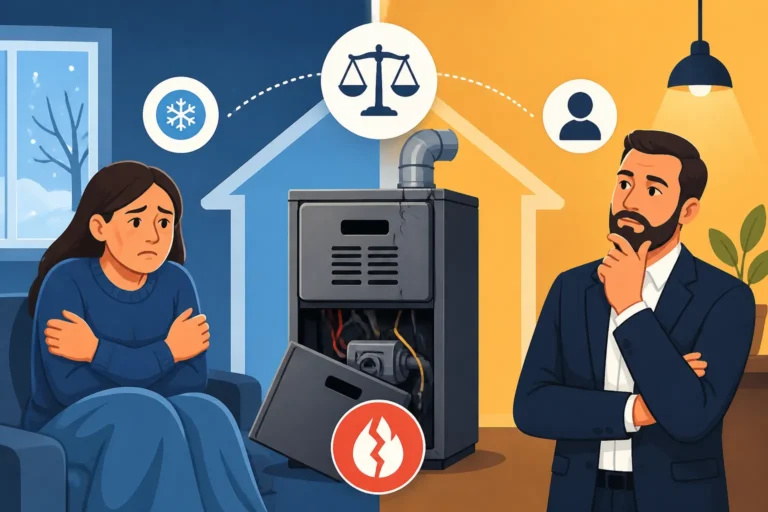
Repair and Deduct Laws in Oregon
It’s an age-old frustration: you’ve got a pressing repair issue in your rental home in Oregon, you’ve told your landlord, and… crickets. Or maybe they just aren't moving fast enough. You pay your hard-earned rent every month, and you deserve a safe, functional place to live. If you're a tenant in Oregon facing a landlord who's dragging their feet on crucial repairs, you might be wondering what legal recourse you have. This guide will walk you through Oregon’s specific "repair and deduct" laws, explaining when and how you can take matters into your own hands without jeopardizing your tenancy.
Understanding Oregon's Implied Warranty of Habitability
Before we dive into the nitty-gritty of "repair and deduct," it's vital to understand the foundational principle that protects tenants in Oregon: the implied warranty of habitability. This isn't usually something explicitly written into your lease, but it's an unspoken promise, legally implied in every residential rental agreement. It essentially states that your landlord must provide and maintain a living space that is safe and fit for human occupation.
Think about it this way: when you rent a home, you're not just renting four walls and a roof. You're renting the expectation that those walls will stand, the roof won't leak like a sieve, and essential services will be provided. Oregon law, specifically the Oregon Residential Landlord and Tenant Act (ORS Chapter 90), outlines exactly what conditions a landlord must ensure to meet this warranty. If these conditions aren't met, your landlord is failing their fundamental obligation, and that's when you, as a tenant, gain certain rights to demand action. Understanding these basics is the first step in knowing your rights, whether you're dealing with a leaky faucet or a more serious issue. You can read more about the broader concept in our guide on the Implied Warranty of Habitability Explained.
What Constitutes a Habitable Living Space in Oregon?
Oregon law is pretty clear about what landlords are responsible for maintaining to ensure a property is habitable. It's not just about keeping the lights on; it's about providing a baseline standard of living. This includes, but isn't limited to, things like:
- Structural Safety: The building's foundation, walls, and roof must be sound and protect you from the elements. No gaping holes or collapsing floors allowed!
- Essential Utilities: This is huge. Your rental must have adequate heating, hot and cold running water, and electricity. Imagine trying to live in Portland in January without heat – it’s simply not acceptable.
- Plumbing and Sanitation: All plumbing, drains, and sanitary facilities (toilets, sinks, showers) must be in good working order. No one wants backed-up sewage or a perpetually running toilet.
- Cleanliness and Pest Control: The premises must be kept clean and free from garbage, rodents, and other pests at the time you move in. While ongoing pest control might shift depending on the cause, the initial state is on the landlord.
- Working Appliances (if provided): If your landlord provides appliances like a refrigerator or oven, they must be in safe working order. This isn't just a convenience; it's often essential for daily living.
- Reasonable Security: This includes working locks on all doors and windows. Your personal safety is paramount, and your landlord has a role in ensuring basic security measures are in place.
When any of these critical elements are compromised, it can quickly turn a comfortable home into a stressful, unlivable situation. It's not just an inconvenience; it can be a health or safety hazard.
Landlord's Responsibility for Essential Services
Beyond the general habitability standards, Oregon law places a strong emphasis on what it defines as "essential services." These are the non-negotiables: heat, running water, hot water, electricity, gas, and adequate locking systems. If any of these essential services are lacking or broken, the clock starts ticking for your landlord to act.
For example, if your furnace conks out in the middle of a winter storm in Bend, that’s an immediate habitability issue. Your landlord can’t just shrug their shoulders. They have a legal obligation to respond promptly to get that fixed. The exact timeframe they have to make repairs depends on the severity and nature of the issue. You can learn more specific timelines by consulting guides like How Long Does a Landlord Have to Make Repairs? (By State). For emergency repairs that affect health and safety, such as a lack of heat or a burst pipe, the expectation is much faster than for a flickering lightbulb in the pantry.
The "Repair and Deduct" Option in Oregon: When and How
Now, let's talk about the "repair and deduct" remedy. This is a powerful tool for Oregon tenants, but it's not a free pass to hire any contractor and send your landlord the bill. It comes with very specific rules and conditions that must be followed precisely. Missteps can lead to serious consequences, including your landlord claiming you've violated your lease. The core idea is that if your landlord fails to make a necessary repair after proper notice, you can get the repair done yourself and deduct the cost from your next rent payment.
Strict Conditions for Using Repair and Deduct
Before you even think about initiating a repair and deduct, you need to ensure these conditions are met:
- The Repair Must Be Minor: This is critical. Oregon's repair and deduct statute (ORS 90.365) is specifically for "minor repairs." What constitutes "minor"? Generally, it's a repair costing no more than $300 or half the monthly rent, whichever is greater. It cannot be for major issues like a new roof or a complete appliance replacement, but rather for things like a broken toilet, a stopped drain, or a non-working light fixture that impacts habitability.
- It Must Affect Habitability: The problem you're fixing must violate the landlord's obligation to maintain a habitable dwelling as described earlier. A broken window is likely a habitability issue; a stained carpet usually isn't.
- You Didn't Cause the Damage: This goes without saying, but it's important to state. If you or your guests caused the damage, you're responsible for fixing it, not your landlord, and you certainly can't use repair and deduct.
- Proper Written Notice is Essential: You absolutely must give your landlord written notice of the defect. This isn't just a casual text or phone call. It needs to be a formal letter, ideally sent via certified mail with a return receipt requested, or hand-delivered with a witness or signed acknowledgment. The notice must clearly describe the problem and state your intent to perform the repair and deduct the cost if they don't fix it within the legal timeframe.
- Landlord Fails to Act: After receiving your written notice, your landlord gets a chance to fix it.
- For essential services (heat, water, electricity, etc.) or other health and safety issues, they generally have seven days to commence repairs and complete them promptly.
- For non-emergency habitability issues, they typically have ten days to commence repairs and complete them promptly.
- If they don't commence repairs within these timelines, then and only then can you proceed.
- You Cannot Be Behind on Rent: You must be current on all your rent payments. If you owe your landlord money, you lose the right to use the repair and deduct remedy.
Here's a quick reference table for clarity:
| Condition for Repair & Deduct | Requirement in Oregon (ORS 90.365) |
|---|---|
| Type of Repair | Minor, affects habitability. Max cost: $300 or half monthly rent (whichever is greater). |
| Cause of Damage | Must NOT be caused by tenant, family, or guests. |
| Tenant's Rent Status | Tenant must be current on rent at the time of notice and deduction. |
| Notice to Landlord | Written notice specifying defect and intent to repair/deduct if not fixed. Delivered via certified mail or hand. |
| Landlord Response Time | 7 days to begin (essential services/H&S) or 10 days to begin (other habitability issues). |
| Documentation | Keep all receipts, copies of notices, and photos. |
Step-by-Step Guide to the Repair and Deduct Process
Alright, you’ve determined that your situation meets all the strict conditions. Here’s how to properly execute a repair and deduct:
- Document Everything (Before & After): This is paramount! Take detailed photos and videos of the defect before you send any notice. Date and timestamp them. This proves the issue existed and its condition. When the repair is done, take after photos to show it was fixed.
- Send Formal Written Notice: Draft a clear, concise letter to your landlord.
- State the exact problem.
- Reference the section of your lease or Oregon law (ORS 90.320 for habitability) that the defect violates.
- State that you have not caused the damage.
- Inform them that if the repair is not commenced within the legally required timeframe (7 or 10 days), you intend to arrange for the repair yourself and deduct the cost from your next rent payment, up to the legal limit.
- Specify the repair and deduct limit ($300 or half a month's rent, whichever is greater).
- Keep a copy of this notice for your records. Send it by certified mail, return receipt requested, or hand-deliver and get a signed acknowledgment. This proves they received it. Our guide on How to Request Repairs in Writing can provide an excellent template.
- Wait the Required Timeframe: Do not jump the gun! You must wait the full 7 or 10 days (depending on the issue) after your landlord receives the notice. If they start the repair within that window, your right to repair and deduct for that specific issue is gone.
- Obtain Quotes and Choose a Professional: If the landlord fails to act, get at least two estimates from qualified, licensed professionals for the repair. Always choose a reputable contractor. Do not try to do complex repairs yourself unless you are qualified and the repair is truly simple and safe. Save all estimates and choose the most reasonable one.
- Get the Repair Done and Pay for It: Have the professional perform the repair. Pay them directly and get an itemized receipt. This receipt is your proof of payment and the work done.
- Deduct from Rent and Provide Documentation: When your next rent payment is due, deduct the actual cost of the repair (up to the legal limit of $300 or half a month's rent, whichever is greater) from your total rent. Pay the remaining amount of rent. Along with your reduced rent payment, provide your landlord with:
- A copy of your original notice letter.
- Copies of the repair estimates you received.
- The original, itemized receipt for the repair.
- Your before-and-after photos.
- A cover letter explaining the deduction, reiterating the timeline, and referencing the statute.
Failing to follow any of these steps could put you in a vulnerable position. You want to make it absolutely clear to any judge or mediator that you followed the law to the letter.
Limitations and Risks of Repair and Deduct
While repair and deduct can be a lifesaver, it’s not without its drawbacks and risks. It's truly a last resort for minor issues when communication has failed.
- Financial Outlay: You're footing the bill upfront. Even if it's only $300, that can be a significant chunk of change for some budgets, especially if you're already living paycheck to paycheck.
- Only for Minor Repairs: Remember, the $300 or half-month's rent limit is strict. If your oven completely breaks down, and a new one costs $800, repair and deduct isn't the right remedy. You'd still be on the hook for the remaining $500, and your landlord could argue you exceeded the scope. For larger issues like this, you might need to explore options like Withholding Rent & Rent Escrow.
- Potential for Dispute: Even if you follow every step perfectly, your landlord might still disagree with the necessity of the repair, the cost, or your adherence to the process. This could lead to a dispute, potentially escalating to an eviction notice for non-payment of full rent or a small claims court battle. Having solid documentation is your best defense.
- Limited Recourse: You can only use the repair and deduct remedy once in any six-month period. This means if your landlord is repeatedly negligent on different minor repairs, you can't keep using this method. This highlights the fact that it's meant for specific, isolated incidents, not as a blanket solution for a habitually negligent landlord.
Knowing these limitations helps you choose the right course of action. Sometimes, even though it's frustrating, a different approach might be more effective or less risky.
Alternatives to Repair and Deduct in Oregon
What if the repair is too big for "repair and deduct," or your landlord is just plain unresponsive to everything? Don't despair; Oregon law provides other avenues for tenants when their landlords fail to uphold their end of the bargain.
Withholding Rent with Proper Escrow
For more serious habitability issues that aren't minor enough for a direct repair and deduct, or if your landlord completely refuses to acknowledge their responsibilities, you might consider withholding rent. However, this is even riskier than repair and deduct and should never be done without proper legal guidance and strict adherence to specific procedures.
In Oregon, if your landlord fails to provide an essential service or fix a major habitability issue after proper notice, you generally cannot just stop paying rent outright. Doing so can lead to an eviction for non-payment. Instead, the law often requires you to deposit the rent into an escrow account, separate from your own funds, to demonstrate that you can pay the rent, but are withholding it due to the landlord's breach of contract. This shows the court you're not just trying to get out of paying rent.
The exact process for this can be complex and usually involves notifying your landlord in writing of your intent to withhold rent and place it in escrow if the repairs aren't made by a certain date. You might also have the option, in extreme cases of uninhabitable conditions, to move out and terminate your lease without penalty. For instance, if your apartment has No Heat / No Hot Water / No AC: Your Rights are critical to understand. This is a very serious step and needs to be handled with extreme care, ideally with legal counsel.
Pursuing Legal Action or Filing a Complaint
If all else fails, or if your landlord's negligence is severe and ongoing, you have the right to pursue legal action.
- Small Claims Court: For damages or unpaid portions of your security deposit (if related to unmade repairs), or even to recover costs for repairs that exceeded the "repair and deduct" limit, small claims court can be an option. In Oregon, generally, individuals can sue for up to $10,000 in small claims court without needing an attorney. You'd need clear evidence: all your dated photos, written communication, repair receipts, and any other relevant documentation. This is where diligent record-keeping really pays off.
- Housing Authorities or Local Code Enforcement: Many cities and counties in Oregon have housing authorities or code enforcement departments that investigate complaints about unsafe or uninhabitable living conditions. For example, if you're in Portland and your landlord isn't fixing a severe plumbing issue or rampant mold, contacting the Bureau of Development Services or similar local departments might lead to an inspection and official violation notice for your landlord. This puts official pressure on them and creates a public record of the issue. Our guide on How to Report a Landlord (Code Violations & Retaliation) offers more details on this process.
- Legal Aid and Tenant Rights Organizations: Organizations like Legal Aid Services of Oregon or local tenant unions can provide invaluable advice, and sometimes even legal representation, to tenants dealing with difficult landlords. They understand Oregon's landlord-tenant laws inside and out and can help you navigate the complexities.
Remember, landlords are often wary of formal legal action or official complaints, as these can lead to fines, lawsuits, and a damaged reputation. Sometimes, simply demonstrating that you know your rights and are prepared to exercise them can be enough to spur action.
Preventing Repair Issues: Tips for Tenants and Landlords
While knowing your rights when things go wrong is crucial, the best approach is always prevention and clear communication. A good landlord-tenant relationship built on trust and mutual respect can often resolve issues before they escalate to legal remedies like repair and deduct.
Documentation is Key for Tenants
I cannot stress this enough: document everything. It's your superpower as a tenant.
- Move-In Checklist: Before you even unpack your first box, perform a thorough Move-In / Move-Out Inspection Guide with your landlord. Document every existing scratch, stain, dent, or minor defect. Take photos and videos of everything, especially areas that might be prone to damage (like kitchen counters, bathroom tiles, carpets). Have your landlord sign off on this list, and you keep a copy. This protects you from being blamed for pre-existing damage later.
- Communication Records: All communication regarding repairs should ideally be in writing. If you have a phone conversation with your landlord about a leaky sink, follow it up with a quick email summarizing what was discussed and agreed upon. "Just confirming our call about the leaky sink; you said a plumber would be out Tuesday morning." This creates a clear paper trail.
- Maintenance Requests: Keep copies of every repair request you send, noting the date sent and how it was delivered. This proves you gave proper notice. Our guide on How to Document Repair Problems delves deeper into effective record keeping.
- Receipts and Estimates: If you do end up doing a repair and deduct, or paying for anything the landlord should have covered, keep all receipts, invoices, and estimates meticulously organized.
Think of it as building your case, even when everything is going well. If a dispute arises, these records will be your best friend.
Effective Communication Strategies
Beyond documentation, cultivating a respectful, professional communication style can go a long way.
- Be Clear and Specific: When reporting an issue, don't just say "the plumbing is bad." Describe the problem precisely: "The toilet in the main bathroom continuously runs, leading to increased water usage, and occasionally overflows, which is a health hazard."
- Be Polite but Firm: You don't need to be aggressive, but you do need to be clear about your expectations and your understanding of your rights. Starting with an email or call before resorting to formal legal notices is often the best first step.
- Know Your Lease: Read your lease agreement thoroughly. It might outline specific procedures for reporting repairs or even specific timelines the landlord has committed to. Knowing what's in your lease adds weight to your communications.
- Consider a Property Manager: Many properties, especially larger apartment complexes in places like Salem or Eugene, are managed by professional property management companies. They often have dedicated systems for repair requests (e.g., online portals) which can streamline communication. Companies like TurboTenant or Steadily provide tools that landlords can use to manage properties, track repair requests efficiently, and ensure clear communication channels, which can benefit both parties.
- Renter's Insurance: While not directly related to landlord repairs, having renter's insurance, from providers like Lemonade, can provide peace of mind. If a repair issue leads to damage to your personal belongings (e.g., a burst pipe ruins your furniture), your renter's insurance can cover that, even if the landlord is responsible for the pipe repair itself.
By being proactive, communicative, and meticulously organized, you can significantly reduce the chances of landlord-tenant disputes over repairs and ensure your home in Oregon remains a safe and comfortable place to live.
Disclaimer
This article is for general informational purposes only and does not constitute professional advice. Laws and regulations vary by location and change over time. Consult a qualified professional for guidance on your specific situation.