Tenant Rights With No Heat in Florida
Finding yourself without heat in your Florida rental, especially when those unexpected cold snaps hit, can feel like a truly miserable and sometimes even dangerous situation. While Florida isn't known for harsh winters like some northern states, temperatures can still plummet, making a lack of heat a serious habitability issue. It's frustrating to pay rent and not have basic comfort and safety, leaving many tenants wondering what their rights are and what steps they can take. This comprehensive guide is here to walk you through everything you need to know about your tenant rights when your heat goes out in Florida, empowering you with the knowledge to address the problem effectively.
Understanding Your Landlord's Responsibility for Heat in Florida
Even in the Sunshine State, landlords have a fundamental responsibility to provide a safe and livable environment, and that includes a functional heating system when necessary. This isn't just a courtesy; it's often a legal obligation.
The Implied Warranty of Habitability in Florida
Florida law, like in many other states, includes an "implied warranty of habitability." This means that even if your lease doesn't explicitly mention it, your landlord promises that your rental unit is fit for human habitation. This promise extends to essential services and amenities that ensure your health and safety. While an air conditioner is often considered the primary essential service in Florida due to the intense heat, a working heating system falls under this umbrella, particularly during colder months. The Florida Statutes, specifically F.S. 83.51, outline a landlord's general obligations to maintain the premises, including providing facilities for heat. It’s about ensuring the property meets basic health and safety standards, and a lack of heat when temperatures drop below a reasonable threshold can certainly compromise those standards. For a deeper dive, check out our guide on the Implied Warranty of Habitability Explained.
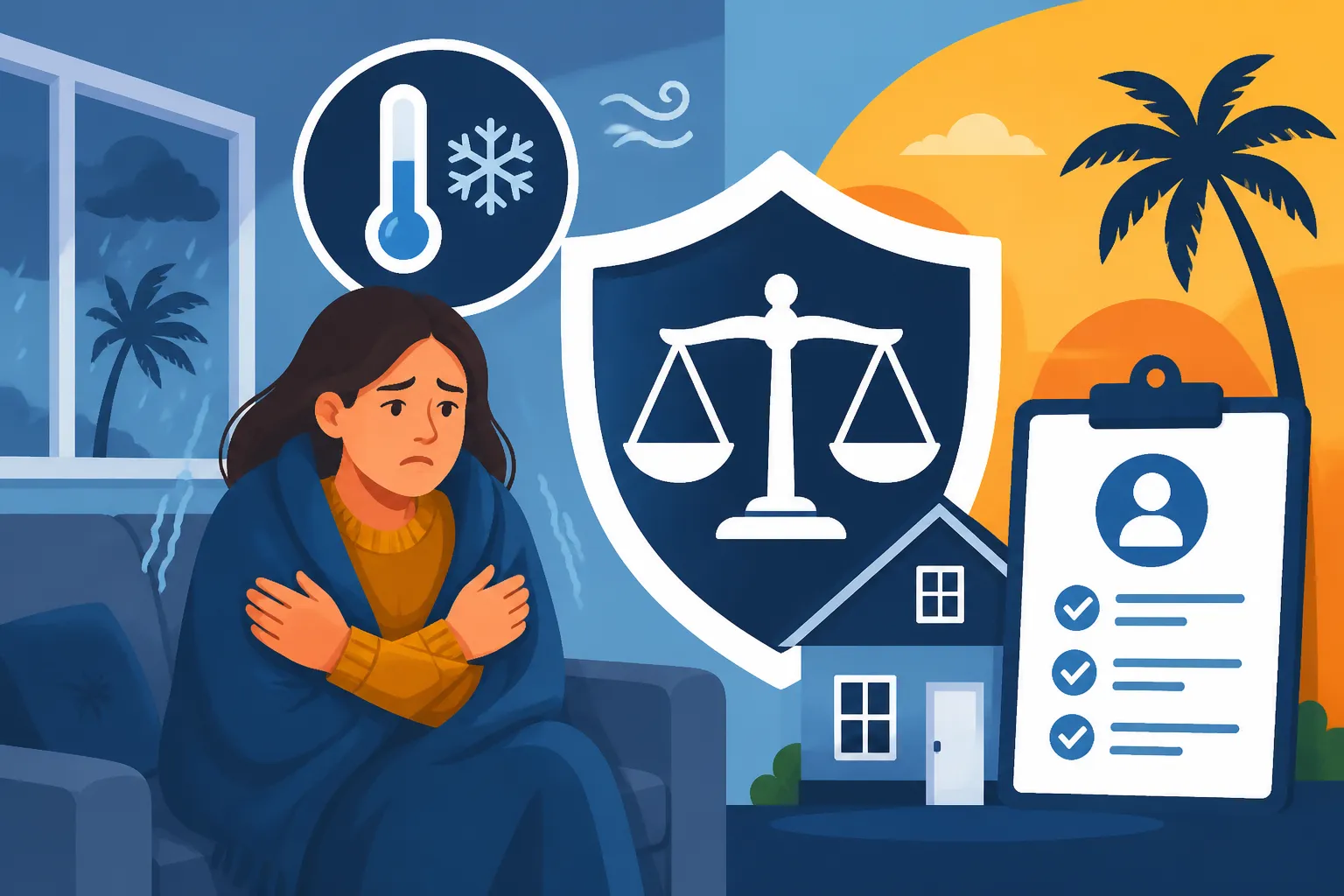
When the outside temperature dips significantly, a non-functional heater isn’t just an inconvenience; it can pose health risks, especially for vulnerable populations like the elderly, young children, or individuals with certain medical conditions. Imagine a scenario where a cold front sweeps through Orlando, dropping nighttime temperatures into the low 40s. If your heater suddenly stops working, your home can quickly become uncomfortably, even dangerously, cold. This is precisely the kind of situation the implied warranty aims to prevent, ensuring your living space remains habitable.
When Heat Is Considered an Essential Service
Under Florida Statute 83.51(1), landlords are generally required to provide for "heating facilities" among other things like screens, hot water, and reasonable provisions for extermination. The key here is "reasonable provision." While you might not need your heater in July, during cooler periods from late fall through early spring, a functioning heating system becomes essential. Florida law doesn't specify an exact minimum indoor temperature, unlike some northern states, but the expectation is that the landlord maintains working facilities to provide heat if needed. If your lease includes a heating system, it must be kept in good repair.
The specific criteria for when heat becomes an "essential service" often aligns with common sense and local climate expectations. If it's 75 degrees Fahrenheit outside, a broken heater might not be an immediate emergency. However, if it's 50 degrees Fahrenheit, or even colder in North Florida areas like Tallahassee, the absence of heat would certainly qualify as a significant issue impacting habitability. Landlords must act quickly to repair issues affecting essential services. If your lease stipulates that a heating system is included, then it is an amenity your landlord is obligated to maintain.
Lease Agreement vs. State Law
It's tempting to think your lease agreement is the be-all and end-all of your rental relationship, but when it comes to fundamental rights like a habitable living space, state law always takes precedence. Your lease might specify certain maintenance responsibilities or protocols, but it cannot override your basic rights as a tenant under Florida Statute 83.51.
For instance, if your lease states that you are responsible for all repairs, including major HVAC system failures, that clause might not be enforceable if it attempts to shift the landlord’s fundamental responsibility to maintain essential services. State law sets a baseline for habitability that all rental agreements must adhere to. Any clause in a lease that tries to waive or limit a landlord's obligations regarding essential services like heat is generally considered void and unenforceable. So, even if you signed a lease that was less-than-ideal on paper, Florida tenant rights still protect you from living in an unheated dwelling during cold weather.
Immediate Steps to Take When You Have No Heat
When the chill sets in and your heater gives up, panic can quickly follow frustration. But taking the right steps, and doing so quickly, can make all the difference in getting the issue resolved and protecting your rights.
Documenting the Problem Thoroughly
This is arguably the most crucial step. Before you do anything else, document, document, document! Don't just rely on your memory or a quick phone call.
First, check the basics yourself. Is the thermostat set correctly? Is the furnace filter clogged (if that's your responsibility per the lease)? Is the circuit breaker tripped? Is the pilot light out? Sometimes, it's a simple fix you can handle, which saves everyone time and hassle. If you fix it, still make a note of what happened and when.
If it's not a simple fix, gather evidence:
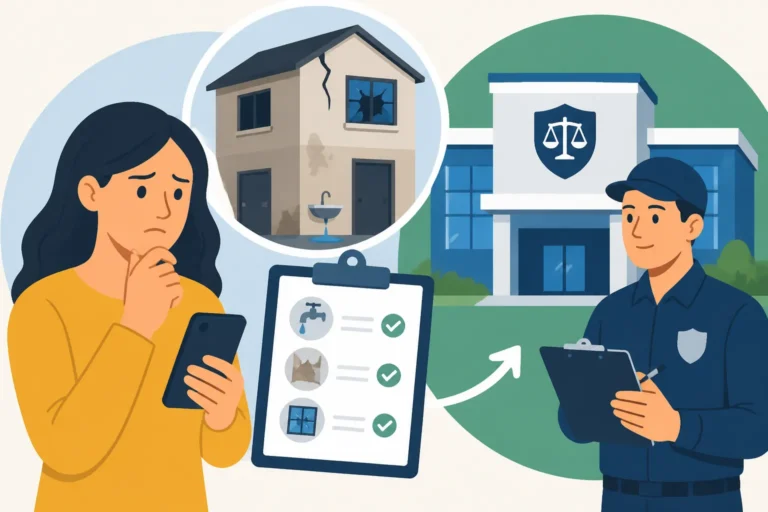
- Take photos and videos: Capture images of your thermostat showing the low temperature inside, especially if it's colder than comfortable. Get a video demonstrating that the heating unit isn't turning on or blowing cold air. Date-stamp these if possible.
- Note the exact time and date: Record when you first noticed the issue.
- Gather temperature readings: If you have an indoor thermometer, take photos of it. Note the outdoor temperature at the time, especially if it's particularly cold. You can use a weather app screenshot for this.
- Keep a log: Start a detailed log of all communication with your landlord or property manager. Include dates, times, names of people you spoke with, and a summary of the conversation.
This evidence will be invaluable if there's a dispute down the line or if you need to take further action. It's your concrete proof of the problem and your efforts to report it. Our guide on How to Document Your Apartment at Move-In offers great tips that can also apply to documenting repair issues.
Notifying Your Landlord in Writing
Verbal communication might feel easier, but it leaves no paper trail. Always, always notify your landlord in writing about the lack of heat. This creates a formal record that proves you informed them of the problem.
Your written notice should include:
- Your name and apartment number.
- The date and time of the notice.
- A clear, concise description of the problem (e.g., "The heating system in my apartment stopped working on [Date] at approximately [Time]. The thermostat is set to [Temperature], but no warm air is coming from the vents, and the indoor temperature is currently [Temperature].").
- A request for immediate repair, stating that it is an essential service.
- A reasonable deadline for the repair to be completed, acknowledging that essential services often require quicker action.
You can send this via certified mail with a return receipt requested, which provides undeniable proof of delivery. Alternatively, email is often acceptable, especially if your lease specifies email as a valid form of communication. Make sure to save a copy of the email and any "read receipts." If you use a tenant portal or platform like TurboTenant for communication, ensure you keep screenshots or copies of your messages.
For specific guidance, our article on How to Request Repairs in Writing can provide templates and further advice. Remember, this written notice is the starting gun for the clock on your landlord's responsibility to make repairs.
Understanding the Repair Timeline
Florida Statute 83.51(1) states that if the landlord fails to comply with their obligations regarding maintenance of the premises, including providing for "heating facilities," the tenant has certain remedies. However, the law generally requires the tenant to give the landlord written notice and a "reasonable time" to make repairs. For essential services like heat, a "reasonable time" is typically much shorter than for non-essential repairs.
While Florida doesn't specify an exact number of hours or days for heat repair, the standard for essential services is generally considered to be around seven days. However, in emergency situations where health and safety are at risk due to extremely cold temperatures, a landlord might be expected to respond even faster. What constitutes "reasonable" can depend on the severity of the cold, the availability of parts, and the complexity of the repair. For comparison, a state like California might give a landlord 24-72 hours for essential services. In Florida, if the temperature outside is dipping into the 30s or 40s consistently, seven days without heat could be deemed unreasonable.
It's a tricky balance because you don't want to prematurely act, but you also don't want to freeze. This is why clear communication and documentation are so vital. If your landlord acknowledges the issue and provides a concrete timeline for repair within a day or two of your notice, that might be considered reasonable. If they ignore your calls or push back the repair date indefinitely, that's a different story. You can learn more about general repair timelines in our comprehensive guide, How Long Does a Landlord Have to Make Repairs?.
Here's a quick look at typical repair timelines:
| Type of Repair | Urgency Level | Common Florida Expectation (after written notice) |
|---|---|---|
| No Heat (Cold Weather) | High (Essential) | 24-72 hours for response, 7 days for repair |
| No Hot Water | High (Essential) | 24-72 hours for response, 7 days for repair |
| Major Plumbing Leak | High (Essential) | 24-72 hours for response, 7 days for repair |
| Broken Refrigerator | High (Essential) | 24-72 hours for response, 7 days for repair |
| General Non-Emergency | Medium | 7-14 days for repair (after written notice) |
| Minor Cosmetic | Low | Varies greatly, often not legally mandated |
Note: These are general expectations; actual "reasonable time" can vary based on circumstances and judicial interpretation.
What to Do If Your Landlord Doesn't Fix the Heat
Unfortunately, not all landlords are as responsive as they should be. If your initial attempts to get the heat fixed fall on deaf ears or the repair timeline drags on, Florida law provides specific remedies, but it's critical to follow them to the letter to protect yourself.
Sending a "Notice to Landlord of Noncompliance"
If your landlord fails to address the lack of heat within that "reasonable time" (which, for an essential service, as discussed, is often considered around seven days after your initial written notice), Florida law requires a second, more formal written notice. This is outlined in Florida Statute 83.56.
This "Notice to Landlord of Noncompliance" or "7-Day Notice" must explicitly state that the landlord is in noncompliance with their obligations under the lease or state law (specifically, 83.51(1)). It must detail the exact noncompliance (e.g., "failure to provide functioning heating facilities"), state that you intend to terminate the rental agreement if the issue is not remedied within seven days, and be delivered in the same way you would serve a legal document (e.g., certified mail, hand delivery with a witness, or according to your lease's specific notice provisions).
It's a serious step, as it formally puts the landlord on notice that you are considering terminating the tenancy if the essential service isn't restored. If they fail to fix the heat within those seven days after receiving this second, formal notice, then you may have the right to terminate the lease and move out without further obligation to pay rent. However, you should be prepared to move out promptly if you choose this path. The law doesn't allow you to stay in the unit and stop paying rent based on this notice alone without a court order for repair, which Florida law generally does not offer.
Exploring Your Options: Repair and Deduct or Lease Termination
This is where tenants often get into trouble if they don't understand Florida's specific rules. Unlike some other states, Florida law generally does not permit tenants to use the "repair and deduct" remedy for landlord noncompliance without specific allowances in the lease. This means you generally cannot hire someone to fix the heater yourself and then subtract the cost from your next rent payment. Doing so could be considered nonpayment of rent and lead to an eviction.
Your primary remedies under Florida law for a landlord's failure to provide an essential service like heat (after proper notice and the 7-day cure period) are:
- Terminate the Rental Agreement: As mentioned above, if the landlord fails to remedy the lack of heat after receiving your formal 7-day notice of noncompliance, you can terminate the lease and vacate the premises. You would then no longer be responsible for future rent payments.
- Procure Reasonable Substitute Housing: You could also, after the 7-day notice period, procure reasonable substitute housing (like a hotel room) until the landlord remedies the noncompliance. You can then deduct the cost of the substitute housing from your rent, but only up to the amount of your daily rent. This is a limited remedy and requires careful calculation.
- Sue for Damages: You could sue your landlord in small claims court for damages incurred due to the lack of heat, such as medical bills if someone got sick, or the cost of alternative heating solutions.
It's important to stress the risks: improperly exercising your rights can result in your landlord pursuing eviction for non-payment of rent. For example, if you moved out and your landlord wrongly withheld your security deposit, you could end up filing a Security Deposit Demand Letter How-To + Template or even Suing a Landlord for Your Deposit Small Claims & Penalties. If you're considering breaking your lease due to the uninhabitable conditions, our guide on Breaking a Lease Due to Mold or Uninhabitable Conditions can offer broader context.
Seeking Legal Aid or Housing Assistance
Navigating landlord-tenant law can be complex, especially when emotions are running high because you're literally in the cold. If your landlord is unresponsive or you're unsure about your next steps, it's always wise to seek professional advice.
- Legal Aid Societies: Many Florida counties have legal aid organizations that provide free or low-cost legal assistance to tenants, especially those with low incomes. For example, Legal Aid Society of Palm Beach County, Legal Services of Greater Miami, or Community Legal Services of Mid-Florida (serving areas like Orlando and Daytona Beach) are excellent resources. They can review your situation, explain your specific rights, and help you draft proper notices.
- Tenant Rights Organizations: While less common than in some other states, some communities may have tenant advocacy groups that can offer advice and support.
- Private Attorneys: If you have the means, a landlord-tenant attorney can provide tailored advice and represent you if legal action becomes necessary.
Remember, protecting your belongings is also important. If your living conditions become truly uninhabitable, your personal property could be at risk from issues like freezing pipes or water damage. This is why having renter's insurance is always a good idea. Providers like Lemonade or Steadily offer renter's insurance policies that can cover your personal belongings against such damage, providing peace of mind even if your landlord is failing their duties. This insurance won't fix your heat, but it protects your financial investment in your possessions.
Preventing Future Heat-Related Issues
While you can't control everything, there are proactive steps you can take as a tenant to minimize the chances of a heating crisis and ensure you're well-prepared if one does occur.
Thorough Move-In Inspections
The day you move into a new rental is one of the most important for protecting your rights later on. Before you even unpack, perform a detailed move-in inspection. This should include checking the heating system.
- Test the heater: Turn it on, set it to a warm temperature, and ensure it kicks on and blows warm air. Note how long it takes to heat up.
- Document its condition: Take photos or videos of the thermostat, the heating unit (if accessible), and any vents. Note any existing issues, no matter how minor, in your move-in checklist or condition report. For instance, if a vent cover is loose or dusty, make a note of it.
- Ensure it's working properly: If it's warm weather when you move in, you might not use the heat for months. If you notice any issues with the heater during the move-in inspection, insist that they are documented and repaired before you fully move in, or at the very least, note them on your move-in checklist.
A thorough Move-In / Move-Out Inspection Guide is your best friend here, as it provides a baseline for the condition of the property. This documentation can serve as crucial evidence if a dispute arises later about the heater's condition or who is responsible for its repair.
Regular Communication and Maintenance
Good communication with your landlord or property manager is key to a smooth tenancy. Don't wait for a full-blown crisis.
- Report minor issues early: If you notice the heater making strange noises, cycling on and off too frequently, or just not heating as efficiently as it used to, report it in writing right away. Early intervention can prevent a complete breakdown.
- Understand your responsibilities: Your lease might stipulate certain tenant maintenance responsibilities, such as changing air filters regularly. Make sure you understand and adhere to these. Neglecting your responsibilities could give your landlord grounds to claim you contributed to the problem. Always keep records if you do perform these tasks, such as receipts for new filters or notes of when you changed them.
- Be clear and concise: When you communicate, stick to the facts. Clearly describe the problem, the date it started, and any immediate impact it's having. Avoid accusatory language, which can escalate tensions unnecessarily.
Maintaining a polite but firm line of communication helps build a positive relationship and often leads to quicker resolutions for issues like a malfunctioning heating system.
Knowing Your Rights and Local Resources
Staying informed about your tenant rights in Florida is your strongest defense. Laws can change, and interpretations can vary, so having a basic understanding of your local statutes is paramount.
- Read your lease carefully: Understand clauses related to maintenance, repairs, and landlord entry for repairs.
- Familiarize yourself with Florida Statutes Chapter 83: This chapter governs landlord-tenant relationships in Florida and is your primary source of legal information.
- Know local ordinances: Some cities or counties in Florida might have their own specific tenant protections or housing codes that offer additional safeguards, although state law usually sets the minimum. For instance, cities like Miami or Jacksonville might have local housing authorities that can provide guidance on habitability standards.
- Keep contact information handy: Have the phone numbers and email addresses for your landlord, property manager, and any relevant legal aid organizations or housing authorities readily accessible.
By being prepared and knowing your rights, you can navigate the unexpected challenges of a broken heating system with confidence, ensuring your home remains a comfortable and habitable place, even when Florida decides to throw a chilly curveball your way. If you find yourself needing to report a landlord for negligence, you might find our guide on How to Report a Landlord Code Violations & Retaliation helpful.
Disclaimer
Please remember that this article provides general information and guidance regarding Florida landlord-tenant law. It is not intended as legal advice. Laws can be complex and are subject to change, and individual circumstances vary. For specific legal advice regarding your situation, it is always recommended to consult with a qualified attorney or a tenant rights organization in your local jurisdiction.