How to Evict a Tenant in Georgia
Georgia eviction laws require proper notice, valid grounds, and a formal court process to legally remove a tenant from property.

Georgia eviction laws require proper notice, valid grounds, and a formal court process to legally remove a tenant from property.

Florida eviction law requires strict adherence to Chapter 83 statutes, correct notice types, court filings, and a final writ of possession.

Delaware eviction laws require proper notice periods, valid lease violation grounds, and formal court filings in the Justice of the Peace Court.

Connecticut eviction laws explain summary process steps, legal grounds, notice periods, and court procedures for removing a tenant from rental property.

Colorado landlord-tenant law explains the legal eviction process, valid reasons, proper notice periods, court hearings, and prohibited self-help lockouts.

California eviction laws require landlords to provide just cause, specific notices, and relocation assistance before filing an unlawful detainer lawsuit.
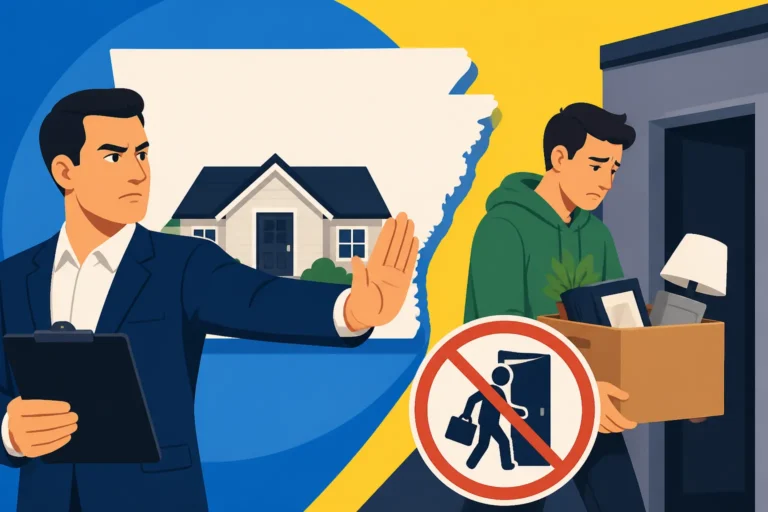
Arkansas landlord-tenant laws outline the specific legal steps required to evict a tenant for non-payment, lease violations, or illegal activity.

Arizona eviction laws require landlords to provide proper notices, file court documents, and enforce writs of restitution through the sheriff.

The Alaska eviction process requires landlords to follow specific notice periods, just cause rules, and court procedures.

Alabama eviction laws require landlords to provide proper notice periods and file an unlawful detainer lawsuit to remove tenants.