Can I Break My Lease if My Apartment Is Unsafe?
Living in an apartment that feels unsafe can be an incredibly stressful and frankly terrifying experience. You signed a lease expecting a habitable home, a place where you could feel secure, only to find yourself dealing with conditions that compromise your well-being or even put your health at risk. It leaves you wondering if you're just stuck or if you have any real options. This comprehensive guide will walk you through your rights as a tenant if your apartment becomes unsafe, detailing the legal grounds for breaking your lease, the essential steps you need to take, and what to expect when navigating such a challenging situation.
Understanding What "Unsafe" Means in Rental Law
When we talk about an "unsafe" apartment in the context of breaking a lease, we're not just talking about minor annoyances or cosmetic issues. The law has a specific, and often high, bar for what constitutes conditions so severe that they render a property uninhabitable or dangerous. Understanding this legal definition is crucial before you consider taking drastic steps like moving out.
The Implied Warranty of Habitability
At the heart of tenant protections lies the "implied warranty of habitability." This isn't usually something explicitly written into your lease agreement; it's a legal principle understood to exist in every residential lease, whether it's for a cozy studio in Brooklyn or a sprawling house in Phoenix. It essentially means that your landlord has a legal obligation to provide and maintain a property that is fit for human habitation throughout your tenancy. It's a fundamental promise that the property will meet basic structural, health, and safety standards.
What does this practically mean? It means your landlord must ensure that your rental unit has things like a functioning roof, adequate waterproofing, working plumbing, hot and cold running water, proper heating (especially in colder climates), electricity, and reasonable security (like working locks on doors and windows). They also generally must ensure the property is free from severe structural defects, dangerous environmental hazards, and significant pest infestations that compromise health or safety. For instance, if you're dealing with raw sewage backing up into your bathtub or exposed electrical wiring, that's almost certainly a breach of the implied warranty of habitability. This is a foundational concept in Landlord Repair Responsibilities What They Must Fix.
Common Issues That Make an Apartment Unsafe
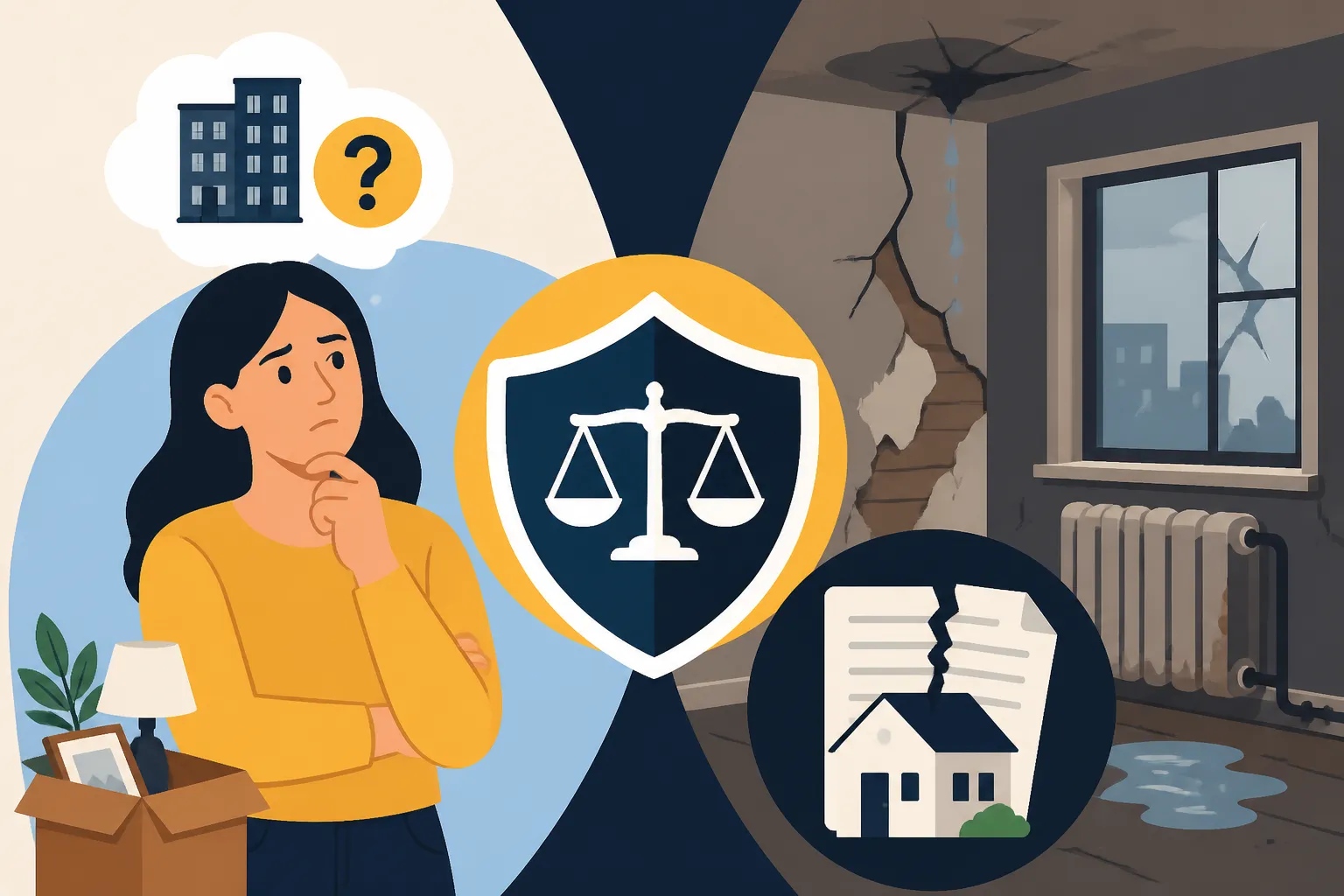
Let's get specific about what kinds of problems typically rise to the level of making an apartment legally "unsafe" or "uninhabitable." These aren't just minor inconveniences; they're issues that fundamentally impact your health, safety, or ability to live normally in the space.
- Structural Defects: Think collapsing ceilings, sagging floors, severely cracked foundations, or walls that are noticeably leaning. These are immediate dangers that could lead to injury.
- Lack of Essential Utilities: This is a big one. No heat during winter months (especially in states like New York or Massachusetts), no hot water for an extended period, or a complete loss of electricity not due to your own negligence can render an apartment uninhabitable. Similarly, a severe and prolonged lack of running water is a major issue.
- Severe Pest Infestations: While a few ants might be annoying, a rampant infestation of rodents (rats, mice), cockroaches, or bed bugs can quickly make an apartment unsanitary and unsafe. Some states, like California, have specific laws regarding pest control responsibility, with landlords often on the hook for severe infestations that pre-date the tenant or affect multiple units.
- Environmental Hazards: This includes significant mold growth (especially black mold that affects air quality), lead paint hazards in older buildings, or asbestos that has become disturbed. Exposure to these can lead to serious health problems.
- Lack of Security: Broken exterior doors, non-functioning locks on main entry points to the unit, or shattered windows that can't be secured can make a tenant feel, and genuinely be, unsafe from intruders.
- Fire or Safety Code Violations: Faulty smoke detectors, non-working carbon monoxide detectors, blocked fire exits, or severe electrical issues that pose a fire risk are all serious concerns.
What Doesn't Qualify as Unsafe
It’s equally important to understand what doesn't typically qualify as "unsafe" enough to break a lease without penalty. Landlord-tenant law is designed to be fair, giving landlords a chance to remedy problems and protecting them from tenants who want to break a lease for less critical reasons.
- Minor Cosmetic Issues: A chipped paint job, scuffed floors, an outdated kitchen, or a leaky faucet that’s easily repaired and doesn’t cause significant damage usually aren't grounds for breaking a lease. While annoying, they don't threaten your health or safety.
- Noise from Neighbors: Unless the noise is extreme, constant, illegal, and the landlord has demonstrably failed to enforce quiet hours or address a severe nuisance after repeated, documented complaints, general neighbor noise typically isn't a habitability issue. It's frustrating, but usually not legally "unsafe."
- Appliance Malfunctions: A broken dishwasher, microwave, or even a refrigerator (unless it’s specifically stated as an essential appliance the landlord must provide and repair under local law) may not be enough. While inconvenient, you can often work around these issues without your living space becoming fundamentally uninhabitable. Many states require landlords to maintain essential appliances they provide, but the immediacy and severity of impact on habitability vary.
- Pest Nuisance vs. Infestation: A few spiders or the occasional fly are normal parts of life. It takes a severe, pervasive infestation of disease-carrying or destructive pests to cross the line into an uninhabitable condition.
- Temporary Disruptions: Planned maintenance, short-term utility outages for repairs, or construction noise (within legal hours and parameters) are usually considered part of renting and not grounds for early lease termination.
Steps to Take Before Breaking Your Lease
Before you even think about packing a single box, there are crucial steps you need to take. Jumping the gun can put you in a precarious legal position, potentially owing your landlord thousands of dollars or damaging your rental history. It’s all about creating a clear, undeniable paper trail.
Document Everything
This is perhaps the most critical step. In any dispute, evidence is king. You need to meticulously document every aspect of the unsafe conditions.
- Photos and Videos: Take clear, timestamped photos and videos of the issues. Capture the scale of the problem. For instance, if there's mold, show how extensive it is. If there's a structural crack, photograph it from multiple angles, perhaps with a ruler or common object for scale. If your heat isn't working, take a video of your thermostat showing the low temperature when it’s cold outside.
- Written Communication Records: Keep copies of all correspondence with your landlord or property manager. This includes emails, text messages, and physical letters. Note down dates, times, and names of anyone you speak with over the phone. If you sent a formal notice through a service like LawDepot, ensure you have proof of mailing and receipt.
- Witness Statements: If possible, have friends, family, or even local code enforcement officers witness the conditions. Their testimony could be invaluable.
- Maintenance Logs: Keep a detailed log of every time you contact your landlord about the issue, including who you spoke to, what was discussed, and what promises were made. Note if any repairs were attempted and if they failed.
- Medical Records/Professional Reports: If the unsafe conditions are affecting your health (e.g., mold causing respiratory issues), obtain doctor's notes or reports from health professionals. If you've had an independent inspector come out (e.g., for mold or lead), keep their report.
Notifying Your Landlord in Writing
Verbal complaints, while often the first step, are rarely sufficient for legal purposes. You need to notify your landlord formally, in writing, about the unsafe conditions. This serves multiple purposes: it creates a record, gives them official notice, and starts the clock on their responsibility to act.
- Specificity is Key: Your notice should clearly describe the problems, their location in the unit, and how they make the apartment unsafe or uninhabitable. Reference specific clauses in your lease if applicable, or generally refer to the implied warranty of habitability.
- Demand for Action: State what you expect the landlord to do (e.g., "I demand immediate repair of the exposed wiring in the kitchen and ceiling leak in the bedroom").
- Deadline for Repairs: Most states require landlords to be given a "reasonable time" to make repairs. This isn't usually immediate, but it can be very short for emergency repairs. In many states, like California, landlords might have 24-72 hours for emergency repairs (no heat, no water, major electrical issues) and up to 30 days for less urgent but still critical problems. Specify a reasonable deadline based on the severity of the issue and local laws. You can find more details on How Long Does a Landlord Have to Make Repairs By State.
- Delivery Method: Send the notice via certified mail with a return receipt requested. This provides undeniable proof that the landlord received your communication and when. Keep a copy for your records. You could also send it via email if your lease specifies email as a valid form of communication, but certified mail adds an extra layer of legal weight. Many tenants use platforms or templates from sites like LawDepot or seek advice from services like TurboTenant if they're unsure about the correct format for such a vital document.
Allowing a Reasonable Time for Repairs
After you've sent your formal notice, you must give your landlord a "reasonable" amount of time to address and fix the problem. What's considered "reasonable" can vary widely depending on the nature of the repair and local landlord-tenant laws.
- Emergency Repairs: For critical issues like no heat in winter, no running water, or exposed electrical hazards, "reasonable time" might be as short as 24 to 72 hours. These are issues that pose immediate threats to health and safety.
- Non-Emergency but Serious Repairs: For problems like a significant mold outbreak, a severe pest infestation, or a non-structural leak causing damage, the landlord might have anywhere from 7 to 30 days, depending on your state's laws and the complexity of the repair.
- No Action or Failed Repairs: If the landlord fails to make any repairs within the stipulated reasonable timeframe, or if the repairs attempted are insufficient and the unsafe conditions persist, then you might have grounds to proceed with breaking your lease without penalty. However, it's vital to have documented evidence of their inaction or failed attempts. This includes photos of the unrepaired issue after the deadline, or further communication stating the repairs were incomplete.
Legal Avenues for Breaking Your Lease Due to Unsafe Conditions
When your landlord fails to address documented unsafe conditions within a reasonable timeframe, tenant law provides specific avenues for you to legally terminate your lease. These are powerful tools, but they must be used correctly to avoid potential legal pitfalls.
Constructive Eviction
Constructive eviction is the primary legal theory that allows a tenant to break a lease when an apartment becomes uninhabitable. It's a complex concept but crucial to understand. Essentially, it means that while your landlord didn't physically evict you, their actions (or inaction) made the property so unlivable that you were, in essence, "forced" to move out. The conditions created by the landlord's failure to maintain a habitable property are considered so severe that they amount to an eviction, even though you left voluntarily.
To successfully claim constructive eviction, you generally need to prove three things:
- The landlord breached the implied warranty of habitability: The conditions were truly severe and rendered the property unsafe, unhealthy, or unfit for basic human habitation. This isn't just about discomfort; it's about fundamental safety and health.
- You notified the landlord and gave them a reasonable chance to fix it: You sent proper written notice of the issues and allowed them adequate time (as discussed above) to make the necessary repairs.
- You vacated the premises within a reasonable time after the landlord failed to act: You couldn't reasonably continue living there, and you moved out relatively quickly after it became clear the landlord wouldn't remedy the situation. You can't claim constructive eviction if you continue to live in the uninhabitable conditions for an extended period.
If you can prove constructive eviction, you may be relieved of your obligation to pay future rent and could even sue your landlord for damages, such as moving expenses, temporary housing costs, or the return of your security deposit. It’s important to understand this concept, as it's a key tenant right, often discussed in resources like Constructive Eviction Explained.
Repair and Deduct (and why it's risky for this specific issue)
Another tenant remedy for landlord inaction on repairs is the "repair and deduct" option. This allows tenants in some states to pay for necessary repairs themselves and then deduct the cost from their next rent payment. However, for issues that make an apartment unsafe to the point of needing to break the lease, the repair and deduct remedy is usually not the appropriate or safest course of action.
Why? Because repair and deduct typically applies to repairs that can be made while you continue living in the unit, and which are not so extensive that they amount to a full habitability crisis. If the conditions are so unsafe that you need to move out, repairing them yourself is often not feasible, desirable, or financially practical. Furthermore, many states have strict limits on how much you can deduct (often up to one month's rent) and how often you can use this remedy. If you spend thousands of dollars to fix a collapsing ceiling and then try to deduct it from rent, you'll likely exceed the legal limit and could face an eviction for non-payment.
It’s a good option for a broken water heater or a leaking pipe that a landlord won't fix, but rarely for conditions that compel you to vacate the property entirely. You can learn more about this in Repair and Deduct by State.
Suing Your Landlord (Small Claims or Higher Court)
If you've been forced to leave an unsafe apartment, and your landlord refuses to return your security deposit or tries to charge you for breaking the lease, you might need to take them to court.
- Small Claims Court: For disputes involving a specific monetary limit (which varies by state, often a few thousand to $10,000 or more), small claims court is often the most accessible and cost-effective option. You can represent yourself without a lawyer. This is where you might seek to recover your security deposit, any rent you paid for the period the apartment was uninhabitable, or damages for expenses incurred due to the constructive eviction. Many tenants find this helpful when a landlord wrongfully withholds their deposit after they were forced to move out.
- Higher Civil Court: If your damages exceed the small claims limit, or if you're seeking more complex relief (like a judgment that officially declares your lease terminated), you might need to file a lawsuit in a higher civil court. This usually requires legal representation and is a more complex and expensive process.
In either case, all the documentation you meticulously collected will be absolutely vital. Without a clear paper trail of the unsafe conditions, your communications, and your landlord's failure to act, your case will be much harder to win. For severe violations, some states even allow for "double or treble damages" if a landlord knowingly and wrongfully withholds a security deposit or violates habitability laws, as explored in Double vs Treble Damages for Wrongful Withholding.
Potential Consequences and How to Mitigate Them
Even with strong legal grounds, breaking a lease can have ramifications. It's essential to understand these potential consequences and take steps to minimize their impact.
Financial Ramifications
One of the biggest concerns is the financial fallout. If you break your lease, even for legitimate safety concerns, your landlord might still try to hold you responsible for rent until a new tenant is found or until your lease term expires.
- Unpaid Rent: The landlord can sue you for lost rent. However, if you've established constructive eviction, you likely won't be liable for future rent. In many jurisdictions, landlords also have a "duty to mitigate damages," meaning they must make a reasonable effort to re-rent the property quickly to minimize their losses and your financial burden.
- Lease Breaking Fees: Some leases have clauses about early termination fees. If you're proving constructive eviction, you argue that these fees don't apply because the landlord breached their fundamental obligations first.
- Security Deposit: Your landlord might attempt to keep your security deposit to cover alleged damages or unpaid rent. This is where your detailed documentation of the unsafe conditions and the fact that you were forced to vacate becomes paramount. You'll need to send a Security Deposit Demand Letter How To + Template to request its return and be prepared to dispute any deductions. Landlords are only allowed to deduct for specific reasons, which are covered in Security Deposit Deductions Full List of Allowed Charges. If they refuse, you may need to escalate.
- Credit Score Impact: If your landlord reports unpaid rent or a broken lease to credit bureaus or collection agencies, it could negatively impact your credit score. This is another reason why having clear documentation and, if necessary, a court judgment in your favor is so important.
Documenting Your Departure
When you move out, it's not enough to just pack up and go. You need to document your departure just as meticulously as you documented the unsafe conditions.
- Move-Out Inspection: Request a joint move-out inspection with your landlord. Document the condition of the apartment (apart from the unsafe issues that forced you out). Take photos and videos of everything to show you left the unit clean and free of new damage. This is a critical step outlined in the Move-In Move-Out Inspection Guide.
- Return Keys Properly: Don't just leave keys under the mat. Return them in a way that creates a record – either directly to the landlord and get a signed receipt, or via certified mail.
- Forwarding Address: Provide your landlord with a written forwarding address for the return of your security deposit and any other official correspondence. This is a legal requirement in many states, as detailed in Security Deposit Forwarding Address Rules.
- Final Utility Readings: Take photos of your final utility meter readings to ensure you're not charged for usage after you've moved out.
Seeking Legal Advice
Navigating the complexities of landlord-tenant law, especially when dealing with severe habitability issues, can be overwhelming. While this guide provides a lot of information, it’s not a substitute for personalized legal advice.
- Tenant Rights Organizations: Many cities and states have non-profit organizations dedicated to tenant rights. These organizations can offer free or low-cost advice, help you understand local laws, and guide you through the process.
- Legal Aid Services: If you meet income requirements, legal aid services can provide legal representation or consultation.
- Private Attorneys: For particularly complex cases, or if substantial money is at stake, consulting a private attorney specializing in landlord-tenant law is advisable. They can help you assess your case, draft legal notices, and represent you in court if necessary.
Don't wait until things reach a boiling point to seek advice. A quick consultation early on can save you a lot of headache, stress, and money down the line. Dealing with an unsafe apartment is a heavy burden, but knowing your rights and taking the proper steps can empower you to protect yourself and your family.
| Unsafe Condition Examples | Legal Basis for Claim | Typical Initial Landlord Response Time |
|---|---|---|
| Exposed Electrical Wiring | Implied Warranty of Habitability | 24-72 hours (Emergency) |
| No Heat in Winter (severe) | Implied Warranty of Habitability | 24-72 hours (Emergency) |
| No Running/Hot Water | Implied Warranty of Habitability | 24-72 hours (Emergency) |
| Raw Sewage Backup | Implied Warranty of Habitability | 24-72 hours (Emergency) |
| Major Structural Collapse | Implied Warranty of Habitability | Immediate evacuation (Urgent) |
| Severe Mold Infestation | Implied Warranty of Habitability | 7-30 days (Non-emergency, but serious) |
| Rodent/Cockroach Infestation | Implied Warranty of Habitability | 7-14 days (Non-emergency, but serious) |
| Broken Main Entry Locks | Implied Warranty of Habitability | 24-72 hours (Emergency) |
Disclaimer
The information provided in this guide is intended for general informational purposes only and does not constitute legal advice. Landlord-tenant laws vary significantly by state and local jurisdiction. Always consult with a qualified attorney or local tenant rights organization for advice specific to your situation.