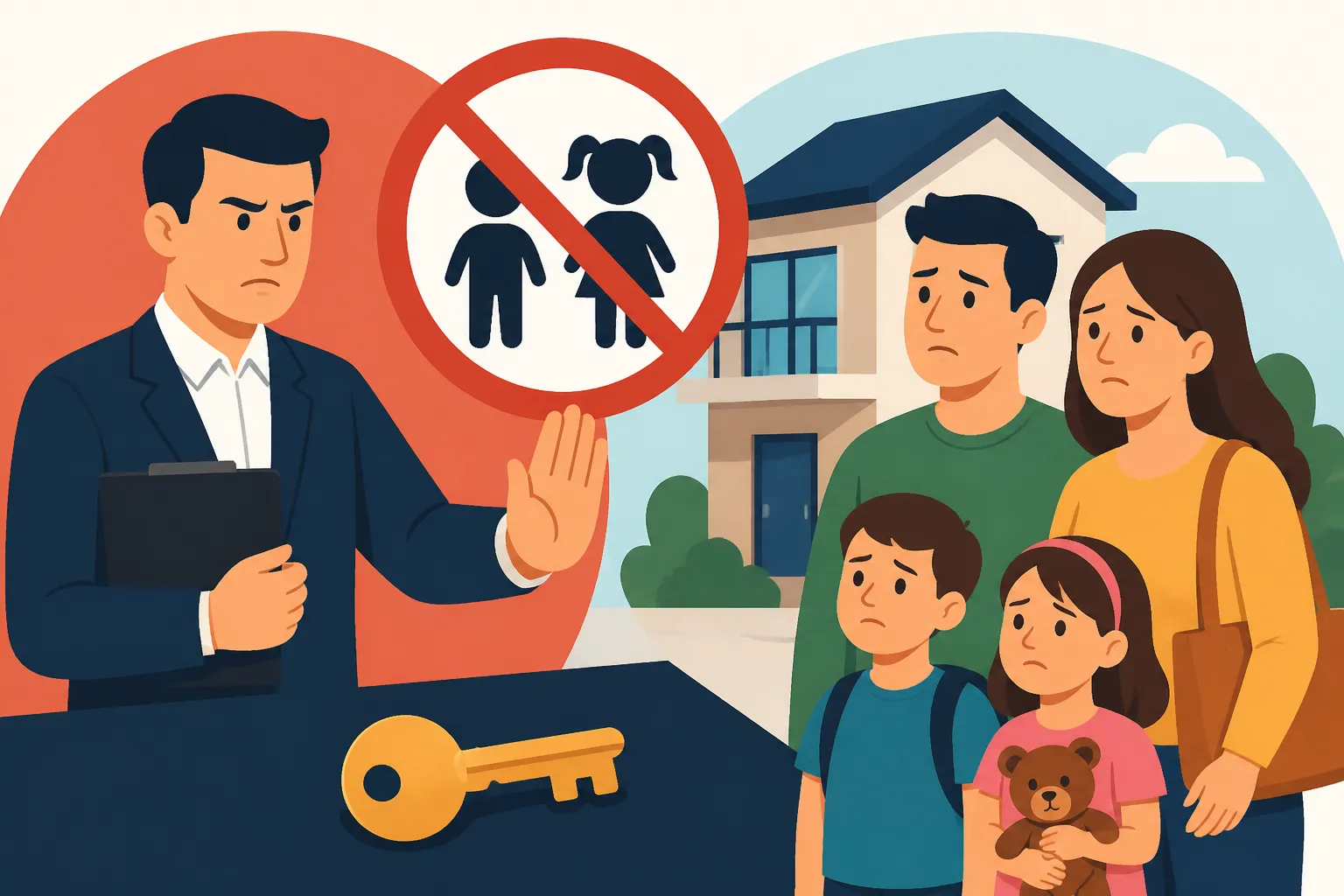
Can a Landlord Say No Kids?
It’s an agonizing experience for any parent: you find a promising rental, imagine your kids playing in the living room, only to be met with subtle (or sometimes not-so-subtle) resistance when you mention you have children. The feeling of being judged or outright denied a home just because you have a family is not only frustrating and disheartling, but it's often illegal. This comprehensive guide will walk you through your rights as a family seeking housing, explaining exactly when a landlord can and cannot legally say "no kids," and what you can do if you face discrimination.
Understanding Familial Status as a Protected Class
Navigating the rental market can feel like walking through a minefield, especially when you have children. Many people don't realize that "familial status" is a federally protected class, similar to race or religion, under the Fair Housing Act. This isn't just a suggestion; it's the law, designed to prevent discrimination against families.
What the Fair Housing Act Says
The Fair Housing Act (FHA), passed in 1968 and later expanded, is a landmark piece of legislation that prohibits discrimination in housing based on seven protected classes: race, color, national origin, religion, sex, disability, and familial status. For families, this means landlords generally cannot refuse to rent to you, set different terms or conditions, or make statements indicating a preference or limitation based on the presence of children. The intent behind this protection is to ensure that families with children have equal access to housing opportunities, preventing landlords from creating "adults-only" environments unless specific legal exceptions apply. It's all about fairness and equal opportunity for everyone to find a place to call home.
Who is Protected Under Familial Status
When we talk about "familial status," it's broader than just a traditional nuclear family with young children. The FHA defines familial status to include:
- One or more individuals under the age of 18 living with a parent or legal custodian. This is the most common scenario people think of. It covers biological children, adopted children, foster children, and stepchildren.
- Pregnant women. Yes, even before the child is born, a pregnant woman is protected from housing discrimination under familial status. This prevents landlords from denying housing to someone simply because they are expecting.
- Anyone in the process of securing legal custody of an individual under 18. This means if you're going through adoption proceedings, guardianship, or foster care placement, you're protected.
- Designated caregivers for children. If you have a legal right to care for a child, such as a grandparent raising grandchildren, you also fall under this protection.
So, if you're a single parent with a toddler, a couple expecting their first child, or a guardian taking in your teenage niece, you are equally protected by familial status laws. Landlords cannot treat you differently or deny you housing simply because you have, or are about to have, children. To learn more about broader protections, check out our guide on the topic of the Fair Housing Act: Protected Classes Explained.
Specific Examples of Discrimination
Discrimination against families often isn't overt; it can be subtle, making it harder to pinpoint but no less damaging. Here are some common examples that would constitute illegal discrimination:
- Refusing to show properties: Imagine calling about an advertised apartment, and when you mention you have two children, the landlord suddenly says the unit is no longer available or suggests it's "not really suitable for kids," even if it’s a spacious three-bedroom.
- Exaggerated occupancy rules: A landlord might tell you a two-bedroom apartment is too small for you and your two children, citing an overly restrictive occupancy limit that isn't based on local codes or federal guidelines. This could be a way to subtly exclude families.
- Different terms or conditions: This includes charging a higher rent for families with children, requiring an extra "child deposit" (beyond a standard security deposit), or imposing stricter rules, such as "children are not allowed in the pool area" or "no bicycles on the property," without legitimate safety reasons.
- Suggesting alternative units: A landlord might try to "steer" you towards different, less desirable units (e.g., smaller, more expensive, or on a different floor) once they learn you have children, even if the unit you originally inquired about is perfectly suitable. For instance, a landlord might say, "Oh, that unit on the top floor is really quiet, perfect for a single professional. With kids, you'd probably prefer a ground-floor unit further from the main entrance, right?"
- Discriminatory advertising: Ads that explicitly state "adults only," "no children," or "perfect for singles or couples" are clear violations of the FHA.
These actions, whether intentional or not, create barriers for families seeking housing and are considered illegal under federal law.
What Landlords CANNOT Do
It’s crucial to understand the bright lines that landlords cannot cross when it comes to tenants with children. These actions are explicitly prohibited by law and carry significant consequences.
Blanket Bans on Children
Let's get this straight: a landlord absolutely cannot implement a blanket "no children allowed" policy for their rental properties, with very specific exceptions we’ll discuss later. If you see an advertisement that says "adults only" or "no kids," that's a huge red flag and likely an illegal discriminatory practice. Similarly, if you inquire about a property and the landlord, upon learning you have children, immediately states, "Sorry, we don't rent to families," they are in clear violation of the Fair Housing Act.
This prohibition applies universally to most rental housing. It means that whether it's a single-family home, an apartment in a multi-unit building, or a condo, children cannot be used as a disqualifying factor for tenancy. The law ensures that families have the same opportunities to secure housing as individuals or couples without children. It's about providing equal access to housing, not about forcing landlords to accept tenants who don't meet other, legal, screening criteria.
Steering Families Away
Steering is a subtle yet pervasive form of discrimination where a landlord or property manager tries to guide families toward or away from certain properties or areas. This often happens under the guise of "being helpful" or "knowing what's best" for the family. For example, if you express interest in a sunny apartment near a park, and the leasing agent immediately starts pushing you towards a unit on the ground floor facing a busy street because it's "more practical with kids," that could be steering.
Another common scenario involves comments like, "Our building isn't really kid-friendly," or "The other tenants prefer a quieter environment, so this apartment might not be ideal for a family." These statements, even if not an outright denial, create a deterrent effect and unfairly limit a family's housing options. A landlord cannot, for instance, tell a family, "Oh, the units on the third floor are usually quieter, better for people without children," while showing you only ground-floor units. They must treat all applicants equally and allow them to choose from available, suitable units based on legal, non-discriminatory factors. This practice essentially creates an invisible barrier, limiting choice and perpetuating housing segregation.
Different Rules or Fees for Families
The FHA also prohibits landlords from imposing different rules, policies, or fees solely because a tenant has children. This means:
- Higher rent or security deposits: Charging a family with children more rent or a higher security deposit than a childless tenant for the exact same unit is illegal. Security deposit laws by state are specific, and rarely allow for higher deposits based on familial status.
- Excessive cleaning fees: While cleaning fees can be part of a lease, charging a higher "family cleaning fee" or deducting more from a security deposit specifically because children lived there (beyond actual damage) can be discriminatory. Landlords can charge for carpet replacement if there's damage beyond normal wear and tear, but not just because a child resided there.
- Discriminatory use restrictions: Creating rules like "children are not allowed to use the common room" or "children must be indoors by 7 PM" without similar restrictions on adults, or without a clear, legitimate safety rationale, is discriminatory.
- Different maintenance standards: Holding families to a higher standard of cleanliness or maintenance than other tenants, or quicker deductions for perceived wear and tear, is also a form of discrimination.
A landlord must apply all lease terms and fees uniformly to all tenants, regardless of familial status. If a landlord says they need an extra $200 "pet and kid deposit," that's a direct violation. Standard pet deposits are legal, but a deposit explicitly for children is not.
Occupancy Limits vs. Discrimination
This is where things can get a little tricky, and it's often a source of confusion. Landlords can enforce reasonable occupancy limits, but these limits must be based on legitimate factors, not discriminatory intent. The key is "reasonable."
The generally accepted guideline for occupancy standards, often referred to as the "two persons per bedroom" rule, comes from a 1991 HUD memorandum. This guideline suggests that a dwelling allowing two occupants per bedroom, plus one additional occupant in the living area, is generally considered reasonable. However, this is a guideline, not a strict rule. Factors like the size and configuration of the unit, the age of the children, and state or local health and safety codes can also play a role.
For example, a landlord might legally say a tiny studio apartment is too small for a family of three, even if it has one "bedroom" if local codes explicitly state maximum occupancy based on square footage. However, if a landlord insists that a spacious two-bedroom, two-bathroom apartment is too small for a couple and their two young children (who could comfortably share a bedroom), that would likely be considered discriminatory, especially if the claim is made without reference to specific, objective health or safety regulations. The burden is on the landlord to prove that their occupancy limit is reasonable and non-discriminatory. If you feel like your landlord is using an occupancy limit as an excuse, you might want to review what disqualifies you from renting.
What Landlords CAN Do Legally
While the law protects families from discrimination, landlords do have legitimate reasons to set certain rules and standards that apply to all tenants. It's about drawing the line between what's fair and what's discriminatory.
Reasonable Occupancy Limits
As discussed, landlords are within their rights to enforce reasonable occupancy limits. The goal here isn't to exclude families, but to ensure safe, habitable living conditions and prevent overcrowding, which can strain building infrastructure and create health hazards.
Most often, this falls back on the "two persons per bedroom" standard from HUD. So, a one-bedroom apartment could typically house two people, and a two-bedroom, four people, possibly more depending on the size of the rooms and the layout. However, it’s not always a rigid formula. For instance, in a large, open-concept studio apartment, a single parent with a very young child might be considered reasonable. Conversely, a tiny bedroom might not comfortably accommodate two teenagers.
State and local jurisdictions often have their own occupancy standards, which landlords must adhere to. For example, some cities might have stricter fire codes or zoning laws that dictate how many people can legally reside in a given space. A landlord using a robust tenant screening service like TurboTenant can often access local regulations to ensure their policies are compliant. The key is that these limits must be applied consistently to all prospective tenants, regardless of whether they have children, and must be justifiable based on objective criteria like square footage or local housing codes, not personal preference about children.
Health and Safety Concerns
Landlords can establish rules and policies that address genuine health and safety concerns for all residents, including children. This isn't discrimination; it's responsible property management.
For example, if a property has an unfenced swimming pool or a busy street with no sidewalks, a landlord might implement rules about supervision for all minors in those areas. They could also require parents to ensure children don't play unsupervised in areas that pose significant dangers, like parking lots or near heavy machinery if it's a mixed-use property. Similarly, rules about noise levels at certain hours, or prohibitions against leaving toys and bicycles in common hallways that could block emergency exits, are generally permissible as long as they apply to everyone and are genuinely aimed at maintaining safety and peaceful enjoyment for all tenants.
The line is crossed when these "safety concerns" are used as a pretext to deny housing to families or impose overly burdensome rules that are not applied to childless tenants. For instance, prohibiting children from using a safe, enclosed playground on the property would likely be discriminatory. It's about balancing the safety of all residents with the right of families to reside freely in their homes.
Age-Restricted Communities (55+)
There is a significant exception to familial status protection: housing for older persons, often referred to as 55+ or 62+ communities. These communities are legally allowed to discriminate based on familial status under specific conditions outlined by the FHA.
To qualify as housing for older persons, a community must meet certain criteria:
- 80/20 Rule: At least 80% of the occupied units must be occupied by at least one person 55 years of age or older.
- Intent and Policies: The community must publish and adhere to policies and procedures that demonstrate an intent to provide housing for persons 55 years of age or older.
- Verification: The community must regularly verify the occupancy of its units to ensure compliance.
In these specific types of communities, landlords can legally say "no kids" (or more accurately, limit residents under 18 or 55, depending on their specific rules). However, even in 55+ communities, they cannot discriminate based on any other protected class, such as race, religion, or disability. This exception is designed to provide dedicated housing options for seniors and is not a loophole for general family discrimination.
Using Fair Screening Criteria
A landlord has every right to screen all prospective tenants, including those with children, using fair, consistent, and non-discriminatory criteria. Tools like TurboTenant can help landlords establish and apply these criteria uniformly. This means evaluating applicants based on factors such as:
- Credit history and score: This assesses financial responsibility.
- Income stability: Landlords typically look for tenants who earn 2.5 to 3 times the monthly rent to ensure they can afford the payments. You can review "How Much Income Do You Need to Rent?" for more details.
- Rental history: Past evictions, property damage, or consistent late payments are legitimate concerns.
- Criminal background: Concerns about safety and property protection are valid.
- References: Verifying past tenancy and character.
As long as these criteria are applied equally to all applicants, regardless of familial status, and are not used as a pretext for discrimination, they are perfectly legal. A landlord using a comprehensive platform like TurboTenant can create a standardized application process that reviews all these factors for every applicant, ensuring transparency and fairness. If a family with children doesn't meet the financial requirements or has a poor rental history, the landlord can legally deny their application, just as they would any other applicant. The key is consistency and objective evaluation. For landlords, understanding how to screen a tenant is vital for fair practices.
| Discriminatory Practice (Illegal) | Legal Landlord Action |
|---|---|
| "No children allowed" policies | Enforcing reasonable, non-discriminatory occupancy limits (e.g., 2 persons per bedroom). |
| Charging higher rent/deposit for families | Charging standard, uniform rent/deposit for all tenants, regardless of familial status. |
| Steering families to less desirable units | Showing all available, suitable units to all qualified applicants equally. |
| Making derogatory comments about children | Setting and enforcing reasonable, neutral rules for all tenants (e.g., quiet hours, pool safety). |
| Advertising "adults only" (outside 55+ communities) | Advertising properties open to all protected classes, specifying general occupancy. |
| Rejecting an applicant solely due to pregnancy | Considering an applicant's ability to pay rent, credit, and rental history consistently. |
What to Do If You Suspect Discrimination
If you believe you've encountered housing discrimination because you have children, it can be incredibly disheartening. But you're not powerless. There are clear steps you can take to protect your rights and seek justice.
Document Everything
The first and most crucial step is to gather as much evidence as possible. Discrimination often lacks a clear paper trail, so your diligent record-keeping is vital.
- Keep detailed notes: Jot down dates, times, names of individuals you spoke with (landlord, property manager, leasing agent), and what was said. Include specific discriminatory statements or actions. For example, "On [Date], at [Time], [Landlord's Name] said, 'We don't really have space for kids here,' after I mentioned my two children."
- Save communications: Keep copies of all emails, text messages, voicemails, or written correspondence. If an online ad stated "adults only," take screenshots.
- Gather comparative evidence: If possible, ask a friend or family member without children (or without the same number of children) to inquire about the same property. Document their experience. Did they get different information or a warmer reception?
- Proof of financial eligibility: Have your financial documents (pay stubs, bank statements) ready to show you met the stated income requirements, proving that the denial wasn't based on your financial capacity.
- Document property condition: If a landlord claims a unit isn't suitable, document its size and features, especially if it contradicts their statement. Taking photos or videos can be helpful.
This documentation will be the backbone of any complaint or legal action you pursue. It’s hard to refute concrete evidence.
Filing a Complaint
If you have a strong suspicion of discrimination, the next step is usually to file a formal complaint.
- HUD Complaint: The U.S. Department of Housing and Urban Development (HUD) is the federal agency responsible for enforcing the Fair Housing Act. You can file a complaint directly with HUD, either online, by mail, or by phone. HUD will investigate your claim, which may involve interviewing you, the landlord, and any witnesses, and reviewing your documentation. They often try to mediate a resolution between the parties.
- State or Local Fair Housing Agencies: Many states and local jurisdictions also have their own fair housing laws and agencies, sometimes with broader protections than federal law. These agencies can often process complaints more quickly and might have additional resources. For example, some states explicitly prohibit discrimination based on marital status, which complements familial status protections. You can usually find these agencies through your state's Attorney General's office or city/county government websites. Our resource, How to File a Fair Housing Complaint, provides a step-by-step guide.
When filing, provide all your detailed documentation. The agency will assess the merits of your claim and determine the appropriate course of action, which could range from mediation to initiating a lawsuit.
Seeking Legal Aid
While filing a complaint with HUD or a state agency is often free, you might consider consulting with a private attorney, especially if your case is complex or if you're seeking specific damages.
- Know your rights: An attorney specializing in landlord-tenant law or fair housing can explain the nuances of the law in your specific jurisdiction and advise you on the strength of your case. They can help you understand what constitutes illegal discrimination and if the landlord is breaking any Security Deposit Laws by State.
- Navigate the legal process: If your complaint escalates to a lawsuit, an attorney can represent you in court. They can help negotiate settlements, gather additional evidence through discovery, and argue your case effectively. Many attorneys offer free initial consultations to discuss your options.
- Potential remedies: If discrimination is proven, remedies can include monetary damages (for emotional distress, out-of-pocket expenses), access to the housing, and even punitive damages against the landlord. An attorney can help you understand what damages you might be entitled to.
Don't hesitate to seek legal advice if you feel overwhelmed or unsure of how to proceed. Organizations like Legal Aid societies or local bar associations can often provide referrals to attorneys who handle fair housing cases. Knowing your tenant rights if a landlord won't return your deposit or tries to unlawfully evict you is also critical.
Disclaimer
Please remember that this guide provides general information and is not a substitute for legal advice. Landlord-tenant laws, including those related to familial status discrimination, can vary significantly by state and local jurisdiction. For specific legal guidance regarding your situation, always consult with a qualified attorney in your area.