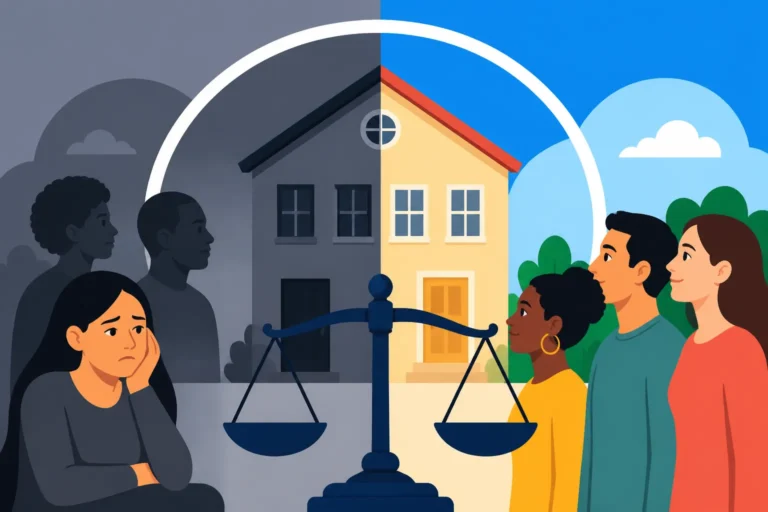
Fair Housing Protected Classes in Maryland
Navigating the rental market can feel like walking through a minefield, especially when you're just trying to find a safe and stable place to call home. It's frustrating to pour your hopes into an application, only to be met with vague denials or a gut feeling that something isn't quite right. This comprehensive guide is here to shed light on your rights as a renter in Maryland, specifically focusing on the federal and state-level protected classes under Fair Housing laws, so you can recognize discrimination and know how to protect yourself.
Understanding Fair Housing Laws at a Glance
The idea behind Fair Housing is pretty simple: everyone deserves an equal opportunity to find housing, regardless of who they are. These laws are designed to prevent discrimination in all housing-related activities, from applying for an apartment to renting, buying, and even getting a mortgage. It's not just about what a landlord can't say, but also about what they can't do in their practices.
The Federal Fair Housing Act
Let's start with the big one, the baseline for all housing protections across the country: the Federal Fair Housing Act. Enacted back in 1968, and expanded over the years, this act prohibits discrimination based on seven specific categories, often called "protected classes." If you're encountering housing discrimination, it usually falls under one of these umbrellas.
Here's a breakdown of the federally protected classes:
- Race: This prevents discrimination based on someone's racial background or perceived race. For instance, a landlord can't refuse to rent to you because you're African American, Asian, or any other race, nor can they treat you differently during the application process or tenancy.
- Color: Similar to race but distinct, this refers to the shade of a person's skin. A landlord cannot, for example, deny an application because someone has a darker or lighter skin tone.
- National Origin: This protects individuals based on their country of birth, ancestry, ethnicity, or even the language they speak. If you're from Mexico, India, or Ireland, you cannot be denied housing because of where you or your family originated.
- Religion: This means landlords cannot discriminate against you based on your religious beliefs or lack thereof. Whether you are Christian, Jewish, Muslim, Buddhist, or atheist, your faith shouldn't impact your housing opportunities.
- Sex: This is a broad category that prevents discrimination based on one's gender. It has been interpreted by the Supreme Court to include protections against discrimination based on sexual orientation and gender identity. So, whether you are a man, a woman, non-binary, gay, straight, or transgender, you are protected.
- Familial Status: This protects families with children under 18, pregnant individuals, and people in the process of securing legal custody of a child. A landlord can't say, "Sorry, no kids allowed in this building," or charge you more simply because you have children. There are very limited exceptions for housing specifically designed for seniors.
- Disability: This covers individuals with a physical or mental impairment that substantially limits one or more major life activities. Landlords must provide reasonable accommodations (changes to rules, policies, or services) and allow reasonable modifications (physical changes to the property, usually at the tenant's expense) to ensure people with disabilities have equal access to housing. For example, a tenant needing a ramp to access their apartment building would be a reasonable modification.
These federal protections are the bedrock, but many states, including Maryland, have taken it a step further to offer even more comprehensive coverage.
Why Fair Housing Matters for Renters
The reality is, fair housing isn't just a legal concept; it's about basic human dignity and the right to shelter. For many, finding an affordable and safe place to live is already a monumental challenge in today's competitive market. When you add the specter of discrimination on top of that, it becomes not just unfair, but truly devastating. Imagine being a single parent, struggling to find a two-bedroom apartment, only to be subtly (or not so subtly) told that the landlord "doesn't rent to people with children." Or perhaps you're using a housing voucher, and suddenly every available unit magically disappears when you mention it. These aren't just inconveniences; they're illegal barriers that deny people fundamental opportunities.
Understanding these protections empowers you. It means you don't have to accept unfair treatment. It means you have a legal framework to stand on if you suspect something is wrong. Knowing your rights is the first and most crucial step in ensuring you're treated fairly in the often stressful journey of finding and securing housing.
Maryland's Specific Protected Classes Beyond Federal Law
Maryland has a well-deserved reputation for having some of the strongest tenant protections in the nation, and its Fair Housing laws are no exception. While the federal laws provide a crucial foundation, Maryland goes above and beyond, recognizing that other characteristics also need protection to ensure truly equitable access to housing. This means residents of Annapolis, Baltimore, Frederick, and all across the Free State have a broader shield against discrimination.
Unpacking Maryland's Expansive Protections
In addition to the seven federal protected classes, Maryland adds several more categories to its Fair Housing Act. These extra layers of protection reflect the state's commitment to inclusivity and ensuring everyone has a fair shot at housing.
Let's look at Maryland's additional protected classes:
- Marital Status: This protects individuals based on whether they are single, married, divorced, separated, or widowed. A landlord cannot refuse to rent to you because you're single, nor can they insist on only renting to married couples. For example, if a landlord states, "We prefer families where the adults are married," that would be a clear violation of this protection.
- Sexual Orientation: While this is now covered under the federal "sex" category as interpreted by the Supreme Court, Maryland explicitly codified protections based on sexual orientation long before the federal ruling. This means discrimination based on whether you identify as heterosexual, homosexual, or bisexual is strictly prohibited.
- Gender Identity: Similar to sexual orientation, Maryland proactively protected individuals based on their gender identity, which refers to a person's internal sense of being male, female, neither, or both. A landlord cannot deny housing or treat a transgender applicant differently because of their gender identity.
- Source of Income: This is a huge one, and it's where many renters face significant hurdles. Maryland's law prohibits discrimination against individuals based on where their income comes from, as long as it's legal. This is particularly vital for those who rely on housing vouchers, disability benefits, social security, or other public assistance programs. A landlord cannot simply say, "We don't accept Section 8," across the board. They must consider all legal sources of income. We'll dive deeper into this in the next section because it's such a common pain point.
- Age: While the federal Fair Housing Act protects families with children (familial status), Maryland's protection against age discrimination is broader, typically protecting against discrimination based on age for adults as well, usually those 18 years and older. This means an older tenant cannot be denied housing simply because of their age, just as a young adult shouldn't be discriminated against because they might be perceived as less responsible.
These additional protections are a game-changer for many people seeking housing in Maryland. They address specific areas where discrimination has historically, and still does, occur. For instance, without source of income protections, it would be much harder for individuals relying on programs like Section 8 to find housing.
The Importance of Source of Income Protections
Let's talk about source of income discrimination for a moment, because it's a huge issue for many renters. Imagine you've finally qualified for a Section 8 housing choice voucher, a program designed to help low-income families, the elderly, and people with disabilities afford decent, safe, and sanitary housing. You spend countless hours searching, find a promising apartment, and then, as soon as you mention the voucher, the landlord suddenly says the unit is "no longer available" or that they "don't participate in those programs." It's incredibly disheartening and, in Maryland, it's illegal.
Maryland's source of income protection means that landlords cannot discriminate against you just because your rent payment comes, in part or in whole, from a housing voucher, Social Security, veteran's benefits, disability payments, or any other lawful source of income. This doesn't mean a landlord has to rent to someone who doesn't meet their other legitimate screening criteria (like credit score or rental history), but they can't outright refuse to consider your application solely because of the type of income you receive. They must evaluate you just like any other applicant, considering whether your legal income, from whatever source, is sufficient to meet their income requirements. This is a critical protection for ensuring that housing assistance programs actually work as intended. Many landlords use tools like TurboTenant to screen tenants, and these tools should be used in a way that respects all protected classes, including source of income.
Recognizing and Documenting Potential Discrimination
It's one thing to know the laws; it's another to spot discrimination in real-time. Often, it's not blatant or overt. Landlords rarely say, "I'm not renting to you because you're Black and have a child." Instead, discrimination can be subtle, couched in seemingly neutral language, or expressed through disparate treatment. It's a frustrating reality that leaves many tenants feeling confused and uncertain about whether their instincts are right.
Subtle Signs of Housing Discrimination
Because outright discrimination is illegal, many landlords who engage in it try to mask their actions. This can make it incredibly challenging to prove, but here are some common subtle signs to watch out for:
- "The unit just rented" when it's still advertised: You call about an apartment, and the landlord or agent tells you it's suddenly unavailable. However, when a friend (who doesn't share your protected characteristic) calls shortly after, they're told the unit is still open. This is often called "steering" or "capping."
- Different terms or conditions: You might be quoted a higher rent, asked for a larger security deposit (beyond the legal limit for Maryland, which is typically two months' rent), or given different rules (e.g., "no guests after 9 PM" only applies to certain tenants).
- Discouragement or lack of enthusiasm: An agent might seem less enthusiastic about showing you units, or they might try to "steer" you towards certain neighborhoods or buildings, saying things like, "You might be happier in this area," which could be coded language for trying to segregate you.
- Excessive scrutiny or nitpicking: While landlords have a right to screen tenants, if you feel like you're being asked far more invasive questions, or your application is being scrutinized more heavily than others, it could be a red flag. For example, if you're a person of color and are asked about your credit history with unusual insistence, while a white applicant is quickly approved.
- Delaying or avoiding communication: Your calls or emails might go unanswered for unusual lengths of time, or you might find it difficult to get clear answers about the application process, while other applicants seem to have no trouble.
- Changing requirements: The landlord might suddenly "remember" a new requirement (like an impossibly high income threshold or a specific type of background check) only after learning about a protected characteristic.
- Refusal to make reasonable accommodations: If you have a disability and request a reasonable accommodation (like allowing a service animal in a "no-pets" building, or providing documents in an accessible format), and the landlord outright refuses without exploring options, that can be a form of discrimination.
These are just a few examples, and sometimes, it truly is just a coincidence. But if you notice a pattern or have a strong gut feeling, it's worth investigating further.
What to Do If You Suspect Discrimination
Feeling discriminated against is not only frustrating but can also feel incredibly isolating. However, you don't have to face it alone. Taking immediate, concrete steps to document your experience is crucial for any potential action you might take.
Here’s a step-by-step approach:
- Document Everything: This is paramount. Keep a detailed log of every interaction: dates, times, names of people you spoke with (landlord, agent, etc.), what was said, and any specific actions taken or not taken. If you communicate via email or text, save those messages. If you make phone calls, make notes immediately afterward.
- Gather Evidence:
- Advertisements: Save screenshots or copies of the rental listing. Did it disappear after you called, but reappear later? Did it mention "no Section 8" despite Maryland's source of income protections?
- Application Materials: Keep copies of your submitted application and any related documents.
- Correspondence: Hold onto emails, texts, voicemails, and letters.
- Witnesses: If anyone else observed the discriminatory behavior, get their contact information and ask if they'd be willing to provide a statement.
- Conduct a "Tester" Experiment (if safe and appropriate): This involves having a friend or acquaintance (a "tester") with a different protected characteristic inquire about the same property. For example, if you feel discriminated against due to your race, have a white friend inquire. If they receive different information or treatment, it strengthens your case significantly. Be careful and ethical when doing this, as there are specific ways fair housing organizations conduct these.
- Send Written Communication: If you suspect you're being treated unfairly, send a polite, factual email or letter to the landlord or property manager. Reiterate your understanding of your rights and ask for clarification. For example, if you were denied for a vague reason, ask for a specific, written explanation. This creates a paper trail.
- Contact a Fair Housing Organization: Organizations like the Maryland Commission on Civil Rights (MCCR) or local fair housing councils are specifically designed to help people in your situation. They can provide advice, investigate complaints, and even mediate disputes. They know the ins and outs of both federal and Maryland's Protected Classes, and can guide you through the official complaint process. The U.S. Department of Housing and Urban Development (HUD) also has a complaint process for federal violations.
- Seek Legal Advice: If the situation is severe or you're unsure of your next steps, consult with a landlord-tenant lawyer specializing in fair housing law. They can assess your case and advise on legal recourse, including potentially suing a landlord.
Remember, the burden of proof is often on the tenant, so meticulous documentation is your best friend.
How to Protect Yourself and Seek Recourse
Experiencing discrimination is upsetting, but knowing your rights and having a plan empowers you. Your home is your sanctuary, and no one should be able to deny you that based on who you are.
Key Steps for Tenants
Beyond documenting, there are proactive steps you can take to safeguard your housing search and tenancy:
- Know Your Rights Cold: This article is a great start, but consider delving deeper into specific aspects like Source-of-Income Discrimination and Section 8 by State. The more you understand the details of Fair Housing Protected Classes in Maryland, the better equipped you'll be to recognize and challenge discrimination.
- Communicate in Writing: Whenever possible, communicate with potential landlords or property managers in writing. Emails are excellent for this. They create an automatic timestamped record of conversations and agreements. If you have a phone conversation, follow up with an email summarizing what was discussed.
- Keep Copies of Everything: Your lease agreement, any notices from your landlord, rent payment receipts (even if you pay online, get a confirmation email), and all correspondence should be kept in a dedicated folder, both physically and digitally.
- Perform a Thorough Move-In Inspection: Before you fully move in, conduct a detailed Move-In / Move-Out Inspection Guide with the landlord, noting any existing damage. Take photos and videos. This protects your security deposit later on, ensuring you aren't charged for pre-existing issues, which can sometimes be a subtle form of discrimination if applied unequally.
- Don't Be Afraid to Speak Up (Respectfully): If you feel uncomfortable about a question or a statement, you can politely ask for clarification. For example, if a landlord asks about your family plans, you could say, "I understand you have standard occupancy rules, and I assure you I meet those requirements. My personal life isn't relevant to my tenancy."
- Utilize Fair Housing Resources: As mentioned, organizations like the Maryland Commission on Civil Rights (MCCR) and local fair housing centers are invaluable. They can offer free counseling, complaint investigation, and even legal referrals. These groups often conduct their own "testing" to uncover systemic discrimination. Many online platforms, including TurboTenant, advocate for fair housing practices and offer resources to both landlords and tenants to ensure compliance.
By being informed and diligent, you create a stronger position for yourself in the rental process.
Consequences for Landlords Who Discriminate
For landlords who violate Fair Housing laws, the consequences can be severe. It’s not just a slap on the wrist; there are real financial and reputational penalties involved. The goal of these penalties is to deter discrimination and provide restitution to victims.
Here’s a general overview of what discriminatory landlords might face:
- Damages for Emotional Distress: Victims of discrimination can be awarded monetary damages for the emotional suffering they endured. This can be substantial, as the psychological toll of discrimination is recognized.
- Actual Damages: This covers any out-of-pocket expenses incurred by the victim, such as temporary housing costs, application fees, or increased rent paid elsewhere due to discriminatory denial.
- Punitive Damages: In cases of egregious or malicious discrimination, courts can impose punitive damages, which are designed to punish the landlord and deter others from similar conduct. These can be very high.
- Civil Penalties: Government agencies, like HUD or the Maryland Commission on Civil Rights, can impose civil penalties against landlords found to have discriminated. For a first violation under federal law, these can exceed tens of thousands of dollars, and increase significantly for repeat offenders.
- Attorney's Fees and Court Costs: If a tenant successfully sues a landlord for discrimination, the landlord will typically be responsible for paying the tenant's legal fees and court costs.
- Injunctive Relief: Courts can order the landlord to cease discriminatory practices, rent to the aggrieved party, or implement fair housing training.
- Reputational Damage: Beyond legal and financial penalties, a landlord found guilty of discrimination will suffer significant damage to their reputation, making it harder to attract future tenants and conduct business.
These consequences underscore the seriousness of Fair Housing violations. Landlords are expected to adhere to these laws diligently. Responsible landlords often educate themselves on the requirements and use platforms like TurboTenant which provides tenant screening services that are designed to be fair and compliant with housing laws.
By understanding both the protections afforded to you and the repercussions for those who violate these laws, you can approach your housing journey with greater confidence and a clear path forward if you encounter unfair practices.
Federal vs. Maryland Protected Classes: A Quick Comparison
To make it easy to remember, here's a table summarizing the protected classes:
| Protected Class | Federal Fair Housing Act | Maryland Fair Housing Act (Beyond Federal) |
|---|---|---|
| Race | Yes | Yes |
| Color | Yes | Yes |
| National Origin | Yes | Yes |
| Religion | Yes | Yes |
| Sex | Yes (includes S.O. & G.I.) | Yes (explicitly includes S.O. & G.I.) |
| Familial Status | Yes | Yes |
| Disability | Yes | Yes |
| Marital Status | No | Yes |
| Sexual Orientation | Covered under "Sex" | Yes (explicitly stated) |
| Gender Identity | Covered under "Sex" | Yes (explicitly stated) |
| Source of Income | No | Yes |
| Age | No (except for familial) | Yes (for adults as well) |
This table highlights Maryland's broader scope of protection, offering its residents more comprehensive safeguards against discrimination in housing.
Disclaimer
Please remember that this article provides general information and is not a substitute for legal advice. Landlord-tenant laws, especially regarding fair housing, can be complex and are subject to change. If you believe you have experienced housing discrimination, it is always best to consult directly with a qualified attorney or a fair housing expert in Maryland to discuss your specific situation.