How Long Does a Landlord Have to Fix Heat in Texas?
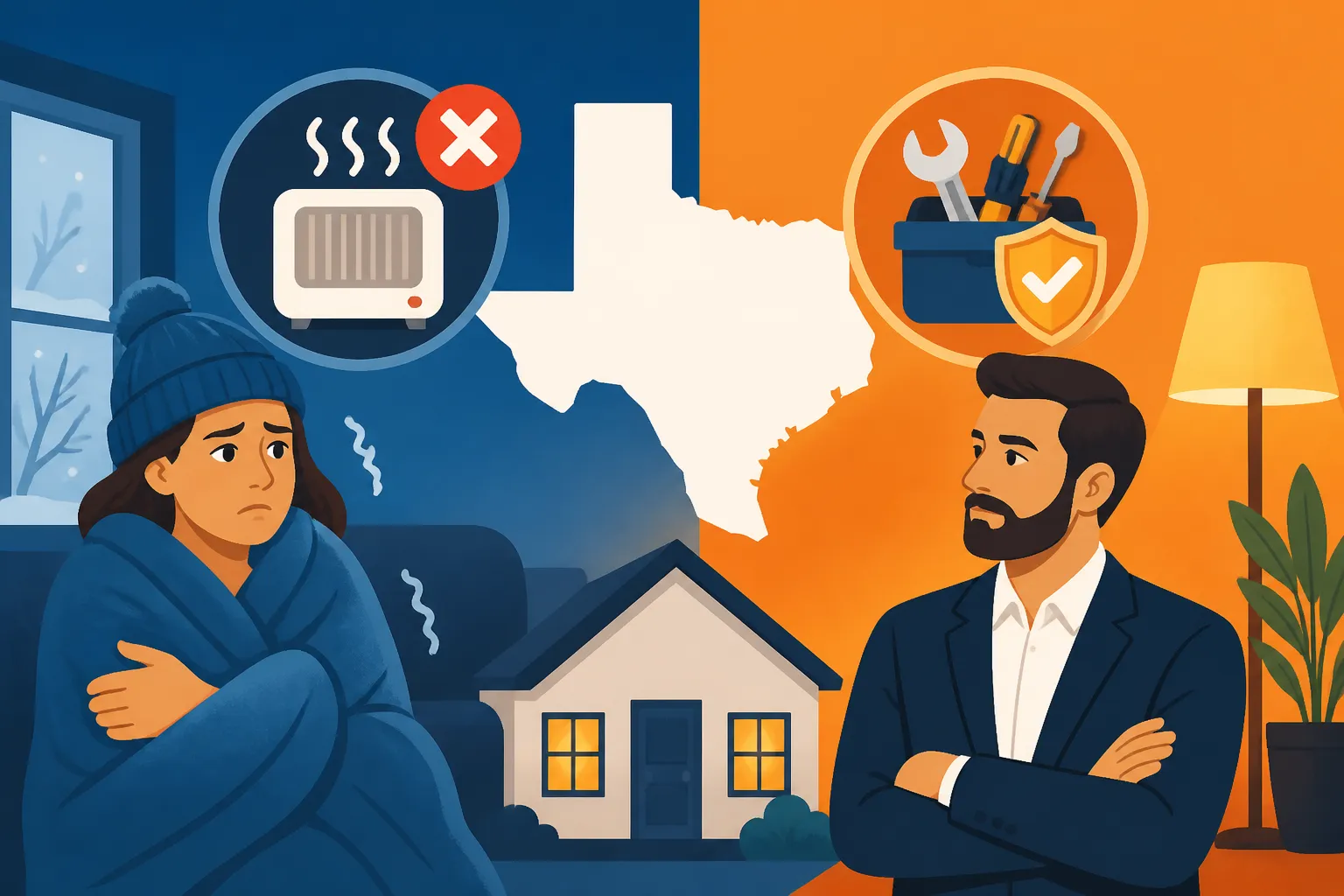
There’s nothing quite as miserable as a cold snap hitting Texas, and suddenly, your heater decides to quit. You’re bundled in blankets, shivering, and wondering just how long you’re supposed to put up with it. The frustration is real, and the question on every tenant's mind is: "How long does my landlord actually have to fix this?" This guide is here to help you understand your rights and the legal timelines your Texas landlord must adhere to when it comes to essential repairs like a broken heating system.
Understanding the Implied Warranty of Habitability in Texas
First things first, let's talk about the big umbrella term: habitability. Every rental agreement in Texas, whether written or verbal, includes an "implied warranty of habitability." This isn't something explicitly written in your lease, but it's a fundamental principle of landlord-tenant law that ensures your rental property is safe and livable. When your heat goes out, especially during colder months, it absolutely falls under this essential standard.
What "Habitable" Actually Means for Heat
In Texas, a dwelling is considered habitable if it doesn't "materially affect the physical health or safety of an ordinary tenant." Now, that sounds a bit vague, right? Let’s break it down in terms of heat. If your heating system completely fails when temperatures are dipping into the freezing zone, or even just uncomfortably cold (think consistently below 60 degrees Fahrenheit indoors), it very likely creates a condition that materially affects your health and safety.
Imagine a family with young children or elderly residents in a home where the furnace dies in January in Dallas. The risk of hypothermia, frozen pipes, and general discomfort becomes a serious health hazard. On the flip side, if it's a mild October evening and the heater isn't working perfectly, while annoying, it might not immediately cross the "materially affect health or safety" threshold for an ordinary tenant. The key here is the severity of the outdoor temperatures and the duration of the outage. Texas law doesn't mandate a specific minimum temperature for rental units, but courts generally interpret "health and safety" reasonably. If it’s cold enough that it’s causing legitimate discomfort or risk, it’s a habitability issue.
When Heat Becomes a Habitability Issue
So, when does a lack of heat become a full-blown habitability problem that your landlord must address? It generally boils down to a few factors:
- Outside Temperature: This is the primary driver. If it's genuinely cold outside, a lack of heat makes the unit uninhabitable. Texas experiences significant temperature swings, and what might be acceptable in October isn't in January.
- Duration: A brief glitch that's fixed within a few hours might not be a major issue. But a heater that's out for days on end, especially in cold weather, absolutely is.
- Vulnerability of Tenants: While the law refers to an "ordinary tenant," factors like children, elderly occupants, or those with certain medical conditions can heighten the urgency and impact of a lack of heat. While the landlord isn't strictly required to cater to every individual vulnerability, it adds weight to the argument that the condition affects physical health.
When your heating system stops working, especially when temperatures outside are low, it can lead to health risks like respiratory issues from prolonged cold exposure, and even issues with water pipes freezing and bursting. This is not just an inconvenience; it's a situation that directly impacts your well-being and safety within your home.
Texas Landlord Repair Obligations and Timelines
When it comes to essential repairs like a broken heater, Texas law puts clear responsibilities on landlords. They are generally obligated to make a "diligent effort" to repair or remedy a condition that materially affects the physical health or safety of an ordinary tenant. But what does "diligent effort" and "reasonable period" actually mean in practice?
The "Reasonable Time" Clause for Heat Repairs
Texas Property Code § 92.056 states that a landlord must make a diligent effort to repair or remedy a condition if it materially affects the physical health or safety of an ordinary tenant, after receiving proper written notice from the tenant. The repairs must be made within a "reasonable period" of time.
Now, here's where it gets a little fuzzy: "reasonable period" isn't explicitly defined in days for most repairs in Texas statute. However, for something as critical as heat when temperatures are low, "reasonable" is generally understood to mean as quickly as possible. Most legal interpretations and court precedents suggest that for urgent matters affecting health and safety, a few days is typically the maximum, and for immediate emergencies, landlords should act within 24-48 hours. If it's truly freezing outside, you can expect an even quicker response.
Consider this scenario: You live in Houston and the temperature drops to 25 degrees overnight. Your heater stops working. You provide written notice to your landlord first thing in the morning. A "reasonable period" here might mean they need to have a technician out that same day or the next, and have repairs completed within 2-3 days, or provide alternative heating solutions. Waiting a week would almost certainly not be considered reasonable in such circumstances. Many property management companies, like those that might use a tool like TurboTenant, have internal policies for emergency repairs that align with this urgency, often prioritizing heating issues in winter.
Written Notice is Non-Negotiable
This is perhaps the single most critical step you can take. Texas law requires that you give your landlord written notice of the problem. Verbal complaints, while they might get the ball rolling, do not count as legal notice for the purpose of triggering your rights under the Property Code.
Your written notice should:
- Be specific: Clearly state what is broken (e.g., "The heating system in my apartment at [address] is not producing any heat").
- Describe the impact: Explain why it materially affects your health and safety (e.g., "Outdoor temperatures are dropping below freezing, and the indoor temperature is consistently below 50 degrees Fahrenheit, making the apartment unlivable and posing a health risk to my family and me").
- Request repair: Clearly ask for the repair to be made.
- Include the date: Make sure your letter is dated.
- Keep a copy: Always keep a copy of the notice for your records.
- Method of Delivery: Send it via certified mail with a return receipt requested, or hand-deliver it and have the landlord or property manager sign and date your copy as proof of receipt. Email can also be acceptable if your lease specifies it as a valid form of communication, but certified mail offers the strongest proof.
You generally need to send two written notices if the first one doesn't get a response. However, for severe issues like a total loss of heat in freezing weather, the first notice should be enough to prompt action within that "reasonable period." Your rights under Texas law to pursue further action, such as Repair and Deduct Laws in Texas, typically only activate after this proper notice has been given.
The Role of Property Management Companies
Many tenants in Texas rent from properties managed by third-party companies rather than individual landlords. These companies, whether large corporations or smaller local outfits, are usually bound by the same state laws regarding repairs. They often have established protocols for emergency maintenance.
When dealing with a property management company, follow the same written notice procedures. If your lease specifies a particular method for submitting repair requests (e.g., through an online portal, a specific email address), follow that, but also send a more formal written letter via certified mail for your records. It ensures you have irrefutable proof of your communication. Good property managers often work with reliable vendors and have systems in place to quickly address critical issues like heating failures, sometimes even having an emergency contact provided through platforms like Steadily.
Steps to Take When Your Heat is Out in Texas
When your heating system fails, especially during cold weather, it can feel overwhelming and frustrating. Knowing the right steps to take can empower you and protect your rights as a tenant.
Document Everything: Your Best Defense
Proof is paramount in any landlord-tenant dispute. Start documenting the moment you realize there’s a problem with your heat.
- Take Photos/Videos: Capture the thermostat reading showing a low temperature, especially if it’s much lower than the outdoor temperature. Video can demonstrate the heater not turning on or blowing cold air.
- Keep Communication Records: Save all emails, text messages, and certified mail receipts related to your repair requests. Note down the dates and times of phone calls, who you spoke with, and what was discussed.
- Log Temperatures: Keep a daily log of the indoor temperature, especially if it continues to drop or stay low.
- Gather Receipts: If you have to buy space heaters, extra blankets, or stay in a hotel due to the lack of heat, keep all receipts. This might be recoverable later if you pursue action against your landlord, but be aware that Texas law has very specific rules about what is recoverable.
- Witness Statements: If friends or family visit and notice the cold conditions, their testimony could be useful.
This comprehensive documentation serves as concrete evidence should you need to escalate the issue or even pursue legal action, such as Suing a Landlord for Your Deposit Small Claims & Penalties.
Options If Your Landlord Fails to Act
If your landlord fails to make repairs within a "reasonable period" after receiving your written notice, Texas law provides tenants with a few options. It's crucial to understand that these actions have specific requirements and should not be taken lightly.
-
Terminate the Lease: You have the right to terminate your lease if the landlord fails to make a repair that materially affects your health and safety within a reasonable time after you've provided proper written notice. You must send a final written notice of termination. This can be a drastic step, but it allows you to move out without penalty. Keep in mind that moving out might be complicated, and you'll want to ensure you've met all legal requirements.
-
Repair and Deduct: This is often seen as a tenant's most empowering option, but it comes with strict limitations in Texas. You can only repair and deduct if:
- The condition materially affects your health or safety.
- You've provided proper written notice (and often a second notice if the first was ignored).
- The landlord failed to make a diligent effort to repair within a "reasonable period" (typically 7 days, but shorter for heat in cold weather).
- The cost of the repair is less than $500 OR one month's rent, whichever is greater. You must also use a repair person, not perform the repairs yourself, and provide an itemized bill.
- You cannot deduct more than one month's rent or $500, whichever is greater, and you can only do this once during a lease term, unless the condition recurs.
Because of the strict requirements and potential risks (your landlord could claim you didn't follow the rules and try to evict you for non-payment of rent), it's often advisable to seek legal counsel before exercising this right.
-
Sue the Landlord: You can sue your landlord in Justice Court (small claims court) for damages, including the actual damages you suffered (like the cost of temporary housing or space heaters), court costs, and potentially even civil penalties depending on the situation. This is where your thorough documentation becomes invaluable.
Understanding "Repair and Deduct" in Texas
Let's dive a bit deeper into the "repair and deduct" option because it's frequently misunderstood and, if done incorrectly, can backfire on a tenant. While the idea of taking matters into your own hands and then deducting the cost from rent sounds appealing, Texas law has set a pretty high bar for it.
As mentioned, the cost of the repair must be less than $500 or one month's rent, whichever is greater. So, if your rent is $1,200, you could potentially deduct up to $1,200 for a qualified repair. However, if your heater needs a major component replaced, such as a new furnace, the cost could easily exceed this limit. A typical furnace replacement can range from $3,000 to $7,000, far surpassing the repair-and-deduct threshold for most tenants.
Furthermore, you must ensure that you send the correct written notices and give your landlord a reasonable time to respond. If you jump the gun and immediately hire a repair person, your landlord could argue you didn't allow them sufficient time, making your deduction illegal.
This is a high-stakes move. If you improperly withhold rent for repairs, your landlord could file an eviction lawsuit for nonpayment of rent. This is why it’s usually recommended to explore less risky options first or consult with a tenant rights attorney. You don't want to end up in a situation where you're facing an eviction, even if you believe you were in the right. For landlords who might be concerned about their tenants taking this route, offering prompt and documented repairs is key, and having good landlord insurance from providers like Steadily can help cover unexpected repair costs that might arise from sudden failures of essential systems.
Here's a quick summary of options and typical timelines:
| Action to Take | Legal Requirement (Tenant) | Landlord's Action & Timeline (Typical) | Potential Tenant Remedy |
|---|---|---|---|
| Written Notice of No Heat | Sent via certified mail, specify issue, state impact on health/safety. | "Diligent effort" within "reasonable time" (e.g., 2-7 days, sooner if freezing) | N/A (this is the first step) |
| Second Written Notice (if no action) | Same as above, if first notice ignored or repair unsuccessful. | Continued "diligent effort" within "reasonable time". | Activate further remedies |
| Terminate Lease | Proper written notice(s) given, landlord failed to act, condition persists. | N/A (landlord failed obligation) | Move out without further rent obligation |
| Repair and Deduct | Proper written notice(s), landlord failed to act, repair cost < $500 or 1 month's rent. | N/A (landlord failed obligation) | Deduct cost from next rent payment (with limits) |
| Sue Landlord in Small Claims | Proper written notice(s), landlord failed to act, damages incurred. | Face legal action | Recover actual damages, court costs, potential penalties |
Remember, this table is a general guide, and specific circumstances can always change the interpretation of "reasonable time" or "materially affects."
Potential Consequences for Non-Compliance
It's not just about what you, as a tenant, can do. There are actual legal ramifications for landlords who fail to uphold their end of the bargain when it comes to providing essential services like heat.
Landlord Penalties for Withholding Heat
If a Texas landlord fails to make required repairs within a reasonable time after receiving proper written notice, they can face significant consequences. A tenant can pursue the following:
- Termination of the Lease: As discussed, you can legally break your lease and move out without further financial obligation. This can be a major headache for landlords, as they lose rental income and have to find a new tenant.
- Repair and Deduct: If the specific conditions are met, the landlord effectively has to cover the cost of the repair, which comes out of their rent payment.
- Suit for Damages and Penalties: A tenant can sue the landlord in Justice Court. If the tenant prevails, they can recover:
- Actual damages: This covers quantifiable losses, such as the cost of temporary housing (like a hotel stay), the purchase of space heaters, medical bills if the cold caused illness, or even a prorated portion of rent for the period the unit was uninhabitable.
- Civil penalties: In some cases, a court may award a civil penalty of one month's rent plus $500.
- Court costs and attorney's fees: The landlord might also be ordered to pay the tenant's legal expenses.
For example, if you're stuck in an unheated apartment in Austin while temperatures plummet to 30 degrees, and your landlord ignores your repeated written notices, you might end up in court. The landlord could be on the hook for your two nights in a hotel, the space heaters you bought, and a substantial civil penalty on top of that. This is why landlords are incentivized to address these issues promptly. It's also why renters should consider insurance options like Lemonade to cover personal property in case of issues that lead to forced relocation, like frozen pipes from a lack of heat.
Tenant Rights to Break Lease Due to No Heat
Breaking a lease is a serious step, but it is a legally protected right in Texas if your landlord fails to provide heat that materially affects your health and safety and ignores your proper written notice. This falls under the broader category of constructive eviction, where the property becomes so uninhabitable that you are forced to leave.
To legally break a lease due to no heat in Texas, you must ensure you have followed all procedural requirements:
- Provide Proper Written Notice: You absolutely must have given your landlord written notice of the lack of heat, specifying how it affects your health and safety.
- Allow Reasonable Time: You must have given your landlord a "reasonable period" to make the repair, and they failed to do so diligently.
- Send Termination Notice: If they still haven't fixed it, you then send a final written notice stating your intention to terminate the lease on a specific date because the condition has not been remedied.
- Vacate the Premises: You must actually move out of the property.
If you fulfill these conditions, you are generally no longer responsible for future rent payments. However, if your landlord disagrees and tries to pursue you for unpaid rent, you would need to present your evidence in court. This is why meticulous documentation of all communication, temperatures, and attempts to resolve the issue is vital. Knowing your rights regarding Breaking a Lease Due to Mold or Uninhabitable Conditions means understanding that heat is just one of many crucial elements to habitability. For a deeper dive into landlord repair duties in Texas, check out our guide on Landlord Repair Duties & Timelines in Texas.
It’s an unfortunate reality that sometimes landlords don’t take their responsibilities seriously. But by understanding the "reasonable time" expectation in Texas and diligently following the proper notice and documentation steps, you can protect yourself and ensure your home remains a safe and warm place, even when the temperatures drop.
Disclaimer
This information is intended for general guidance and informational purposes only, and does not constitute legal advice. Landlord-tenant laws can be complex and are subject to change. For advice specific to your situation, it is always recommended to consult with a qualified attorney specializing in landlord-tenant law in Texas.