How Long Does a Landlord Have to Fix AC in California?
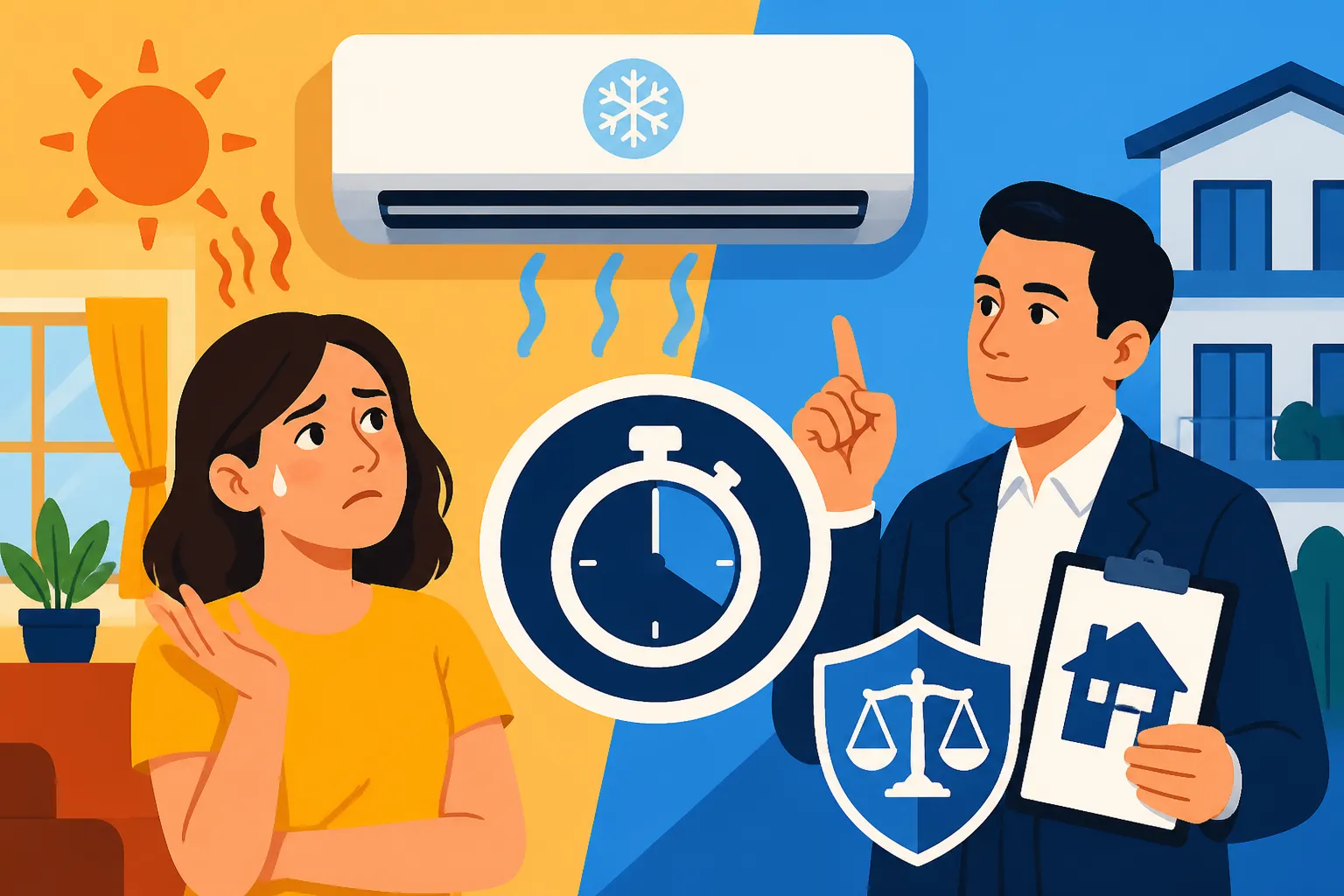
There’s nothing quite like a broken air conditioner during a sweltering California summer. That feeling of dread when the cool air stops, replaced by nothing but hot, stagnant air, can turn your comfortable home into an unbearable oven. It’s frustrating, uncomfortable, and often leaves tenants wondering, "How long is my landlord actually allowed to take to fix this?" This comprehensive guide is here to unravel the complexities of California landlord-tenant law regarding AC repairs, helping you understand your rights, what to expect, and the concrete steps you can take to get that cool air flowing again.
Understanding Your Rights to Air Conditioning in California
When you're dealing with a broken AC, the first question on many tenants' minds is whether their landlord is even obligated to fix it. This isn't always as straightforward as it seems, as AC often falls into a different category than other essential utilities.
Is AC a "Habitable" Condition?
In California, landlords are legally required to maintain a rental unit in a "habitable" condition. This concept is covered by the implied warranty of habitability. This warranty ensures that your rental property meets basic health and safety standards. Things like a functioning roof, plumbing, heating, and hot water are almost universally considered essential for habitability.
However, here’s where it gets tricky for air conditioning: generally speaking, a lack of air conditioning is not considered a breach of the implied warranty of habitability in California. Unlike a broken furnace in winter, state law doesn't typically list AC as a fundamental requirement for a dwelling to be considered safe and livable. So, if your lease doesn't specifically mention AC as an amenity provided by the landlord, and you live in a region where AC isn't explicitly mandated by local housing codes for all residences, your landlord might not be legally obligated to repair it solely based on habitability.
This distinction can be incredibly frustrating, especially when temperatures soar into the triple digits. It feels like a basic necessity, but the law sometimes sees things differently.
When AC Does Become a Landlord's Responsibility
Just because AC isn't always a "habitable" condition doesn't mean your landlord is off the hook. There are several key situations where they absolutely are responsible for fixing a broken air conditioner:
- Explicitly Stated in Your Lease Agreement: This is the most common and clear-cut scenario. If your lease agreement lists air conditioning as an amenity provided by the landlord, or if it explicitly states that the landlord is responsible for maintaining all appliances, then they are legally obligated to repair it. It doesn't matter if it's considered "essential" for habitability; if it's in the contract, it's their responsibility. Always refer back to your lease first.
- AC Was Working at Move-In and Part of the Amenities: Even if your lease doesn't explicitly mention AC, if the unit had a working air conditioner when you moved in, and it was implicitly understood to be part of the rental package, your landlord generally has a duty to maintain it. This falls under the expectation that the landlord will maintain the property and its amenities in the condition they were offered.
- Local Ordinances or Health Codes: While statewide law doesn't generally require AC for habitability, some cities or counties in California might have specific ordinances that require landlords to provide and maintain air conditioning, especially in areas prone to extreme heat. For example, some jurisdictions might have temperature maximums for rental units, which would implicitly require functional AC in certain climates. Always check with your local housing authority to see if such specific rules apply where you live.
- Extreme Heat Conditions Creating an Uninhabitable Situation (Rare but Possible): This is a much higher bar to clear. While a broken AC usually doesn't make a unit uninhabitable, in truly extreme, life-threatening heat waves, especially if combined with other factors like poor ventilation, older tenants, or tenants with specific medical conditions, a lack of AC could potentially contribute to making a unit unsafe. This is a rare and difficult argument to win without expert testimony or clear medical evidence, but it's not entirely impossible in dire circumstances.
It's crucial to understand these distinctions because they dictate your leverage and the legal avenues available to you. Without a clear obligation, your options might be limited to negotiation rather than enforcement.
Specific Timelines for AC Repair in California
Okay, so you've established that your landlord is responsible for fixing the AC. Great! But now comes the next burning question: how long do they have to actually do it? This is where things can get a bit vague, as California law often uses terms like "reasonable time" rather than strict deadlines for non-emergency repairs.
"Reasonable Time" for Non-Emergency Repairs
For most repairs, including a broken AC that isn't deemed a life-threatening emergency, California law states that a landlord must make repairs within a "reasonable time" after receiving written notice from the tenant. What exactly constitutes "reasonable time" can be subjective and depends on several factors:
- Severity of the Repair: A minor drip from the AC unit might warrant a longer "reasonable time" than a complete system failure.
- Availability of Parts and Technicians: Sometimes, specialized parts need to be ordered, or qualified HVAC technicians are in high demand, especially during peak season. A landlord can't magically make parts appear or force a booked technician to prioritize their repair over others.
- Nature of the Damage: If the AC broke due to tenant negligence, the repair might still be the landlord's responsibility (depending on the lease), but the timeline could be negotiated differently.
- Local Climate and Weather Conditions: This is a big one for AC. While California law doesn't classify AC as a habitability requirement, common sense dictates that a broken AC during a heatwave in Palm Springs should be addressed with more urgency than one that breaks in San Francisco in April.
Generally, for non-emergency repairs, "reasonable time" in California is often interpreted as 30 days. However, this 30-day guideline is more common for issues like a leaky faucet or a broken appliance, not necessarily for something like AC during extreme heat. For a broken AC, especially in hot climates, a landlord would typically be expected to act much faster – perhaps within 7 to 14 days. Some judges might consider anything over a week or two for a non-emergency AC repair in hot weather to be unreasonable.
It's essential to document when you first reported the issue and every follow-up communication. This paper trail will be invaluable if you need to take further action.
Emergency Repairs and Faster Turnarounds
There are instances where a broken air conditioner can escalate from a mere inconvenience to an emergency, significantly shortening the "reasonable time" a landlord has to respond. While rare, this usually occurs when the lack of AC directly impacts the health and safety of the occupants.
Situations that might warrant an emergency designation include:
- Extreme Heat Warnings: When official weather advisories or warnings for dangerously high temperatures are issued for your area (e.g., heat index above 105°F for extended periods), especially if you live in a region like the Central Valley or parts of Southern California, a broken AC could become an emergency.
- Vulnerable Tenants: If there are occupants in the unit who are particularly susceptible to heat-related illnesses, such as:
- Elderly residents: Seniors are at a higher risk of heatstroke and dehydration.
- Infants or very young children: Their bodies are less able to regulate temperature.
- Individuals with pre-existing medical conditions: Conditions like heart disease, respiratory issues, diabetes, or certain medications can make individuals highly vulnerable to heat.
- Combined with Other Issues: If the broken AC is coupled with other habitability issues like poor ventilation, non-functioning windows, or other compromised systems that prevent cooling, it strengthens the case for an emergency.
In genuine emergency scenarios, landlords are typically expected to address the issue within 24 to 72 hours. If your landlord is failing to meet these urgent timelines, it's a serious matter. This is why clear communication and documentation from day one are so important; it helps establish the context and urgency for your landlord and, if necessary, for any legal proceedings.
Steps to Take When Your Landlord Isn't Fixing the AC
So you've given your landlord notice, waited a reasonable amount of time, and the AC is still on the fritz. Now what? This is where you need to be proactive and strategic.
Document Everything
The single most critical piece of advice for any landlord-tenant dispute is to document absolutely everything. Without a clear record, it becomes a "he said, she said" situation, which is incredibly difficult to prove in court.
Here’s how to do it effectively:
- Written Repair Requests are Paramount: Never rely solely on phone calls or verbal conversations. Always follow up any phone call with a written communication – an email, text message, or, ideally, a formal letter sent via certified mail with a return receipt requested. This creates a timestamped record that your landlord received your request. In your written request, clearly state the date, the problem (e.g., "The air conditioning unit is not blowing cold air"), and request action within a reasonable timeframe, perhaps 7 days. For example, "This letter serves as formal notification that the air conditioning unit at [Your Address] has been non-functional since [Date]. We kindly request that you arrange for its repair or replacement within seven (7) business days."
- Keep Records of All Communication: Save copies of all emails, text messages, certified mail receipts, and letters. If you do have a phone conversation, make notes immediately afterward: date, time, who you spoke to, and what was discussed.
- Photos and Videos: Take clear photos or videos of the broken AC unit. While it might not look broken, a video showing the thermostat setting and the air blowing warm can be powerful evidence. Also, document any adverse conditions in your apartment due to the heat (e.g., thermometer readings indoors).
- Repair Estimates (If Applicable): If you've called an HVAC technician for an estimate (ensure your landlord approves this first, or you might be on the hook), keep those documents.
This rigorous documentation is your best defense and offense. It shows you've been responsible and diligent in seeking a resolution.
Formal Notice to Your Landlord
After initial communication, if repairs aren't happening, it's time to escalate to a more formal "Notice to Repair." This is a written letter that reiterates the problem, references your previous attempts to contact them, and clearly states your intent to pursue further action if the repair isn't made within a specified, reasonable timeframe (e.g., 7-10 days for AC).
Your formal notice should include:
- Your name and address.
- The date the notice is sent.
- A clear description of the problem (the broken AC).
- Dates of previous communication regarding the issue.
- A statement that the AC is a promised amenity in your lease (if applicable) or a necessary amenity given the extreme heat.
- A deadline for repair (e.g., "If repairs are not completed by [Date – typically 7-10 days from the letter date], I will consider further legal action as permitted under California tenant law").
- Your signature.
Consider using a service that helps landlords and tenants manage communication and documents, like TurboTenant, though for a tenant, a simple certified mail letter is often sufficient. If you use email, ensure you request a read receipt. Sending it via certified mail adds a layer of undeniable proof that your landlord received the notice.
Next Steps if Repairs Are Still Not Made
If your landlord still hasn't fixed the AC after your formal notice and the reasonable timeframe has passed, California law offers tenants several remedies, though some come with significant risks and should be considered carefully.
- Repair and Deduct: This option allows you to pay for the repair yourself and deduct the cost from your rent. However, it’s rarely applicable for AC issues because it typically only applies to repairs that directly affect the unit's habitability. As we discussed, AC is usually not considered a habitability issue. Even if it were, California law has very strict rules: you must give proper written notice, the repair must not cost more than one month's rent, and you can only use this remedy twice in any 12-month period. Misusing "repair and deduct" can lead to eviction for non-payment of rent. Always consult with a tenant rights attorney before attempting this for AC. For more detailed information, check out our guide on Repair and Deduct by State.
- Withholding Rent: Similar to repair and deduct, withholding rent is a powerful but risky remedy. It's generally only permissible if the landlord has failed to maintain the property in a habitable condition. Since AC is typically not a habitability issue under state law, withholding rent specifically for a broken AC is usually not a legally sound strategy and could lead to an eviction notice for non-payment. There are specific guidelines for Withholding Rent for Repairs, which are rarely met by a broken AC.
- Contacting Local Housing Authorities or Tenant Unions: This is often a safer and more effective first step. Your local housing authority (e.g., your city's code enforcement department or county health department) might investigate your landlord's failure to maintain a promised amenity or address conditions that, while not strictly "uninhabitable" statewide, violate local codes. Tenant unions or non-profit legal aid organizations can also provide free or low-cost advice on your rights and specific local laws. They can often mediate with your landlord or help you draft legal documents. You can also learn How to Report a Landlord Code Violations & Retaliation in our detailed guide.
- Small Claims Court for Damages: If the broken AC has caused you financial damages (e.g., you had to stay in a hotel due to extreme heat, or your utility bills skyrocketed trying to use fans instead), you might be able to sue your landlord in small claims court. You would sue for the financial losses incurred due to the landlord's breach of the lease agreement or their failure to maintain a promised amenity. This requires strong documentation of your losses.
- Constructive Eviction / Breaking the Lease: In extremely rare and severe cases where the lack of AC, combined with other factors, makes the unit truly uninhabitable and the landlord has failed to act, a tenant might argue constructive eviction and break the lease without penalty. This is an extremely high legal bar to meet and usually doesn't apply to AC alone unless the heat poses a direct and serious threat to life or health. You must vacate the premises for this to apply. Always seek legal counsel before considering this option. Our article on Legal Reasons to Break a Lease Uninhabitable offers more insights.
Navigating these steps can be daunting. It's highly recommended to consult with a landlord-tenant attorney or a tenant rights advocate to understand the specific laws in your area and the best course of action for your unique situation.
Preventing Future AC Headaches
While dealing with a broken AC is stressful, taking proactive steps can significantly reduce your chances of experiencing such issues in the first place or at least give you a stronger position when they arise.
Thorough Move-In Inspections
The day you move into a new place is arguably one of the most important for protecting your tenant rights. This is when you should conduct a meticulously thorough move-in inspection.
- Test Everything, Including the AC: Don't just assume appliances work. Turn on the air conditioner, let it run for a while, and confirm that it blows cold air effectively. Test all vents. Do the same for all other appliances like the stove, refrigerator, and water heater.
- Document Existing Conditions: Take clear photos and videos of the entire unit, inside and out, before you move any of your belongings in. Pay close attention to any pre-existing damage, no matter how minor. This includes scratches on floors, dings on walls, dirty areas, and especially any visible wear or issues with the AC unit itself (e.g., rusty vents, strange noises). This documentation is critical for ensuring you get your Security Deposit Back and proving the condition of the unit at the start of your tenancy. We have a detailed Move-In / Move-Out Inspection Guide that can walk you through the process.
- Use an Inspection Checklist: Many landlords provide a move-in checklist, but if they don't, create your own. Detail the condition of every room and every appliance. Make sure both you and your landlord (or their agent) sign and date this document, and ensure you get a copy. This establishes a baseline for the property's condition.
By thoroughly documenting the unit's condition at move-in, you establish a clear record of what was working and what wasn't, which can be crucial evidence if a dispute arises later.
Understanding Your Lease Agreement
Your lease agreement is the contract that governs your tenancy. It’s a legally binding document, and understanding its contents is paramount.
- Read the Fine Print About Appliances and Repairs: Before you sign anything, carefully read sections related to appliances, maintenance, and repairs. Does it specifically mention the air conditioner? Does it state who is responsible for its maintenance and repair? Are there any clauses about what happens if an appliance breaks? If the AC is important to you, and it's not mentioned, consider asking for an addendum to the lease.
- Negotiating Terms for AC: If you're renting in a hot area and AC is a non-negotiable amenity for you, don't be afraid to negotiate with the landlord before signing the lease. You can ask for a clause to be added that explicitly states the landlord is responsible for maintaining the AC unit and the timeframe for repairs. A good landlord using a platform like Steadily to manage their properties will likely have clear clauses and be open to discussing them.
- Renter's Insurance for the Unexpected: While renter's insurance won't fix your AC, it can protect your personal belongings from damage caused by certain perils, including potential water leaks from a malfunctioning AC unit. Companies like Lemonade offer affordable renter's insurance policies that can provide peace of mind in case of unforeseen circumstances. It's a small investment that can save you a huge headache if, for example, a broken AC unit causes water damage to your electronics or furniture.
By understanding your lease inside and out, and taking proactive steps like a thorough move-in inspection and considering renter's insurance, you can better protect yourself from potential issues down the line. Remember, knowledge is power when it comes to landlord-tenant relations.
California AC Repair Timelines at a Glance
For clarity, here's a general overview of common expectations for AC repair timelines in California:
| Situation | Typical Landlord Obligation | Expected Repair Timeline | Recommended Tenant Action |
|---|---|---|---|
| AC specified in lease / working at move-in | Yes, to maintain | 7-14 days (non-emergency) | Written notice, follow up, document everything |
| AC NOT specified, NOT working at move-in | No (unless local ordinance applies) | N/A (no obligation) | Negotiate with landlord, check local laws |
| Extreme Heat Warning + Vulnerable Tenants | Yes, heightened urgency | 24-72 hours (emergency) | Urgent written notice, state emergency, contact authorities |
| AC broken due to tenant negligence | Tenant responsible for repair cost | Negotiated, tenant pays | Communicate promptly, arrange repair, confirm landlord approval |
Please note, these are general guidelines. Actual timelines can vary based on the specific circumstances, local ordinances, and landlord responsiveness.
Disclaimer
Please remember that this article provides general information and guidance and should not be considered legal advice. Landlord-tenant laws can be complex and vary by specific circumstances and local jurisdiction. If you are facing a legal issue or dispute, it is always recommended to consult with a qualified attorney or a local tenant rights organization for advice tailored to your situation.