Late Fee Limit in North Carolina
It’s a scenario we’ve all dreaded: you’re trying to make ends meet, rent is due, and suddenly an unexpected expense throws your budget completely off kilter. Maybe your car broke down, or you had an emergency doctor’s visit. Whatever the reason, if your rent payment is late, the last thing you need is a hefty, confusing late fee adding insult to injury. Navigating landlord-tenant laws can feel like hacking through a jungle with a butter knife, especially when you're stressed about money. This comprehensive guide is here to untangle the specifics of late fee limits in North Carolina, empowering you with the knowledge to understand your rights and responsibilities.
Understanding North Carolina's Late Fee Regulations
Let’s get straight to the heart of it: North Carolina law is pretty clear when it comes to how much a landlord can charge for late rent. This isn't some arbitrary number they can pull out of a hat; it’s enshrined in the General Statutes to protect tenants from excessive charges. Knowing these limits is your first line of defense against unfair fees and can save you a lot of headache and money.
The Statutory Cap on Late Fees
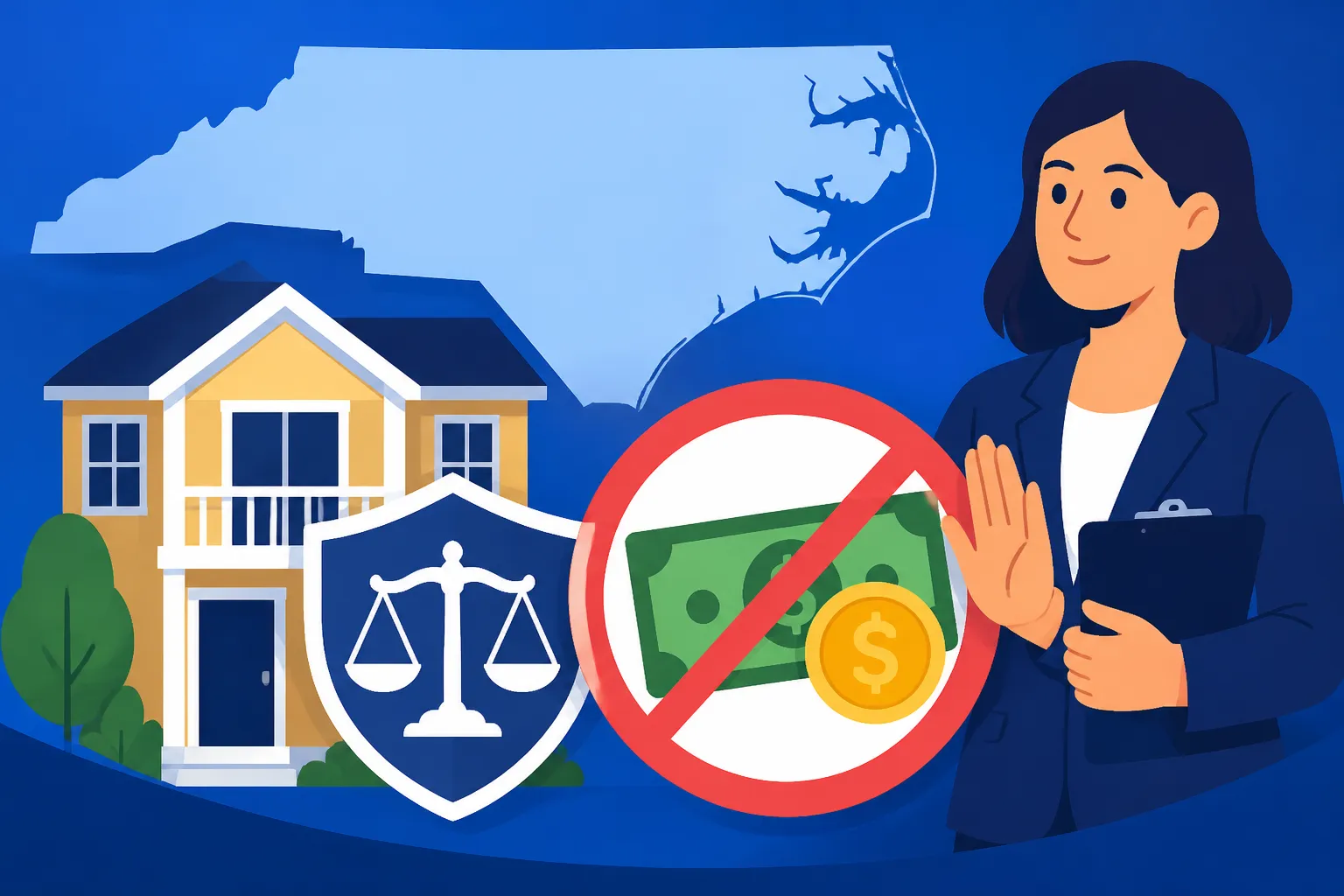
In North Carolina, the law sets a definitive cap on how much a landlord can charge for a late rent payment. It’s actually quite specific. According to North Carolina General Statute § 42-46, a landlord can only charge a late fee that amounts to either $15 or 5% of the monthly rent, whichever amount is greater. This means if your rent is $500, 5% would be $25, so the maximum late fee would be $25. If your rent is $200, 5% would be $10, which is less than $15, so the maximum late fee would be $15. It’s important to calculate this yourself based on your specific rent amount to ensure you're not being overcharged.
This cap exists to strike a balance: it provides landlords with a reasonable incentive for timely payments and helps cover administrative costs associated with late payments, while simultaneously preventing them from using late fees as an exorbitant revenue stream. It’s a common misconception that landlords can charge any amount they wish, especially if it’s written into a lease you signed. However, state law overrides any lease clause that attempts to impose a fee higher than these limits. If your lease agreement states a late fee that exceeds this amount, that specific clause is considered unenforceable, and your landlord can only legally collect up to the state-mandated maximum.
When a Late Fee Can Actually Be Charged
It’s not enough for your rent to be a day or two late for a landlord to slap on a late fee. North Carolina law also includes a crucial provision regarding grace periods. Your landlord cannot impose a late fee until your rent payment is at least five days late. This effectively means you have a built-in 5-day grace period from the official rent due date. So, if your rent is due on the 1st of the month, a late fee cannot be charged until the 6th of the month.
This grace period is non-negotiable and applies even if your lease tries to say otherwise. Many tenants assume that if their lease says "rent is due on the 1st, late after the 1st," that a late fee can be charged immediately. That's not the case in North Carolina. This waiting period gives tenants a small window of flexibility for things like mailing delays or minor banking issues without immediately incurring penalties. It’s a real lifeline for many folks, offering a bit of breathing room when life inevitably throws a curveball. Always remember to check your lease for the rent due date, but also know that state law protects you with this five-day buffer.
What Makes a Late Fee Legal and Enforceable
Beyond the maximum amount and the grace period, there are other critical elements that determine whether a late fee is legitimate in North Carolina. It’s not just about the number; it’s also about how and when it’s communicated and applied. Understanding these nuances can help you identify if your landlord is following all the rules.
Lease Agreement Requirements
One of the most fundamental requirements for a late fee to be enforceable is that it must be explicitly stated in your lease agreement. If your lease doesn't mention a late fee at all, your landlord generally cannot suddenly decide to charge one. This is because the lease is a binding contract, and any terms that aren't included are typically not enforceable. The lease should clearly outline:
- The exact amount or method of calculation for the late fee (e.g., "$15" or "5% of the monthly rent").
- When the late fee will be applied (e.g., "after the 5th day of the month").
- Any specific payment methods or processes that apply to rent to ensure clarity.
It’s also important that the late fee isn't vague or open-ended. A good lease, and a good property management system like RentRedi, will clearly outline these terms from the get-go. This transparency is crucial for both landlords and tenants, preventing misunderstandings down the line. If your lease merely says "late fees may apply" without specifying the amount or trigger, it might be difficult for a landlord to legally enforce any charge.
Prohibited Late Fee Practices
North Carolina law is also quite explicit about what landlords cannot do regarding late fees. This prevents landlords from trying to circumvent the spirit of the law through creative accounting or repeated penalties. Here’s what you need to watch out for:
- Charging multiple late fees for the same late payment: A landlord can only impose one late fee per late rental payment. They cannot charge a late fee on the 6th, then another one on the 10th, and so on, for the same month's overdue rent. This is a critical protection against escalating, unfair charges.
- Charging a late fee on a late fee: This is often called "compounding" and is strictly prohibited. If you owe a late fee from last month, your landlord cannot then charge another late fee on top of that unpaid late fee this month. Late fees must only apply to the overdue rent amount itself, not to previously accrued fees.
- Charging a late fee without the proper grace period: As we discussed, the 5-day grace period is mandatory. If your landlord attempts to charge a late fee before the rent is at least five full days late, that charge is illegal.
- Hidden or surprise fees: All fees, including late fees, should be transparent and clearly communicated in the lease. A landlord can't just spring a "late processing fee" on you that wasn't previously agreed upon.
It's vital for tenants to understand these limitations. If your landlord attempts any of these prohibited practices, you have strong grounds to dispute the charge. For example, if you paid your rent on the 7th of the month, and your landlord adds a $50 late fee (assuming 5% of your rent is $40), and then adds another $20 because you haven't paid that late fee, both the extra $10 above the 5% limit and the additional $20 fee would be illegal. Knowing How Much Can a Landlord Withhold From a Deposit?, is important to prevent them from taking illegal fees from your security deposit too.
| North Carolina Late Fee Rule | Description | Legality |
|---|---|---|
| Maximum Amount | $15 or 5% of monthly rent (whichever is greater) | Legal, if stated in lease |
| Grace Period | Rent must be at least 5 days late | Mandatory, overrides lease if shorter |
| Lease Requirement | Must be explicitly stated in the written lease | Required for enforceability |
| Compounding Fees | Charging a late fee on a previous late fee | Illegal |
| Multiple Fees (same payment) | Charging more than one late fee for the same overdue rent | Illegal |
| Unspecified Fees | Charging a fee not mentioned in the lease | Illegal |
Your Rights and Actions When Facing an Illegal Late Fee
Discovering that you’ve been charged an illegal late fee can feel frustrating, even infuriating. You might feel helpless or unsure of what steps to take. But remember, you have rights as a tenant, and there are concrete actions you can take to challenge an unlawful charge. The key is to be informed, organized, and communicate effectively.
How to Dispute an Unlawful Charge
If you believe your landlord has charged an illegal late fee, the first and most crucial step is to gather your evidence and communicate with your landlord. Don't just ignore it or assume it will go away.
- Review your lease: Re-read your lease agreement carefully to see what it says about late fees. Note the due date, the stated late fee amount, and when it applies.
- Understand NC law: Confirm the North Carolina General Statute § 42-46 details (the $15 or 5% cap and the 5-day grace period).
- Collect proof of payment: If you paid on time and still got charged, have proof of your payment date (bank statement, receipt from RentRedi or other payment system).
- Write a formal letter: Draft a polite but firm letter to your landlord. Explain why you believe the late fee is illegal, referencing your lease and North Carolina law. State the exact statute if you can. For example, "Under NC General Statute § 42-46, the maximum late fee is $15 or 5% of the monthly rent, whichever is greater, and a fee cannot be applied until rent is 5 days late." Request that the fee be removed from your account. Keep a copy for your records. A formal Security Deposit Demand Letter How-To + Template can give you an idea of how to structure this kind of written communication.
- Send via certified mail: Send this letter via certified mail with a return receipt requested. This provides you with proof that your landlord received the communication. This step is critical because it creates a clear paper trail, which can be invaluable if the dispute escalates.
- Maintain rent payments (minus the disputed fee): It's generally advisable to continue paying your regular rent on time, even if you are disputing a late fee. Do not withhold rent over a disputed late fee, as this could lead to an eviction notice for non-payment of rent. This is a different ballgame than Withholding Rent & Rent Escrow for repairs, and it's best to keep your main rent payment separate and current.
Often, landlords, especially smaller property owners, might genuinely be unaware of the precise legal limits and will correct the error once it's brought to their attention. Larger property management companies, especially those that use robust software like RentRedi to manage their properties, should have systems in place that automatically adhere to state laws, so a mistake might be easier to fix.
Escalating the Issue: Legal Avenues
If your landlord refuses to remove an illegal late fee after you've formally disputed it, you have further options. This is when things can get a bit more serious, but rest assured, the legal system is there to protect tenants.
- Contact a tenant rights organization: Organizations like Legal Aid of North Carolina offer free or low-cost legal assistance and advice for tenants. They can provide guidance, help you understand your specific rights, and even mediate with your landlord.
- File a complaint with consumer protection: The North Carolina Department of Justice's Consumer Protection Division may be able to help mediate landlord-tenant disputes or investigate patterns of illegal charges. While they don't provide legal representation, a formal complaint can sometimes prompt a landlord to act correctly.
- Small Claims Court: If all else fails, you might consider taking your landlord to small claims court. This is a more accessible and less formal court system where you can sue for the return of illegally charged fees. You wouldn't need a lawyer for small claims court, though consulting with one beforehand is always a good idea. To be successful, you'll need all the documentation you collected: your lease, proof of payment, copies of your letters to the landlord, and certified mail receipts. The judge will review the evidence and make a decision based on North Carolina landlord-tenant law. Knowing about Suing a Landlord for Your Deposit (Small Claims & Penalties) can offer insights into the small claims process, even if your specific issue is a late fee rather than a deposit.
Remember, standing up for your rights is important. While it might feel daunting, understanding the process and having your documentation in order makes it much more manageable.
Preventing Future Late Fee Issues
While it’s essential to know how to deal with illegal late fees, it’s even better to avoid them altogether. Proactive communication and smart payment strategies can go a long way in ensuring your rent is always paid on time, or that any unavoidable delays are handled with minimal fuss.
Best Practices for Timely Rent Payments
Setting yourself up for success with rent payments can eliminate a lot of stress. Here are some simple, yet effective, strategies:
- Set up reminders: Whether it's a calendar alert, a recurring note on your phone, or an app like RentRedi that sends automated reminders, make sure you get a nudge a few days before your rent is due. This helps you factor in weekends or holidays that might delay bank transfers.
- Automate payments: Many banks and property management systems offer automatic bill pay. If your landlord uses a platform like RentRedi, you can often schedule recurring payments directly through their portal. This is a fantastic way to ensure your rent is always sent on time, provided you have sufficient funds in your account. Just be sure to set it up a few days before the due date to account for processing times.
- Communicate early: If you foresee a legitimate issue that might cause your rent to be late, contact your landlord before the due date. A quick, honest conversation might result in a temporary understanding, especially if you have a good rental history. While they are not obligated to waive late fees due to the law, open communication can foster goodwill.
- Understand your payment methods: Clarify with your landlord exactly how they prefer to receive rent. Some landlords only accept checks, others prefer online payments, and some even have specific days for processing. Knowing this upfront can prevent misunderstandings and delays. Always get a receipt, whether it’s a physical one or a digital confirmation from an online payment platform.
Documenting Your Payments and Communications
The power of a paper trail cannot be overstated. When it comes to something as critical as housing, thorough documentation is your best friend.
- Keep all receipts and confirmations: For every rent payment, ensure you have proof. This could be a bank statement showing the transaction, a physical receipt from your landlord, or a digital confirmation email from an online payment system like RentRedi. If you pay by check, keep a copy of the cleared check.
- Maintain written communication: Any conversation with your landlord about rent, late fees, or payment issues should be followed up with a written communication (email or letter). This clarifies what was discussed and agreed upon. Even a simple email like, "Following our conversation today, I understand that my rent for October will be paid on the 7th. Thank you," can be incredibly helpful.
- Photo/video evidence at move-in/out: While not directly related to late fees, it's a good practice to document the condition of your rental unit at move-in and move-out. This helps prevent disputes over Normal Wear and Tear vs Damage: Complete Guide which could potentially lead to deductions from your security deposit if not clearly recorded. A proper Move-In / Move-Out Inspection Guide can save you countless headaches.
By adopting these habits, you’ll not only protect yourself from illegal late fees but also build a stronger, more transparent relationship with your landlord, making your renting experience much smoother overall. Knowing your Tenant Rights If Landlord Won't Return Deposit is also crucial, as illegal deductions from deposits are another common issue.
Disclaimer
Please remember that this article provides general information and guidance regarding landlord-tenant laws in North Carolina. While we strive to be accurate and up-to-date, landlord-tenant laws can be complex and are subject to change. This content is not a substitute for professional legal advice. If you have a specific legal question or are facing a dispute with your landlord, it is highly recommended that you consult with a qualified attorney or a tenant's rights organization in North Carolina.