How Do I Evict My Roommate?
Dealing with a difficult roommate can feel like an impossible situation, leaving you frustrated, stressed, and unsure of your legal standing. Whether they’re constantly late on rent, causing damage, or simply making your shared living space unbearable, figuring out how to regain peace without escalating things into a full-blown legal battle is tough. This comprehensive guide is here to walk you through the precise steps and legal considerations involved in evicting a roommate, ensuring you understand your rights and responsibilities every step of the way.
Understanding Your Roommate's Legal Status
Before you even think about eviction, it's absolutely crucial to understand the legal relationship you have with your roommate. This isn't just about friendship or a casual living arrangement; the law sees these relationships very distinctly, and it will heavily influence your options. Many people mistakenly believe all roommates are equal under the law, but that's rarely the case.
Co-Tenants: All on the Same Lease
When you and your roommate both signed the same lease agreement directly with the landlord, you are considered co-tenants. This means you both have equal rights and responsibilities under that lease. The landlord holds both of you "jointly and severally liable" for the rent and any damages, which is a fancy legal term meaning the landlord can pursue either of you for the full amount owed, even if only one person caused the problem. This is a critical distinction because, in most cases, one co-tenant cannot legally evict another co-tenant. Your landlord is the only one with the authority to initiate an eviction process if you're both on the lease.
Imagine Sarah and Jessica signed a lease together for an apartment in Portland. Jessica stops paying her share of the rent and frequently throws loud parties, violating the lease's noise clause. Sarah can't simply serve Jessica an eviction notice. Their lease is a contract between both of them and the landlord. Sarah's recourse would be to communicate the issues to the landlord and ask the landlord to take action, or to potentially seek legal counsel to explore options for civil action against Jessica for breach of their personal agreement (if they had one). In essence, you are both equally bound to the landlord, and the landlord is the only one who can sever that tie through eviction. If you are both considered co-tenants, the situation often requires involving the landlord directly to resolve serious issues.
Subtenants: Renting from Another Tenant
A subtenant, on the other hand, rents from another tenant, not directly from the landlord. If you were the primary tenant who signed the lease with the landlord, and then you rented out a room to someone, that person is likely your subtenant. In this scenario, you become the de facto landlord to your subtenant, and they are your tenant. This means you have a direct contractual relationship with them, often through a separate sublease agreement. This arrangement gives you much more power to initiate an eviction, as you are essentially their landlord.
Let's say Michael signed a lease for a three-bedroom house in Denver. He then found a roommate, David, and they signed a simple written agreement where David pays Michael rent each month for one of the bedrooms and a share of utilities. David is a subtenant. If David stops paying rent or violates the terms of their sublease agreement, Michael, as the primary tenant (and David's landlord), would generally have the legal standing to evict David. This is why having a clear, written sublease agreement is so important – it outlines the terms and conditions that, if violated, can be grounds for eviction. You can often find reliable templates for such agreements on platforms like LawDepot.
Occupants: No Formal Agreement
An occupant is someone living in the rental property without a formal lease agreement with either the landlord or a primary tenant. This might be a friend crashing on your couch indefinitely, a family member, or someone who was supposed to sign a lease but never did. Their legal status can be tricky. While they don't have the same tenant protections as someone on a lease, you can't just throw them out. They still have certain rights as residents, often requiring a formal eviction process. The exact procedures can vary significantly by state, but generally, you'd need to treat them similarly to a tenant, starting with proper notice.
Consider Elena, who let her cousin, Maria, move into her spare room in Chicago after Maria lost her job. They never signed anything, and Maria doesn't pay rent, but she contributes to groceries and chores. Six months later, Maria has overstayed her welcome and Elena wants her to leave. Even without a lease, Maria has established residency. Elena would likely need to serve Maria with a "Notice to Quit" (a type of eviction notice for tenants without a formal lease) before filing an eviction case in court. This highlights the importance of addressing living arrangements upfront with clear expectations, even with family or friends. When dealing with occupants without a lease, you might need to consult your state's laws on How to Evict a Tenant Without a Lease.
Legal Grounds for Evicting a Roommate
Once you've figured out your roommate's legal status, the next step is to identify legitimate legal grounds for eviction. You can't just evict someone because they annoy you or use too much of your milk. There must be a clear violation of a rental agreement or specific state laws.
Nonpayment of Rent
This is, by far, the most common and straightforward reason for eviction. If your roommate is obligated to pay you (as a subtenant) or the landlord (as a co-tenant) a specific amount of rent on a specific date, and they fail to do so, it constitutes a breach of their agreement.
For subtenants, if your sublease clearly states the rent amount and due date, and your subtenant misses a payment, you have strong grounds. You would typically need to serve them a "Notice to Pay Rent or Quit," giving them a few days (e.g., 3-5 days, depending on state law) to pay the overdue rent or move out. Failure to comply would allow you to proceed with an eviction filing. Remember, detailed records are your best friend here, documenting every payment (or lack thereof). This is where having a robust system, perhaps even using a tool like DoorLoop if you manage multiple properties or arrangements, can keep everything organized.
For co-tenants, if one person isn't paying their share, the entire rent often goes unpaid, putting both tenants at risk of eviction by the landlord. In this scenario, the landlord would serve both co-tenants with a 3-Day Notice to Pay or Quit Explained or similar notice. Your personal agreement with your co-tenant for their share of the rent is usually a separate matter, enforceable in small claims court, but not typically a direct basis for you to evict them.
Lease Violations
Beyond rent, leases and sublease agreements contain numerous clauses outlining tenant responsibilities. Violating these clauses can be grounds for eviction. This category is broad and can include things like:
- Property Damage: Intentionally damaging the unit beyond normal wear and tear.
- Noise Complaints: Repeatedly disturbing neighbors or violating quiet hours.
- Unauthorized Pets: Bringing in a pet when the lease explicitly forbids them.
- Illegal Activity: Engaging in illegal activities on the premises.
- Breach of Guest Policy: Having unauthorized long-term guests.
If your roommate is a subtenant, you (as the primary tenant/landlord) would typically serve a "Notice to Cure or Quit," giving them a specified period (e.g., 7 or 10 days) to fix the violation or move out. If they fail to "cure" the breach, you can proceed with eviction. For egregious violations like illegal activity, an "Unconditional Quit Notice" might be allowed, giving no opportunity to correct the issue, simply demanding they leave. Check your specific state's laws on Eviction Notice Types. For co-tenants, these violations would be handled by the landlord, who would serve notice to all tenants on the lease.
Expiration of Tenancy or Lease
If your roommate is a subtenant on a month-to-month agreement, or their sublease has expired, and you do not wish to renew, you can typically terminate their tenancy with proper notice. The notice period usually ranges from 30 to 60 days, depending on your state and local laws. This is often called a "no-fault" eviction.
For co-tenants, if the primary lease term ends, and you decide not to renew, the landlord will generally require all tenants to vacate. If one co-tenant refuses to leave, it again becomes a landlord issue, though you could face legal consequences (like damages) for holding over. Ensuring clarity around lease end dates and intentions to renew or vacate is paramount. Having clear communication is also critical when navigating Lease Renewals & Automatic Renewal Clauses.
The Step-by-Step Process for Roommate Eviction
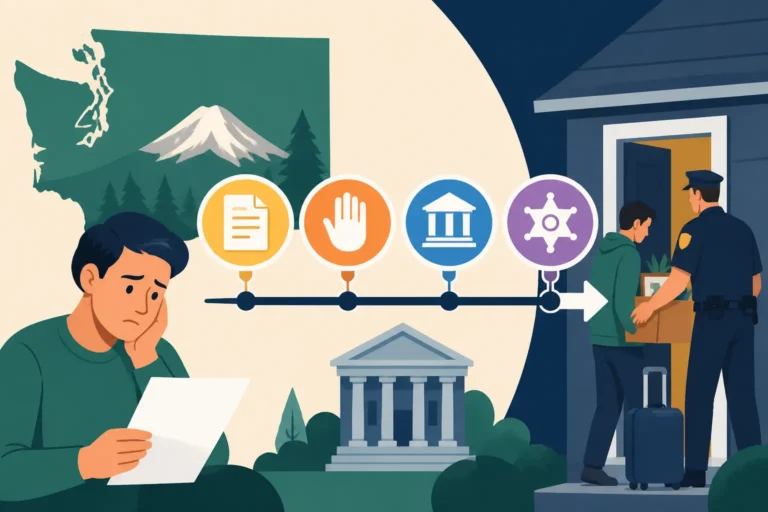
Evicting a roommate, even a subtenant, follows a legal process that requires strict adherence to state and local landlord-tenant laws. Bypassing these steps can lead to illegal self-help evictions, which carry severe penalties. Remember, you cannot change locks, shut off utilities, or remove their belongings without a court order.
Step 1: Consult Your Lease and State Laws
This is where you need to put on your detective hat. First, re-read your master lease agreement with your landlord. Does it permit subletting? Does it have clauses about guest policies or noise? This information is vital, especially if you're the primary tenant dealing with a subtenant. Next, research your specific state and city landlord-tenant laws. These laws dictate everything from notice periods to acceptable reasons for eviction and the court process. Websites for your state's bar association, local housing authorities, or legal aid organizations are good places to start. For example, California has specific tenant protections that differ from, say, Texas.
If you're a co-tenant, your first step is always to communicate with your landlord. If your roommate is violating the lease, the landlord is the one who needs to take action. Provide them with detailed documentation of the violations. If your landlord fails to act, you may have limited options to pursue legal action against your roommate directly for monetary damages, but you generally cannot evict them yourself.
Step 2: Serve a Formal Eviction Notice
Once you've established legal grounds and understand the local requirements, the next move is to serve a formal written eviction notice. This is not a casual request; it’s a legal document. The type of notice depends on the reason for eviction:
- Pay or Quit Notice: For nonpayment of rent. It gives your roommate a set number of days (usually 3-5) to pay the overdue rent or move out.
- Cure or Quit Notice: For lease violations. It gives your roommate a set number of days (e.g., 7-30 days) to correct the violation or move out.
- Unconditional Quit Notice: For severe, uncurable lease violations (like illegal activity) or when permitted for month-to-month tenancies at the end of a term. This notice demands they move out with no opportunity to fix the issue.
The notice must be delivered correctly, following your state’s rules. This often means personal service, certified mail, or posting it on their door and mailing a copy. Make sure you keep proof of service! Many legal document services, like LawDepot, offer state-specific eviction notice templates that ensure all the required legal language is included. Using a reputable template minimizes errors that could derail your case.
Step 3: File an Eviction Lawsuit (Unlawful Detainer)
If your roommate does not comply with the eviction notice (i.e., they don't pay rent, don't fix the violation, or don't move out), you will need to file an eviction lawsuit, also known as an "Unlawful Detainer" action, in the appropriate local court. This is a formal legal process.
You'll typically fill out specific court forms, pay a filing fee, and then have the summons and complaint legally served to your roommate. This service must also follow strict legal guidelines. Your roommate will then have a limited time to respond to the lawsuit. If they don't respond, you might be able to get a default judgment. If they do respond, a court hearing will be scheduled. This stage can be complex, and it’s often advisable to seek legal assistance from an attorney specializing in landlord-tenant law. Understanding the full Eviction Process by State (Step-by-Step) can help prepare you for what's ahead.
Step 4: Attend the Court Hearing and Obtain a Judgment
During the court hearing, both you and your roommate will present your cases to a judge. You'll need to provide evidence, such as the lease agreement, the sublease agreement, copies of the eviction notice, proof of service, communication records (emails, texts), photos of damage, and payment ledgers. The judge will listen to both sides and then issue a judgment.
If the judge rules in your favor, they will issue an "Order of Eviction" or a "Writ of Possession." This is the official court order authorizing the removal of your roommate. This is a crucial document because it’s the only legal way to force a non-compliant roommate to leave.
Step 5: Execute the Writ of Possession
Even after receiving a court order, you cannot physically remove your roommate yourself. You must take the Writ of Possession to the local sheriff’s or marshal’s office. They are the only ones legally authorized to carry out the physical removal (a "lockout") of the tenant. The sheriff will typically post a final notice on the property, giving the roommate a last chance to vacate, usually within 24 to 48 hours. If they still haven't left, the sheriff will supervise their removal and ensure they are locked out.
It's critical to respect this process fully. Any attempt to speed things up or bypass the sheriff could result in severe legal consequences for you, including fines and potential criminal charges for illegal self-help eviction. The local police department will likely also refer you back to the courts if you attempt to circumvent this final stage.
Navigating Common Challenges and Alternatives
Evicting a roommate is rarely simple and often comes with emotional and practical challenges. Knowing what to expect and considering alternatives can save you a lot of heartache and expense.
The Challenge of Joint and Several Liability
As mentioned earlier, if you are co-tenants, you are both typically "jointly and severally liable" for the entire rent and any damages. This means if your problematic roommate stops paying rent, you are still on the hook for their share. Your landlord will expect the full rent, and if it's not paid, they can pursue an eviction against both of you. This can feel incredibly unfair when you're the one upholding your end of the bargain.
In this scenario, while you can't evict your co-tenant, you can pursue legal action against them in small claims court for their unpaid share of the rent or damages. This is a civil case separate from an eviction. Document everything: your roommate agreement (if you have one), payment records, and any communications about the unpaid rent. This evidence will be vital in court. Some individuals find success by formally sending a Security Deposit Demand Letter or a similar demand for unpaid rent before filing in small claims court.
Mitigating Damages
Many states have a "landlord's duty to mitigate damages," meaning the landlord must make reasonable efforts to re-rent the property after a tenant leaves early or is evicted. This also applies to a primary tenant whose subtenant has been evicted. If you successfully evict a subtenant, you should actively look for a new one to minimize the financial losses from unpaid rent. Keeping records of your efforts (advertisements, showing dates, applications received) can be helpful if your former roommate later tries to argue they weren't responsible for rent after they left because you didn't try to replace them. This principle is deeply embedded in tenant law and can influence what happens when you're Breaking a Lease and Your Credit Score.
The Value of a Roommate Agreement
While a formal lease or sublease is legally binding, a separate, informal "roommate agreement" can be incredibly helpful, even for co-tenants. This isn't usually enforceable by your landlord, but it's a contract between you and your roommate that defines shared responsibilities. Think of it as a playbook for living together. It can outline:
- Rent and utility payment schedules.
- Chore assignments.
- Guest policies.
- Quiet hours.
- Rules for shared spaces.
- Procedures for dispute resolution.
Having these expectations in writing, even if informal, can prevent misunderstandings and provide a clear document to refer to if problems arise. Platforms like LawDepot offer templates for comprehensive roommate agreements. If a co-tenant violates this agreement, while you still can't directly evict them, you can use the agreement as evidence in small claims court to recover damages. These agreements can be a critical component of healthy shared living, often explored in more detail in guides about Roommate Agreements & Co-Tenancy.
Cash for Keys
Sometimes, the simplest solution is to offer your roommate a financial incentive to move out voluntarily. This strategy, known as "cash for keys," involves offering a lump sum payment in exchange for them vacating the premises by a certain date and leaving the property in good condition. This can be significantly cheaper and faster than a lengthy eviction process, which can cost thousands in legal fees and lost rent, not to mention the emotional toll.
This is a negotiation. You might offer a few hundred dollars, or even enough to cover their moving expenses or a security deposit for a new place. It's an opportunity to avoid court entirely. If you pursue this, make sure you have a written agreement outlining the terms, signed by both parties, specifying the exact date they will leave and how the payment will be made (e.g., half upon signing, half upon successful move-out and inspection).
Mediation
If communication has broken down but you still want to avoid court, consider mediation. A neutral third party (a mediator) can help facilitate a discussion between you and your roommate to reach a mutually agreeable solution. Many cities and counties offer free or low-cost mediation services for landlord-tenant disputes. This can be an effective way to address issues like cleanliness, noise, or minor rule violations without resorting to formal legal action, preserving what's left of the relationship or at least allowing for an amicable departure. Mediation is a powerful tool and is often discussed as an effective alternative in situations requiring Eviction Mediation: How It Works.
A Final Word on Documentation
No matter which path you take, documentation is your strongest ally. Keep meticulous records of everything:
- Lease and Sublease Agreements: Original signed copies.
- Payment Records: Bank statements, cancelled checks, digital payment receipts showing who paid what and when.
- Communication: Emails, text messages, and dated notes of phone calls or in-person conversations (including details of what was discussed).
- Notices: Copies of any eviction notices served, along with proof of delivery.
- Evidence of Violations: Photos or videos of damage, police reports for disturbances, written complaints from neighbors.
This paper trail will be invaluable whether you're dealing with your landlord, filing in small claims court, or pursuing a formal eviction. It helps prove your case and shows you’ve followed all the necessary steps diligently.
Disclaimer
Please remember that this article provides general information and is not a substitute for legal advice. Landlord-tenant laws vary significantly by state and local jurisdiction. It is always recommended to consult with a qualified attorney or housing authority in your area for advice tailored to your specific situation.