How to Break a Lease in South Dakota
Oh, the lease agreement. It feels like such a solid commitment when you sign it, promising months or even years of stability. But life, as we all know, has a funny way of throwing curveballs. Sometimes, circumstances change dramatically, and you find yourself in a bind, needing to get out of your rental agreement long before its official end date. Breaking a lease can feel daunting, filled with fears of penalties, legal battles, and financial repercussions. This guide is here to walk you through how to navigate breaking a lease in South Dakota, outlining your rights, responsibilities, and the most common paths to a smoother exit.
Understanding South Dakota Lease Agreements
Before you even think about packing boxes, it’s absolutely essential to understand what you're up against: your lease agreement. This document isn't just a formality; it's a legally binding contract between you and your landlord, outlining the terms of your tenancy. Ignoring it or assuming you can just walk away can lead to significant problems down the line.
The Binding Nature of a Lease
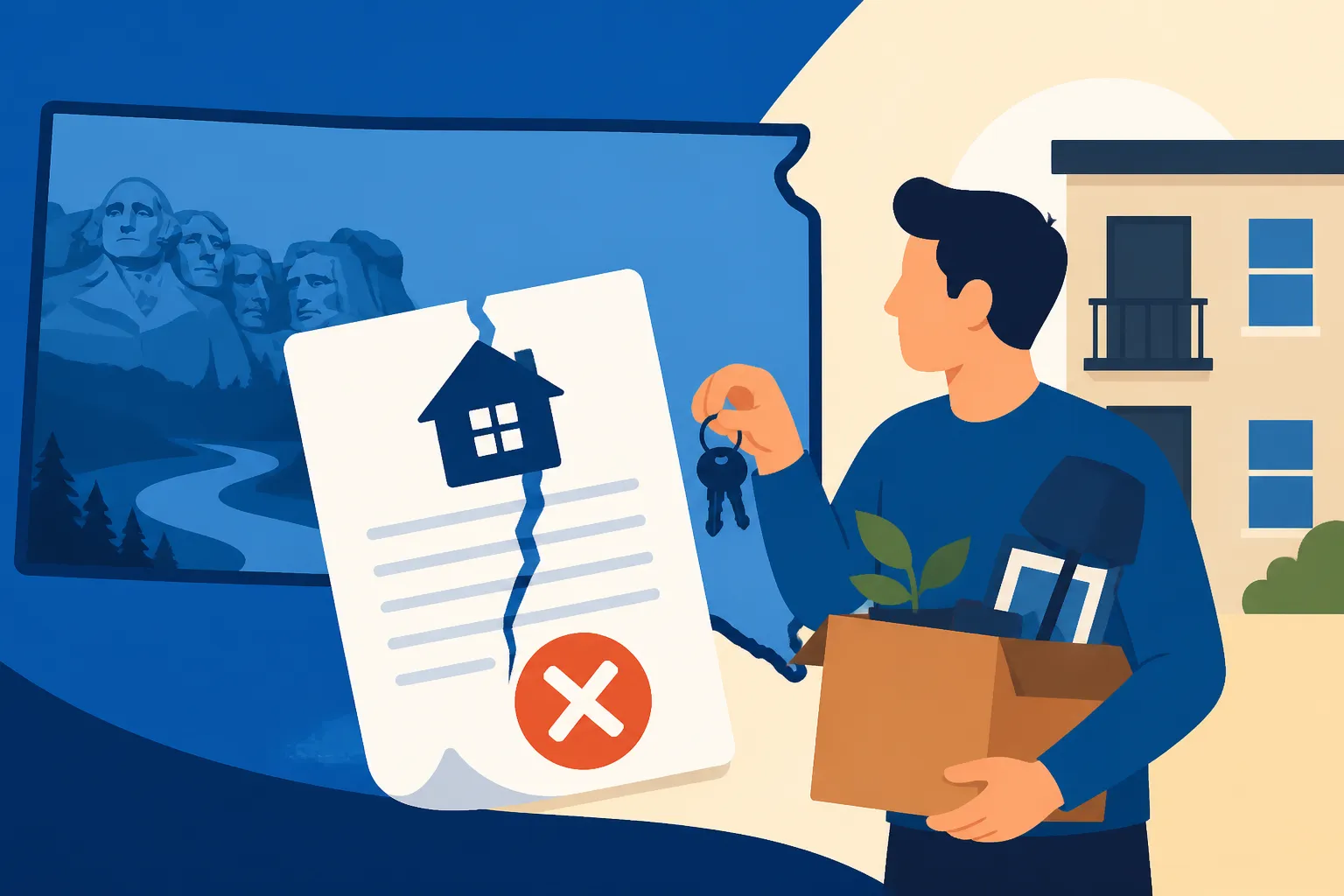
In South Dakota, a residential lease agreement creates a landlord-tenant relationship governed by state law. When you sign a lease, you're essentially agreeing to pay rent for the entire term, usually 6 to 12 months, in exchange for occupying the property. This means that if you decide to move out early without a legally recognized reason or an agreement with your landlord, you are technically in breach of that contract. The repercussions can range from losing your security deposit to being sued for the remaining rent. It's not a situation anyone wants to be in, which is why understanding your options is so critical. Think of it like this: your signature is a handshake that carries a lot of legal weight. Many landlords use standard forms, which you can even find on platforms like LawDepot, but the specifics of each lease can vary, so always read every clause.
Common Lease Terms to Look For
When reviewing your lease, pay close attention to several key sections that dictate what might happen if you need to terminate early. Look for clauses related to "early termination," "subletting," "assignment," or "liquidated damages." Some leases might actually have a specific early termination clause that spells out a fee you can pay to break the lease legally. This could be a set amount, like two months' rent, or a formula. While it's a financial hit, it might be a clear path to freedom without further liability. Also, check for language about your security deposit. Understanding what can be deducted from a security deposit is vital, as landlords often use these funds to cover damages or unpaid rent resulting from an early departure. Another crucial area is the section detailing your responsibilities for maintaining the property and returning it in good condition.
Legal Grounds to Break a Lease Early in South Dakota
Sometimes, life events or landlord actions provide a legal shield, allowing you to break your lease without facing severe penalties. South Dakota law, like many other states, recognizes specific circumstances where a tenant can terminate a lease early. These aren't just "I don't like it here anymore" reasons; they are serious, legally recognized situations.
Active Military Duty (Servicemembers Civil Relief Act)
If you're a servicemember and receive orders for active duty, permanent change of station (PCS), or deployment, the federal Servicemembers Civil Relief Act (SCRA) is your best friend. This act allows military personnel to break a residential lease without penalty if they:
- Enter active duty after signing the lease.
- Are already on active duty and receive orders for a PCS or deployment for 90 days or more.
To invoke the SCRA, you must provide your landlord with written notice of your intent to terminate and a copy of your military orders. The termination becomes effective 30 days after the date on which your next rent payment is due. For example, if you pay rent on the first of the month and give notice on September 15th, your lease would terminate on November 1st. This is a powerful protection, and it ensures that our servicemembers aren't penalized for answering the call of duty.
Uninhabitable Living Conditions
No one should have to live in unsafe or unhealthy conditions. In South Dakota, landlords are required to provide and maintain a safe and habitable living environment. This means ensuring the property has essentials like working plumbing, heat, electricity, and is free from severe infestations or structural defects. If your landlord fails to make necessary repairs that impact the habitability of your home, and you've given them proper written notice, you might have grounds to break your lease.
Let's say your furnace breaks in the middle of a South Dakota winter, and despite repeated written requests, your landlord takes an unreasonable amount of time to fix it, leaving you without adequate heat for weeks. That's a serious habitability issue. Before you can break the lease, you must typically:
- Provide written notice to your landlord detailing the specific problem and requesting repairs.
- Give the landlord a "reasonable" amount of time to fix the issue. What's reasonable can depend on the severity of the problem – a broken furnace in January would warrant a much quicker response than a leaky faucet.
- If they fail to act, you may have grounds for "constructive eviction," which allows you to move out and terminate the lease.
It's crucial to document everything – dates of notifications, photos of the issues, and any communication with your landlord. This documentation is your evidence if the situation escalates. For more on what landlords must fix, you might find our guide on Landlord Repair Responsibilities What They Must Fix helpful.
Landlord Harassment or Privacy Violations
Tenants in South Dakota have a right to "quiet enjoyment" of their rental property. This means your landlord generally cannot harass you or repeatedly violate your privacy. While South Dakota law doesn't explicitly define a specific notice period landlords must provide before entering, common practice and implied rights usually require reasonable notice (often 24 hours) for non-emergency entry.
Examples of landlord harassment or privacy violations that could potentially justify breaking a lease include:
- Repeated, unannounced entries: Your landlord constantly showing up without notice, or entering your apartment when you're not home, can be a serious breach of your right to privacy.
- Harassment or threats: If your landlord uses aggressive tactics, threatens you, or tries to force you out through intimidation.
- Utility shut-offs: Illegally shutting off essential utilities like water or electricity to compel you to move out. This is a clear example of an illegal self-help eviction.
Again, thorough documentation is key here. Keep a log of dates, times, and descriptions of each incident, along with any written communications you send to your landlord regarding the issue.
Domestic Violence, Sexual Assault, or Stalking
South Dakota law offers specific protections for victims of domestic violence, sexual assault, or stalking. If you are a victim and need to leave your rental unit for your safety, you generally have the right to terminate your lease early without penalty.
To do so, you typically need to provide your landlord with:
- Written notice of your intent to terminate the lease.
- Documentation of the domestic violence, sexual assault, or stalking, such as a protection order, a police report, or a statement from a qualified third party (like a doctor, counselor, or advocate).
The lease usually terminates 30 days after the landlord receives the notice, or a shorter period if specified in state law. This critical protection recognizes the severe circumstances victims face and prioritizes their safety and well-being.
Strategies to Minimize Financial Impact When Breaking a Lease
Even if you don't have a legally recognized reason to break your lease, all hope is not lost. There are proactive steps you can take to significantly reduce the financial burden that comes with an early departure. The goal is to work with your landlord, not against them, to find a mutually agreeable solution.
The Landlord's Duty to Mitigate Damages
This is a really important concept in South Dakota. Unlike some states where landlords can just sit back and collect rent from you for the remainder of the lease term, South Dakota law generally requires landlords to make a reasonable effort to "mitigate damages." What does this mean? It means they can't just let the property sit vacant and expect you to pay all the rent. They have a responsibility to try and find a new tenant as quickly as possible.
Practically, this looks like the landlord advertising the unit for rent, showing it to prospective tenants, and accepting a qualified applicant. If they successfully re-rent the property, your liability for rent typically ends when the new tenant moves in. However, you might still be responsible for the period the unit was vacant and any legitimate costs the landlord incurred in re-renting (like advertising fees or a reasonable re-leasing fee). It’s in your best interest to help your landlord find a replacement, as this directly reduces your financial exposure. Our deep dive into Landlord Duty to Mitigate Damages Explained offers more insights.
Negotiating an Early Termination Agreement
Sometimes, the best solution is to simply talk to your landlord. Many landlords are reasonable and understand that life happens. If you're upfront and communicate your situation clearly and respectfully, they might be willing to work with you on an early termination agreement.
Here's how to approach this negotiation:
- Be proactive: As soon as you know you need to move, reach out. The more notice you give, the better.
- Explain your situation: Briefly and politely explain why you need to move. You don't have to overshare, but a basic understanding can foster empathy.
- Offer solutions: Suggest ways to help. Will you find a replacement tenant? Will you forfeit your security deposit? Offer to pay a reasonable early termination fee if your lease doesn't specify one, perhaps equivalent to one or two months' rent.
- Get it in writing: Absolutely, positively, get any agreement in writing. A verbal agreement is much harder to enforce. A written agreement, signed by both parties, should clearly state that you are released from your lease obligations and any associated fees. You can find templates for such agreements on sites like LawDepot.
Finding a Replacement Tenant: Subletting or Assignment
Depending on your lease and your landlord's willingness, finding a replacement tenant can be a fantastic way to mitigate your costs.
- Subletting: This is when you rent out your unit to a new tenant (the subtenant), but you remain the original tenant on the lease with your landlord. You collect rent from the subtenant and pay your landlord. You are still ultimately responsible for the unit and ensuring rent is paid.
- Lease Assignment: This is a more permanent solution where you transfer your entire lease agreement to a new tenant (the assignee). If approved by the landlord, the assignee takes over all the rights and responsibilities of the original lease, and you are typically released from your obligations.
Many leases prohibit subletting or assignment without the landlord's express written consent. Even if your lease doesn't mention it, you generally need your landlord's permission. If you find a qualified replacement tenant, and your landlord unreasonably refuses to allow a sublease or assignment, this might strengthen your argument that the landlord isn't fulfilling their duty to mitigate damages. You could even use platforms like TurboTenant to help screen potential new tenants to present a strong candidate to your landlord. For more detailed information, check out our guide on Subletting & Lease Assignment Explained.
The Importance of Proper Notice and Documentation
Regardless of your reason for breaking a lease, formal communication and meticulous record-keeping are your strongest allies. Failing to provide proper notice or document your efforts can weaken your position significantly.
Crafting a Formal Notice
Always, always put your intent to terminate the lease in writing. A phone call or a casual conversation won't cut it in the eyes of the law. Your written notice should include:
- Your current address and the date.
- A clear statement of your intent to terminate the lease early.
- The effective date of your termination.
- The specific reason for termination, especially if it's a legally justified one (e.g., military orders, uninhabitable conditions, domestic violence). Include copies of any supporting documentation.
- A request for the return of your security deposit, minus any lawful deductions, to a forwarding address.
Send this notice via certified mail with a return receipt requested. This provides undeniable proof that your landlord received the notice and when they received it. Keep a copy for your records. You can often find templates for a formal "Notice to Vacate" or a "Security Deposit Demand Letter" on legal document sites or tenant rights resources.
Maintaining Detailed Records
Think of yourself as a diligent historian of your tenancy. Every interaction, every problem, every attempt to resolve an issue should be recorded.
Keep a binder or digital folder with:
- Your signed lease agreement. This is your foundational document.
- All correspondence with your landlord: This includes emails, text messages, and copies of all formal written notices you've sent (like repair requests, notices of intent to terminate, or even simple questions about the property).
- Proof of mailing: Certified mail receipts are invaluable.
- Photographs and videos: Document the condition of the property when you moved in (a good practice covered in our How to Document Your Apartment at Move-In guide) and when you move out. If you're breaking the lease due to damage or habitability issues, document those specifically.
- Receipts: For any repairs you had to make that were the landlord's responsibility (if allowed by South Dakota law to repair and deduct, which generally requires specific conditions).
- Advertisement efforts: If you're helping to find a new tenant, keep records of listings you posted or inquiries you received.
This comprehensive record will be your evidence if there's any dispute over your early termination or the return of your security deposit.
Potential Consequences of Improper Lease Termination
Stepping away from a lease without proper legal grounds or a formal agreement with your landlord can lead to a host of unpleasant and costly consequences. It's not a decision to be taken lightly.
Financial Repercussions
The most immediate and common consequence is financial. If you abandon your lease, your landlord can generally hold you responsible for the rent until a new tenant is found or until the lease term officially ends, whichever comes first. Remember, the landlord still has a duty to mitigate damages in South Dakota, but you are liable for the rent during the vacancy period.
Beyond the monthly rent, you might also face:
- Loss of your security deposit: This is almost a given if you break your lease without justification. Landlords can use it to cover lost rent, re-rental costs, or damages beyond normal wear and tear. You can learn more about What Can a Landlord Deduct From a Security Deposit?.
- Early termination fees: If your lease includes a specific early termination clause, you'll be on the hook for that fee.
- Re-rental costs: These can include advertising costs, tenant screening fees (which services like TurboTenant provide), and possibly a reasonable administrative fee for the landlord's time and effort in finding a new tenant.
- Legal fees: If your landlord has to take you to court to recover unpaid rent or other damages, you could be responsible for their legal fees and court costs, in addition to the owed amounts.
Imagine owing several months of rent on an empty apartment while also paying rent on your new place. It’s a double financial hit that can really sting.
Impact on Rental History and Credit
Beyond immediate financial costs, an improper lease break can have long-lasting negative effects on your rental history and credit score.
- Damaged rental history: Future landlords will likely conduct a background check, and a previous lease break will almost certainly appear. This can make it incredibly difficult to secure a new rental, as landlords are wary of tenants who have breached past agreements. They might see you as a high-risk tenant.
- Impact on credit score: If your landlord pursues you for unpaid rent or fees and wins a judgment against you, or if they send the debt to a collection agency, it will negatively impact your credit score. A lower credit score can affect your ability to get loans, mortgages, or even some jobs.
It's clear that understanding the process and trying to work with your landlord, or at least having legitimate grounds for termination, is crucial to protect your financial well-being and future housing prospects.
Disclaimer
Please remember, I'm a lifestyle blogger and SEO content writer, not a legal professional. The information provided in this guide is intended for general informational purposes only and does not constitute legal advice. Landlord-tenant laws can be complex and are subject to change. For specific advice regarding your situation, always consult with a qualified attorney in South Dakota.