How to Break a Lease in Wyoming
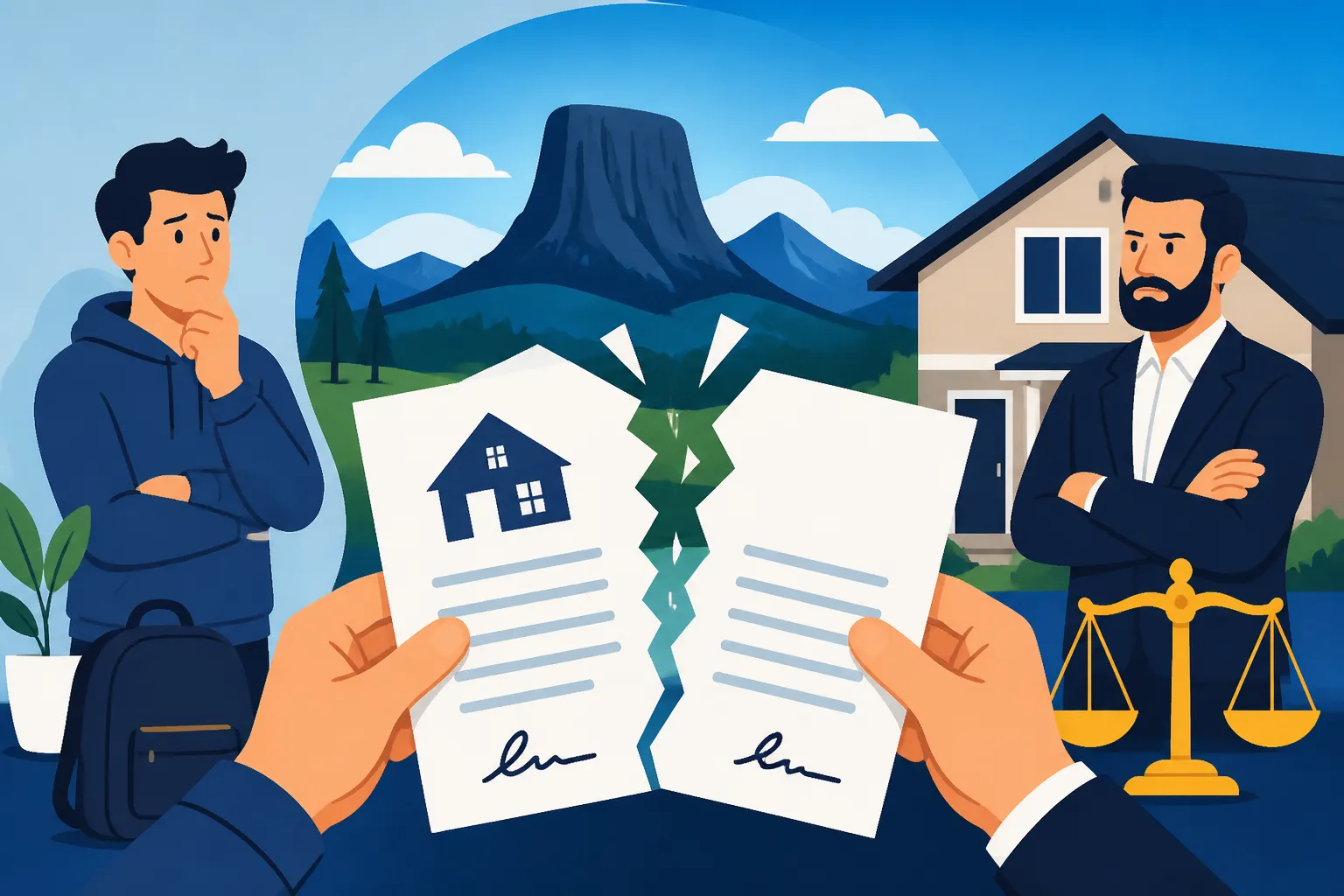
Life throws curveballs, and sometimes those curveballs hit your housing situation right when you least expect it. Whether it's a sudden job relocation, a family emergency, or an unforeseen change in personal circumstances, breaking a lease can feel like navigating a legal minefield, especially in a state like Wyoming where tenant laws aren't always as explicit as in other places. This guide is here to walk you through the ins and outs of how to break a lease in Wyoming, outlining your rights, responsibilities, and the practical steps you can take to minimize financial headaches and stress.
Understanding Your Lease Agreement
Before you even think about packing a single box or writing a notice, the absolute first thing you need to do is thoroughly review your lease agreement. This document is the bedrock of your tenancy, and it often contains crucial clauses regarding early termination. Many people just skim their lease when they sign it, but now's the time to become an expert on its contents.
Key Clauses to Look For
Your lease isn't just a piece of paper; it's a legally binding contract that outlines the terms of your stay and, importantly, the conditions for leaving early. Missing a crucial clause could cost you.
Look specifically for sections titled "Early Termination," "Lease Break Policy," "Subletting," or "Assignment." Some leases might explicitly allow you to break the lease early under certain conditions, such as paying a termination fee equal to two months' rent. If your lease specifies a particular procedure or penalty for early termination, that's often the easiest (though not necessarily the cheapest) path forward. It gives you a clear roadmap, even if it comes with a cost. Sometimes, landlords include an early termination clause that requires a specific notice period and a penalty fee. This is often preferable to being held liable for the entire remaining lease term, as it caps your potential financial exposure. If you find such a clause, make sure you understand every detail, from the notice period required to the exact amount of the fee.
Wyoming's General Lease Principles
Unlike some states with very prescriptive landlord-tenant laws, Wyoming's statutes are less detailed, meaning the lease agreement itself often carries significant weight. In the absence of specific state laws, common law principles and the terms you agreed to in your lease become even more critical. Generally, a lease in Wyoming is a binding contract, and tenants are typically responsible for paying rent for the entire term of the lease, even if they move out early. This can feel incredibly daunting, but understanding this fundamental principle is your starting point. This is why exploring any early termination clauses in your specific agreement is paramount. If your lease is a standard agreement, you might find templates from resources like LawDepot helpful for understanding common lease structures and terms, which can assist in deciphering your own.
Legal Reasons to Break a Lease in Wyoming
While Wyoming's statutes don't provide a long list of explicit legal justifications for breaking a lease without penalty, there are still several situations where you might be legally protected. These generally fall under the umbrella of either severe landlord non-compliance or specific federal protections.
Active Military Duty (SCRA)
One of the strongest legal protections for breaking a lease comes from federal law, specifically the Servicemembers Civil Relief Act (SCRA). This act is a lifeline for military personnel facing sudden deployments or permanent change of station (PCS) orders.
If you are an active-duty servicemember, a reservist ordered to active duty, or a member of the National Guard ordered to federal active duty for 90 days or more, the SCRA allows you to terminate your lease early. You need to provide your landlord with written notice of your intent to terminate and a copy of your military orders. The termination typically becomes effective 30 days after the next rent payment is due. This means if you give notice on June 15th and rent is due July 1st, your lease would terminate on August 1st. This is a powerful protection, and landlords are required by law to honor it. For a deeper dive into this, you can check out our comprehensive guide on Military (SCRA) Lease Termination Step-by-Step.
Uninhabitable Living Conditions
Every tenant has a right to a safe and habitable living environment, a concept known as the "implied warranty of habitability." While Wyoming doesn't have a specific statute detailing this, courts generally recognize it under common law. This means your landlord is obligated to maintain the property in a condition that is fit for human habitation, ensuring essential services like heat, running water, and a structurally sound dwelling are provided.
If your landlord fails to make necessary repairs that render your rental unit uninhabitable, and they don't address the issues after you've given them proper written notice and a reasonable amount of time to fix them, you might have grounds to break your lease. What constitutes "uninhabitable" can vary, but generally refers to severe issues like a lack of essential utilities (heat, water, electricity), a major pest infestation, or dangerous structural problems. Minor inconveniences or cosmetic issues typically won't qualify. Documenting these issues meticulously, including dates, photos, and copies of all communication with your landlord, is absolutely essential if you plan to go this route. Our article on the Implied Warranty of Habitability Explained offers more detail.
Landlord Harassment or Privacy Violations
Tenants in Wyoming, like everywhere else, have a right to privacy and quiet enjoyment of their rented premises. While Wyoming statutes don't explicitly define landlord entry notice requirements, "reasonable notice" (often interpreted as 24 hours) is generally expected under common law, except in emergencies. If your landlord repeatedly enters your unit without notice, harasses you, or otherwise creates a hostile living environment, it could potentially be grounds for constructive eviction.
Constructive eviction occurs when a landlord's actions (or inactions) make the property so uninhabitable or disruptive that the tenant is effectively forced to move out. This is a high bar to meet and typically requires a pattern of severe behavior that substantially interferes with your ability to enjoy your home. As with uninhabitable conditions, thorough documentation of every incident, including dates, times, witnesses, and written communications, is vital if you are considering arguing constructive eviction. You must demonstrate that the landlord's actions were so egregious that they essentially evicted you by making the premises unlivable in practice.
Domestic Violence Situations
Wyoming state law does not have specific statutes allowing for early lease termination for victims of domestic violence, sexual assault, or stalking, which is a critical gap compared to many other states. However, it's always worth checking for local ordinances in your specific city or county within Wyoming, as some municipalities might offer more protections.
In the absence of a direct state statute, victims would typically need to rely on other legal avenues, such as proving uninhabitable conditions due to a landlord's failure to provide adequate security after documented incidents, or negotiating directly with the landlord. It's incredibly important for victims in Wyoming to seek legal counsel or connect with local domestic violence support organizations, as they may be able to advocate on your behalf or provide guidance on available resources and options, even without a specific state law.
Breaking a Lease Without Legal Justification
If your situation doesn't fall into one of the legally protected categories, breaking your lease in Wyoming means you're technically in breach of contract. This doesn't mean you're out of options, but it does mean you'll likely face some financial consequences.
Financial Ramifications
The most immediate concern when breaking a lease without legal justification is the financial impact. In Wyoming, as in most states, landlords generally have the right to hold you responsible for the rent until the lease term expires or until a new tenant is found, whichever comes first. This means you could be on the hook for several months' worth of rent, plus any costs associated with finding a new tenant, such as advertising fees.
Imagine you're renting a place in Cheyenne for $1,200 a month with six months left on your lease. If you move out without legal cause and the landlord can't find a new tenant for three months, you could be liable for $3,600 in rent. This can be a significant financial burden, which is why understanding your landlord's obligations to mitigate damages (which we'll cover next) is so important. Additionally, if your lease included a security deposit, your landlord will likely keep a portion, if not all of it, to cover lost rent and any damages or cleaning costs. Our article on Security Deposit and Broken Lease: What Happens provides more context.
Impact on Your Rental History and Credit Score
Beyond the immediate financial costs, breaking a lease can have long-term repercussions on your rental history and, potentially, your credit score. Landlords often run background checks that include past rental history when you apply for a new place. An eviction or a judgment for unpaid rent due to breaking a lease can make it very difficult to secure future housing.
If your landlord has to sue you in small claims court to recover unpaid rent, and they win, that judgment will appear on your credit report, negatively impacting your credit score for up to seven years. This can affect your ability to get loans, credit cards, or even other services. It's a serious consequence that shouldn't be overlooked. While it might feel like the end of the world, remember that there are steps you can take to mitigate this damage, which we'll discuss in the next section. Our guide on Breaking a Lease and Your Credit Score has more information on this aspect.
Minimizing Financial Liability When Breaking a Lease
Even if you don't have a legally protected reason to break your lease, you're not entirely powerless. There are proactive steps you can take to reduce the financial blow and maintain a good relationship with your landlord, which can save you a lot of grief in the long run.
Understanding the Landlord's Duty to Mitigate Damages
This is a critical concept in Wyoming, even though it's not explicitly spelled out in state statutes for residential leases. Under common law, many courts in Wyoming apply the principle of "mitigation of damages." This means that even if you break your lease, your landlord generally has a legal obligation to make reasonable efforts to find a new tenant and re-rent the property. They can't just sit back and let the rent accumulate while you're still on the hook.
What constitutes "reasonable efforts" can vary, but it usually means advertising the property, showing it to prospective tenants, and not rejecting qualified applicants without good cause. If your landlord does find a new tenant, your liability for rent ends when the new tenancy begins. If they fail to make reasonable efforts to re-rent, you might be able to argue in court that they haven't fulfilled their duty to mitigate, which could reduce the amount you owe. This concept is explored in detail in our article on Landlord Duty to Mitigate Damages Explained.
Finding a Replacement Tenant
One of the best ways to help your landlord mitigate damages and, by extension, reduce your own liability, is to assist in finding a suitable replacement tenant. This shows good faith and can significantly shorten the vacancy period.
You could offer to advertise the unit, screen potential renters, and even conduct showings on behalf of the landlord. Ensure that any prospective tenant you find meets the landlord's screening criteria (credit score, income, rental history) to avoid giving them a valid reason to reject an applicant. While your landlord isn't obligated to accept your replacement tenant, a qualified candidate makes it much harder for them to claim they couldn't find anyone, bolstering your case that they didn't mitigate damages effectively. You can even use tenant screening tools, which many landlords use (like those offered by TurboTenant, for example, to get an idea of the screening process).
Negotiating with Your Landlord
Communication is key when you need to break a lease. The sooner you talk to your landlord, the better. Many landlords are reasonable and would prefer to work something out rather than deal with the hassle and uncertainty of pursuing you for unpaid rent.
- Offer a lease break fee: Propose a lump-sum payment (e.g., one or two months' rent) in exchange for being released from your lease obligations. This provides the landlord with immediate compensation and certainty.
- Find a sublessee or assignee: Some leases allow for subletting (you find someone to live in your place and pay rent to you, and you still pay the landlord) or assignment (you transfer your entire lease obligation to a new tenant). Be aware that subletting or assignment usually requires your landlord's approval, and they can often charge fees for processing these changes. Crucially, in a sublease, you remain ultimately responsible for the rent if the sublessee defaults.
- Help with advertising: As mentioned, offer to assist with advertising the unit and finding new tenants.
- Be transparent: Explain your situation honestly. Landlords are people too, and sometimes empathy can go a long way.
- Get everything in writing: Any agreement you reach with your landlord about breaking the lease, including any agreed-upon fees or release from liability, must be in writing and signed by both parties. Do not rely on verbal agreements.
| Situation | Potential Financial Liability | Landlord's Obligation | Tenant's Recommended Actions |
|---|---|---|---|
| Legal Justification (SCRA, uninhabitable conditions, harassment) | Minimal to None | Adhere to legal requirements (SCRA) or rectify conditions | Provide written notice, document thoroughly, collect evidence, seek legal counsel if needed. |
| No Legal Justification | Rent until new tenant found, plus re-renting costs | Duty to mitigate damages by re-renting property | Give written notice, offer to help find new tenant, negotiate a lease break fee, get all agreements in writing. |
Important Steps to Take When Breaking Your Lease
No matter your reason for breaking a lease, handling the process correctly can make a world of difference. Following these steps can help protect you legally and financially.
Provide Proper Written Notice
This cannot be stressed enough: always provide your landlord with written notice of your intent to vacate the property. A phone call or a casual conversation is not sufficient. Written notice serves as undeniable proof that you informed your landlord, establishing a clear timeline.
Your notice should include:
- Your current address.
- The date you intend to vacate the property.
- A clear statement that you are terminating your lease early and the reason (if applicable and legally protected).
- A request for a move-out inspection.
- Your forwarding address for the return of your security deposit.
Send the notice via certified mail with a return receipt requested. This provides you with proof that the landlord received the notice and on what date. Even if your lease specifies a particular notice period for early termination, adhering to it is crucial. You can find helpful templates for drafting such notices on platforms like LawDepot, which can ensure you don't miss any critical details. For general advice on drafting these, you may also find our article on How to Write a Notice to Vacate useful.
Document Everything
In any landlord-tenant dispute, documentation is your best friend. From the moment you even consider breaking your lease, start a paper trail.
- Lease Agreement: Keep a copy of your signed lease.
- Communications: Save all emails, letters, texts, and notes from phone calls with your landlord. Date everything.
- Repairs & Conditions: If you're breaking the lease due to uninhabitable conditions, take photos and videos of the issues, along with dated maintenance requests and any responses from your landlord. Our guide on How to Document Your Apartment at Move-In can give you ideas for documenting existing conditions, which is equally important for move-out.
- Move-Out Condition: Before you leave, take extensive photos and videos of the property's condition to demonstrate that you left it clean and undamaged, beyond normal wear and tear. This helps protect your security deposit.
- Proof of Notice: Keep copies of your written termination notice and the certified mail receipt.
Review Your Lease Agreement Carefully
We started with this, and we're ending with it for a reason: your lease is that important. Re-read it, highlight relevant sections, and make sure you understand every clause, particularly those related to early termination, penalties, and your responsibilities upon vacating.
Understanding the specific terms of your lease will guide your strategy. It might specify a liquidated damages clause (a pre-determined fee for breaking the lease), or it might outline a process for finding a replacement tenant. Knowing these details upfront will help you negotiate more effectively and avoid surprises. A thorough understanding of your initial agreement, like what's covered in What to Include in a Lease Agreement, can illuminate clauses you might have overlooked.
Breaking a lease in Wyoming can be a challenging process, but by understanding your rights and responsibilities, communicating openly with your landlord, and documenting every step, you can navigate it with greater confidence and minimize potential fallout.
Disclaimer
Please remember that this article provides general information and guidance on landlord-tenant laws in Wyoming. It is not a substitute for professional legal advice. Landlord-tenant laws can be complex and vary based on specific circumstances and local ordinances. If you are considering breaking a lease or have questions about your specific situation, it is always recommended to consult with a qualified attorney in Wyoming.