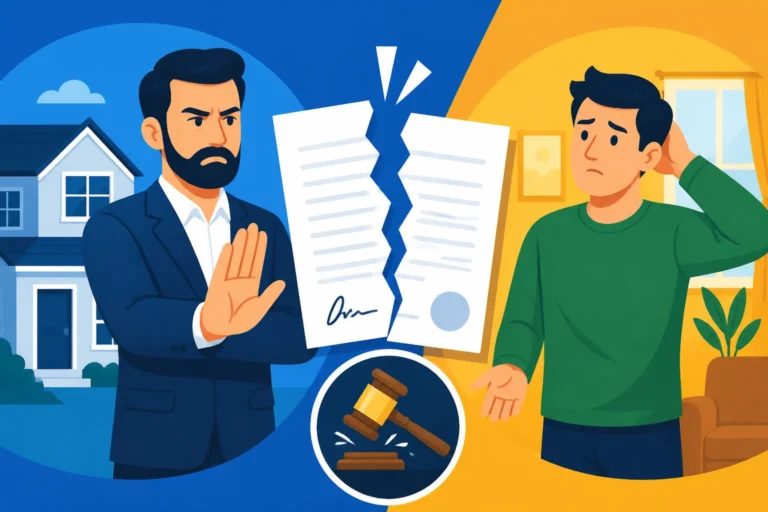
How to Break a Lease in Colorado
Life throws curveballs, and sometimes those curveballs hit you right in your housing situation, leaving you needing to break a lease you thought was a long-term commitment. It's an incredibly stressful position, whether it's a new job opportunity in another city, an unexpected family emergency, or simply an untenable living situation. You might feel trapped, overwhelmed, and unsure of your rights and responsibilities. This comprehensive guide is here to walk you through the process of breaking a lease in Colorado, covering everything from understanding your lease terms to navigating legal justifications and mitigating the financial fallout.
Understanding Your Colorado Lease Agreement
Before you even think about packing a single box or sending a notice, the very first step in breaking a lease in Colorado is to thoroughly understand the agreement you signed. Many tenants just sign on the dotted line without truly grasping the legal weight of the document, and that's completely understandable – leases can be dense, jargon-filled beasts. But trust me, taking the time to review it now can save you a mountain of headaches and expenses down the line.
The Binding Nature of a Lease
A lease isn't just a casual agreement; it's a legally binding contract between you (the tenant) and your landlord. When you sign a fixed-term lease, you're essentially agreeing to pay rent for the entire duration of that term, whether it's six months, a year, or longer. This means that if you decide to move out early without a legally recognized reason or an agreement with your landlord, you could still be on the hook for the remaining rent until the lease expires or a new tenant takes over. It's a heavy commitment, and many tenants feel the full weight of it when unexpected circumstances force them to consider early departure.
Unlike a month-to-month agreement, which offers much more flexibility for either party to terminate with proper notice (usually 30 days in Colorado), a fixed-term lease locks you in. This is why it's so crucial to know what you committed to. Reviewing your original lease document for any specific clauses related to early termination is paramount. Don't rely on memory or assumptions; pull out that paperwork and read it carefully, highlighting anything that discusses breaking the lease.
Early Termination Clauses
While many leases historically didn't explicitly address early termination, it's becoming more common for landlords, especially larger property management companies, to include specific "early termination clauses" in their agreements. These clauses are designed to provide a predetermined pathway for tenants who need to break their lease, outlining the exact fees and procedures involved. It's essentially a way to simplify a complex situation for both parties.
An early termination clause might state that you agree to pay a fee equal to two months' rent to break the lease, plus give 30 or 60 days' notice. Or it might require you to pay a flat fee and continue paying rent until a new tenant is found, whichever comes first. The benefit of such a clause, while it involves a cost, is that it provides certainty. You know exactly what you'll owe and what steps you need to take, rather than facing an open-ended financial liability. If your lease contains such a clause, adhering to its terms is typically the most straightforward (though not necessarily the cheapest) way to proceed. If you're looking to draft a new lease or simply understand your current one, services like LawDepot often provide templates and guidance on common lease clauses, including those for early termination.
Legal Justifications for Early Lease Termination in Colorado
The good news is that under certain circumstances, Colorado law recognizes legitimate reasons for a tenant to break a lease without incurring the standard penalties. These aren't just "I don't like my apartment anymore" reasons; they're serious, often life-altering situations where the law steps in to protect tenants. Understanding these legal justifications is vital, as they can significantly reduce or even eliminate your financial liability.
Active Military Duty (SCRA)
One of the most robust protections for tenants is the Servicemembers Civil Relief Act (SCRA). If you're a servicemember in the active military, the SCRA allows you to terminate your lease early if you receive orders for a permanent change of station (PCS) or deployment for 90 days or more. This federal law is a lifeline for military families who often face sudden and unavoidable relocations.
To qualify for SCRA protection in Colorado, you generally need to provide your landlord with written notice and a copy of your military orders. The termination typically becomes effective 30 days after the next rent payment is due. For instance, if you give notice on June 15th and rent is due on the 1st of each month, your lease would terminate on July 31st. This gives you peace of mind knowing you won't be penalized for serving your country. For a step-by-step guide on this process, check out our article on Military (SCRA) Lease Termination Step-by-Step.
Uninhabitable Living Conditions
Every tenant in Colorado has a right to live in a safe and healthy environment, thanks to the "implied warranty of habitability." This means your landlord is legally obligated to maintain the property in a condition that is fit for human habitation. If your rental unit becomes genuinely uninhabitable due to serious issues that the landlord refuses to fix, you may have grounds to break your lease.
What constitutes "uninhabitable"? We're not talking about a leaky faucet or a slow drain here (though those should still be fixed!). We're talking about major problems like a lack of heat in winter, no running water or hot water, a severe pest infestation (like bed bugs or roaches), structural hazards, or dangerous electrical issues. Before you consider this route, you must notify your landlord in writing about the problem and give them a reasonable amount of time to make the repairs. If they fail to do so, and the condition is severe enough to affect your health and safety, you might be able to terminate your lease. This is a serious step, so be sure to understand the full scope of the Implied Warranty of Habitability Explained and what constitutes Breaking a Lease Due to Mold or Uninhabitable Conditions.
Landlord Harassment or Privacy Violations
Your right to "quiet enjoyment" of your rental property is a fundamental tenant right in Colorado. While landlords have the right to enter your property for legitimate reasons (like repairs or inspections), they typically must provide reasonable notice – usually 24 hours – and enter at reasonable times. They cannot simply barge in whenever they please. If your landlord repeatedly violates your privacy, harasses you, or engages in actions that make your living situation intolerable, you might have a case for constructive eviction, which would allow you to break your lease.
Imagine your landlord entering your apartment without notice every other day, or constantly calling and texting you with non-urgent demands, making you feel unsafe or unable to relax in your own home. This kind of behavior crosses a line. Before acting, document every instance of harassment or privacy violation, including dates, times, and specific details. Send formal written notices to your landlord stating that their actions are violating your rights and demanding they cease. If the behavior continues, you might have a strong argument for early termination.
Domestic Violence, Sexual Assault, or Stalking
Colorado law provides critical protections for tenants who are victims of domestic violence, sexual assault, or stalking. If you or an immediate family member living with you are a victim, you have the right to terminate your lease early to ensure your safety. This is a compassionate and necessary legal provision designed to help individuals escape dangerous living situations.
To invoke this protection, you typically need to provide your landlord with written notice of your intent to terminate and include specific documentation. This documentation might include a copy of a temporary or permanent protection order, a police report, or a written statement from a qualified third-party professional (like a doctor, therapist, or victim's advocate) verifying the abuse. The notice period for termination under these circumstances in Colorado is generally 14 days after the next rent payment is due. For more detailed information on state-specific protections, see our guide on Domestic Violence Lease Termination by State.
Strategies for Breaking a Lease When No Legal Justification Exists
Let's be realistic: not every reason for needing to move falls into those legally protected categories. Sometimes, life just changes, and you need to relocate for a job, move closer to family, or you simply can no longer afford the rent. In these situations, where you don't have a legal "out," you'll need to employ strategy and good communication to minimize the financial repercussions.
Open Communication with Your Landlord
The absolute best first step, even if it feels daunting, is to have an honest and proactive conversation with your landlord. Many tenants avoid this, fearing an immediate confrontation or financial demand, but transparency can often work in your favor. Approach the conversation professionally, explaining your situation clearly and calmly. Remember, landlords are in the business of collecting rent, and an empty unit is bad for their bottom line. They might be more willing to work with you than you think, especially if you present solutions rather than just problems.
When you communicate, do so in writing, even if you've already had a verbal conversation. A certified letter or email creates a paper trail, which is incredibly important for your own protection. You could propose a specific date for your departure and offer a lump sum payment as a penalty, or offer to find a suitable replacement tenant yourself. Being polite, respectful, and organized can go a long way. Consider using a service like LawDepot to generate a formal notice to vacate or a proposal letter, ensuring it's clearly worded and legally sound. This proactive approach shows you're taking responsibility and looking for a fair resolution, which can significantly influence how your landlord responds.
Finding a Replacement Tenant (Subletting or Assignment)
One of the most effective strategies to limit your liability is to find someone else to take over your lease. This can be done through subletting or lease assignment, and the differences are important. With a sublet, you're essentially renting out your unit to a new tenant (the subtenant), but you remain the primary tenant on the original lease and are still ultimately responsible for the property and rent payments. With a lease assignment, you transfer all your rights and responsibilities under the original lease to a new tenant (the assignee), and you are typically released from future obligations.
In Colorado, while a landlord's consent is usually required for both subletting and assignment, they generally cannot unreasonably withhold that consent if you present a qualified replacement tenant. This doesn't mean they have to accept anyone you find, but they can't deny a tenant who meets their standard screening criteria without a legitimate reason. You will likely be responsible for finding and screening potential tenants. Utilizing tools like TurboTenant for background checks and credit reports can help ensure you're presenting a strong candidate to your landlord. Make sure to understand the nuances by reading our detailed guide on Subletting & Lease Assignment Explained, and if you're adding or removing roommates, our article on How to Add or Remove a Roommate From a Lease might also be helpful.
Understanding the Landlord's Duty to Mitigate Damages
This is a really important protection for tenants in Colorado. Even if you break your lease without a legal justification, your landlord generally has a "duty to mitigate damages." This means they are legally required to make reasonable efforts to re-rent the property after you move out. They can't just sit back and let the unit remain vacant for the rest of your lease term and expect you to pay all the rent.
What constitutes "reasonable efforts"? It means they must advertise the unit, show it to prospective tenants, and try to re-rent it at a fair market rate, similar to how they would normally seek a new tenant. They can't intentionally leave it empty just to collect from you. If they successfully re-rent the unit, your financial liability for rent usually ends when the new tenant's lease begins. However, you might still be responsible for the period the unit was vacant and any legitimate costs they incurred to re-rent it (like advertising fees). Documenting your own efforts to find a replacement tenant can serve as valuable proof if there's ever a dispute about whether your landlord fulfilled their Landlord Duty to Mitigate Damages Explained.
Potential Consequences and Mitigating Financial Impact
Breaking a lease, especially without a clear legal justification, can come with significant financial and credit implications. It's crucial to be aware of these potential consequences and take steps to mitigate them. Understanding what you might owe and how it could affect your future rental prospects will help you make informed decisions and approach the situation strategically.
Financial Ramifications
The most immediate and tangible consequence of breaking a lease is financial. Your primary liability will often be for the rent due until a new tenant is found or your original lease term officially ends. Even with the landlord's duty to mitigate damages, there could be a period of vacancy for which you are responsible. Additionally, many leases include an early termination fee, which can often be equal to one or two months' rent. This fee is often explicitly stated in your lease agreement and is intended to compensate the landlord for the costs and inconvenience of finding a new tenant.
It's also highly likely that your security deposit will be at risk. Landlords are generally allowed to deduct for unpaid rent, re-rental costs, and any damages beyond normal wear and tear from your security deposit. If these costs exceed your deposit, you could even be billed for the difference, potentially leading to collections or a lawsuit. Knowing How Much Does It Cost to Break a Lease? is crucial. The table below illustrates common financial factors when breaking a lease:
| Cost Factor | Description | How to Mitigate |
|---|---|---|
| Remaining Rent | You're typically liable for rent until your lease officially ends or a new, qualified tenant moves in. | Proactively help landlord find new tenant; document landlord's efforts (duty to mitigate). |
| Early Termination Fee | A specific fee, often 1-2 months' rent, outlined in your lease for early exit. | Review your lease carefully; negotiate a lower fee if circumstances allow. |
| Marketing/Re-rental Fees | Landlord may charge legitimate costs for advertising the unit and screening new tenants. | Offer to assist with marketing and showing the property. |
| Lost Security Deposit | Your security deposit can be used to cover unpaid rent, re-rental costs, and damages. | Document property condition thoroughly; ensure landlord provides an itemized statement. |
| Legal Fees | If the situation escalates to a lawsuit, you could be responsible for your landlord's legal costs. | Strive for an amicable agreement; consider mediation to resolve disputes. |
Impact on Your Rental History and Credit Score
Beyond the immediate financial costs, breaking a lease can leave a negative mark on your rental history. Future landlords will often ask for references from previous landlords or conduct background checks that reveal prior evictions or lease breaks. A history of breaking a lease can make it much harder to rent another apartment, as it signals to potential landlords that you might not uphold your contractual obligations.
If you leave owing a significant amount of money that goes to collections, it will negatively impact your credit score. A lower credit score can affect your ability to get loans, credit cards, and even other housing opportunities. It can take years to recover from such a hit. This is why understanding What Happens If You Break a Lease? and working diligently to resolve the situation with your current landlord is so important for your long-term financial health. Avoiding an eviction at all costs is paramount, as an eviction on your record is a major red flag for future landlords, far more severe than a simple lease break that's amicably resolved. Our guide on Breaking a Lease and Your Credit Score delves deeper into these potential long-term impacts.
Documenting Everything
No matter the reason for breaking your lease, thorough documentation is your best friend. This cannot be stressed enough. Keep copies of everything: your original lease, all correspondence with your landlord (emails, certified letters, text messages), photos and videos of the unit's condition at move-in and move-out, and any advertisements you placed to help find a replacement tenant.
If you have a legal justification for breaking the lease (like military orders or proof of domestic violence), ensure you have multiple copies of all official documentation. If your landlord is failing to make necessary repairs, document those issues meticulously with dates, descriptions, and photos. This paper trail will be invaluable if there's a dispute over your security deposit, an early termination fee, or if the situation escalates to court. Having concrete evidence proves you acted responsibly and in good faith, providing a strong defense or negotiation tool.
Disclaimer
The information provided in this guide is intended for educational purposes only and should not be considered legal advice. Landlord-tenant laws can be complex and vary by specific circumstances. If you are considering breaking a lease or have questions about your specific situation, it is always recommended to consult with a qualified attorney or housing legal aid organization in Colorado.